When Were Horses Domesticated? A Timeline That Doesn’t Add Up
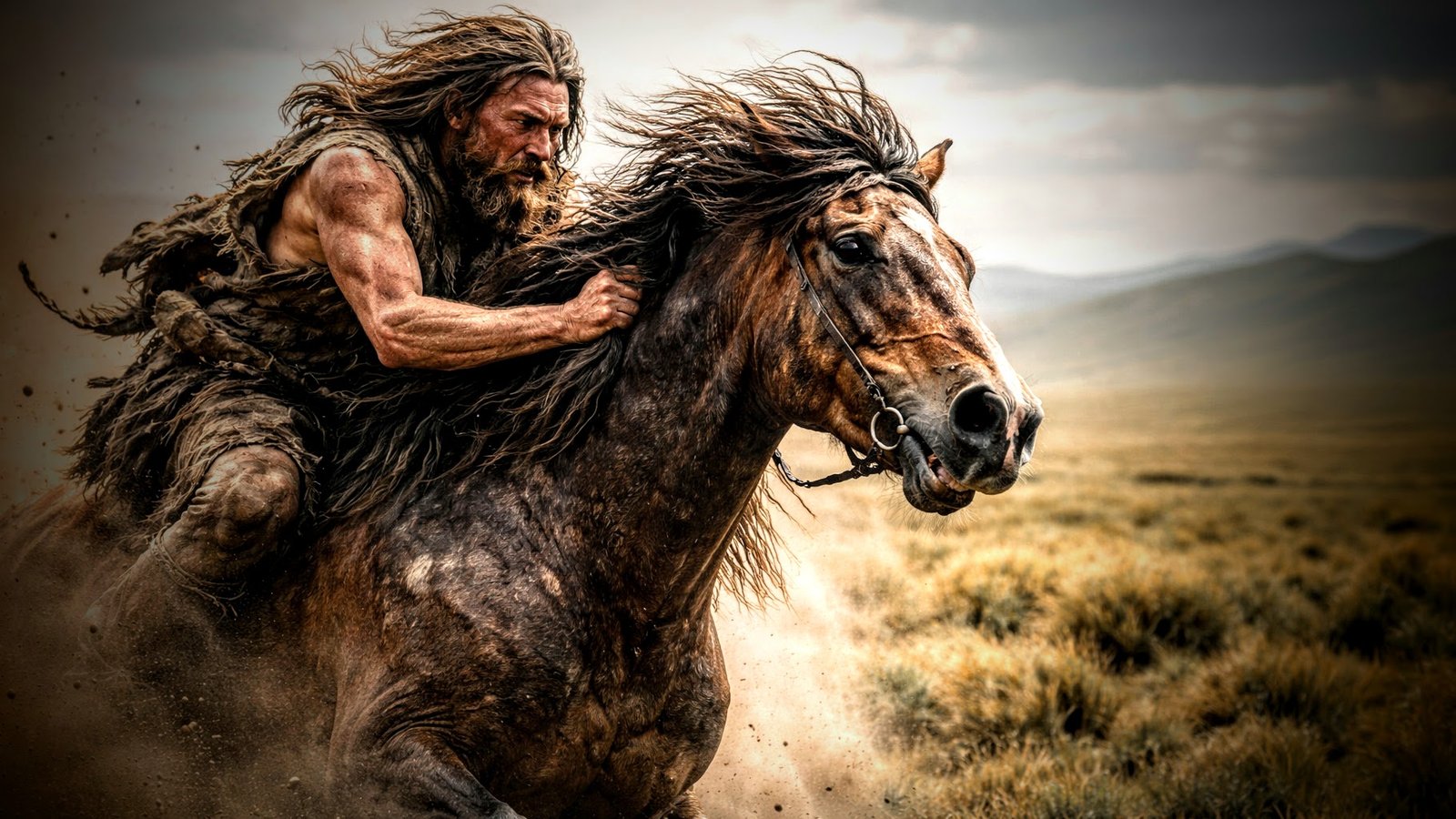
When were horses domesticated? For something that reshaped warfare, trade, and the very scale of human movement, you would expect a precise timestamp. Historians chased one for decades. Instead, the closer we look, the more the answer fractures. What once passed as a single turning point now looks like a series of experiments, misfires, and one runaway success story that rewrote the map.
At first glance, the modern answer looks reassuringly precise. Ancient DNA suggests that most horses alive today trace back to a population that emerged on the Western Eurasian steppes, around the lower Volga-Don region. This lineage, often labelled DOM2, expanded rapidly across Eurasia roughly around 2000 to 2200 BC. If you are looking for a headline date for when horses were domesticated, this is the closest thing we have to one. It feels definitive, almost elegant.
Except it is not the full story. Because once researchers started looking beyond that dominant lineage, a different pattern began to surface. Earlier genetic studies, especially those focusing on mitochondrial DNA, revealed something far less tidy. Domestic horses carry a remarkable diversity of maternal lines. In practical terms, that means humans were not relying on a small, controlled group of mares. They were repeatedly bringing new ones into their herds, from different regions, at different times.
So while the backbone of modern horses may point to a specific time and place, their family tree looks more like a collage. Many mothers, far fewer fathers. That imbalance tells its own story. Humans tended to control breeding through a limited number of stallions while incorporating mares more freely. Capture, trade, local taming, all of it likely played a role. Domestication, in that sense, was not a single decision. It was an ongoing process.
This is where things start to get interesting, because the older theory of multiple domestication events was not entirely wrong. It was simply incomplete. There may not have been several equally successful origins feeding directly into modern horses, but there were certainly multiple episodes of human interaction with horse populations. Some of those experiments faded. Others were absorbed into larger herds. One lineage, however, proved extraordinarily successful and spread at a scale that reshaped entire continents.
For a while, the leading candidate for the earliest domestication was the Botai culture in what is now northern Kazakhstan. Archaeologists found evidence that looked convincing: traces of corralling, chemical signatures linked to mare’s milk, and wear patterns on teeth that hinted at bridles. It seemed to answer the question of when horses were first domesticated, pushing the date back to around 3500 BC.
Then genetics complicated matters again. Ancient DNA revealed that Botai horses were not the primary ancestors of modern domestic horses. Instead, they are closely related to the lineage behind Przewalski’s horses, which were once thought to be truly wild but are now understood as feral descendants of managed animals. In other words, Botai may represent an early attempt at domestication that did not lead directly to the horses that later dominated Eurasia.
That realisation forced researchers to rethink the entire timeline. It also exposed a hidden assumption in the question itself. When were horses domesticated might sound like it refers to one moment, but in reality it compresses several different milestones into a single phrase. Managing horses, milking them, riding them, and breeding a lineage capable of rapid expansion are not necessarily the same thing, and they may not have happened at the same time or in the same place.
Recent studies have sharpened that distinction further. Evidence now suggests that the widespread use of horses for mobility across Eurasia accelerated only after the rise of the dominant DOM2 lineage, around 2200 BC. That is later than many earlier narratives assumed. It implies that even if humans were interacting with horses long before that, the version of the animal that transformed travel, warfare, and trade emerged later, and then spread with surprising speed.
So where does that leave the original question? When were horses domesticated depends on what you choose to measure. If you are asking about the ancestry of most modern horses, the answer points to the early second millennium BC on the Eurasian steppes. If you are asking when humans first began managing and exploiting horses, the timeline stretches further back, with Botai as one of the earliest known examples. If you are asking how the domestic horse as we recognise it today came into being, then you are looking at a long, uneven process rather than a single event.
That layered answer may feel slightly unsatisfying, but it reflects something more realistic about how human history tends to work. Innovations rarely appear fully formed. They emerge through experimentation, adaptation, and, occasionally, through one particularly successful version that outcompetes everything else.
Horses followed that pattern almost perfectly. There were early attempts, partial successes, and regional traditions that did not survive. There was also one lineage with the right combination of traits that allowed it to spread rapidly and dominate. Along the way, humans kept adding genetic diversity, especially through female lines, folding local horses into a broader and more resilient population.
In the end, the question of when horses were domesticated does have an answer, but not a simple one. Around 2000 to 2200 BC marks the rise of the lineage behind most modern horses. Yet the deeper story stretches back centuries earlier, shaped by multiple human choices, failed experiments, and quiet genetic exchanges that left their mark without ever making the history books. History prefers clean beginnings. Horses, it seems, never offered one.