Is Drought Becoming Britain’s New Summer Tradition?
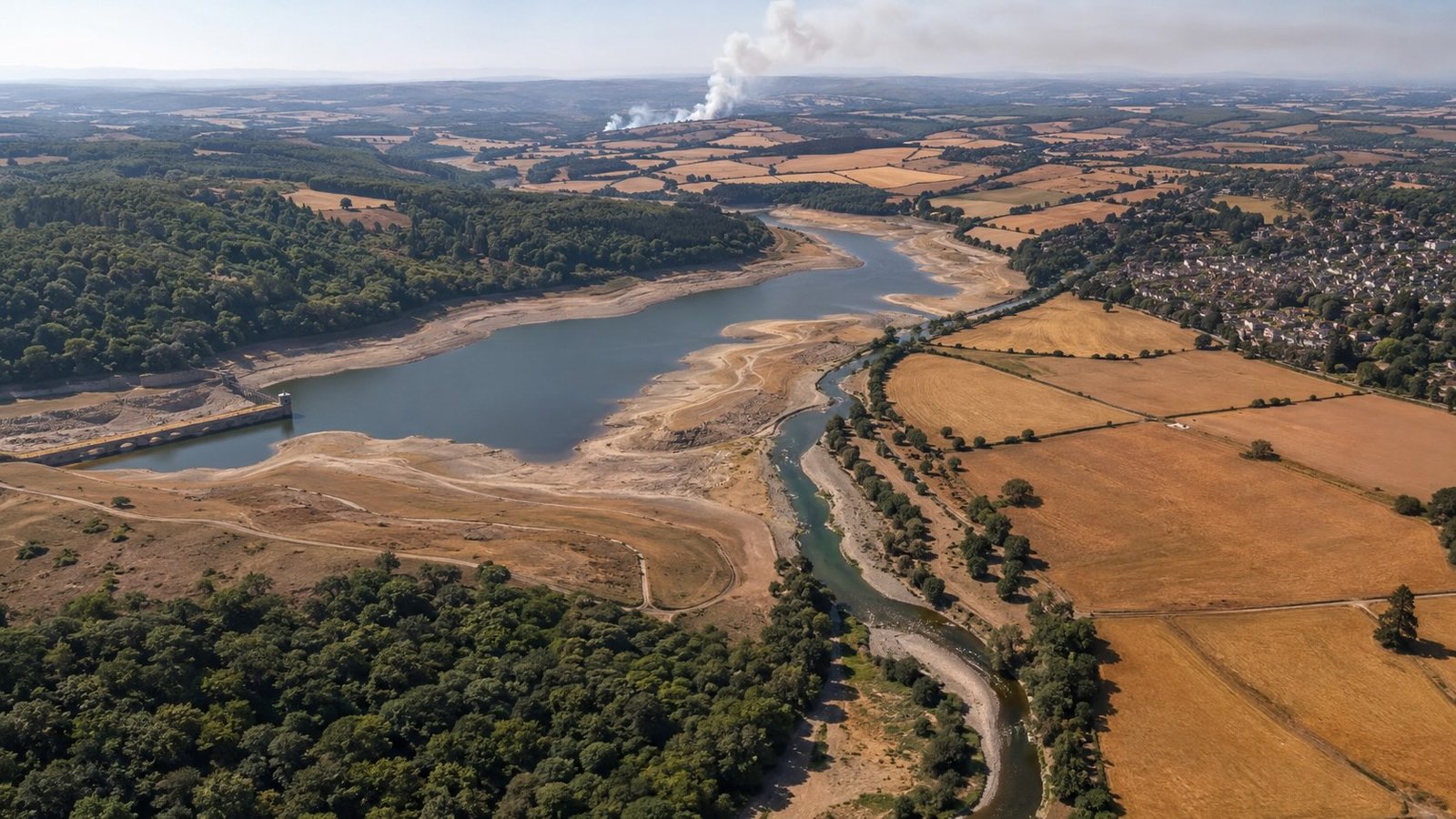
Britain has built much of its national identity around rain. It rains during picnics, bank holidays, cricket matches and almost any outdoor event organised with dangerous levels of optimism. Yet the supposedly soggy United Kingdom has a surprisingly long and serious history of drought. Some lasted a few months, others persisted for several years, and one dry period stretched, with interruptions, across roughly two decades.
So, how often does drought strike the UK? There is no neat answer such as “once every ten years”, because drought comes in several forms. Meteorological drought means unusually little rainfall. Agricultural drought begins when the soil becomes too dry for crops. Hydrological drought affects rivers, reservoirs and groundwater, while public water-supply drought develops when demand starts overtaking available resources.
These stages do not always occur together. A rainless month may turn lawns brown without threatening drinking water. Conversely, a dry winter can quietly lower groundwater levels and cause serious problems months later, even after summer showers have persuaded everyone that normal British service has resumed.
Reliable national rainfall records extend back into the nineteenth century. Met Office datasets include some variables from 1836, while researchers have reconstructed river flows for many catchments back to 1891. Newspapers, diaries, water-company records and agricultural reports allow historians to go further, identifying major dry episodes from at least the eighteenth century.
One remarkable episode, known as the Long Drought, ran from around 1890 to 1910. It was not twenty uninterrupted years of blazing sunshine. Instead, repeated periods of low river flow and water scarcity affected different regions at different times. Southern England and Wales often suffered together, although conditions varied considerably elsewhere.
Another serious drought developed in 1920 and 1921, particularly across England and South Wales. The 1940s then brought several dry periods, although their geography changed from year to year. By the time anyone claims that drought never happened before climate change, Britain’s historical water records have already raised a politely sceptical eyebrow.
The most famous modern episode remains 1975–76. A dry winter, spring and summer combined to reduce rivers, reservoirs and groundwater across much of the country. Hosepipe bans spread, crops suffered and some communities relied on standpipes. The government even appointed Denis Howell as Minister for Drought. Rain followed soon afterwards, prompting his reassignment as Minister for Floods, which may represent the most British ministerial career imaginable.
The 1976 drought still acts as the benchmark because it affected a large area and several parts of the water system simultaneously. Yet it was hardly the final warning. Britain experienced another prolonged drought between 1988 and 1993. Hosepipe bans returned, aquatic habitats disappeared temporarily and restrictions affected agricultural abstraction. Groundwater-fed areas of southern and eastern England became especially vulnerable.
Further significant episodes followed in 1995–96, 2004–06, 2010–12, 2018–19, 2022 and 2025. Then came 2026. On 29 July, the Environment Agency declared seven areas covering half of England to be in drought after extremely low rainfall and persistent heat created what officials described as a flash drought.
That phrase matters. Traditional British droughts often developed slowly after several dry seasons. Flash droughts can emerge within weeks because heat rapidly removes moisture from soil and vegetation. Rainfall remains important, but temperature increasingly decides how damaging its absence becomes.
Droughts therefore have no standard length. A meteorological drought may last several weeks. Soil moisture problems can continue for a season, while depleted aquifers may take months or several wet winters to recover. The 1975–76 event lasted roughly eighteen months in its principal form. The 1988–93 episode repeatedly faded and returned over about five years, while the Long Drought involved recurring shortages across twenty years.
Nor does the entire UK usually dry out at once. South-east England and East Anglia face the greatest structural pressure because they receive relatively modest rainfall, contain large populations and depend heavily on groundwater. Parts of Wales, Scotland and north-west England receive far more rain, although they can still experience local drought when weather patterns, reservoir design and demand align badly.
How serious is the problem? For most households, drought first appears as a hosepipe ban and the minor tragedy of an increasingly beige lawn. Behind that inconvenience lies a much wider chain of damage. Farmers lose yields and may harvest crops early. Livestock feed becomes scarcer, irrigation costs rise and fruit or vegetable growers compete for limited water.
Rivers suffer even before taps run dry. Low flows raise water temperatures and reduce oxygen, placing fish and invertebrates under pressure. Pollutants become less diluted, wetlands shrink and migrating fish struggle to pass shallow sections. Dry vegetation also increases wildfire risk, while reservoirs and canals may restrict recreation or navigation.
Businesses face interruptions too. Food production, energy generation, construction, data centres and manufacturing all need reliable water. Meanwhile, water companies must balance households, farms, industry and the environment, usually while explaining why millions of litres continue escaping through old pipes. The resulting debate combines climate science, infrastructure policy and the traditional British pastime of blaming somebody else.
Are droughts more common now than a century ago? The honest answer requires nuance. Britain experienced formidable droughts long before current warming, including events that lasted longer than most recent examples. Historical records do not show a simple, uninterrupted increase in the number of droughts across every UK region.
Nevertheless, the risk is changing. Higher temperatures increase evaporation from soil, plants and reservoirs. Consequently, the same shortage of rain can create more severe agricultural and ecological stress than it would have produced in a cooler climate. Heatwaves also overlap with drought more often, producing the particularly damaging hot-dry combination seen in 2022, 2025 and 2026.
Climate projections point towards wetter winters but drier summers on average, with the strongest summer drying expected in southern Britain. Rain may also fall in heavier bursts. That sounds contradictory, although British weather has never regarded contradiction as a design flaw. Intense rain can cause flooding and run rapidly into rivers without fully restoring dry soil or groundwater.
Population growth and water demand amplify the climatic trend. England now has many more residents, homes and water-dependent businesses than it did in 1921. Urban development covers absorbent ground, while ageing infrastructure leaks substantial quantities of treated water. Therefore, a drought of identical meteorological severity can create a larger practical crisis today.
The 2025 drought illustrates the new vulnerability. England experienced its driest spring since 1893, its hottest summer on record and widespread pressure on reservoirs, farms and wildlife. By late September, fifteen important reservoirs held less than half their capacity, and regulators had granted 46 drought permits to water companies.
One year later, half of England entered official drought status by late July. That sequence does not prove that every future summer will bring restrictions. It does show how quickly Britain can move between wet winters, flooding, heat and water shortage.
The country will not turn into a desert. That popular image confuses drought with permanent aridity. Britain will remain a generally wet nation, especially during winter and in western and northern regions. However, it may increasingly become a country with plenty of water at the wrong time, in the wrong place and occasionally descending from the sky all at once.
The practical response involves more than asking households to take shorter showers. Britain needs fewer leaks, stronger river protection, additional storage, better agricultural water management and buildings designed to use less mains water. Restoring wetlands and healthy soils can also slow runoff and retain moisture.
Drought has always belonged to British history, even if rain receives better publicity. What has changed is the temperature surrounding each dry spell, the demand placed on limited supplies and the speed with which conditions can deteriorate. A century ago, drought was an occasional but sometimes devastating visitor. Today, it looks increasingly like a familiar summer guest who knows where the spare key is kept.