Wildfires: When the Forest Fights Back
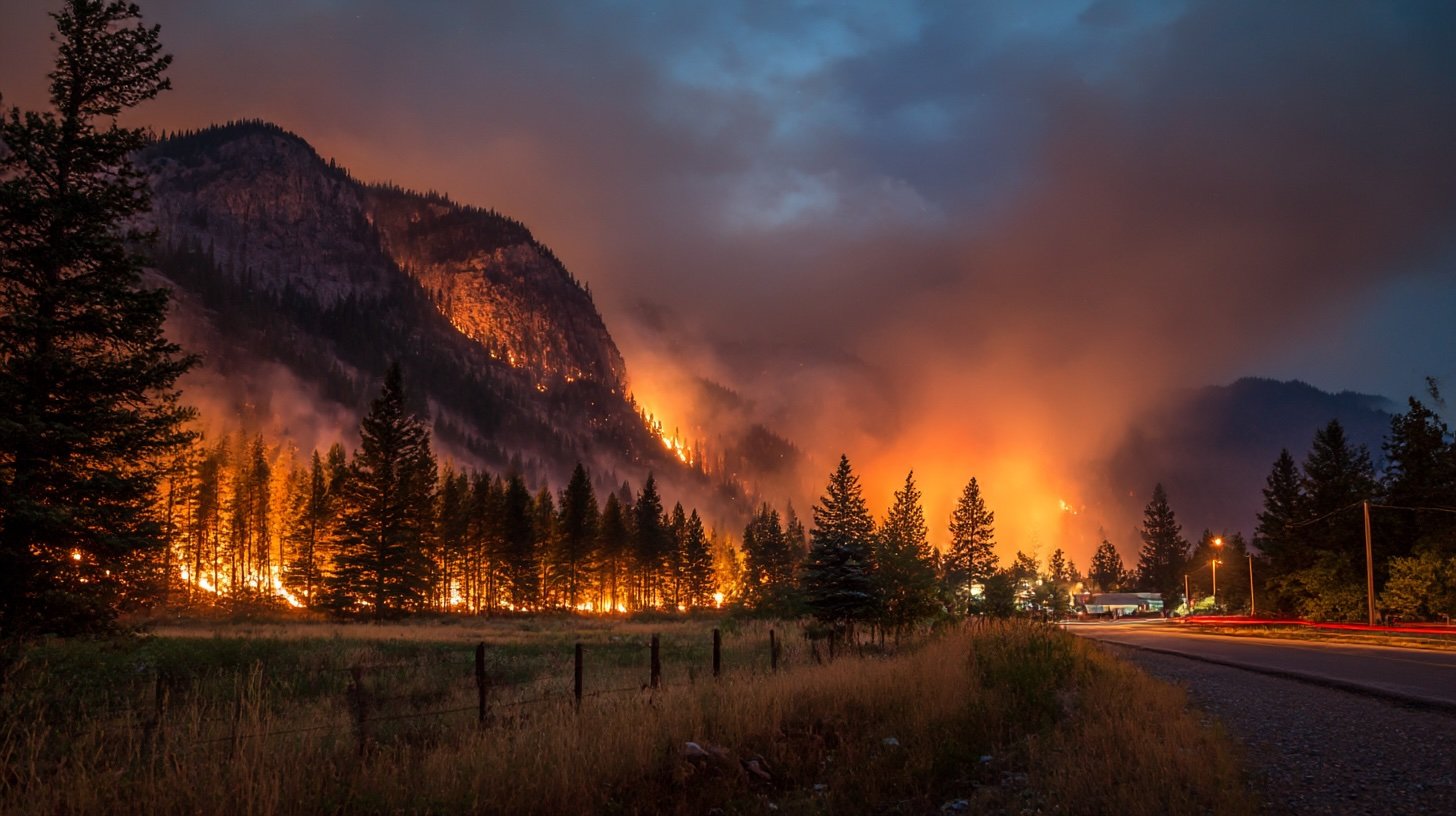
A forest fire often begins with something insultingly small. A spark jumps from a power line, lightning strikes a dry tree, or somebody decides that a disposable barbecue and a windy afternoon make excellent companions. Minutes later, flames race through the vegetation with the confidence of an army that has studied the terrain rather better than we have.
Then come the familiar images. Cars crawl along smoke-darkened roads. Families leave homes carrying bags packed in a panic. Aircraft drop water into a wall of orange, while television presenters describe the situation as “unprecedented” for what feels like the fifth consecutive summer. Unfortunately, the word has not lost its meaning. The precedents really are becoming less useful.
In July 2026, fires swept through Europe, North Africa and Canada at the same time. France and Spain faced enormous evacuations as extreme heat and strong winds pushed fires towards populated areas. Near Bordeaux, one vast blaze burned across an area reportedly several times the size of Paris and forced around 220,000 people to leave. More than 2,000 firefighters and over 20 aircraft joined the response, yet the fire became powerful enough to create its own thunderstorm.
That phenomenon has the suitably alarming name pyrocumulonimbus. An intense fire heats the air so rapidly that smoke and moisture rise high into the atmosphere, forming a storm cloud. The cloud can generate violent winds, lightning and fresh ignitions far beyond the original fire front. In other words, a large wildfire may stop behaving like a fire influenced by the weather and begin manufacturing weather of its own.
Firefighters in southwest France saw this happen while temperatures approached 40°C. Lightning from the fire cloud ignited additional blazes, while wind carried embers across roads and defensive lines. Europe once associated such events mainly with Australia, Canada and California. Now they have appeared over French vineyards, which feels like climate change displaying an unnecessary taste for symbolism.
Spain faced its fourth heatwave of the summer as fires threatened areas around Madrid, Ávila and Castellón. Greece and Turkey also fought major outbreaks, while England and Wales recorded numerous wildfires during unusually dry conditions. Half of England entered official drought conditions as reservoirs and rivers fell, proving that Britain can, in fact, run short of water despite having built an international reputation around rain.
Across the Atlantic, Canada had nearly 900 active wildfires by late July 2026, with more than 3.7 million hectares already burned. Evacuations particularly affected remote Indigenous communities, where residents often depend on a limited number of roads or aircraft. Smoke from northern Ontario pushed Toronto’s air quality towards the worst levels recorded among major world cities and drifted south towards the United States.
Smoke deserves more attention than it receives. Flames destroy visibly, while smoke conducts its business from a distance. Fine particles penetrate deep into the lungs and can enter the bloodstream, aggravating asthma, heart disease and other illnesses. A person may live hundreds of miles from a burning forest yet still breathe part of it over breakfast.
We call wildfires natural disasters, which sounds reassuringly external. Nature misbehaved; humans suffered; helicopters appeared. Yet people cause most wildfires in many inhabited regions, either accidentally or deliberately. Meanwhile, human choices increasingly create the conditions that turn a small ignition into an inferno.
We warm the climate, abandon farmland, allow vegetation to accumulate, build homes among combustible trees and then appear surprised when the landscape develops opinions. Climate change does not personally wander into the forest carrying matches. It does, however, produce hotter air, drier vegetation, longer droughts and extended fire seasons. Once somebody supplies the spark, the surroundings stand ready to cooperate.
The latest science describes another uncomfortable pattern. Extreme wildfire activity has more than doubled worldwide over roughly two decades, with some of the strongest increases in western North America’s conifer forests and the boreal forests of Canada and Russia. These fires have grown more frequent, larger and more intense, even though the total area burned globally has not followed the same simple upward line.
That apparent contradiction causes confusion. Global burned area has declined partly because less grassland and savanna now burns in Africa and parts of Asia. However, forest fires in other regions have become more severe. The world can therefore burn fewer square kilometres overall while producing more destructive fires, more dangerous smoke and larger carbon emissions.
During the March 2024 to February 2025 fire season, wildfires released about 2.2 billion tonnes of carbon, nine per cent above the recent average and the sixth-highest total recorded since 2003. Yet the area burned remained below average. Fires in South American forests and wetlands, Canada’s boreal zone and Southern California helped drive emissions upwards because carbon-rich forests and peat release far more stored carbon than many frequently burned grasslands.
A hectare of grassland and a hectare of mature forest may look identical inside a spreadsheet, but they do not contain identical amounts of fuel or carbon. This helps explain why burned-area statistics can create false reassurance. Counting hectares without considering what burned resembles assessing a burglary by measuring the floor space of the room.
Fire itself, however, is not the villain. Many landscapes evolved alongside periodic burning. Heat opens the cones of some pine species, ash returns nutrients to the soil, and low-intensity flames clear dense undergrowth. Certain ecosystems need fire in much the same way gardens need pruning.
For much of the twentieth century, authorities treated almost every fire as an enemy requiring immediate defeat. The policy seemed sensible. Extinguish a small fire before it becomes a large one. Unfortunately, decades of successful suppression allowed dead wood, leaves and shrubs to accumulate in many landscapes. When fire eventually escaped, it found an impressive buffet waiting.
The debate often deteriorates into a contest between climate change and forest management. One side blames global warming, while another points towards neglected woodland and rural depopulation. Both sides occasionally behave as though two causes cannot operate at the same time.
In reality, hotter and drier weather increases the chance of extreme fire behaviour, while accumulated vegetation gives the flames more energy. Wet winters can make matters worse by encouraging rapid plant growth. When an exceptionally hot summer follows, that new vegetation dries into fuel. Scientists call this climate whiplash. The landscape moves from vigorous growth to explosive flammability with indecent speed.
Southern Europe faces an additional problem. Rural populations have declined, traditional grazing has diminished and former farmland has reverted to scrub. These changes may look like a welcome return of nature, but they can also create continuous corridors of combustible vegetation. A flame no longer meets a cultivated field, grazed pasture or regularly cleared orchard. It simply continues towards the next village.
Europe’s emergency response system now struggles with fires occurring simultaneously across several countries. During the July 2026 crisis, the European Union sent aircraft, helicopters and ground teams to support France and Spain. Officials warned that demand was pushing available resources towards their limits. Aircraft cannot occupy two burning regions at once, and trained pilots do not emerge from storage cupboards when the temperature rises.
The European Commission had already described 2025 as Europe’s worst wildfire season since records began. In March 2026, it launched a broader strategy covering prevention, preparedness, emergency response and recovery. The shift matters because governments have traditionally spent far more political energy fighting visible flames than reducing risk before the fire begins.
Firefighting aircraft remain valuable, but popular culture gives them almost magical abilities. A water bomber passing through orange smoke creates a magnificent photograph. However, water evaporates, wind scatters it and dense forest canopy prevents much of it from reaching the flames below. Smoke, turbulence, darkness and extreme heat can also ground aircraft precisely when people need them most.
Under severe conditions, firefighters may not control the blaze at all. Instead, they defend evacuation routes, protect selected buildings and wait for the weather to become less hostile. Very large fires can leap across roads and rivers, throw embers kilometres ahead and change direction unexpectedly. At that point, “fighting the fire” becomes a heroic phrase for managing a situation that has temporarily exceeded human command.
Technology promises to restore some of that lost control. Satellites now monitor enormous territories for heat anomalies. Networks of cameras search continuously for thin columns of smoke. Artificial intelligence compares images, weather, vegetation and terrain, then ranks which alerts deserve human attention. Drones can map fire fronts through thick smoke without risking a pilot’s life.
Researchers have also begun combining satellite imagery with language-based artificial intelligence. One experimental 2026 system identifies small smoke plumes or fire zones and then converts the observations into risk assessments and response priorities. Other researchers are testing models that predict possible ignitions and simulate where helicopters might achieve the greatest effect. These systems remain experimental, but they point towards firefighting that begins with prediction rather than sirens.
Canadian companies are exploring even more ambitious ideas. FireSwarm Solutions, for example, is developing heavy-lift drone swarms intended to detect, map and suppress fires in remote areas. The concept imagines autonomous aircraft carrying water or equipment into terrain that conventional crews cannot safely reach. Whether such fleets can operate reliably in smoke, heat and violent winds at meaningful scale remains the expensive question.
Artificial intelligence also comes with a useful warning label. A July 2026 study tested several foundation models for forecasting dangerous wildfire smoke in California. The fashionable large models did not consistently outperform older, purpose-trained systems. A specialised recurrent model predicted extreme pollution more accurately than the larger general-purpose alternatives. Apparently, even algorithms occasionally need reminding that confidence and competence belong in separate columns.
No algorithm can extinguish a fire by producing an attractive dashboard. Detection means little without trained crews, reliable communications, accessible roads, available equipment and officials empowered to act quickly. A camera may spot smoke within minutes, but that achievement becomes academic when the nearest crew sits three hours away.
This explains renewed interest in prescribed burning. Specialists deliberately burn vegetation under carefully chosen conditions, reducing the fuel available for a future wildfire. Indigenous communities used forms of cultural burning for generations, creating mosaics of vegetation at different stages of growth while protecting settlements, food plants and hunting areas.
Modern authorities often restricted those practices because all fire appeared dangerous. They are now rediscovering the awkward truth that the safest landscape may not be the one that never burns. Instead, it may be the one that burns regularly, gently and under supervision.
Controlled burning remains controversial because it still produces smoke and occasionally escapes. Residents rarely applaud when officials deliberately light vegetation near their homes. Mechanical clearing can provide an alternative, although it costs more and becomes difficult on steep or inaccessible land. The practical choice often lies not between fire and no fire, but between smaller planned fires and enormous unplanned ones.
Building design also matters. Embers, rather than a solid wall of flame, ignite many homes. They enter roof spaces, land in dry gutters and gather beneath wooden decking. Fire-resistant roofing, screened vents, cleared gutters and a carefully maintained zone around a property can make an enormous difference.
Yet personal responsibility cannot replace public policy. Governments continue approving development in highly flammable landscapes, partly because people enjoy forest views and partly because councils enjoy property revenue. Insurers then raise prices or withdraw cover, turning environmental risk into a financial and housing crisis. The forest does not read the planning application, but it eventually comments on it.
Wildfires also carry cultural and economic losses that satellite maps struggle to express. The 2026 French fires threatened vineyards, campsites and rural businesses around Bordeaux. Farmers watched smoke settle over crops, residents returned to damaged homes and tourism operators faced cancellations during their busiest season. Two French firefighters died when flames engulfed their vehicle in Gironde, a reminder that every dramatic aerial image conceals people working on the ground.
The forest is not fighting back in any conscious sense. It holds no meetings, issues no demands and bears no personal grudge against estate agents. Still, the phrase captures something important. Natural systems respond to accumulated pressure, and they do not negotiate with property prices, political calendars or our faith in technological progress.
We will not eliminate wildfires, nor should we remove fire from every ecosystem. A realistic strategy combines lower emissions, better land management, cultural knowledge, resilient buildings, rapid detection and properly funded emergency services. It also requires governments to spend money before the smoke appears, a concept that traditionally makes politics strangely uncomfortable.
Perhaps the forest is not fighting us after all. Perhaps it is exposing the accumulated consequences of choices we preferred not to notice. Fire simply delivers the message in unusually bright lettering.