Kalanchoe: The Cheerful Succulent with a Slightly Sinister Side
Kalanchoe looks almost suspiciously perfect. Its glossy leaves seem freshly polished, while dense clusters of red, pink, orange, yellow or white flowers create the impression of a plant designed to flatter even the least attentive owner. Compact, affordable and remarkably tolerant of neglect, it often looks too immaculate to be entirely real.
It is, however, very much alive, although it has developed an impressive ability to cope without us. Kalanchoe belongs to the Crassulaceae family, the broad botanical clan that also includes jade plants and stonecrops. The genus contains numerous succulent species, many originating in Madagascar, with others native to parts of Africa and Asia. They range from neat flowering pot plants to silvery shrubs, furry-leaved curiosities and reproductive fanatics that scatter offspring across the soil like botanical confetti.
The kalanchoe most people recognise comes from Kalanchoe blossfeldiana. Garden centres sell it as flaming Katy, florist kalanchoe or Christmas kalanchoe, although it has no particular obligation to flower at Christmas. Its wild ancestor comes from north-eastern Madagascar, where seasonally dry conditions rewarded plants that could store water rather than expect regular refreshments.
Those thick leaves work as reservoirs. Instead of collapsing whenever the rain disappears, the plant holds moisture in its tissues and waits. It also uses crassulacean acid metabolism, usually shortened to CAM, a water-saving form of photosynthesis. The plant opens its pores mainly at night, when temperatures fall and less moisture escapes. In effect, kalanchoe conducts much of its breathing after dark, which feels appropriately mysterious for something sitting beside a supermarket till.
This thriftiness explains both its success and the most common way people kill it. Owners see a flowering plant and lovingly water it every few days. The roots then sit in damp compost, begin to rot and quietly resign. Kalanchoe usually copes better with a forgotten watering than with an enthusiastic daily shower.
Let the upper layer of compost dry before watering again, then soak the soil thoroughly and allow the excess to drain away. A pot with drainage holes matters more than a fashionable ceramic container that behaves like a small indoor pond. During a British winter, growth slows and the plant generally needs even less water. The exact schedule depends on temperature, light, pot size and compost, so checking the soil makes more sense than obeying a rigid calendar.
Bright light keeps kalanchoe compact and encourages flowering. A sunny windowsill often works well in the UK, particularly outside the strongest part of summer. However, a plant moved suddenly from a dim shop into fierce afternoon sunshine may scorch. Gradual adjustment saves it from receiving the horticultural equivalent of an unexpected week in Ibiza without sunscreen.
The flowers last unusually well, which helped turn Kalanchoe blossfeldiana into a major commercial houseplant. Modern cultivars include double-flowered types, often sold under names such as Calandiva, whose blooms resemble tiny roses. Growers can also manipulate flowering because the plant responds to day length. Long, uninterrupted nights encourage bud formation, allowing nurseries to schedule colourful displays throughout the year.
Recreating that performance at home takes more patience. After flowering, remove the faded blooms, keep the plant in bright light and reduce watering slightly. To stimulate new buds, give it several weeks with roughly fourteen hours of uninterrupted darkness each night. Even a lamp switched on late in the evening may disturb the process. One could say the plant requires beauty sleep and takes the phrase rather literally.
Not every kalanchoe behaves like a polite flowering ornament. Kalanchoe tomentosa, commonly called panda plant, grows velvety grey-green leaves edged with brown. The hairs help protect it from intense sunlight and reduce water loss, while also making it look like a succulent wearing a winter coat. Indoor plants rarely flower, yet nobody seems particularly disappointed because the foliage already provides the entertainment.
Kalanchoe luciae, known as the paddle plant, produces broad, flat leaves that can turn vivid red around the edges in strong light. Sellers sometimes confuse it with the similar Kalanchoe thyrsiflora. The distinction matters to botanists, although both remain perfectly capable of looking like stacks of ceramic plates designed by someone in a very experimental mood.
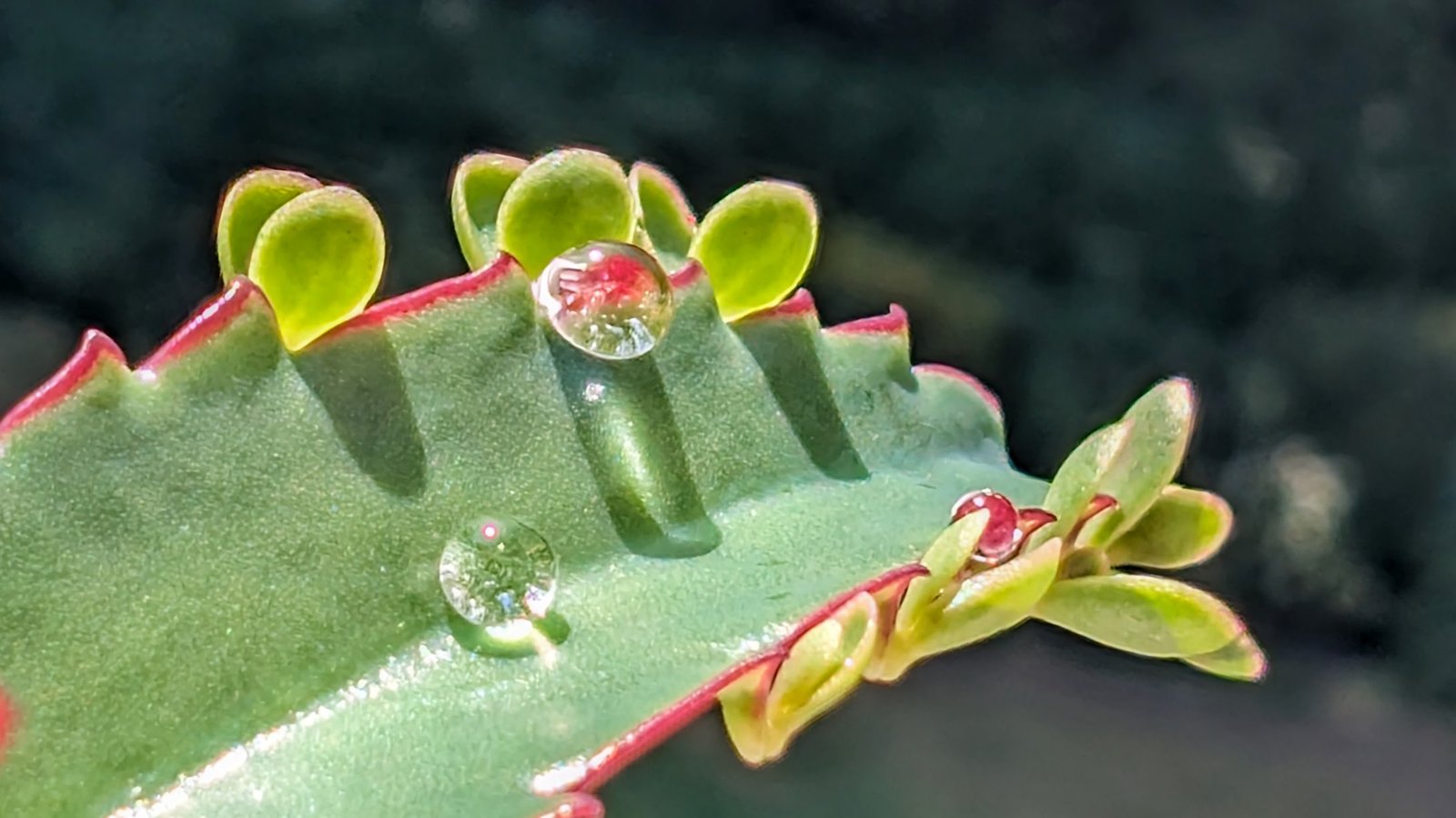
Then come the mothers. Species such as Kalanchoe daigremontiana and Kalanchoe delagoensis produce tiny plantlets along their leaf margins. These miniature copies develop roots while still attached, drop onto nearby soil and begin growing with almost indecent confidence. Their names include mother of thousands and mother of millions, both of which sound exaggerated until one spends several months removing plantlets from every neighbouring pot.
This remarkable reproduction represents vivipary: the parent produces young plants rather than relying only on seeds. It looks charming on a windowsill, but the same ability creates environmental problems in warm regions. Several plantlet-producing kalanchoes have escaped cultivation and become invasive. In parts of Australia and other suitable climates, they spread through grazing land and compete with native vegetation.
Their expansion carries a darker risk because kalanchoes contain cardiac glycosides, including compounds known as bufadienolides. These chemicals can disrupt heart function when ingested. Poisoning has affected livestock in regions where invasive plants enter pastures, and the flowers may contain higher concentrations than the leaves or stems.
Cats, dogs and curious children should not have access to kalanchoe. Eating it can cause vomiting, diarrhoea and, in more serious cases, abnormal heart rhythms. The plant does not release sinister fumes or attack anyone from across the room. It simply should not become a snack, regardless of how fresh and salad-like the leaves may appear.
This toxicity makes kalanchoe’s medicinal reputation especially complicated. Various cultures have used species such as Kalanchoe pinnata in traditional remedies for wounds, inflammation, infections, kidney stones and other conditions. Laboratory research has identified compounds with potentially anti-inflammatory, antimicrobial, antioxidant and anticancer activity. Researchers continue to investigate them because biologically active plants can provide valuable leads for new medicines.
However, activity in a laboratory dish does not prove that chewing a leaf treats cancer, diabetes or any other serious illness. Much of the available research involves cells, isolated compounds or animals rather than robust clinical trials in people. Dosage, preparation, species identification and interactions with medicines also matter. A plant can contain promising chemicals and dangerous chemicals at the same time; nature has never signed a contract promising simplicity.
Online claims sometimes present kalanchoe as a forbidden cancer cure ignored by doctors or pharmaceutical companies. This story offers drama, villains and a convenient houseplant, but it outruns the evidence. Scientists have found interesting possibilities, not a proven home treatment. Consuming homemade kalanchoe preparations can expose people to cardiotoxic compounds with no reliable guarantee of benefit.
The sensible response does not require dismissing traditional knowledge. Traditional uses often guide scientific investigation and can reveal valuable therapeutic possibilities. Nevertheless, respecting that knowledge means studying it carefully, identifying active substances and establishing safe doses. It does not mean treating every leaf on the kitchen windowsill as an unlicensed pharmacy.
Despite all this botanical drama, kalanchoe remains an excellent houseplant. Give it bright light, sharply draining compost and less water than your caring instincts recommend. Remove dead flowers, protect it from frost and watch for mealybugs hiding around stems and leaf joints. Repot only when necessary, because a slightly snug container rarely troubles it.
In return, the plant offers months of colour, strangely sculptural leaves and a useful lesson in restraint. It can survive neglect, reproduce without permission, invade entire landscapes and inspire medical rumours, all while looking like an innocent present from the local garden centre. Few houseplants manage such a complicated private life.