Extinction usually sounds rather final. A species disappears, scientists search for it, nobody finds it, and eventually someone reaches for the biological equivalent of a black armband. Yet nature occasionally treats these administrative arrangements with magnificent disrespect. On Anglesey, a small brown insect called Limnephilus pati has provided exactly that sort of embarrassment.
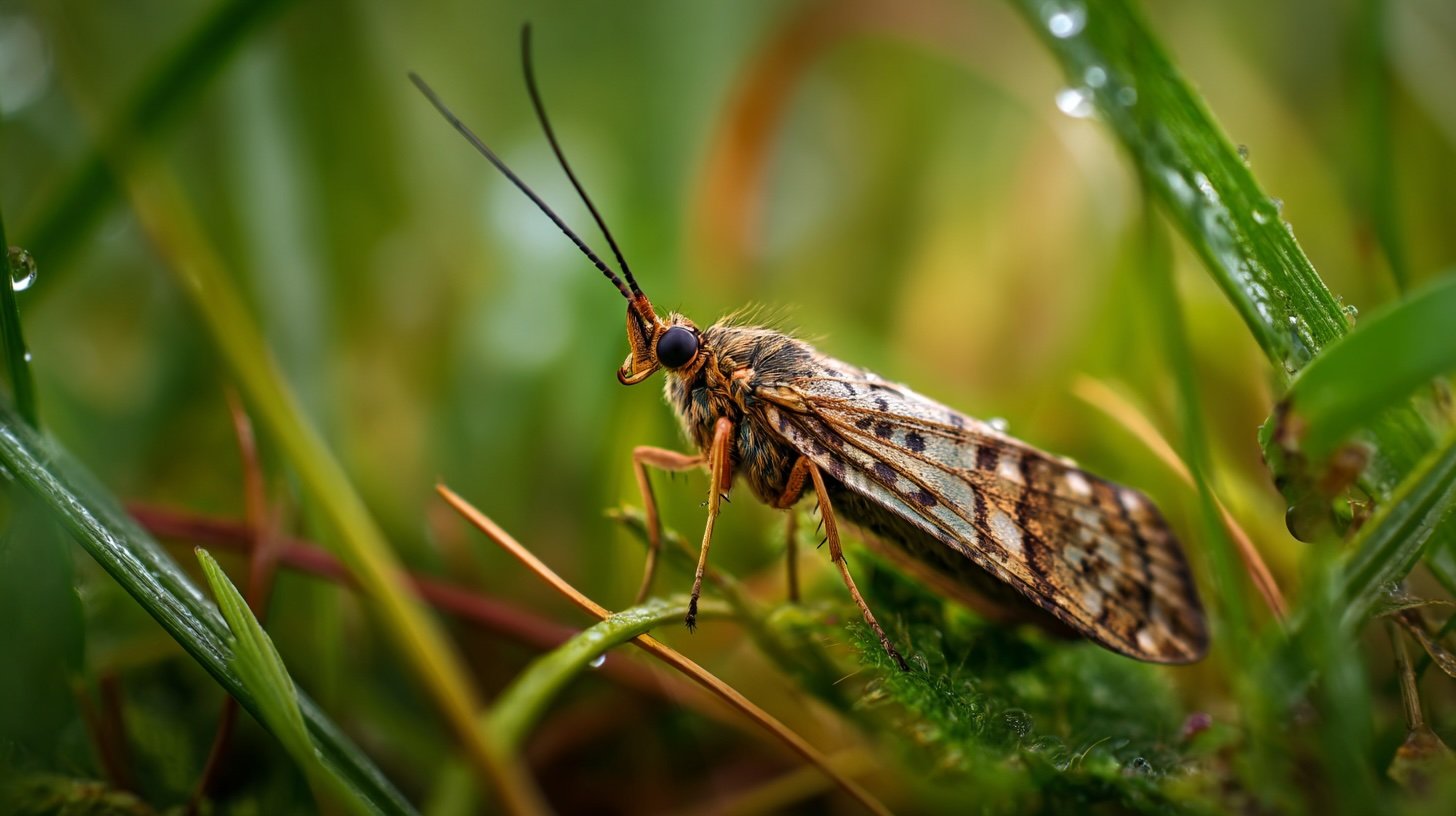
The caddisfly appeared at Cors Goch, a remarkable wetland nature reserve near Llanbedrgoch. Surveyors found it during work by Natur am Byth, Wales’s species recovery programme, working with the RSPB and North Wales Wildlife Trust. Better still, they were not actually looking for it. Their light traps had been set during July and August to search for another rare caddisfly, Limnephilus tauricus. Instead, the traps produced something even more extraordinary. There sat Limnephilus pati, an insect once considered lost from Great Britain.
Strictly speaking, we need to untangle a slightly confusing extinction story. The species was classified as “Presumed Extinct” in Great Britain in a review published in 2016. That did not mean somebody saw the last one expire that year. The classification reflected the extraordinary absence of modern British records. Old specimens from England dated mainly from the nineteenth and early twentieth centuries, with Suffolk material dating to 1915. Then the supposedly absent insect began upsetting the paperwork.
In 2020, naturalist Robin Sutton caught a male Limnephilus pati in a light trap at Eochar on South Uist in the Outer Hebrides. Rather wonderfully, the trap stood in his garden. Imagine discovering that an insect missing from Britain for roughly a century has been spending the evening near your house. Suddenly, a back garden becomes an internationally interesting piece of entomological real estate. Another population emerged at Market Weston Fen in Suffolk. Then came Cors Goch. The Anglesey find made it one of only three known British locations for the species and the only known location in Wales.
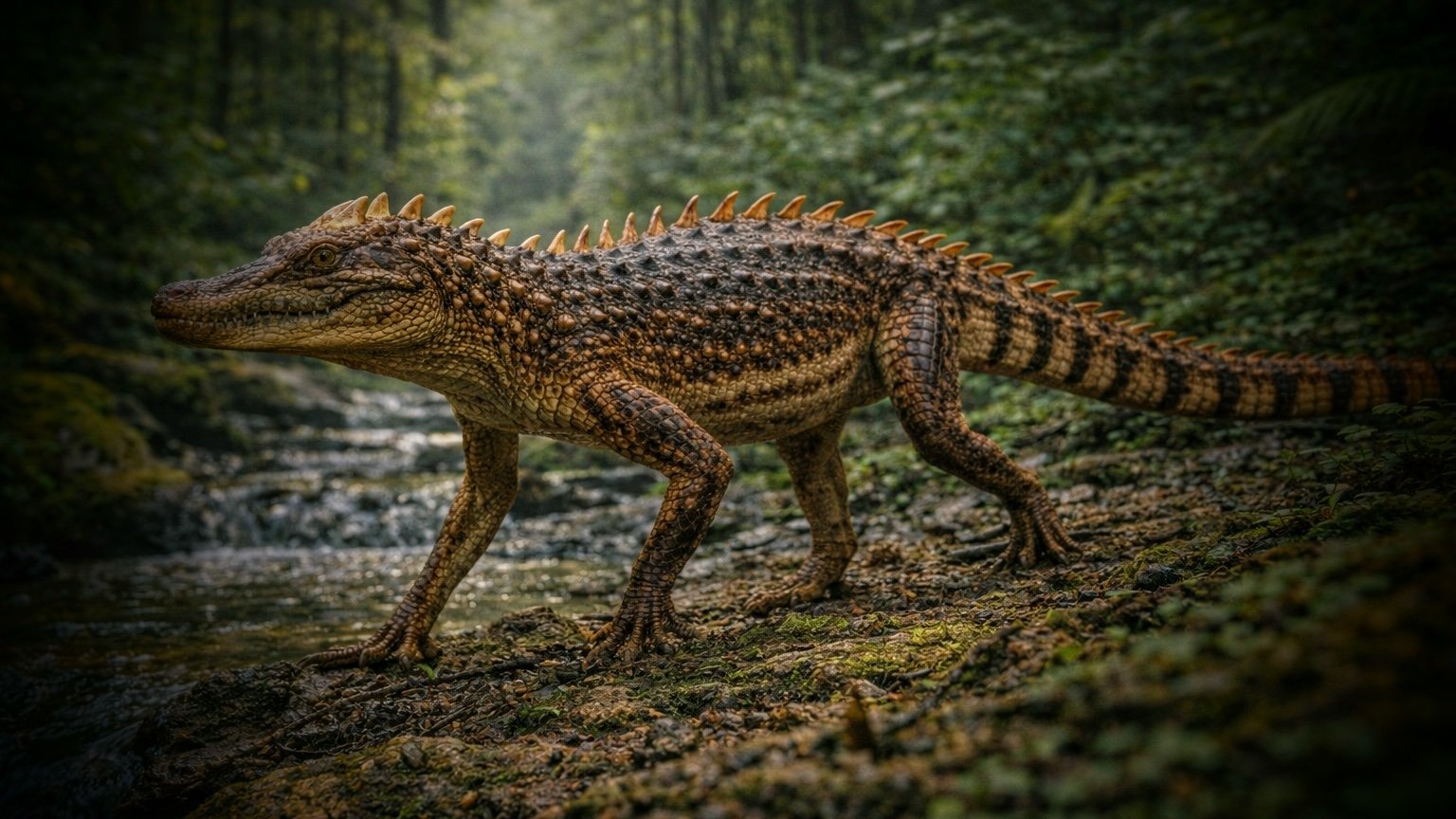
There is even an informal scientific expression for organisms that apparently disappear and then turn up again: a Lazarus taxon. The name comes, naturally enough, from the biblical Lazarus, who returned from the dead. It sounds wonderfully dramatic for a small brown insect sitting quietly on a Welsh reed, although Limnephilus pati never actually died out. We simply stopped finding it.
The celebrity of this peculiar club is the coelacanth. Scientists knew the fish from fossils and believed its lineage had disappeared around the end of the Cretaceous period. Then, in 1938, museum curator Marjorie Courtenay-Latimer examined an unusual fish landed at East London in South Africa. It was a living coelacanth. An animal associated with an apparently vanished ancient lineage had inconveniently continued swimming around while humans confidently discussed its extinction.
The comparison with Limnephilus pati is obviously imperfect. The caddisfly did not return after tens of millions of years, and nobody is likely to build a natural-history blockbuster around a small brown insect from Anglesey. Yet the underlying lesson is remarkably similar. “We haven’t found it” and “it no longer exists” are not always the same statement.
The setting makes sense. Cors Goch sits in a shallow valley fed by lime-rich water. Peat reaches more than three metres deep in places, while reedbeds, fen, open water and patches of acidic heath create an unusually complicated ecological mosaic. Orchids flourish there. So do dragonflies, rare plants, amphibians, birds and a considerable assortment of insects that most visitors will never notice.
For Limnephilus pati, the chemistry matters. The species appears closely associated with exceptionally clean, calcium-rich wetlands. Evidence from its known habitats points towards shallow, slow-moving, well-vegetated water. Its aquatic larvae live among dense vegetation and roots. That makes an apparently obscure insect rather useful: finding it tells us something about the place where it lives.
Caddisflies themselves deserve better publicity. Britain has roughly 200 species, yet most people could probably walk past one without giving it a second glance. Adults can resemble small, slightly dishevelled moths. Their wings carry hairs rather than the scales characteristic of moths, which helps explain their scientific order name, Trichoptera: essentially “hairy wings”. Their childhood is considerably more theatrical.
Caddisfly larvae live in water, and many species construct portable protective cases. They assemble them from whatever suitable materials surround them: grains of sand, fragments of stems, seeds and other tiny pieces of the landscape. The result can resemble a miniature piece of improvised architecture. The larva carries its home around while remaining wonderfully inconspicuous.
That camouflage continues into adulthood. Brown caddisflies disappear visually against vegetation with impressive efficiency. For a creature whose survival strategy involves not attracting attention, Limnephilus pati has become surprisingly good at making news.
Its scientific history contains another delightful complication. James P. O’Connor formally described the species only in 1980 after examining museum material. Some of the insects themselves were much older. The earliest specimen associated with the species had been collected in County Donegal in 1894. O’Connor named pati after his late father.
So the animal effectively spent decades sitting in collections before science properly recognised what it was. That provides a useful warning about the phrase “new species”. Sometimes scientists discover something genuinely unfamiliar in a rainforest. Sometimes the creature has already been dead in a drawer for generations, patiently waiting for somebody to look at it properly.
Its wider European distribution remains remarkably scattered. Records have emerged from Ireland, Denmark, Germany, Poland and France, while a 2020 specimen provided Switzerland with its first known record. In Poland, researchers found it in a mineral-rich, groundwater-fed fen. In Ireland, records have included calcareous fen habitat. Again and again, water chemistry and specialised wetlands appear in the story.
This also explains why the Anglesey find carries more weight than a charming tale about a rare bug coming back from the dead. Fens have suffered heavily from drainage, nutrient enrichment, agricultural intensification and changes in water levels. A wetland does not need a bulldozer to destroy it. Alter its hydrology or allow too many nutrients to enter the water and its ecology can change dramatically.
Climate adds another uncomfortable variable. A creature dependent on persistently wet conditions has limited enthusiasm for prolonged drying. Protecting a species such as Limnephilus pati therefore means protecting processes rather than merely drawing a boundary around a reserve. Water must remain clean. Springs must continue flowing. The right vegetation must survive. Surrounding land management matters too.
There is also a larger lesson about extinction itself. “Presumed extinct” does not mean “definitely extinct”. Scientists cannot search every ditch, fen, lochan and reedbed continuously. Tiny insects complicate matters further because few people recognise them and fewer still systematically survey them. Absence of records can mean genuine disappearance, but occasionally it means nobody happened to look in precisely the right place at precisely the right time.
That should not encourage the comforting myth that extinction is usually reversible. It is not. Species genuinely disappear, and rediscoveries remain newsworthy precisely because they are unusual. Nor does finding Limnephilus pati mean its future suddenly looks secure. Three known British locations constitute survival, not abundance.
Still, there is something wonderfully ironic about its story. Humans classified it, lost it, presumed it extinct and then encountered it again while searching for something else. The caddisfly contributed nothing to this drama. It simply continued being a caddisfly.
Perhaps that is the most appealing part of the Cors Goch story. Conservation often focuses on charismatic animals large enough to stare soulfully from fundraising posters. Yet an ecosystem also depends on creatures that are brown, tiny, obscure and almost impossible to pronounce over dinner.
Somewhere among the reeds of Anglesey, Limnephilus pati carries on regardless. It does not roar, migrate across the Serengeti or pose conveniently for photographers. For part of its life, it hides underwater inside a case decorated with bits of its surroundings. And for an insect once filed under “Presumed Extinct”, staying unnoticed may have been its greatest trick.