There is a comfortable psychological arrangement between humans and insects. We are large; they are small. They occupy cracks, leaves and inconvenient corners of bathrooms, while we occupy houses and generally assume the size advantage belongs to us. Nature, however, never signed this agreement. In the tropical forests of China, South America, Papua New Guinea and New Zealand, insects exist that can stretch longer than your forearm, spread wings almost as wide as a school ruler and weigh enough to make the word “bug” seem rather inadequate. Choosing the five largest is surprisingly difficult, though, because nature has neglected to establish an official measuring system. Length, weight, wingspan and wing area produce different champions. So instead of forcing them onto one podium, here are five living giants that dominate their particular departments of insect absurdity.
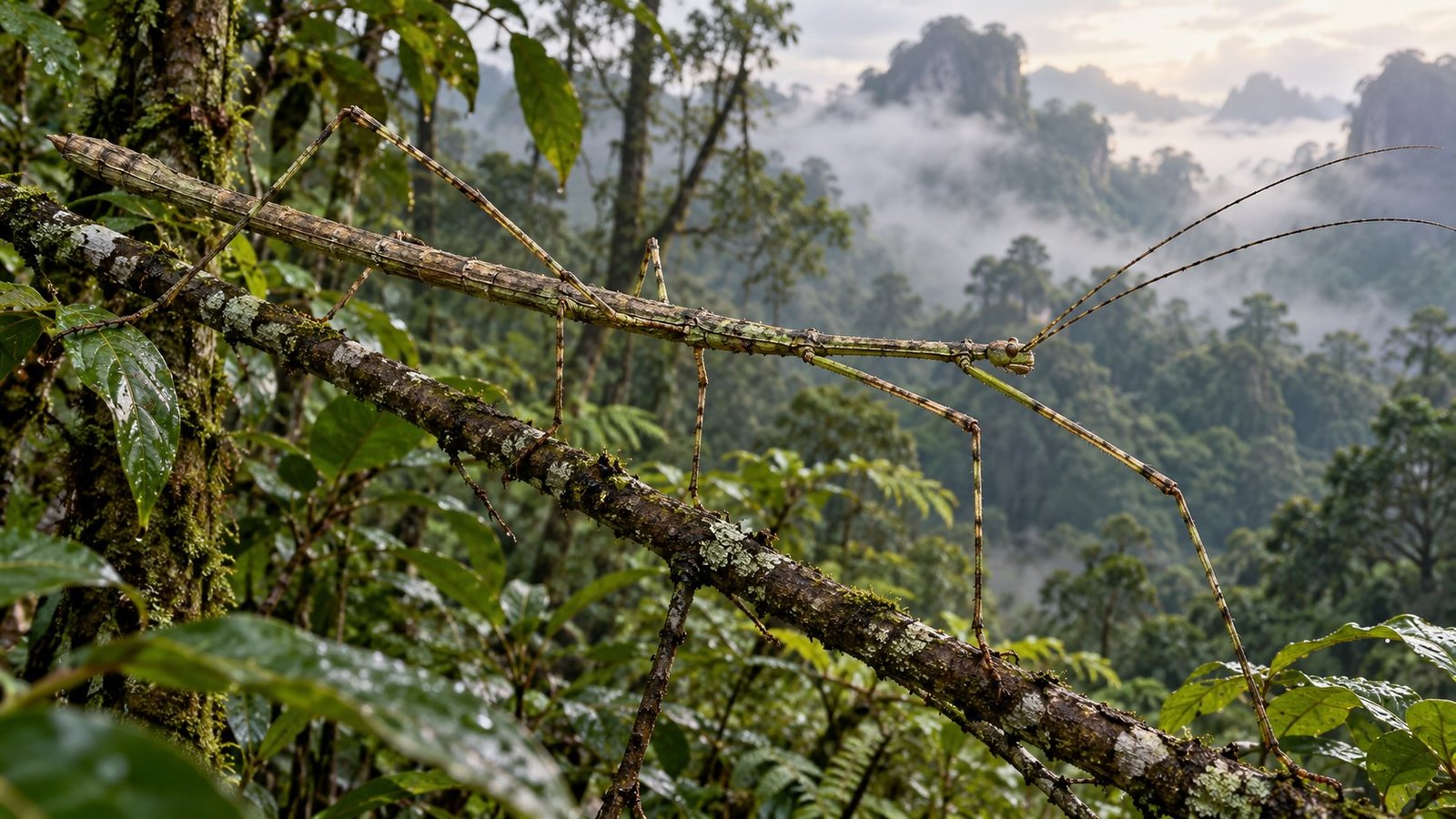
The Chinese giant stick insect, Phryganistria chinensis, makes perhaps the most dramatic opening. A captive-bred specimen at the Insect Museum of West China in Chengdu measured an extraordinary 64 centimetres with its legs fully extended. Its body alone measured about 38 centimetres. Imagine discovering what appears to be a perfectly respectable twig, only for the twig to decide that it has somewhere else to be.
Stick insects evolved precisely around this visual deception. Their long bodies, angular legs and slow movements make them extraordinarily difficult to distinguish from vegetation. The record-breaking Chinese species therefore combines two qualities that should logically contradict each other: it is enormous and remarkably good at disappearing. The species came to scientific attention only recently, after entomologist Zhao Li found a huge female in Guangxi in 2014. That individual measured 62.4 centimetres, but one of her captive-bred offspring eventually surpassed her. Apparently even insect world records suffer from generational competition.
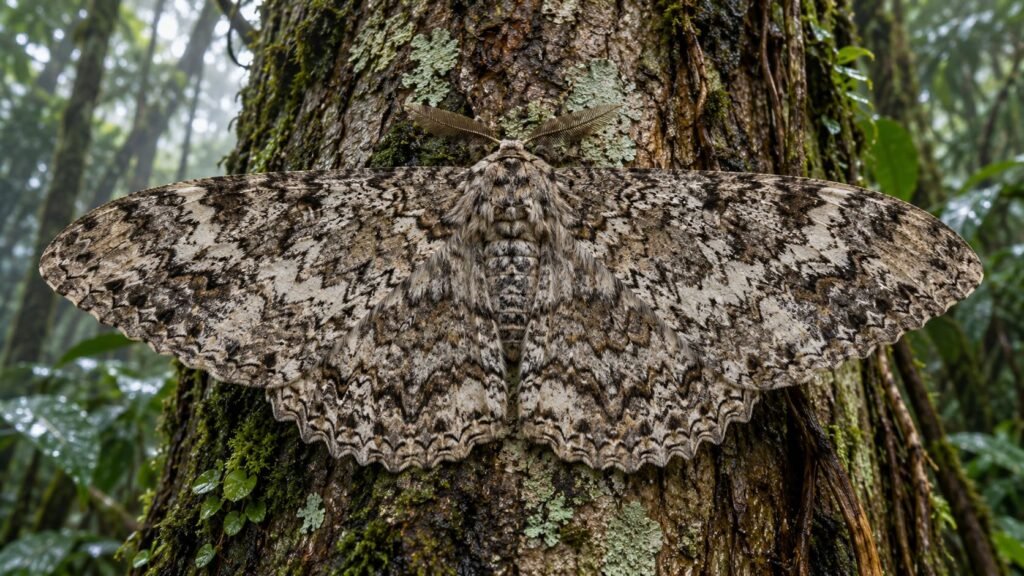
If length belongs to the stick insects, wingspan takes us to something much more theatrical. The white witch moth, Thysania agrippina, lives across parts of Central and South America. A remarkable female specimen collected in Brazil in 1934 measured 30.8 centimetres across the wings. That remains the verified record wingspan for a moth specimen. Its appearance makes the measurement even stranger. Rather than displaying tropical colours, the white witch wears an intricate pattern of grey, brown and cream, which helps it vanish against tree bark. Fold those enormous wings against a trunk and one of the world’s widest insects can become surprisingly inconspicuous. There is a useful lesson here: evolution does not always advertise extravagance. Sometimes it builds a 30-centimetre moth and then paints it like wallpaper.
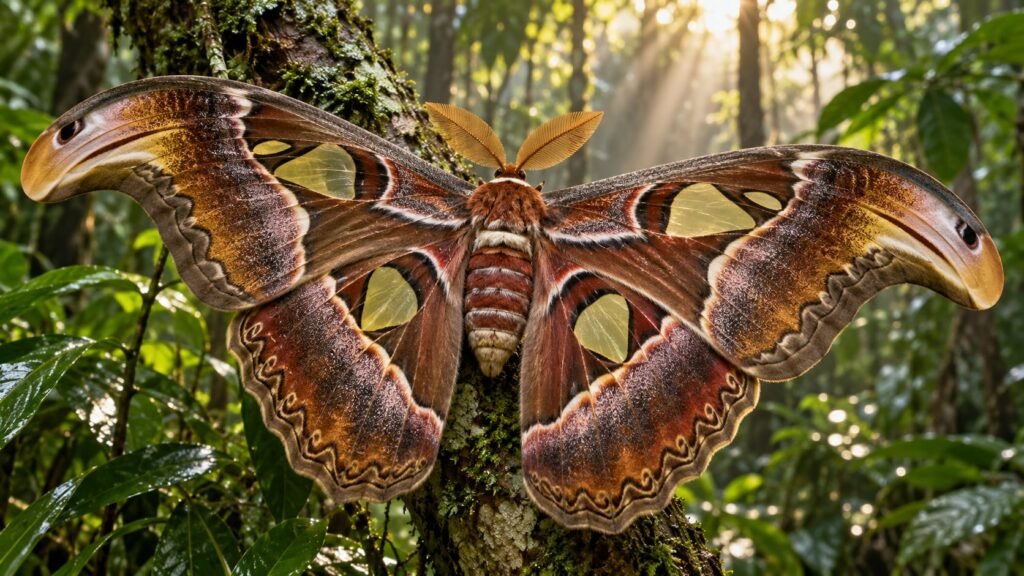
Yet wingspan creates another argument, because the longest wings do not necessarily create the largest wings. Enter — or rather, consider, because even our vocabulary needs watching around insects this size — the Hercules moth, Coscinocera hercules. Native to northern Australia and New Guinea, females can reach roughly 28 centimetres in wingspan. More importantly, their wings can cover around 300 square centimetres, giving the Hercules moth the record for wing surface area. The elongated tails on the male’s hindwings add still more visual drama. Like several enormous silk moths, adult Hercules moths have a remarkably brief existence. Their caterpillars do the eating and growing; adulthood largely concerns finding a partner and reproducing. Being magnificent, it seems, is exhausting.
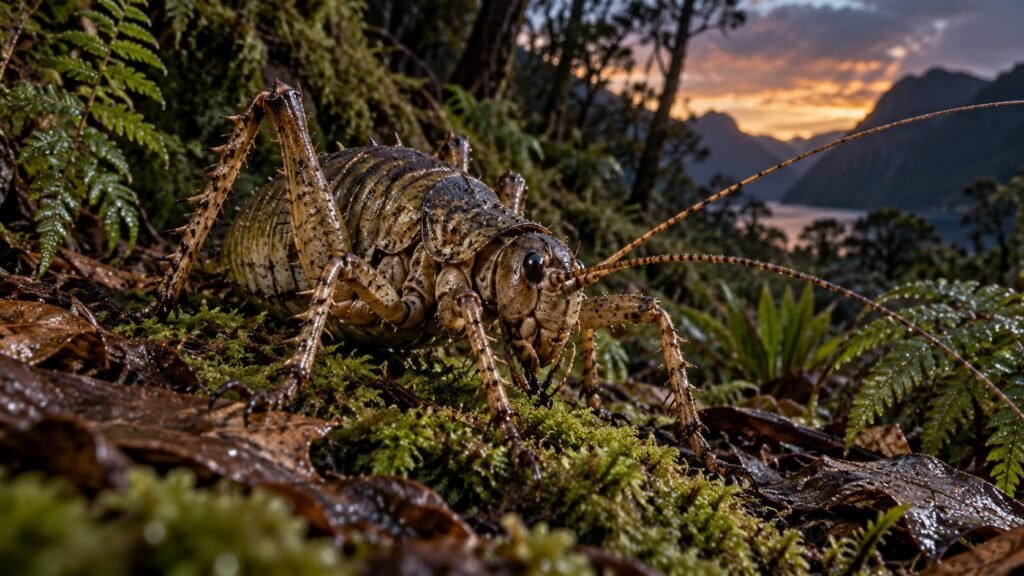
Then there is the insect that abandons elegance altogether and concentrates on mass. New Zealand’s wētāpunga, Deinacrida heteracantha, resembles what might happen if a cricket spent several years training for heavyweight competition. One exceptionally large pregnant female weighed 71 grams, the heaviest reliably verified individual insect specimen. That is roughly the weight of a small hen’s egg. Despite its prehistoric appearance, the wētāpunga is mostly herbivorous and far less sinister than photographs suggest. Humans caused its real problems rather than the reverse.
Forest clearance and introduced predators including rats and stoats devastated populations, eventually leaving the species confined to Little Barrier Island. The story has recently taken an unexpectedly cheerful turn. Over 15 years, conservationists bred thousands in captivity, and by 2025 more than 11,000 had been released at predator-controlled sites. Several populations are now reproducing successfully. One of the world’s most improbable insects has therefore become an equally improbable conservation success story.
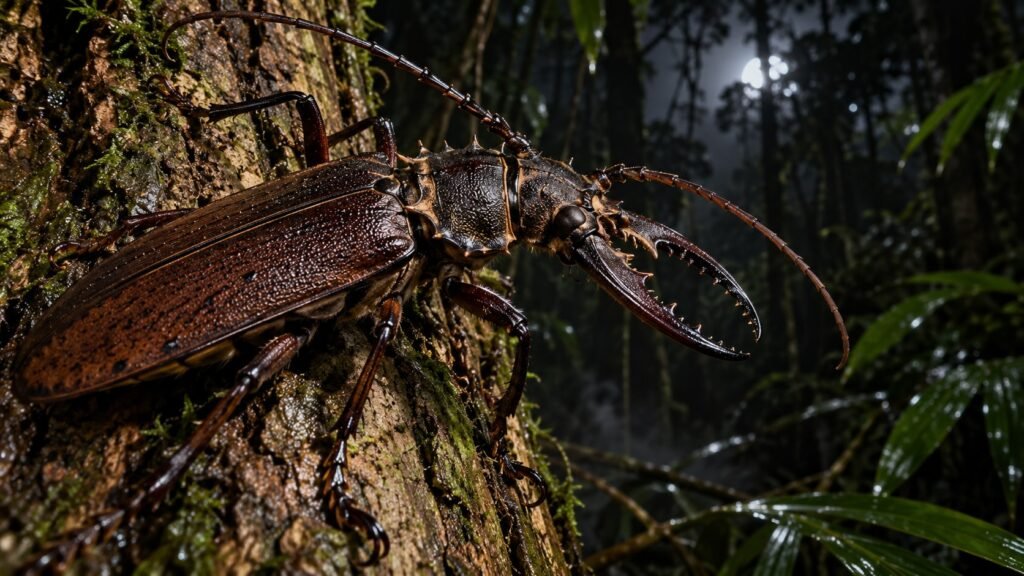
For the fifth giant, the Titan beetle, Titanus giganteus, brings us back to South America. Unlike the stick insect, it does not achieve its impressive dimensions through ridiculously extended legs. This is genuine beetle. Adults can reach around 16.7 centimetres in body length, making the Titan one of the longest beetles known. It inhabits tropical forests around the Amazon basin and looks exactly like an insect that deserves a mythological name: enormous head, formidable mandibles, powerful legs and an armoured body. Stories frequently claim that its jaws can snap a pencil.
Whatever one’s enthusiasm for experimental entomology, allowing a Titan beetle to demonstrate the point on a finger seems unnecessary. Curiously, adult Titans appear to eat little or perhaps not at all, depending largely on energy accumulated during their mysterious larval development. Their larvae remain poorly known, which feels appropriate. A beetle this excessive deserves to retain at least one secret.
There are other candidates demanding recounts. Africa’s Goliath beetles rank among the heaviest adult beetles and can reach around 11 centimetres. The Atlas moth of South-East Asia stretches towards 27 centimetres across and remains one of the most spectacular insects alive. Its adult life has an especially brutal economy: its mouthparts do not function, so it survives entirely on energy stored while it was a caterpillar. It emerges, reproduces and dies, usually within about a week. Queen Alexandra’s birdwing of Papua New Guinea, meanwhile, is the world’s largest butterfly, with females approaching 27–30 centimetres across. The first specimen collected by Europeans in 1906 was reportedly shot down with a small shotgun because it was flying too high to catch. Victorian and Edwardian natural history occasionally had all the subtlety of a military campaign.
Perhaps the greatest myth about giant insects is that they represent some surviving remnant of an age when insects routinely grew to monstrous proportions. They do not. Ancient Earth really did produce much larger flying insects. Around 300 million years ago, dragonfly-like griffinflies reached wingspans of roughly 70 centimetres. Higher atmospheric oxygen levels probably helped make such dimensions possible, although oxygen alone does not explain insect gigantism. Today’s giants evolved independently under modern conditions, each exploiting its own ecological opportunity.
What makes these five particularly fascinating is therefore not simply their size. Each represents a different solution to being an insect. The Chinese stick insect turns extraordinary length into camouflage. The white witch combines huge wingspan with invisibility. The Hercules moth turns wings into extravagant surface area. The wētāpunga concentrates on sheer mass, while the Titan beetle builds a body that looks engineered rather than evolved. None is simply an ordinary insect enlarged with a photocopier.
Perhaps that is why giant insects provoke such a peculiar mixture of fascination and discomfort. A blue whale can weigh 150 tonnes and somehow feels magnificent. A 64-centimetre stick insect feels like nature has made an administrative error. Scale changes our emotional response because insects belong, in our imagination, to the miniature world. Make them large enough and suddenly we notice their armour, joints, antennae and alien engineering.
Fortunately, none is likely to challenge humanity for control of the planet. Most are specialised, geographically restricted and dependent on fragile habitats. Some face much greater danger from us than we could ever face from them. Still, should a 64-centimetre “twig” begin walking across a branch beside you, scientific appreciation can probably wait a few seconds.