British Orders of Chivalry Explained: From the Garter to the British Empire
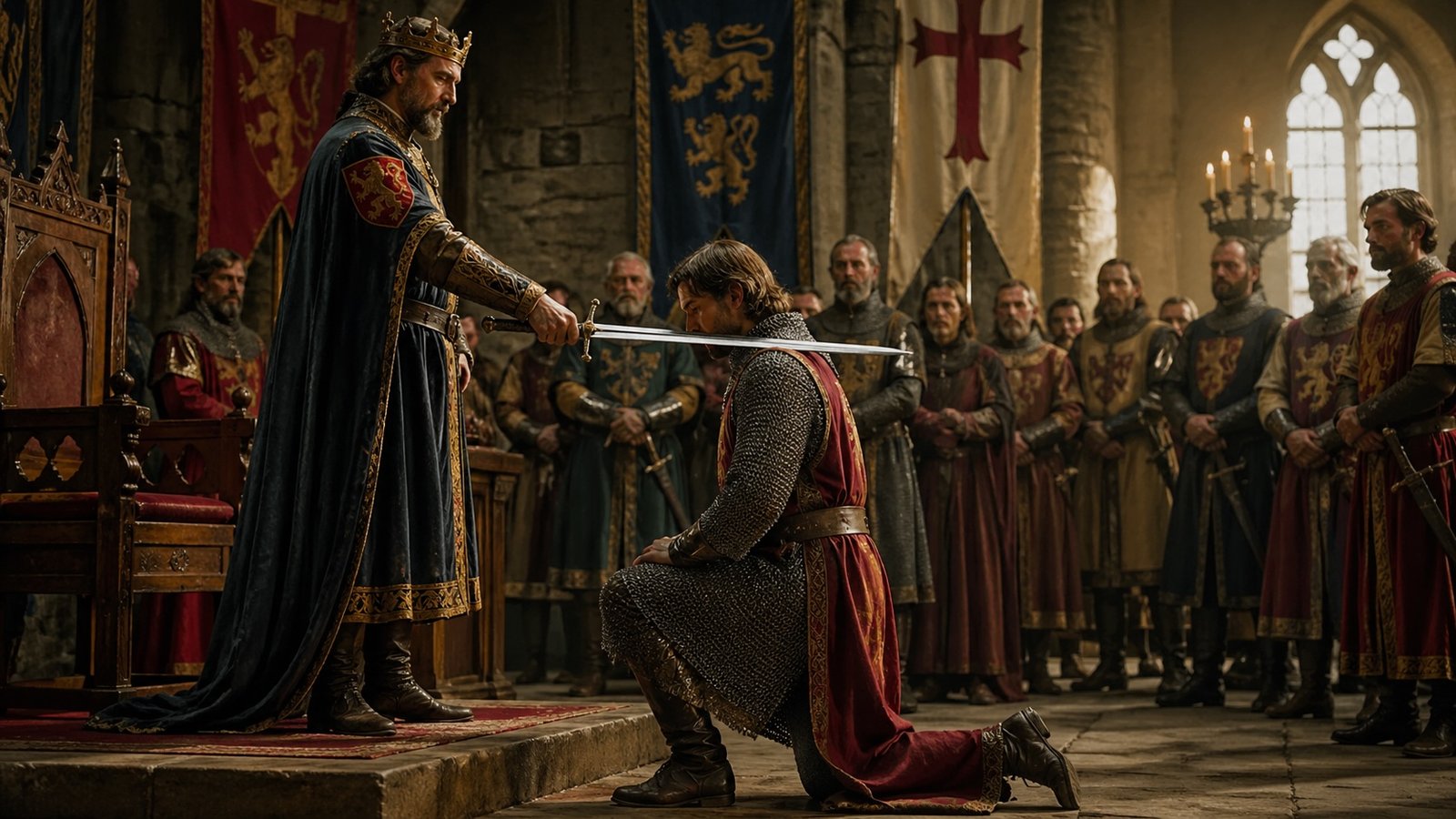
There is a particular kind of quiet drama attached to British orders of chivalry. Not the loud, cinematic kind with clashing swords and banners in the wind, but something slower, more deliberate. It lives in ceremony, in language, in the way a title lingers after a name. These orders were never just about honour. They were about proximity to power, about signalling loyalty, and, increasingly over time, about telling the world what Britain thought was worth recognising.
The story begins in a world that would feel almost unrecognisable now. Fourteenth-century England wasn’t handing out honours for community service or scientific breakthroughs. It rewarded allegiance. When Edward III founded the Order of the Garter, he wasn’t trying to build a meritocratic system. He was shaping an inner circle. Knights bound by loyalty, prestige, and symbolism. The famous motto, wrapped in layers of legend and ambiguity, mattered less than what the order actually did: it drew a line between those who were inside the monarch’s orbit and those who weren’t.
That idea—honour as closeness—never fully disappeared. It simply adapted. As Britain grew more complex, so did its need to recognise different kinds of service. By the time the Order of the Bath took on its modern form in the 18th century, the country had armies to manage and an administrative state to maintain. Recognition shifted slightly. It still carried prestige, but it also started to reward function. Senior officers, civil servants, people who made the system work rather than simply belonging to it.
Then the map changed. Empire expanded, and suddenly the question wasn’t just who served the Crown, but where. Recognition had to stretch across continents. The Order of St Michael and St George became a kind of diplomatic shorthand, attached to those operating far from London. It’s the sort of honour that quietly reveals how geography shapes hierarchy. If you saw those post-nominals, you could almost guess the career: embassies, colonial administration, negotiations conducted in rooms far removed from Westminster.
India complicated things further. Governing a vast and diverse territory required more than military control; it required symbolic integration. Orders like the Order of the Star of India and the Order of the Indian Empire were designed to recognise local rulers and elites without fully absorbing them into the British system. It was a balancing act, and not an entirely comfortable one when viewed from a modern perspective. Still, it worked, at least for a time. Honours became part of governance, a way to maintain influence without constant force.
What’s striking is how these orders didn’t replace one another. They accumulated. Britain rarely clears the stage; it adds new props. By the early 20th century, the system had become layered to the point of mild confusion. Ancient chivalric traditions sat alongside imperial inventions, all coexisting under the same Crown.
Then came the First World War, and with it, a rupture. Suddenly, the scale of contribution expanded beyond anything the existing system could comfortably accommodate. War wasn’t just fought by generals. It was sustained by nurses, engineers, organisers, and volunteers—people who would never have been considered for traditional orders of chivalry. The response was the creation of the Order of the British Empire, and with it, a subtle but important shift.
For the first time, recognition began to move away from exclusivity towards reach. British orders of chivalry started to reflect society more broadly. Not perfectly, and certainly not without hierarchy, but the direction changed. It became possible for someone far removed from aristocratic circles to receive an honour that carried national recognition.
At the same time, another strand quietly persisted: the monarch’s personal discretion. The Royal Victorian Order sits slightly apart from the rest. It isn’t filtered through committees or political processes. It is, quite simply, the monarch saying thank you. In a system that can feel bureaucratic, this introduces something more human, even if it still operates within a framework of tradition.
There are also orders that have managed to remain relevant by shifting their focus rather than their structure. The Order of St John, with its emphasis on medical and humanitarian work, feels less like a relic and more like an institution that quietly adapted to modern expectations. It doesn’t rely on imperial prestige or medieval symbolism. It operates through practical impact, which may explain its longevity.
Not everything adapted so neatly. Some orders simply faded as the empire receded. The structures remained, technically intact, but their purpose dissolved. They linger in official lists, rarely invoked, like old titles in a family archive. Their existence tells you less about the present and more about the past—about a time when Britain’s reach required a different kind of recognition system.
That lingering past is also where the tension sits. The phrase “British orders of chivalry” carries centuries of meaning, and not all of it sits comfortably in the present. The word “Empire” in particular feels increasingly out of step with modern sensibilities. Some recipients accept honours while openly questioning the terminology. Others refuse them altogether. The debate isn’t new, but it has grown more visible as historical narratives shift.
Yet the system continues. Not because it is universally agreed upon, but because it still serves a function. It recognises contribution, signals values, and, perhaps most importantly, creates continuity. A scientist receiving a modern honour is, in a strange way, linked to a medieval knight. The connection is symbolic rather than practical, but it is there.
That continuity can feel either meaningful or slightly absurd, depending on perspective. There is something undeniably odd about a 21st-century innovator being folded into a framework that once revolved around battlefield loyalty. And yet, that oddness is part of the system’s identity. It doesn’t reinvent itself completely. It evolves just enough to remain usable.
What emerges from all this is not a clean hierarchy, but a narrative. British orders of chivalry tell a story about how the country has seen itself at different moments in time. Medieval loyalty, imperial administration, wartime mobilisation, modern civic recognition—they all coexist within the same structure.
It’s tempting to look for logic, for a neat system that explains everything. But that misses the point slightly. The system was never designed in one go. It was built piece by piece, each order responding to a specific need, a specific context, a specific version of Britain.
And that is precisely why it still feels alive. Not because it is perfectly aligned with modern values, but because it carries its history openly. It doesn’t hide its contradictions. It wears them, quite literally, on its sleeve.