The Iron Lady: How Margaret Thatcher Reforged Britain’s Backbone
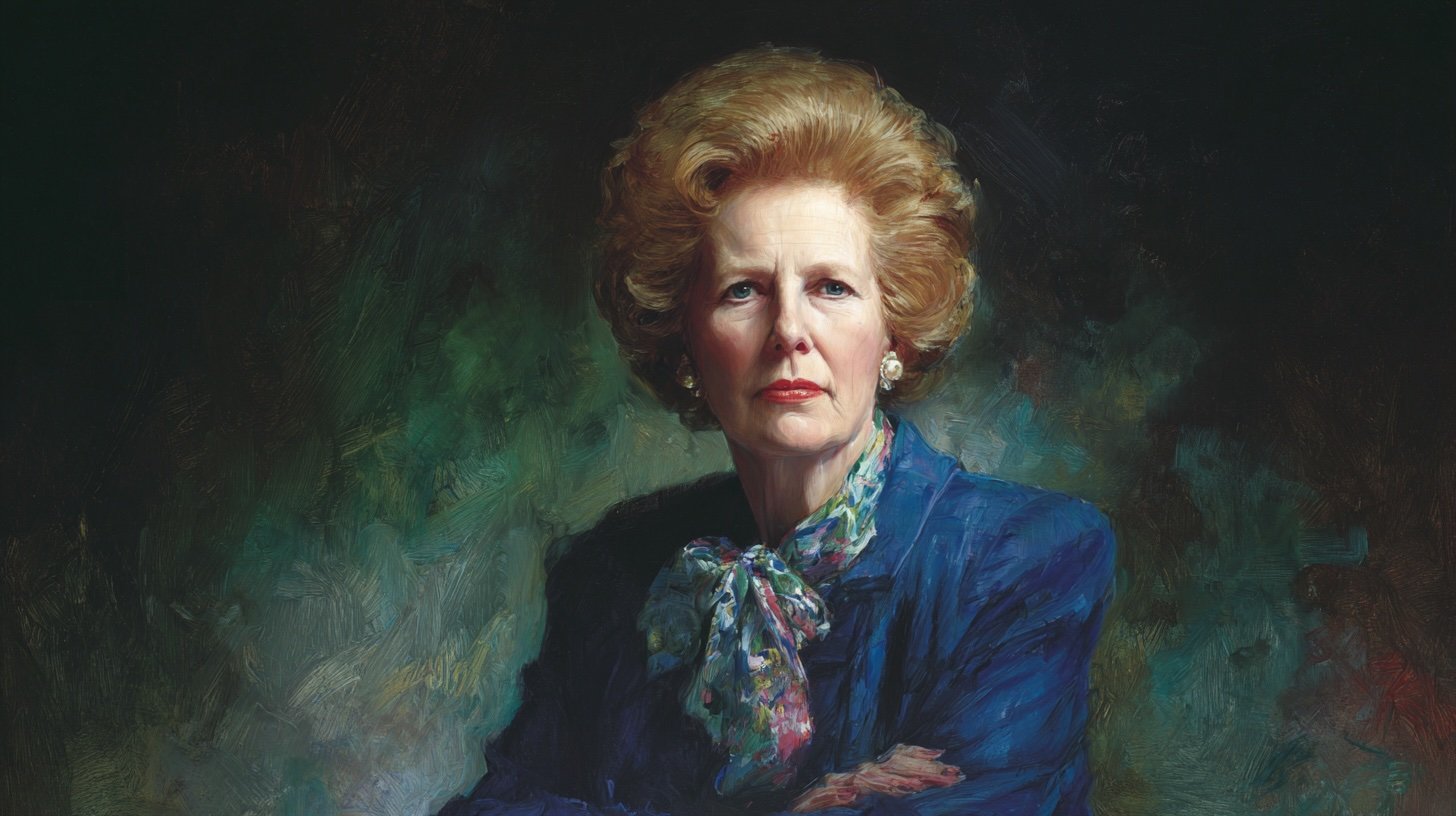
They called her the Iron Lady. Not because she pumped iron, or because she had a fondness for cast-iron teapots, but because Margaret Thatcher simply refused to bend. It was a nickname born in Moscow, meant as an insult, yet she wore it like a crown. And why not? After all, she ruled Britain for eleven years, outlasting every male rival who ever underestimated her – which was, frankly, most of them.
Margaret Hilda Roberts, born in 1925 above a grocer’s shop in Grantham, Lincolnshire, seemed an unlikely candidate for political immortality. Her father, Alfred, ran the local grocery and the local council, instilling in her a belief in thrift, hard work, and the divine right of shopkeepers to lecture others on moral discipline. By all accounts, young Margaret loved two things: order and chemistry. She studied hard enough to earn a scholarship to Oxford, where she graduated in chemistry before swiftly deciding that molecules were less interesting than men who made decisions. Politics, she found, was another kind of experiment – except the explosions were social, not chemical.
Her political career was, from the start, an uphill climb through the gentlemen’s club of post-war Conservatism. But she was relentless. When she spoke, people noticed. There was that voice – trained later to sound less shrill, more commanding, but always unmistakable. It could slice through parliamentary chatter like a scalpel. Colleagues called her bossy; voters called her decisive. Same thing, really, just depends whether you’re listening from the front bench or the kitchen table.
When she became Prime Minister in 1979, Britain was a country that had seen better days. Rubbish piled up in the streets during strikes, inflation was wild, and the national mood was best described as beige. Thatcher swept in promising discipline, efficiency, and a cure for Britain’s economic hangover. Her solution was simple: tough love. She cut subsidies, sold off state industries, and declared war on trade unions. The economy screamed, the miners protested, and unemployment soared. Yet Thatcher, with her handbag and her iron will, didn’t flinch. “The lady’s not for turning,” she declared, in one of those lines that only work when delivered by someone who looks like they might actually turn you to stone.
It was in the 1980s that the Iron Lady myth truly solidified. Thatcher became a global icon of both admiration and rage. To her supporters, she restored Britain’s pride; to her detractors, she dismantled its soul. Either way, she made sure no one could ignore her. She faced down the Soviet Union with rhetoric so fierce it made Reagan look cuddly. When Argentine forces invaded the Falklands in 1982, she sent the Navy halfway across the world to get them back. It worked. Britain cheered, and suddenly, she was unstoppable. Patriotic victory does wonders for poll numbers.
She also redefined what leadership looked like. Before Thatcher, the idea of a woman running Britain seemed improbable. After her, it seemed inevitable. Yet she never called herself a feminist. In fact, she seemed mildly irritated by women who did. To her, success was individual, not collective. She once quipped that there was no such thing as society – only individuals and families. That line became the essence of Thatcherism: personal responsibility, free markets, and a barely disguised suspicion of anyone asking for help. For better or worse, she turned Britain from a post-war welfare state into a competitive, capitalist nation with sharp elbows and sharper suits.
But the Iron Lady had her rust spots. Her confrontations with the miners in 1984–85 remain some of the most bitter episodes in modern British history. Whole communities were crushed, both economically and spiritually, in her campaign to curb union power. Her critics saw cruelty; she saw necessity. She called it reform, others called it destruction. It depends, of course, on whether your father was a miner or a merchant.
Then came the poll tax – a spectacularly unpopular idea that made her seem out of touch even to her own party. For someone who prided herself on her political instincts, she misread the room badly. By 1990, her Cabinet, tired of her authoritarian style and the constant turmoil, quietly moved to replace her. She was, in the end, undone not by her enemies but by her friends. When she finally left Downing Street, she did so in tears, though one suspects they were tears of fury rather than heartbreak. Even iron melts at a certain temperature.
After her fall, she remained a figure of fascination. She gave speeches around the world, wrote her memoirs, and occasionally appeared at party conferences, glowering like a ghost of authority past. The political landscape she left behind was permanently altered. The Labour Party reinvented itself under Tony Blair to win back power, essentially by accepting many of her ideas. In that sense, Thatcher didn’t just shape a decade – she shaped the next three.
Her foreign policy instincts, too, were strikingly theatrical. She adored the stagecraft of politics: the firm handshake with Reagan, the frosty smile with Mikhail Gorbachev, the photo ops that made her look like she personally stared down the Cold War. The phrase “Iron Lady” came from a Soviet journalist mocking her hostility toward communism, but she embraced it with glee. Iron, after all, resists corrosion, and that was precisely the image she wanted to project: unbreakable, incorruptible, and inconveniently eternal.
Of course, history has a way of softening even its hardest edges. Today, Thatcher is less a political figure than a cultural one – the subject of films, plays, and memes. Meryl Streep played her in The Iron Lady, a performance so eerily accurate it reportedly gave former Cabinet members flashbacks. Younger generations, raised in a Britain she helped design, view her through nostalgia or Netflix, not memory. Some see her as a feminist trailblazer, others as the architect of inequality. The truth lies somewhere in between – probably sipping tea in a blue suit, judging everyone equally.
What’s undeniable is that Thatcher changed the tone of politics. Before her, leaders sought consensus. After her, they sought victory. She didn’t want to manage Britain; she wanted to remake it. And she did. The country that emerged from her tenure was richer, colder, more dynamic, and more divided. She made people believe that conviction was a virtue and compromise a weakness. In her world, hesitation was fatal, and certainty was an art form.
Yet behind the legend, there was still the grocer’s daughter from Grantham, tidying the nation’s shelves, convinced that Britain just needed to live within its means. Her obsession with order, thrift, and responsibility never faded. Even her handbag became a symbol of discipline – not a fashion statement but a weapon of policy enforcement. She was known to slam it on the table to punctuate her point. If only the handbag could talk, it would probably say, “Read the minutes.”
When she passed away in 2013, Britain mourned and argued in equal measure. Some lowered their flags; others raised their glasses. It was the most Thatcherite farewell imaginable – even her death caused a national debate. Yet the image of her, standing outside Number 10 in that cobalt suit, voice sharp as steel, remains fixed in the collective memory. She was the Iron Lady not because she lacked emotion, but because she channelled it into purpose. She was proof that one person’s will can reshape an entire nation – though whether that’s a good thing depends on which side of the fence you’re standing on.
To this day, she divides opinion like few others. Economists still argue over her impact, politicians still quote her, and comedians still impersonate her. In a way, she’s still running the show. Every British Prime Minister since has had to measure themselves against her – and none have quite matched her mix of ruthlessness, discipline, and sheer theatrical flair.
So yes, they called her the Iron Lady. But maybe she was something even more complicated: the mirror in which Britain saw both its strength and its cruelty, its ambition and its indifference. She didn’t just govern a country – she forced it to decide what kind of country it wanted to be. And that, in the end, is the real weight of iron.