Why the White House Was Never Really Finished
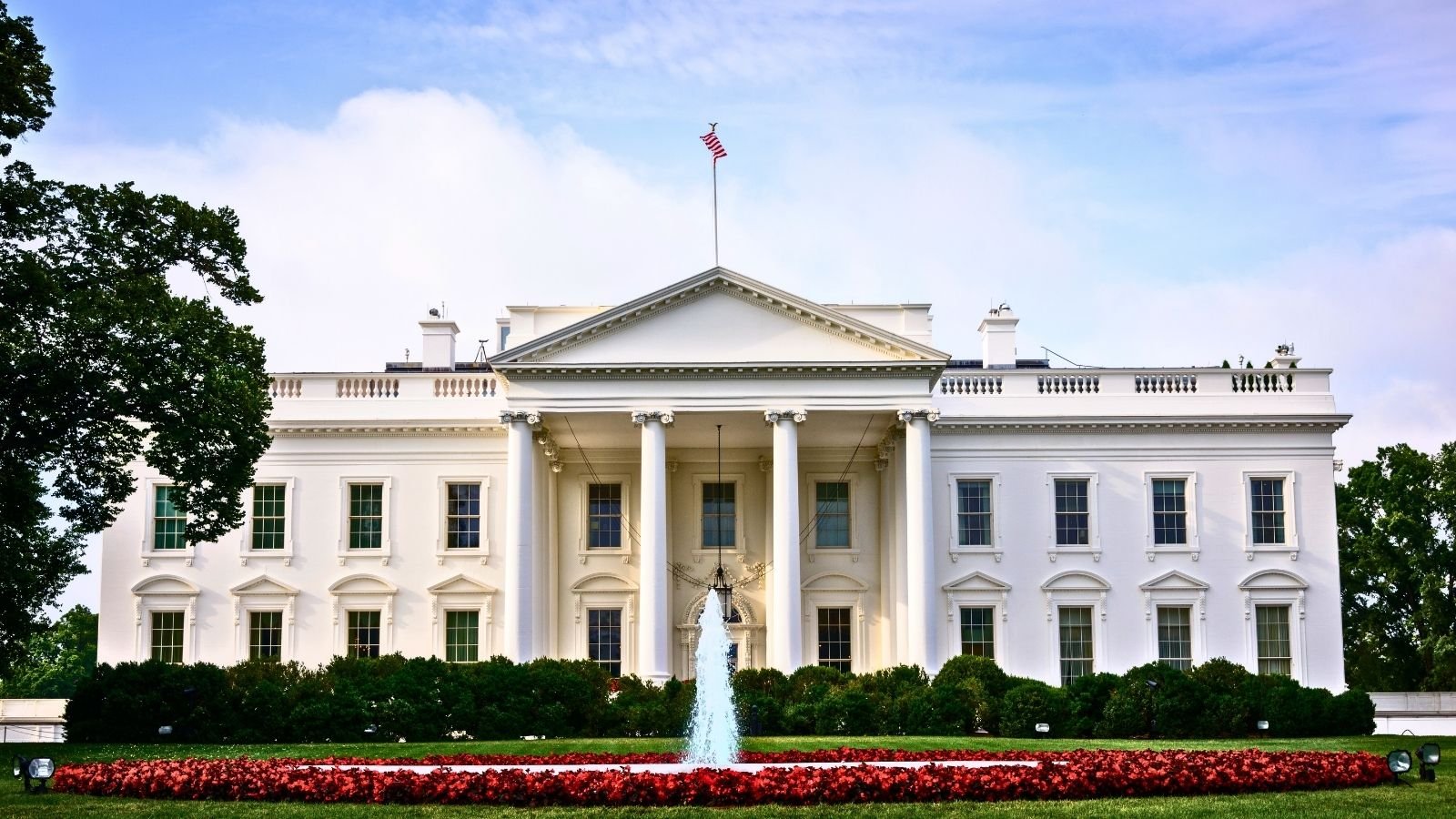
The White House looks so peaceful these days — all gleaming neoclassical symmetry, a bit of manicured lawn, the occasional squirrel doing its best to photobomb tourists. But don’t let the calm fool you. This house has been burnt, rebuilt, remodelled, painted more times than a West End theatre set, and haunted by every political ghost from Jefferson’s quills to Nixon’s tape recorders. It is less a house, more a national soap opera in marble and limestone.
It began with an idea. After winning independence, America needed a symbol of power — something that would whisper “civilisation” in an accent borrowed straight from ancient Rome. George Washington, who knew a thing or two about power, decided the new republic needed a proper palace for its president. He also knew appearances mattered: nothing says “we’ve made it” like a grand façade with columns. But there was a catch. The capital wasn’t even finished yet. Washington DC was, at that point, a swampy wilderness filled with mosquitoes, mud, and optimism.
In 1791, a design competition was launched. America, still drunk on democracy, invited architects to submit their visions for the nation’s most important address. Among the hopefuls was a young Irishman named James Hoban, who had recently moved to the States and probably didn’t expect to end up shaping American architectural identity. Hoban’s proposal was elegant, restrained, and very British — which is ironic, considering the house was meant to celebrate independence from Britain. The design was said to be inspired by Leinster House in Dublin, which itself had borrowed heavily from London’s Palladian tradition. In short: America’s most famous house is Irish by birth, British by style, and built by a workforce that included enslaved African Americans. The Founding Fathers’ taste for irony was clearly well-developed.
Construction began in 1792, and it didn’t take long for the romantic ideals to meet reality. The site was a bog. Workers battled swarms of insects, oppressive humidity, and the absence of anything resembling modern machinery. Bricks had to be fired locally, lumber hauled from Virginia and Maryland, and sandstone quarried from Aquia Creek. The sandstone, a charmingly soft material, turned out to be so porous that it absorbed water like a sponge. To stop it crumbling, the walls were coated in a thick white lime-based paint — and that’s how the building got its famous name. The White House wasn’t originally called that officially; it was just the nickname everyone used because of the paint job.
By 1800, after eight years of mud, sweat, and lime, the building was finally habitable — barely. George Washington never got to live there; he died before it was finished. The honour of the first occupant went to John Adams, who moved in with his wife Abigail. She famously used one of the unfinished rooms to hang laundry. It’s hard to imagine modern presidents drying socks above the Oval Office’s heating vents, but in those days the presidential residence was still half-construction site, half-domestic experiment.
Then came Thomas Jefferson, who turned the building into a proper Enlightenment salon. He redesigned interiors, added colonnades to hide the servants’ quarters, and filled the place with books, maps, and the faint whiff of Enlightenment self-importance. Jefferson loved symmetry and science; his White House had more gadgets than a Bond villain’s lair.
But history, being American, prefers a bit of drama. In 1814, during the War of 1812, the British decided to give the Americans a taste of imperial revenge. British troops marched into Washington and set fire to the President’s House, as it was then called. They burned the library, the furniture, even the curtains. The only thing that survived intact was a portrait of George Washington, which First Lady Dolley Madison heroically rescued before fleeing. It was a cinematic moment — think Meryl Streep in a bonnet, dragging a frame through the smoke.
After the flames died, the shell of the house stood black and hollow. It was rebuilt almost immediately — by James Hoban again, the original architect, who must have sighed deeply and sharpened his quills. The reconstruction kept the neoclassical look but made the structure sturdier. And again, that whitewash returned to cover the fire-blackened stone. The White House rose like a phoenix, or at least a very determined limestone pigeon, from the ashes.
Throughout the 19th century, the White House morphed along with the country. New presidents brought new tastes, new scandals, and new furniture. Andrew Jackson added running water. James Polk introduced gas lighting. Then came electricity, which terrified Benjamin Harrison’s family so much they refused to touch the light switches for fear of electrocution. The staff had to turn the lights on and off for them, which must have made for some interesting conversations.
By the time Abraham Lincoln lived there, the house had already absorbed decades of national tension. The Civil War turned it into both command centre and sanctuary. Lincoln’s nocturnal walks through its corridors, haunted by decisions that split the country, left a residue of melancholy that visitors still claim to feel. The legend of Lincoln’s ghost has been passed down for generations — Winston Churchill, staying overnight, allegedly refused to sleep in the Lincoln Bedroom after seeing a spectral figure by the fireplace.
After the war, the White House kept expanding. Ulysses S. Grant turned the East Room into a ballroom so large it could host state dinners, cotillions, and the occasional scandal. Later presidents experimented with décor that ranged from stately to questionable. Theodore Roosevelt, impatient with Victorian clutter, commissioned a full renovation in 1902, led by the architects McKim, Mead & White. They modernised the structure, created the West Wing, and gave the house a cleaner, more “presidential” image — less grandmother’s parlour, more empire on Potomac. Roosevelt also brought in animal chaos: his six children filled the halls with snakes, guinea pigs, and one rather unfortunate pony.
The West Wing quickly became the nerve centre of American power. It housed the Oval Office, designed under President Taft, whose fondness for round rooms matched his reputation for, well, generous proportions. Franklin D. Roosevelt later expanded it again, adding a swimming pool for therapy sessions. That pool was later covered over to create the Press Room — meaning every time a reporter asks a tricky question, they’re technically standing above Roosevelt’s water therapy spot.
By the mid-20th century, the White House was falling apart again. Decades of hurried repairs and overloaded floors left the structure dangerously unstable. In 1948, inspectors discovered the building was literally sagging. Floors creaked, walls buckled, chandeliers trembled. President Truman once joked that the whole place was “ready to collapse.” He wasn’t far off. So, with the pragmatism of a man used to tough decisions, Truman ordered a full gut renovation. The exterior walls were kept, but the entire interior was demolished and rebuilt with a steel frame. For years, the presidential family lived across the street in Blair House while the White House became a construction site once again. By 1952, the building was reborn — same façade, completely new skeleton. The symbolism practically wrote itself: democracy, renovated.
The modern White House, the one seen in films and news broadcasts, owes as much to television as to architecture. Jackie Kennedy, with her legendary 1961 restoration, transformed the interior from post-Truman plainness into a museum of American heritage. She filled rooms with antiques, portraits, and the spirit of Camelot. Her televised tour of the White House turned interior décor into political art. For the first time, the American public saw their house not as a workplace, but as a national heirloom.
And it hasn’t stopped evolving since. Each president leaves a mark, literal or metaphorical. The Clintons added contemporary art; the Obamas brought a modern minimalist flair; the Trumps gilded things; the Bidens prefer warmth and tradition. It’s a living document of taste, ego, and historical compromise.
Yet through all the wars, scandals, and redecorations, one thing remains constant: the White House was built not just as a home, but as a stage. Every speech, every handshake, every scandal is performed against those same white walls first painted to hide the flaws in the stone. The building’s beauty lies not in perfection, but in the fact it’s always been patched, repaired, and repainted — a metaphor for the country it represents.
If you stand on Pennsylvania Avenue today and squint through the iron railings, the place looks immaculate. But beneath that limestone skin lies a patchwork of rebuilds and reinventions. The house has been burnt, gutted, and refurbished so many times that almost nothing original remains except the mythology. And yet it endures. It’s as if the very act of rebuilding became part of America’s identity. The White House is proof that even symbols need maintenance.
Behind those windows, presidents have agonised, danced, lied, laughed, and occasionally just wanted a nap. Staff have served dinners fit for kings and cleaned up messes fit for tabloids. Tourists queue outside to glimpse history; residents inside often long for escape. It’s a paradox — the most famous house in the world and yet probably the least private home ever built.
So how was the White House built? With ambition, contradiction, and a lot of lime paint. It rose from a swamp, burned to the ground, and came back whiter than ever. It’s not so much a building as an ongoing construction project wrapped in marble self-esteem. And like its nation, it was never finished — only repainted, again and again, until the story gleams.