Ceuta: The Spanish City in Africa
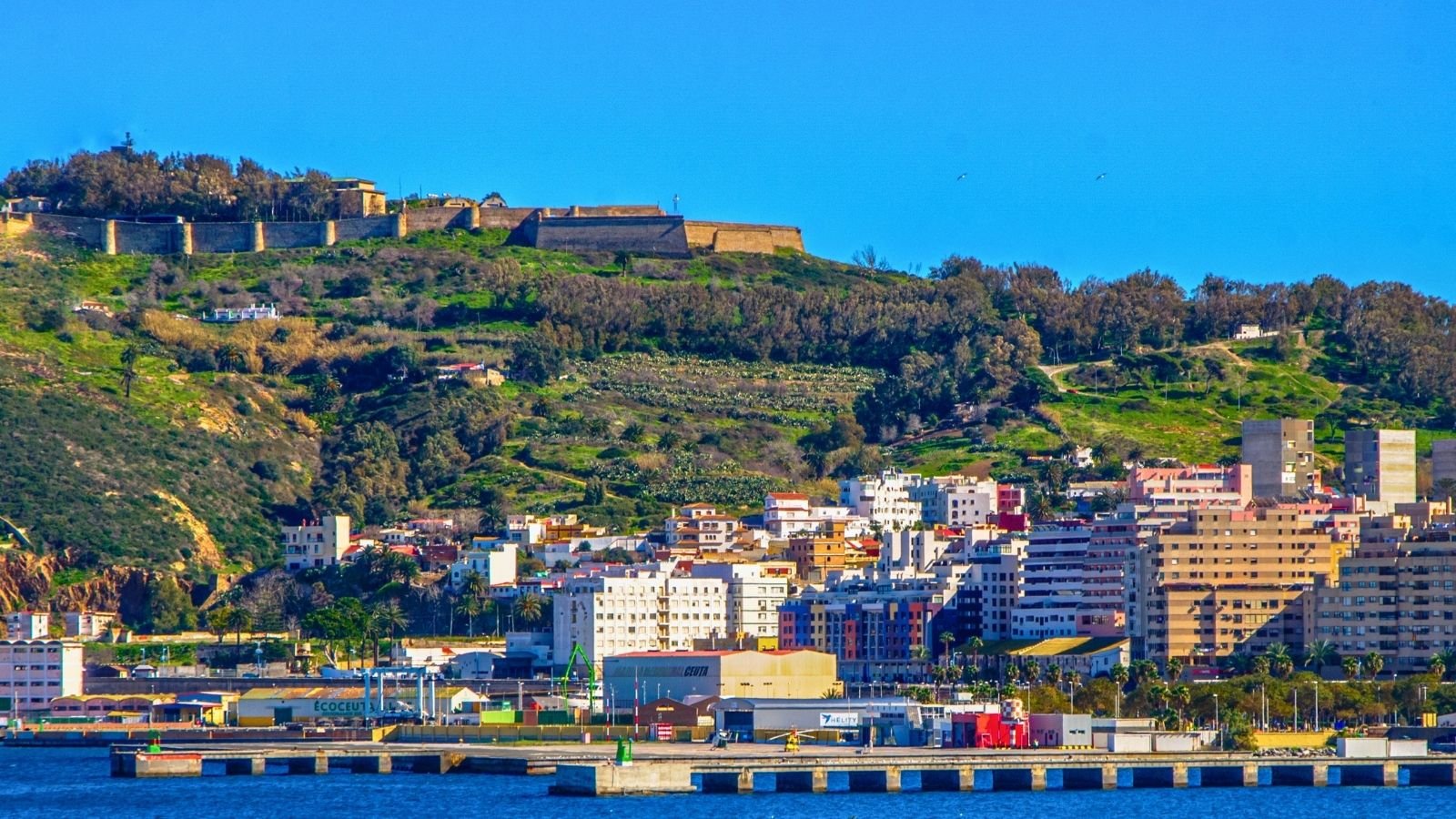
Ceuta looks like the sort of place created during a particularly competitive evening of mapmaking. It sits on the North African coast, shares a land border with Morocco, uses the euro, belongs to Spain and forms part of the European Union. Across the Strait of Gibraltar, mainland Spain lies only a short ferry journey away. Behind the city, however, the mountains of Morocco rise with complete geographical confidence.
This compact autonomous city occupies a strategic point where the Mediterranean approaches the Atlantic. Around 84,000 people live within roughly 19 square kilometres, so Ceuta feels less like a remote colonial outpost and more like a tightly packed coastal town. Spanish serves as the official language, although many residents also speak Darija, the Moroccan form of Arabic. Christian, Muslim, Jewish and Hindu communities have all shaped local life, architecture and food.
That cultural mixture often appears in tourism material as the harmonious “four cultures” of Ceuta. The phrase contains truth, although it can sound suspiciously tidy. Churches, mosques, synagogues and a Hindu temple do stand within a remarkably small area. Religious festivals overlap on the local calendar, while shop signs, clothing and conversations reveal influences from both sides of the border. Yet coexistence does not erase economic inequality, political disagreement or the tension surrounding migration. Real cities rarely behave as neatly as their promotional brochures.
Ceuta’s history began long before Spain existed. Phoenician traders understood the value of this narrow maritime gateway, followed by Carthaginians, Romans, Vandals, Byzantines and successive Muslim dynasties. Classical tradition connected nearby Monte Hacho with one of the Pillars of Hercules. According to the myth, Hercules split Europe from Africa and created the Strait of Gibraltar. Geologists may raise an eyebrow, but Hercules enjoyed better publicity.
The Romans knew the settlement as Septem, probably referring to the seven surrounding hills. Over time, Septem became Ceuta. Its location made it valuable to anyone interested in controlling trade, fleets or inconvenient neighbours. The city therefore accumulated walls, watchtowers and military installations rather than peaceful confidence.
Portugal captured Ceuta in 1415, an event often treated as the opening chapter of Portuguese overseas expansion. The campaign gave Portugal a foothold in North Africa and helped its rulers imagine a maritime empire stretching far beyond Europe. However, Ceuta proved expensive to defend and less commercially rewarding than expected. Apparently, occupying a strategic fortress did not automatically persuade every merchant to conduct business there.
When Portugal broke away from the Spanish monarchy in 1640, Ceuta chose to remain connected to Spain. The 1668 Treaty of Lisbon formally confirmed Spanish possession. Morocco never accepted the underlying logic and continues to regard Ceuta, along with Melilla, as Moroccan territory under foreign occupation. Spain argues that both cities have belonged to the Spanish state for centuries and possess the same constitutional standing as other parts of the country.
The Royal Walls provide the most dramatic physical record of this complicated past. Their enormous stone defences surround the navigable Royal Moat, a saltwater channel cutting through the narrow isthmus. Visitors can walk along the fortifications or travel through the moat by small boat and kayak. Few European cities allow you to paddle through several centuries of military anxiety before lunch.
Hidden within the walls, the Caliphal Gate reveals an older Islamic layer. Archaeologists uncovered sections of a tenth-century entrance that once belonged to the fortified Muslim city. Portuguese builders later incorporated or covered earlier structures as they modernised Ceuta’s defences. Consequently, the site behaves like an architectural palimpsest: every ruler wrote over the previous one but failed to erase it completely.
From the walls, a walk through the centre leads towards Plaza de África, the cathedral and the Sanctuary of Our Lady of Africa. Henry the Navigator sent the religious image associated with the sanctuary to Ceuta during the fifteenth century. Each August, local celebrations honour the city’s patron saint with flowers, ceremonies and a procession. Nearby streets contain early twentieth-century buildings with decorative façades that seem unexpectedly grand for such a small territory.
Monte Hacho offers the best perspective on Ceuta’s geography. A road and walking route circle the hill, passing pine woods, viewpoints, military remains and the small Hermitage of San Antonio. From higher ground, the city appears squeezed between two seas and two political worlds. On clear days, Gibraltar and the coast of southern Spain become visible across the water, while Morocco stretches inland in the opposite direction.
Some traditions identify Monte Hacho as the southern Pillar of Hercules. Gibraltar represents the northern pillar, although Morocco’s Jebel Musa competes for the southern title. Mythology has never shown much respect for municipal boundaries, so the disagreement remains pleasantly unresolved.
Down at sea level, Ceuta has beaches that many visitors fail to expect. La Ribera and El Chorrillo sit close to the historic centre, complete with clear water and urban facilities. Smaller coves and beaches appear around the peninsula, including San Amaro, Benítez, Calamocarro and Benzú. The mixing of Atlantic and Mediterranean waters also supports unusually varied marine life, making the coastline attractive for diving, kayaking and wildlife watching. Dolphins, turtles and occasionally whales pass through the surrounding waters.
The Mediterranean Maritime Park provides a more engineered relationship with the sea. Designed by César Manrique, the artist and architect closely associated with Lanzarote, it combines saltwater pools, gardens, paths, restaurants and recreational spaces. The result resembles a tropical resort that somehow wandered into a fortified border city and decided to stay.
Ceuta’s food reflects its position more convincingly than any political speech. Spanish tapas meet North African spices, while seafood dominates menus near the harbour and Ribera beach. Local dishes include frigate mackerel stew, tuna pie, volaor salad and salted or marinated fish. Calamari, cuttlefish, clams and langoustines require less explanation and usually disappear quickly. Meanwhile, Moroccan-style pastries, couscous, grilled meats and sweet mint tea reveal the influence of the neighbouring country.
For travellers from mainland Spain, the usual route involves a fast ferry from Algeciras, generally taking about an hour depending on the service and conditions. Helicopter connections sometimes operate from southern Spain as well. Because Ceuta belongs to Spain, British visitors enter under the rules that apply to Spain. Crossing onward into Morocco involves separate border procedures, passport checks and potentially lengthy delays.
That border defines Ceuta as much as its beaches or walls. High double fencing separates the city from Morocco, turning a short geographical boundary into one of Europe’s most politically charged frontiers. People seeking to enter the EU have attempted to climb the barriers, pass through checkpoints or swim around coastal defences. The city therefore stands simultaneously as someone’s home, another person’s holiday destination and a symbol of exclusion for those waiting outside.
In late July 2026, Ceuta faced a major and rapidly developing migration emergency after thousands of people attempted to enter from Morocco, many by sea. Spanish authorities sent military and police reinforcements, while reports described deaths, overwhelmed local resources and intense negotiations with Morocco. The figures and circumstances changed quickly, and some early claims differed substantially between news organisations. Anyone considering an immediate visit should check current official travel advice, transport operations and border conditions before leaving.
The crisis also illustrates why Ceuta cannot be presented merely as a charming multicultural curiosity. Morocco’s territorial claim, Spain’s determination to retain the city, economic differences across the border and Europe’s migration policies all converge within a few kilometres. Even the celebrated idea of four cultures sits beside neighbourhood inequality and unemployment that have troubled the city for years.
Nevertheless, Ceuta deserves attention beyond dramatic news footage. Its streets compress Roman trade, Islamic scholarship, Portuguese ambition, Spanish identity, Moroccan influence and modern European politics into a place small enough to cross in an afternoon. Ancient walls overlook apartment blocks. Church bells mingle with the call to prayer. Tapas bars face the African mountains, while ferries repeatedly stitch the city back to Europe.
Ceuta does not offer the polished escapism of an ordinary Mediterranean resort. It offers something more complicated and, for a curious traveller, far more interesting. Here, geography argues with politics, mythology argues with geology and two continents watch one another across the water. Somehow, everyone still finds time for coffee.