Balearic Food: What Mallorca, Menorca, Ibiza and Formentera Really Eat
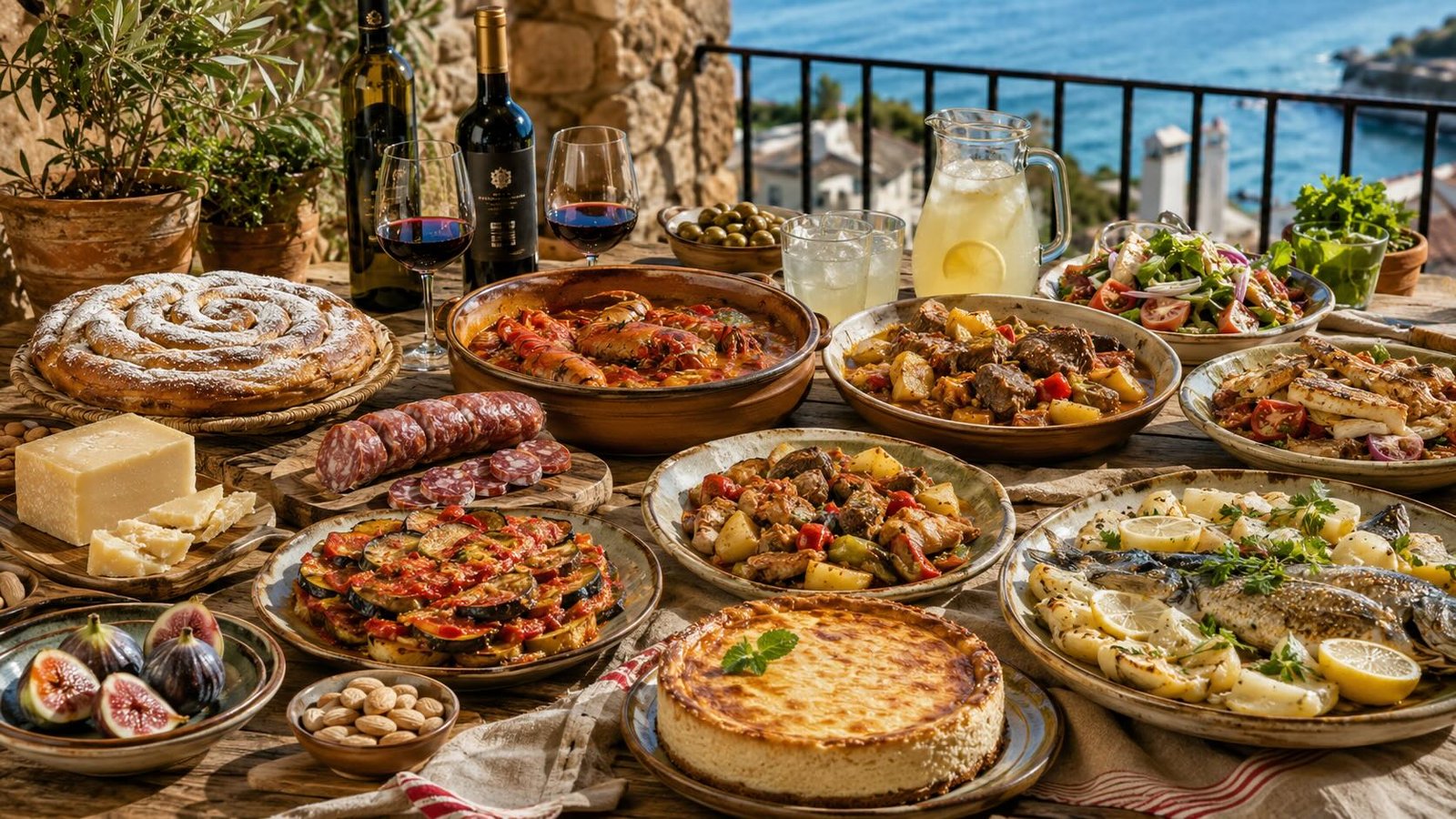
Balearic food rarely receives the same attention as the beaches, coves and nightlife of Mallorca, Menorca, Ibiza and Formentera. Visitors often arrive expecting seafood, paella and something cold beside a swimming pool. They usually find all three, but the traditional cuisine of the islands offers far more than the familiar Mediterranean holiday menu.
The story of Balearic food begins with geography. These islands sit in the Mediterranean, close enough to mainland Spain for centuries of trade and influence, yet isolated enough to develop their own culinary habits. Before supermarkets, refrigerated transport and daily ferries, islanders ate what they could grow, raise, catch or preserve.
That meant bread, olive oil, tomatoes, peppers, aubergines, pulses, almonds, figs, pork, cheese and fish. Nothing particularly glamorous there, at least until generations of cooks transformed those ingredients into dishes that remain distinctive today. Balearic food grew from necessity rather than fashion, although modern restaurants now present some of it with extremely fashionable lighting.
Each island has its own culinary identity. Mallorca has the largest and most varied food tradition, while Menorca reflects its pastoral landscape and periods of British and French rule. Ibiza combines rural cooking with seafood, and Formentera preserves a simpler cuisine shaped by fishing, scarcity and preservation.
Mallorca’s best-known contribution to Balearic food is probably sobrassada. This soft, spreadable sausage combines pork, salt and paprika. Islanders eat it on bread, cook it with eggs, add it to pastries and sometimes serve it with honey.
The mixture of sweet honey and spicy pork may sound slightly reckless. However, it works because the sweetness softens the richness and heat of the sausage. It also proves that traditional island food understood flavour contrasts long before restaurants began describing them as “unexpected pairings”.
Paprika gives modern sobrassada its deep red colour, but early versions would have looked different. Peppers only reached Europe after contact with the Americas. This detail challenges the romantic idea that traditional Balearic food has remained unchanged for centuries.
Food traditions constantly evolve. New ingredients arrive, recipes shift and families adapt. After several generations, the revised dish becomes ancient, authentic and apparently prepared exactly the same way by everybody’s grandmother.
Another Mallorcan classic is tumbet, a layered dish made with potatoes, aubergines, peppers and tomato sauce. People sometimes compare it with ratatouille, although tumbet usually feels richer and more substantial. The vegetables are normally fried separately before being arranged together, which gives each ingredient its own texture.
Tumbet represents Balearic food at its most recognisably Mediterranean. It uses simple summer vegetables, but it does not treat them timidly. Olive oil, frying and ripe tomatoes turn humble produce into a dish that can accompany meat, fish or stand confidently on its own.
Frit mallorquí offers a more robust experience. Cooks prepare it with fried potatoes, onions, peppers and meat, often including liver or other offal. Seafood versions also exist.
The dish developed from a practical culture that wasted very little. Modern diners sometimes hesitate when they hear the full ingredient list, but older island kitchens could not afford such delicacy. Balearic food used the whole animal because wasting edible meat made no economic sense.
Pa amb oli may be Mallorca’s simplest meal. Its name means bread with oil, and the basic version combines rustic bread, tomato and olive oil. Cheese, ham, sobrassada, olives or cured fish may appear alongside it.
On paper, pa amb oli barely sounds like cooking. Yet simple food depends entirely on ingredient quality. Ripe tomatoes, good olive oil and proper bread create something memorable. Weak tomatoes and factory bread create a sandwich that looks disappointed with itself.
Mallorca also produces one of the most famous examples of Balearic food: the ensaimada. This spiral-shaped pastry contains flour, sugar, eggs, yeast and pork lard. The word comes from saïm, the local term for lard.
That detail surprises many visitors, especially those who assume the light, sweet pastry must be vegetarian. Traditional ensaimadas may come plain or filled with cream, chocolate, apricot or cabell d’àngel, a sweet preserve made from squash.
Several stories attempt to explain the pastry’s origins. Some link its spiral shape to Moorish baking traditions, while others suggest connections with Jewish pastry-making. The evidence remains uncertain, although the legends continue because food history prefers dramatic secret origins to the more likely explanation of recipes changing gradually over time.
Menorca brings a different character to Balearic food. The island’s agricultural landscape supports dairy farming, and its most celebrated product is Maó cheese. Made from cow’s milk, it ranges from soft and mild when young to hard, salty and intense when aged.
The cheese reflects Menorca’s climate, pastures and traditional production methods. Mature versions develop a strong, slightly sharp flavour that works well with bread, olive oil or fruit preserves. It also travels better than many fresh foods, which mattered greatly in an island economy.
Menorca is equally famous for caldereta de langosta, a rich lobster stew associated with the fishing village of Fornells. Today, restaurants treat it as a luxury dish, and prices usually confirm the point.
Historically, lobster did not always carry such prestige. Fishermen once regarded it as a local catch rather than an international symbol of expensive dining. Tourism, scarcity and reputation transformed it into one of the most celebrated dishes in Balearic food.
Menorca also claims a connection with mayonnaise. A popular story suggests that the sauce became associated with Mahón after the French captured the port in 1756, giving rise to the name mahonnaise. Other theories point to earlier recipes and different linguistic origins.
The island therefore may have invented mayonnaise, named it, influenced it or simply acquired one of Europe’s most successful culinary legends. Whatever the truth, Menorca has understandably decided not to discourage the story.
British rule left another mark through gin. Menorcan producers developed their own style of the spirit, which islanders often mix with lemonade to make pomada. It appears frequently during summer festivals and tastes far less dangerous than it actually is.
Ibiza’s traditional cuisine feels very different from the island’s modern reputation. Long before beach clubs and international DJs, rural families lived from farming, livestock and fishing. Their food needed to be filling, practical and suitable for large gatherings.
Sofrit pagès reflects that tradition. The dish combines several meats, often lamb, chicken and pork, with potatoes, garlic and spices. Families usually prepared it for celebrations rather than everyday meals.
It offers a useful correction to the idea that Balearic food consists mainly of light salads and grilled fish. Island cuisine can be heavy, rich and firmly designed for people who spent the day working rather than reclining under a parasol.
Ibiza also has bullit de peix, a fish and potato dish in which cooks use the cooking broth to prepare rice afterwards. One pot therefore produces several stages of a meal.
This approach reflects both thrift and hospitality. Nothing goes to waste, yet the meal feels generous. The rice absorbs the concentrated flavour of the fish, giving diners a second dish that often becomes as memorable as the first.
For dessert, Ibiza offers flaó, a cheesecake flavoured with mint or aniseed. It tastes lighter and more herbal than many modern cheesecakes. The combination can surprise visitors, but it suits the island’s mixture of dairy, herbs and rural baking traditions.
Formentera preserves one of the most unusual elements of Balearic food: peix sec. Fishermen salt and dry fish using the sun and sea air, creating a strongly flavoured preserved ingredient.
Islanders use peix sec in amanida pagesa, a country salad with potatoes, tomatoes, peppers, onions and dry bread. The dish grew from preservation and scarcity, although modern chefs now value the dried fish for its intense taste and local identity.
Today, Balearic food sits within a complicated tourism economy. Visitors create demand for restaurants, markets and traditional products. At the same time, mass tourism places pressure on housing, water, fishing, farming and local communities.
Restaurants increasingly promote seasonal produce, native varieties and local suppliers. This trend helps preserve island cuisine, but authenticity becomes difficult when the people who produce the food can no longer afford to live nearby.
Tourists also expect traditional food to appear conveniently beside major resorts. Real culinary culture rarely works that neatly. It survives in markets, bakeries, village bars, fishing ports and family-run restaurants, not only in polished venues with sea views and menus translated into six languages.
The best way to experience Balearic food is to treat each island separately. Mallorca offers sobrassada, tumbet, frit mallorquí and ensaimada. Menorca contributes Maó cheese, lobster stew and gin. Ibiza brings sofrit pagès, bullit de peix and flaó, while Formentera offers dried fish and country salads shaped by preservation.
Together, these dishes reveal a cuisine built on isolation, ingenuity and cultural exchange. Balearic food did not begin as holiday food. It began as survival food, farming food, fishing food and celebration food.
Sunshine certainly helped the tomatoes. Necessity, however, wrote most of the recipes.