Why Cinnamon Made Empires Lose Their Minds
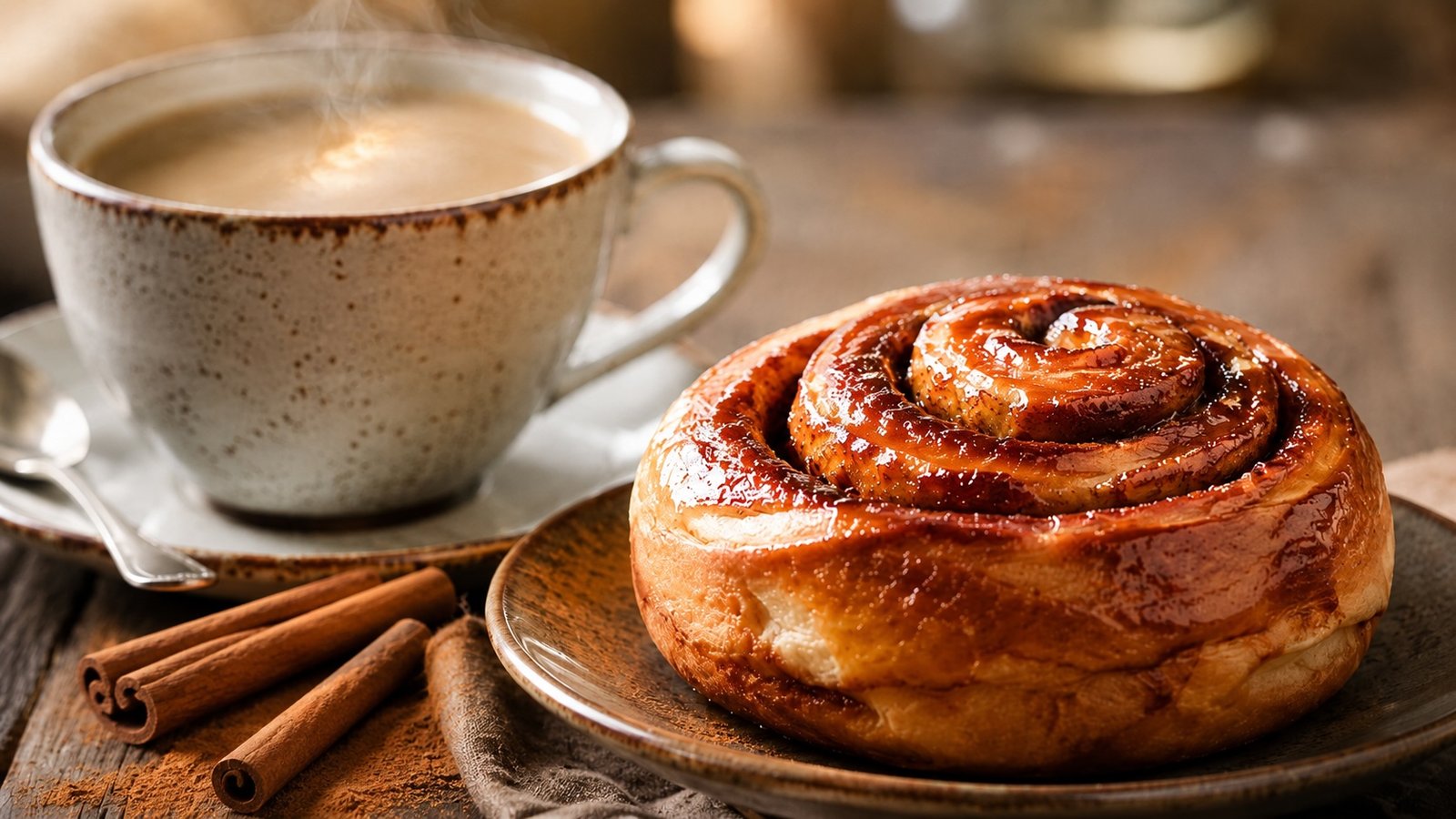
Cinnamon sits in the kitchen cupboard pretending to be innocent. A pinch goes into porridge, apple crumble, mulled wine, coffee, buns, biscuits and anything that wants to smell like a warm jumper in December. It looks soft, brown and harmless. Yet behind that cosy little jar sits one of the strangest careers in food history: embalming rituals, fake origin stories, secret trade routes, colonial monopolies, medical exaggeration, safety debates and a modern wellness industry that occasionally behaves as if sprinkled bark can solve civilisation.
The funny thing is that this famous spice really is bark. More precisely, it comes from the inner bark of trees in the Cinnamomum family. Workers cut young shoots, scrape away the outer layer, loosen the fragrant inner strip and dry it until it curls into quills. Those elegant sticks are not twigs, though they do a convincing impression of them. They are rolled strips of tree skin. Once you know that, sprinkling the stuff on a cappuccino feels slightly more dramatic.
There is also not just one type. The famous “true” variety, or Ceylon cinnamon, usually means Cinnamomum verum, long associated with Sri Lanka. It tastes delicate, sweet, almost floral, with a gentle warmth rather than a punch in the face. Cassia, its stronger and cheaper cousin, comes from related species and dominates many supermarket shelves. It tastes louder, darker and more fiery. Most people call both by the same name, which keeps life simple but also a little misleading. It is like calling both silk and polyester “nice fabric” and hoping nobody asks follow-up questions.
Ancient people took this bark seriously. Egyptians used it, along with cassia, in embalming, religious practice and perfumed preparations. If a spice could help preserve the dead and impress the gods, it clearly had more status than something you hide behind the flour. In the ancient Mediterranean, it became a luxury good wrapped in mystery. Greek and Roman writers knew it came from somewhere far away, but the exact geography often arrived through rumour, exaggeration and merchant theatre.
Herodotus repeated one of the most charmingly ridiculous stories about its origins. According to the tale, giant birds collected fragrant sticks for their nests on cliffs. Clever humans supposedly left large pieces of meat nearby, the birds carried the meat to their nests, the nests collapsed under the weight, and the precious spice fell down for collection. This sounds less like botany and more like a rejected fantasy subplot, but it served a purpose. Mystery protected margins. If buyers did not know where a luxury ingredient came from, sellers could charge more and explain less.
Arab merchants controlled much of the early long-distance trade into the Mediterranean world. The spice moved through Indian Ocean routes, Red Sea ports and Middle Eastern trading networks before reaching European markets. By the medieval period, it had become one of those luxury ingredients that made aristocrats feel properly aristocratic. It flavoured meat dishes, sauces, spiced wines and elaborate banquets. It also appeared in medical recipes, because medieval medicine loved a confident aromatic.
Physicians recommended it for digestion, coughs, coldness, bad breath, weakness and various complaints that probably needed less spiced wine and more sanitation. Still, the logic made sense within the medical thinking of the time. This ingredient felt warming, smelled powerful and cost a fortune. Expensive things always seem more medicinal. Even now, people trust a product more when the label mentions “ancient wisdom” and the price suggests a minor jewellery purchase.
Then European empires arrived, and the story took a sharper turn. In the sixteenth century, the Portuguese reached Sri Lanka and saw not just a flavouring, but a monopoly waiting to happen. Ceylon cinnamon became a strategic prize. Control the source, control the supply, control the price. Later, the Dutch pushed the Portuguese aside and built their own spice empire with the calm brutality of a trading company that treated flavour as geopolitical infrastructure. The British eventually took over Ceylon too, because apparently no European power could smell valuable bark without reaching for a flag.
The Dutch East India Company managed production and trade with particular intensity. It regulated cultivation, controlled exports and treated this commodity as far too valuable to leave to ordinary market chaos. This is where the cosy kitchen image falls apart. The fragrant powder that now makes festive baking smell friendly once sat inside systems of coercion, exploitation and colonial extraction. A spiced bun may look cheerful, but history rarely lets anything stay uncomplicated.
Sri Lanka remains central to the story. Ceylon cinnamon still carries cultural, agricultural and economic significance there. Producing high-quality quills takes skill, speed and experience. Workers must peel, scrape, roll and dry the bark carefully, often by hand. The result looks simple only because the labour behind it has become invisible to the final buyer. A neat glass jar on a supermarket shelf hides a long chain of growers, peelers, traders, exporters, grinders, packagers and retailers. Spices often work that way: tiny objects with enormous backstories.
In cooking, this ingredient has never belonged only to desserts. Northern Europe may push it towards cakes, buns and Christmas drinks, but many cuisines use it in savoury food. It appears in rice dishes, stews, meat preparations, spice blends, curries, tagines, teas and broths. In Mexico, it flavours chocolate drinks and sweet dishes. In the Middle East and North Africa, the same warm note can sit comfortably beside lamb, chicken, rice and dried fruit. In South Asia, it joins complex spice mixtures where it behaves less like a soloist and more like a member of a well-drilled orchestra.
The magic comes partly from cinnamaldehyde, the compound that gives the bark much of its distinctive aroma and flavour. It creates that warm, sweet, woody note that makes food feel richer even when nothing especially luxurious has happened. Food brands understand this extremely well. Add this flavour to packaging and suddenly the product sounds comforting, wholesome, seasonal and possibly knitted by someone’s grandmother. One familiar word on a label can do emotional work before the customer even opens the packet.
Of course, its reputation as a health ingredient has grown loudly in recent years. It appears in articles, supplements, powders, drinks and cheerful online advice about blood sugar, metabolism, inflammation and weight control. Some studies have explored whether extracts or powdered forms can modestly affect blood glucose or cholesterol markers. The key word there is “modestly”. This spice may have interesting biological effects, but it does not replace medication, fix a poor diet, or turn a pastry into a clinical intervention. A sticky bun remains a sticky bun, however spiritually optimistic it smells.
The bigger health controversy concerns cassia and coumarin. Cassia naturally contains more coumarin than the Ceylon variety. In high amounts, coumarin can cause liver concerns for some people, especially with long-term heavy intake. Normal culinary use usually causes no drama, but daily spoonfuls, strong supplements or enthusiastic “wellness hacks” deserve more caution. The Ceylon type contains much lower coumarin levels, which explains why people who use the spice frequently often prefer it. The problem, as usual, begins when common sense leaves the room wearing yoga trousers and carrying a detox smoothie.
Another modern concern involves contamination. Spices travel through complicated global supply chains, and ground products can prove difficult to trace. In recent years, some ground cinnamon products have faced alerts over elevated lead levels, especially in the United States. That does not mean the spice itself has turned sinister. It does mean buyers should choose reputable suppliers, avoid suspiciously cheap products, and remember that “natural” does not automatically mean clean, safe or well-regulated. Nature also invented poison ivy, so perhaps it deserves fewer blank cheques.
This famous bark also suffers from the usual confusion between tradition and evidence. People have used it for thousands of years, and that matters culturally. It tells us the spice earned trust across civilisations because it tasted good, smelled good, preserved well and seemed useful. Yet ancient use does not prove every modern health claim. The past can offer clues, but it cannot peer-review your supplement label. History gives the ingredient richness. Science decides what claims deserve belief.
Still, none of this ruins it. In fact, the complications make it more interesting. Few ingredients manage to feel both ordinary and epic. This warm brown spice can sit in a child’s biscuit, a medieval feast, a Sri Lankan plantation, an Egyptian tomb, a colonial trade ledger and a wellness influencer’s morning routine. It can comfort, impress, flavour, preserve, mislead and occasionally worry regulators. For something scraped from a tree, that is an outrageously full CV.
So the next time cinnamon lands on porridge or disappears into cake batter, it may deserve a moment of respect. Not solemn respect, obviously; it is still breakfast. But perhaps a small nod to the bark that travelled through myth, empire, medicine, commerce and controversy before ending up beside the nutmeg. It smells sweet because chemistry says so. Its story smells complicated because humans got involved.