For most of European history, eating something from Asia involved a quiet act of logistical madness. A spoonful of pepper, a cup of tea, a bowl of rice, a pinch of cinnamon — each one carried the ghost of a long sea journey, colonial ambition, warehouse speculation, shipwreck risk, insurance paperwork, and somebody somewhere shouting at a dockworker. Food was never just food. It was geography with flavour.
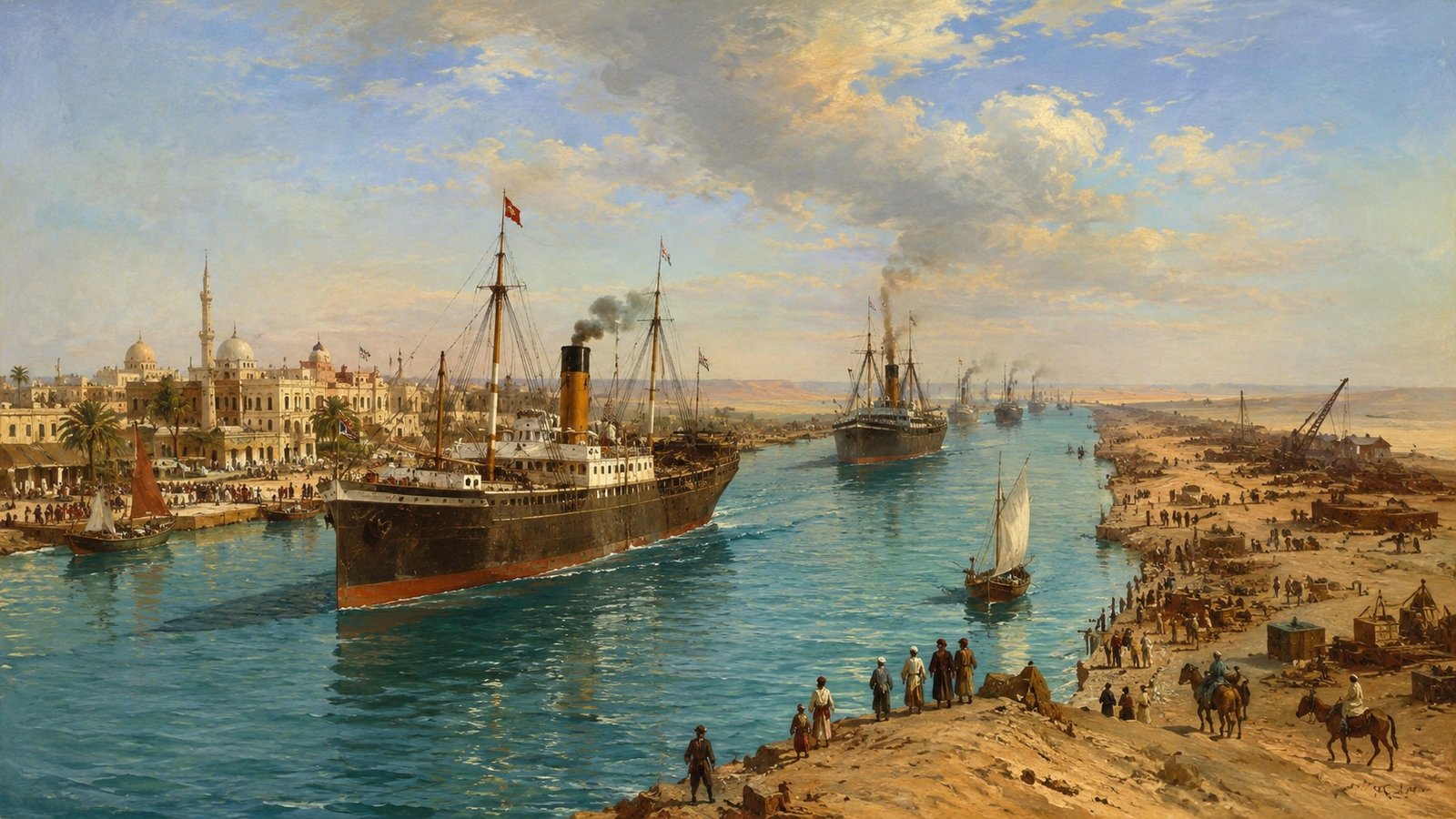
Then, in 1869, a strip of water opened through Egypt and Europe’s dinner table tilted eastwards. The Suez Canal did not suddenly make Europeans curious about Asian food. They already were. The Romans loved pepper. Medieval elites treated spices like edible jewellery. The Dutch, Portuguese, French and British had spent centuries turning cloves, nutmeg, tea and sugar into profitable obsessions. The British had already made tea feel less like a foreign plant and more like a national emergency. Yet before the canal, much of this trade still had to perform the grand maritime absurdity of sailing around Africa. Ships leaving Asia for Europe often had to pass the Cape of Good Hope, which sounds poetic until you remember that “good hope” is usually what you need when the weather, currents and cargo insurers all start behaving badly.
The canal changed the equation. By connecting the Mediterranean to the Red Sea, it gave ships a direct route between Europe and the Indian Ocean. The effect looks simple on a map, almost insultingly simple: draw a line through Egypt instead of looping around a continent. In practice, that line helped alter the rhythm of European consumption. Goods from Asia could move faster, more predictably and, over time, more cheaply. That mattered because taste does not spread by curiosity alone. It spreads when merchants can supply it regularly, retailers can price it sensibly, and consumers stop treating it as a rare indulgence.
Tea offers the neatest little drama. Before Suez, the China tea trade belonged to the great clippers, those elegant sailing ships built for speed and glamour. Newspapers followed tea races as if the ships were racehorses with masts. In 1866, the famous Great Tea Race saw clippers dash from China to London, with the public obsessing over which vessel would land the new season’s tea first. It was thrilling, expensive and faintly ridiculous, like Formula One with damp cargo.
Then steam arrived with the manners of a very efficient accountant. Steamships had existed before the canal, of course, but the route around Africa made them awkward for the Far East trade because coal took up valuable space. The Suez Canal made steam more practical. Steamships could use coaling stations, keep schedules and pass through a route that suited engines far better than sails. Sailing ships could technically enter the canal, but the Red Sea and canal navigation did not flatter them. So the romantic tea clipper began to lose to the less romantic machine that could arrive on time.
This mattered for the European cupboard. Tea became not merely a prized import but an increasingly dependable habit. Reliability creates rituals. It is one thing to taste an exotic drink at a fashionable gathering. It is another to expect it every afternoon, complain when it runs low, and build a national personality around putting the kettle on. The canal did not create Britain’s tea addiction, but it helped industrialise the supply chain behind it.
Spices tell a similar story, though with older roots. Pepper, cinnamon, cardamom, cloves and nutmeg had haunted European imagination for centuries. They carried stories of distant islands, medical theories, religious feasts, aristocratic kitchens and aggressive colonial accounting. Before modern logistics, spices justified their high prices partly because they travelled so far and passed through so many hands. Suez did not make spices instantly cheap for everyone, but it pushed them further into the world of regular commerce. The more predictable the route, the easier it became for importers to manage stock, for grocers to offer variety, and for middle-class households to experiment without behaving like minor Renaissance princes.
Rice also benefited from this wider reshaping of trade. Europe had its own rice-growing regions, especially in Italy and Spain, but the canal strengthened connections with Asian grain markets and helped normalise the idea that staple foods could arrive through long-distance maritime systems. This was one of the quieter revolutions of the nineteenth century: the European diet became less strictly local without anyone needing to announce that dinner had joined globalisation. It simply happened through ships, ports, warehouses and prices.
And then came the cold chain, which sounds boring until you realise it changed what freshness meant. Refrigerated shipping turned distance into something food could survive. In 1880, the steamship Strathleven successfully carried Australian beef and mutton to London using refrigeration machinery and, crucially, the shorter Suez route. In 1882, the Dunedin carried frozen meat from New Zealand to Britain, helping launch a trade that would reshape New Zealand’s economy and British eating habits. Suddenly, Europe could import not only dry, durable or preserved goods, but also perishable products from the other side of the world. Meat, dairy and later fruit could travel with fewer tragic smells and fewer commercial disasters.
The canal and refrigeration together helped train Europeans to expect abundance out of season and food from places they had never visited. That expectation sits at the heart of the modern supermarket. A supermarket is not just a shop with bright lighting and judgemental avocados. It is a promise that the world has been organised into aisles. Tea from one place, rice from another, spices from several others, frozen goods from somewhere so distant that a nineteenth-century sailor would have demanded a bonus just for hearing about it.
Of course, there is a darker side to this story, because there usually is when dinner becomes convenient. The canal belonged to the age of empire. Its construction, financing and control sat inside European power politics, Egyptian debt, French engineering ambition and British imperial strategy. The food routes it strengthened did not float above history like innocent little coriander seeds. They moved through systems shaped by colonial extraction, unequal trade, plantation labour, military pressure and the European appetite for other people’s produce. So yes, the canal helped fill European kitchens. It also helped tighten Europe’s grip on the routes that fed those kitchens.
This is where the myth needs trimming. The Suez Canal did not suddenly bring spices to Europe. It did not single-handedly invent British tea culture. It did not personally create the supermarket, although it would probably claim a loyalty card if it could. What it did was more subtle and more important. It made certain flows faster, more regular and more commercially attractive. It shifted the balance from occasional luxury to repeatable supply. And repeatable supply is where culture changes.
Think about the difference between a rare ingredient and a normal one. A rare ingredient becomes a story. A normal ingredient becomes invisible. The first time a household buys a spice, it feels adventurous. The hundredth time, it sits in the cupboard behind the flour, quietly losing potency while everyone pretends they will use it soon. That journey from wonder to neglect tells us a lot about global trade. The Suez Canal helped move many Asian goods along that path.
It also helped Europe become used to speed. Once shipping routes compressed time, consumers adjusted their expectations. Freshness, variety and price all began to depend on invisible infrastructure. People did not need to understand canal tolls, coaling stations, marine insurance or refrigerated holds. They only needed to notice that products appeared more regularly and, eventually, in greater variety. Modern consumers still behave this way. We do not think about container routes when buying tea bags or basmati rice. We think about whether the shelf has the brand we like, and perhaps whether the price has become offensive again.
Recent disruptions in the Red Sea and Suez route have reminded the world that this old canal still sits under the modern dinner table. When ships divert around Africa, journeys grow longer, costs rise, and supply chains lose their smug little rhythm. The nineteenth-century shortcut remains a twenty-first-century pressure point. The supermarket may look local, but its nervous system runs through ports, canals and maritime chokepoints.