
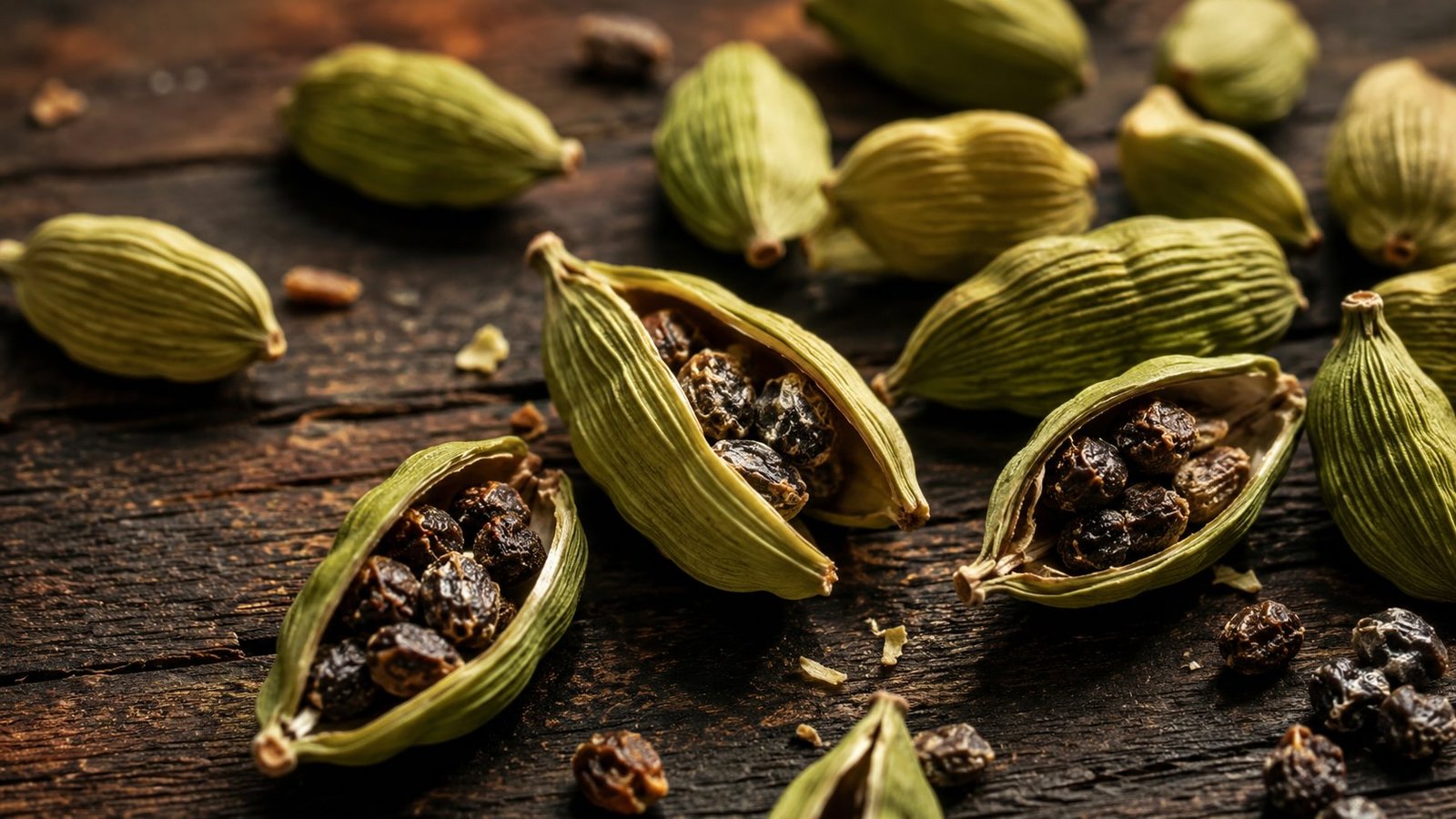
Cardamom is a spice that defies its size. Encased in a small, pale green pod, it appears unassuming at first glance, almost delicate. Yet the moment it is crushed, it releases a complex and layered aroma—notes of citrus, mint, eucalyptus and warm sweetness—evoking both distant trade routes and the comforting richness of traditional home cooking.
No wonder people call it the “queen of spices”. Pepper grabbed the louder title of king, naturally, because pepper has always had main-character energy. Cardamom, though, does something more interesting. It floats between sweet and savoury, between medicine cabinet and dessert table, between ancient ritual and modern latte. One pod can make rice pudding feel expensive, coffee feel mysterious and curry feel as if it has remembered its ancestors.
Cardamom comes from plants in the ginger family, mainly Elettaria cardamomum for green cardamom and Amomum subulatum for black cardamom. The pods carry the real treasure: tiny black seeds packed with essential oils and flavour. Green cardamom tends to taste bright, floral, sweet and slightly lemony. Black cardamom, its moodier cousin, tastes smoky, earthy and almost resinous, as if it has spent time beside a campfire having strong opinions.
Its story begins in tropical Asia, especially the Indian subcontinent, where cardamom has grown, travelled, healed, perfumed and generally made itself useful for thousands of years. Ancient medical traditions valued it for digestion and breath, while cooks worked out something even more important: it makes food taste dramatically better. From India it moved through Arab trade networks, across the Middle East, into Europe and eventually into that strange modern world where people sprinkle it into Scandinavian buns and charge six pounds for a cardamom bun in a bakery with exposed brick.
That Scandinavian connection surprises some people, but it should not. Spices rarely stay where they start. Cardamom travelled with merchants, empires, recipes and appetites. In Sweden and Finland, it became a beloved baking spice. In the Middle East, it slipped into coffee, especially Arabic coffee, where it gives the drink a fragrant lift and a certain polite intensity. And in India, it turns up in chai, biryani, kheer, garam masala and sweets.
The green-versus-black debate can confuse beginners, mostly because calling both “cardamom” feels like calling both a violin and a foghorn “instruments” and leaving it there. Green cardamom loves sweet dishes, tea, coffee, cream, rice, fruit and delicate spice blends. It works beautifully in cakes, custards, biscuits, poached pears and milky desserts. Black cardamom prefers slower, deeper cooking. It belongs in stews, meat dishes, lentils, biryanis and rich sauces, where its smoky character can settle in rather than shout over everyone. Use the wrong one and the dish may not collapse, but it might look at you with disappointment.
Then there is white cardamom, which usually means bleached green cardamom. It tastes milder and looks less dramatic, which may be useful in pale desserts where green pods would appear like tiny botanical intruders. Red cardamom also exists in some Asian cuisines, though most home cooks meet the green and black versions first. Whole pods keep their aroma better than ground cardamom, because ground spice loses its volatile oils quickly. In other words, that dusty jar from 2018 may still technically be cardamom, but emotionally it has left the building.
Cardamom’s market story is almost as spicy as its flavour. India remains one of its great cultural homes and major producers, especially in Kerala’s Idukki district. Yet Guatemala has become a giant in the global green cardamom trade, particularly for exports. That sounds unexpected until you remember that crops, like people, sometimes move abroad and do surprisingly well. Recent market reports have highlighted how weather and harvest disruption in Guatemala can shake global supply and prices, with European market analysis noting that Guatemala’s 2024–2025 harvest was expected to fall sharply below its usual average.
This matters because cardamom is not a casual cheap sprinkle. It ranks among the world’s most expensive spices by weight, partly because harvesting takes effort, timing and care. Pods need picking before they split, drying properly and protecting from moisture. Farmers also deal with climate stress, plant disease, labour costs and volatile prices. So when someone says cardamom is expensive, they are not entirely wrong. They are simply experiencing the global supply chain through a biscuit.
Health claims around cardamom deserve both interest and a raised eyebrow. Traditional medicine has long used it for digestion, breath and general comfort. Modern research suggests cardamom contains antioxidant, anti-inflammatory and antimicrobial compounds, and a 2023 meta-analysis linked cardamom consumption with reductions in some inflammatory markers and blood pressure measures. Still, that does not turn a cardamom bun into a medical intervention, however emotionally persuasive the bun may be. Food amounts are generally considered safe for most people, but supplements belong in the “ask a qualified professional first” category, not the “my cousin watched a video” category.
One of cardamom’s best tricks is breath freshening. Chewing a seed after a meal can leave the mouth feeling cleaner and more fragrant, which explains why it often appears after rich food in South Asian and Middle Eastern traditions. It does not replace brushing your teeth, obviously. Few spices enjoy that level of responsibility. Still, it offers a civilised ending to a heavy meal, especially when fennel seeds, cloves and sugar crystals join the party.
Cooking with cardamom rewards restraint. Too little and it vanishes. Too much and your cake starts tasting like a luxury soap. For baking, crush the pods, remove the seeds and grind them fresh. For rice, stews or tea, bruise the pods and let them infuse. In coffee, one or two pods can transform the cup without turning it into a scented candle. In curries, black cardamom needs time and heat, like a grumpy uncle who becomes charming after the first hour.
Cardamom also carries a small mythology of glamour. It smells expensive because, historically, it often was. It travelled long distances, appeared in elite kitchens and joined the grand theatre of spice trade desire. Yet it also belongs to ordinary rituals: morning chai, festive sweets, family recipes, market stalls, bakery queues and the simple pleasure of opening a jar and getting ambushed by aroma.
That may be why cardamom has survived every culinary fashion with its dignity intact. It does not need to shout. It only needs one cracked pod in warm milk, one pinch in dough, one smoky black pod in a slow curry, and suddenly everything tastes more layered than before. Small, fragrant and slightly bossy, cardamom proves that power in the kitchen does not always arrive with size. Sometimes it arrives inside a green pod, looking innocent, waiting to take over.