Why Napoleon Was Never as Short as You Think
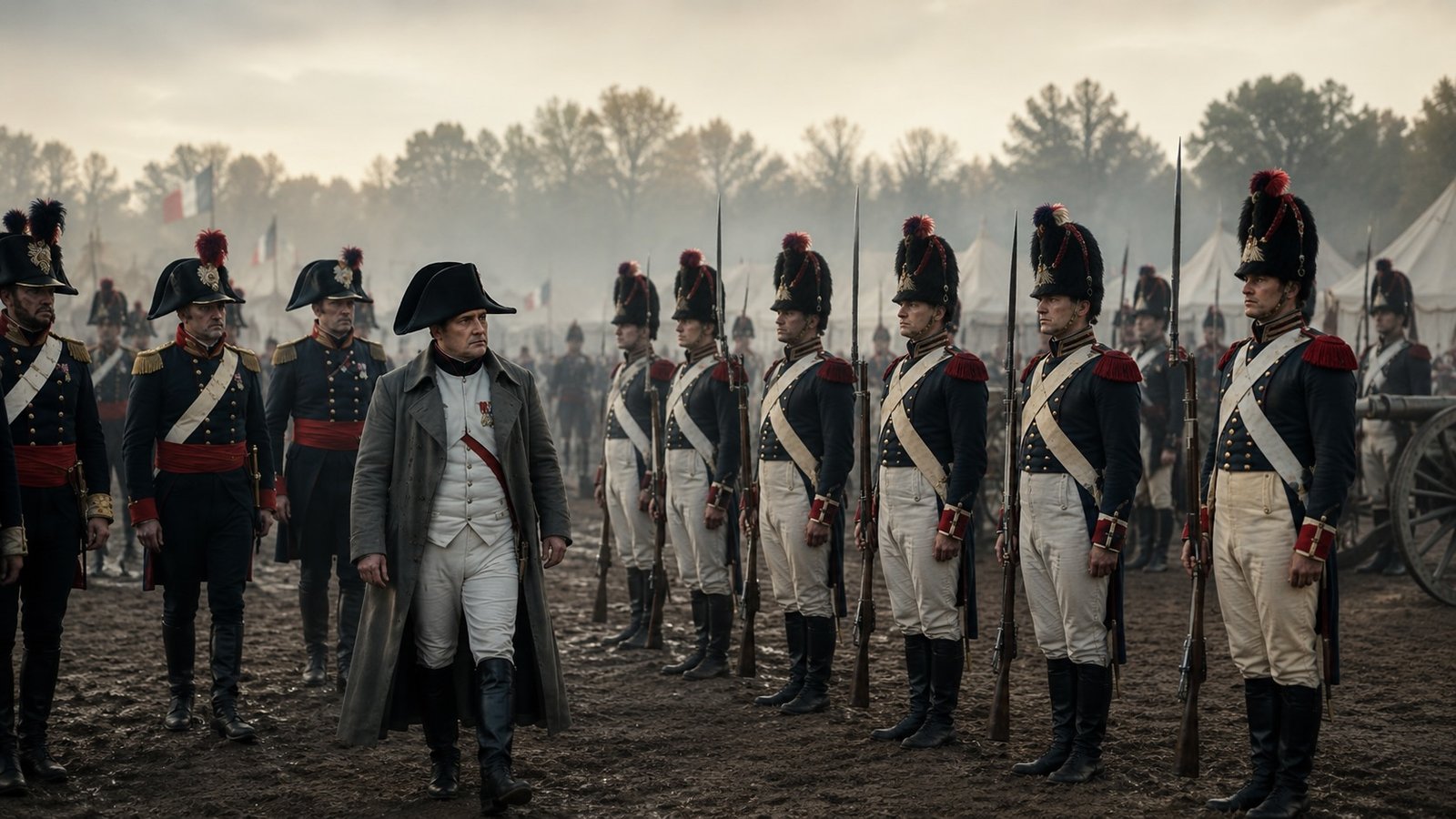
Napoleon Bonaparte conquered much of Europe, reorganised France, crowned himself emperor and inspired several coalitions of nervous monarchs to unite against him. Yet popular culture remembers one crucial detail above almost everything else: apparently, he was very short. Not merely below average, either, but comically tiny, forever standing inside an enormous hat while shouting orders at people twice his size.
There is only one problem with this wonderfully durable image. Napoleon was not especially short. Most estimates place him at around 1.68 metres, or approximately five feet six inches in modern British measurements. That would make him relatively short by modern standards, although hardly extraordinary. More importantly, it placed him close to the average height of a Frenchman during his lifetime and possibly a little above it. Napoleon did not tower over his contemporaries, but neither did he need a footstool to inspect a battlefield map.
The confusion begins with a measurement recorded after his death on Saint Helena in 1821. His height appeared as five pieds, two pouces and several lignes. Anyone reading that as five British feet and two British inches would naturally imagine a very small man. However, France and Britain did not use identical units.
Before France fully standardised the metric system, the French pied measured about 32.5 centimetres. A French pouce, or inch, measured roughly 2.7 centimetres. The British foot and inch were shorter. Consequently, five feet two inches in old French measurements did not equal five feet two inches in Britain. Once converted, Napoleon’s recorded height comes out closer to five feet six or five feet seven, depending on which surviving measurement and calculation you accept.
In other words, Europe’s most famous supposedly short man partly fell victim to poor international unit conversion. It resembles someone reading a temperature of 30 degrees Celsius, assuming Fahrenheit and preparing for snow. The number looks familiar, so nobody pauses to ask whether the scale has changed. The misunderstanding alone, however, cannot explain why the myth became so powerful. For that, Napoleon needed help from Britain’s thriving propaganda industry.
Britain and France spent years at war, while the prospect of a French invasion haunted the British public. Napoleon represented military genius, revolutionary disorder, continental domination and, from the British government’s perspective, a dangerously persuasive political brand. Defeating him required armies, fleets, money and alliances. Mocking him required only ink, paper and a talented caricaturist.
James Gillray provided the talent. One of the greatest political cartoonists of his age, Gillray transformed Napoleon into “Little Boney”, a miniature, temperamental figure swallowed by oversized boots, swords and hats. In his prints, the French leader kicked furniture, stamped his feet, carved up the globe or behaved like an angry child denied a favourite toy.
The joke worked because it reduced a terrifying enemy to manageable proportions. A man threatening to invade Britain looked less frightening when portrayed as a tantrum-throwing toddler. His vast ambition became overcompensation. His military aggression became childish bad temper. Rather than confront the uncomfortable reality of a highly capable ruler commanding enormous armies, Britons could laugh at a pocket-sized despot with delusions of grandeur.
Gillray did not necessarily invent every element of the image, but he gave it unforgettable visual form. Political caricatures circulated widely, appeared in shop windows and reached audiences who might never read a detailed military report. A successful cartoon could compress foreign policy into one ridiculous picture. Napoleon understood the power of such images and reportedly regarded British caricaturists as serious enemies.
His nickname, “the Little Corporal”, added another convenient ingredient. French soldiers called him le Petit Caporal, but the phrase did not function as a medical assessment of his height. It expressed affection and familiarity.
Napoleon earned the nickname during the Italian campaigns of the 1790s, when he built a reputation for sharing danger with ordinary troops and personally involving himself in battlefield details. “Petit” could suggest youth, closeness or fondness rather than physical tininess. The soldiers essentially treated their young general as one of their own, despite the obvious difference in rank.
English speakers later encountered “Little Corporal” alongside caricatures of “Little Boney” and drew the most obvious conclusion. If everyone kept calling him little, surely he must have been little. Language, like measurement, quietly betrayed him.
His surroundings may also have strengthened the illusion. Napoleon often appeared beside officers, guards and courtiers selected partly for impressive stature. The grenadiers of the Imperial Guard included notably tall men, and their bearskin caps added even more height. Place an average-sized ruler among unusually large soldiers and he will appear smaller, especially when an enemy cartoonist has already prepared the audience to notice the contrast.
Portraiture created another complication. Official artists presented Napoleon as a monumental figure surrounded by imperial symbols, dramatic landscapes and obedient subordinates. British satirists reversed that formula. They shrank the man while enlarging his ambitions, producing a visual joke that audiences understood instantly.
Later generations added psychology to the story. The phrase “Napoleon complex” came to describe an allegedly aggressive short man who seeks power to compensate for his stature. The theory sounds plausible enough to survive dinner-party conversation, although psychology offers little support for treating it as a universal rule. Worse, its most famous supposed example did not fit the premise.
Napoleon certainly possessed ambition, sensitivity to criticism and an appetite for control. He also governed during revolutionary upheaval, fought repeated wars and believed deeply in his own historical importance. None of that requires a height-based explanation. Sometimes an emperor invades Russia because of diplomacy, strategy, pride and catastrophic judgement, not because someone laughed at his shoes.
The myth survives because it tells a satisfying story. We enjoy imagining that vast ambition must emerge from some small personal insecurity. It makes frightening power seem psychologically simple. Napoleon conquered kingdoms because he felt inadequate; case closed, Europe explained.
Reality offers a more interesting lesson. Measurements can mislead when people ignore their original systems. Nicknames can change meaning when they cross languages. Caricatures can outlive official histories, while a good joke can defeat accuracy for centuries.
Napoleon was not a giant, but he was not the tiny figure of British cartoons either. His reputation shrank because propaganda, translation and visual comedy worked together remarkably well. Britain eventually helped defeat him on the battlefield, yet Gillray achieved something perhaps even more permanent: he made the world picture Napoleon standing several inches shorter than he really did.