How Did Beethoven Compose Music While Deaf?
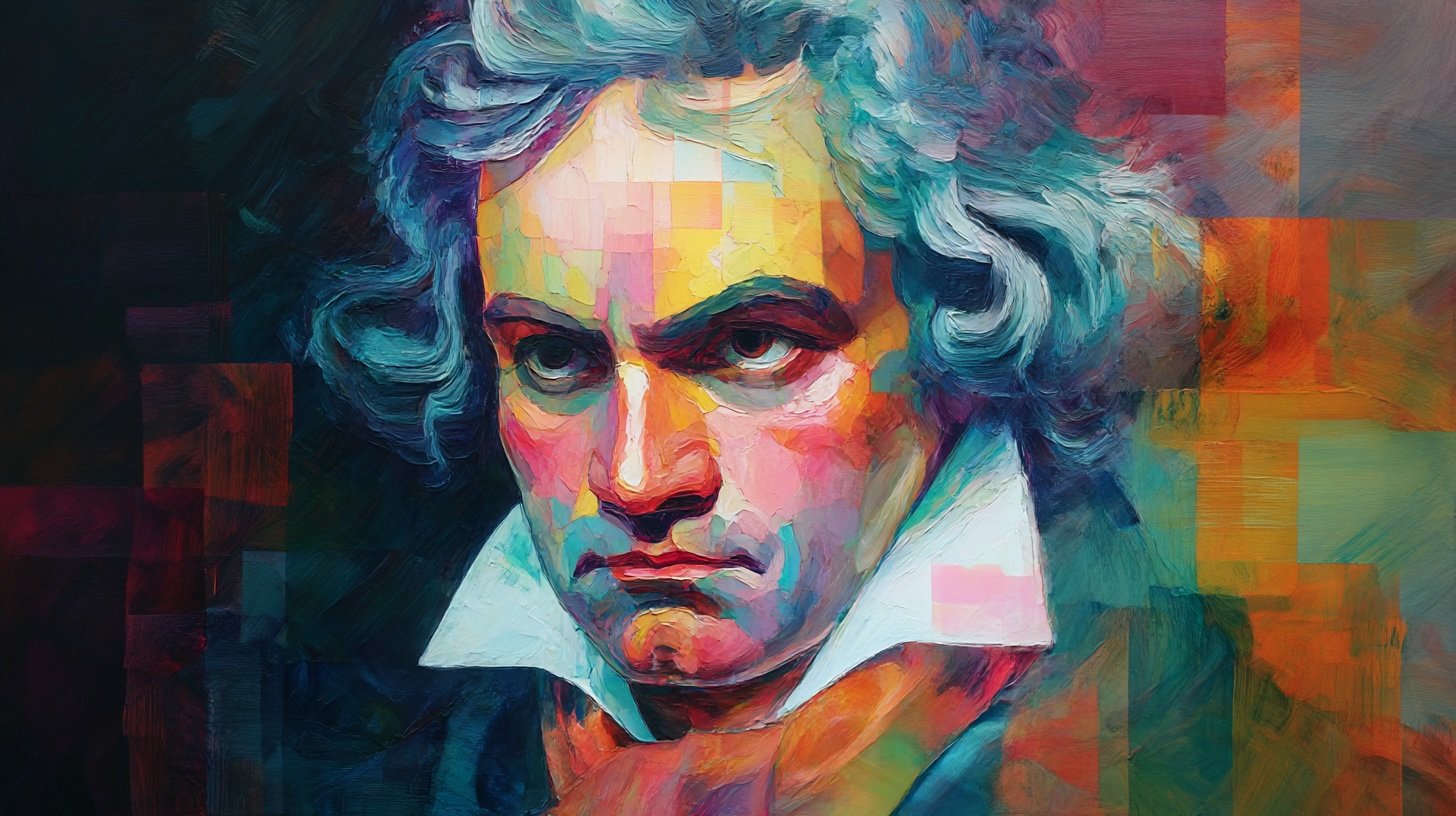
Imagine a chef losing the ability to taste, a painter slowly going blind or a professional footballer discovering that his legs have begun ignoring instructions. Ludwig van Beethoven faced the musical equivalent. He started losing his hearing while still building his reputation as one of Vienna’s most exciting pianists, yet he went on to write the Ninth Symphony, the late string quartets and some of the most extraordinary piano music ever composed. The obvious question sounds almost too obvious: how could a deaf man write music?
First, Beethoven did not suddenly wake up in complete silence. His hearing deteriorated gradually over many years. He probably noticed the first serious symptoms during the late 1790s, when he was still in his twenties. High-pitched sounds became difficult to distinguish, conversations grew confusing and tinnitus produced unwanted noises of its own. By 1802, the problem had become frightening enough for him to describe his despair in the private document now known as the Heiligenstadt Testament.
At that stage, however, Beethoven could still hear. He continued performing, conducting and listening, although increasingly imperfectly. His condition worsened throughout the following decade. By around 1817 or 1818, ordinary musical listening had become extremely difficult, and he began relying heavily on written conversation books. Visitors wrote their remarks in notebooks, while Beethoven often answered aloud because his speech remained intact.
So Beethoven’s deafness resembled a long, uneven retreat rather than a theatre curtain dropping between two movements. That distinction matters because he had time to adapt. More importantly, he had already spent most of his life absorbing the sounds of instruments, chords, voices, rhythms and orchestras.
A trained composer does not need to play every note to know how it sounds. Musicians develop what teachers call an inner ear: the ability to imagine music without hearing it externally. Many experienced players can look at a score and hear at least an approximate version in their minds. Beethoven possessed this ability at an exceptional level, supported by an extraordinary memory and decades of practical experience.
He knew, for example, how a violin behaved in different registers, how a horn could cut through an orchestra and how certain combinations of notes created tension. He understood the weight of a low piano chord and the brilliance of a high trumpet line. Deafness removed his access to immediate acoustic feedback, but it did not erase this enormous mental library.
Think of a chess grandmaster examining a position without moving the pieces. The board exists physically, yet most of the real activity takes place internally. The player imagines several possible sequences, tests them mentally and rejects weak variations. Beethoven worked in a comparable way, although his chessboard contained melodies, harmonies, rhythms, instrumental colours and structures lasting perhaps an hour.
Moreover, he did not usually receive a perfect symphony from the heavens and write it down before breakfast. His surviving sketchbooks reveal a relentless, sometimes messy working process. He tested short motifs, changed rhythms, crossed out passages, rearranged ideas and returned to the same material repeatedly. The famous opening of the Fifth Symphony sounds inevitable now, but inevitability often requires a surprising amount of editing.
This method became especially important as his hearing faded. Paper served as a laboratory. Beethoven could examine musical relationships visually and intellectually, just as a mathematician manipulates symbols without needing to see physical objects representing every equation. He understood the rules of harmony so thoroughly that he could predict how notes would interact, even when he could no longer confirm the result through normal listening.
He may also have used physical vibration. Pianos transmit sound through wood, strings, keys and floors, and a person with severe hearing loss can sometimes sense aspects of rhythm or resonance through touch. Stories claim that Beethoven attached a wooden or metal rod to his piano and held it between his teeth so vibrations travelled through his jaw. Bone conduction itself works, but the precise details of Beethoven’s supposed device remain less firmly documented than popular retellings suggest.
In any case, vibration would not have allowed him to experience an entire orchestra with perfect clarity. It might have helped him detect resonance, rhythm or the physical response of the piano. It could not explain the complicated counterpoint, orchestration and emotional architecture of his late works. The real instrument behind those achievements sat between his ears, even as the ears themselves became increasingly uncooperative.
His ability to play also changed over time. During his early career, Beethoven ranked among Europe’s finest improvising pianists. Audiences admired his power, imagination and dramatic personality. As his hearing worsened, however, performing became dangerous. He could strike the piano too forcefully, fail to notice balance problems or lose coordination with other musicians.
Reports from later performances describe uncomfortable scenes. Beethoven sometimes continued playing after an orchestra had stopped, apparently unaware that the ensemble had fallen apart. Eventually, he withdrew from public piano performance. Therefore, the claim that he remained a fully functioning concert pianist while completely deaf creates a misleadingly heroic picture. He adapted magnificently as a composer, but deafness severely damaged his performing career.
The premiere of the Ninth Symphony in Vienna in 1824 produced the most famous story associated with his condition. Beethoven stood near the orchestra and followed the score, but another musician directed the actual performance. When the audience applauded, Beethoven reportedly remained facing the performers, unable to hear the reaction. A singer turned him around so he could see the crowd’s enthusiasm.
The scene sounds almost suspiciously cinematic, yet contemporary accounts broadly support it. Still, it should not reduce Beethoven to a tragic statue gazing silently at applause. His later music shows neither surrender nor simple compensation. Instead, it became stranger, freer and more ambitious.
Some listeners have argued that deafness liberated Beethoven from practical expectations. Since he could no longer hear contemporary performances normally, he supposedly began writing for an imagined future audience. That interpretation contains an attractive grain of truth, although it risks turning disability into a convenient explanation for every innovation. Beethoven changed because he aged, experimented, studied earlier music, confronted personal crises and pursued new artistic goals. Deafness formed part of that story, not the entire plot.
His late string quartets demonstrate the result. They contain abrupt contrasts, unusual structures, dense counterpoint and moments of startling simplicity. Early audiences sometimes found them baffling. Later generations recognised that Beethoven had expanded the possibilities of musical form. Ironically, the man who could barely hear external music created works that demanded new ways of listening from everyone else.
Another myth suggests that he stopped caring about sound and composed through pure mathematics. Yet Beethoven’s scores remain intensely concerned with tone, texture, dynamics and instrumental character. He did not abandon sound; he reconstructed it internally. His imagination continued to supply what his damaged hearing could no longer provide reliably.
Perhaps the best comparison comes from language. Someone who has spoken English all their life can silently compose a sentence without saying it aloud. They hear its rhythm mentally, sense whether a word feels awkward and revise it before speaking. Beethoven performed this operation with a vastly more complicated language. Instead of verbs and nouns, he manipulated themes, keys, orchestral colours and rhythmic patterns.
His achievement therefore depended on preparation as much as genius. Before losing his hearing, he had spent thousands of hours playing, improvising, studying scores, listening to instruments and learning exactly what musical choices produced. When silence closed in, that experience did not disappear. It became his private orchestra.
Beethoven could no longer hear music as most people did. Nevertheless, he remembered sound, imagined it, analysed it and shaped it on paper. He also sensed vibrations and used whatever remaining hearing he retained during the long progression of his condition. Rather than composing despite having no relationship with sound, he composed through a relationship with sound that had moved largely into memory and imagination.
That may make the story less supernatural, but it makes Beethoven more remarkable. No magical trick allowed him to write the Ninth Symphony. He relied on knowledge, stubborn revision, mental hearing and an almost unreasonable refusal to stop. Silence did not give him his music. It simply failed to take the music away.ed into history and made sure we’d never forget him.