The History of Porter: London’s Original Working-Class Beer
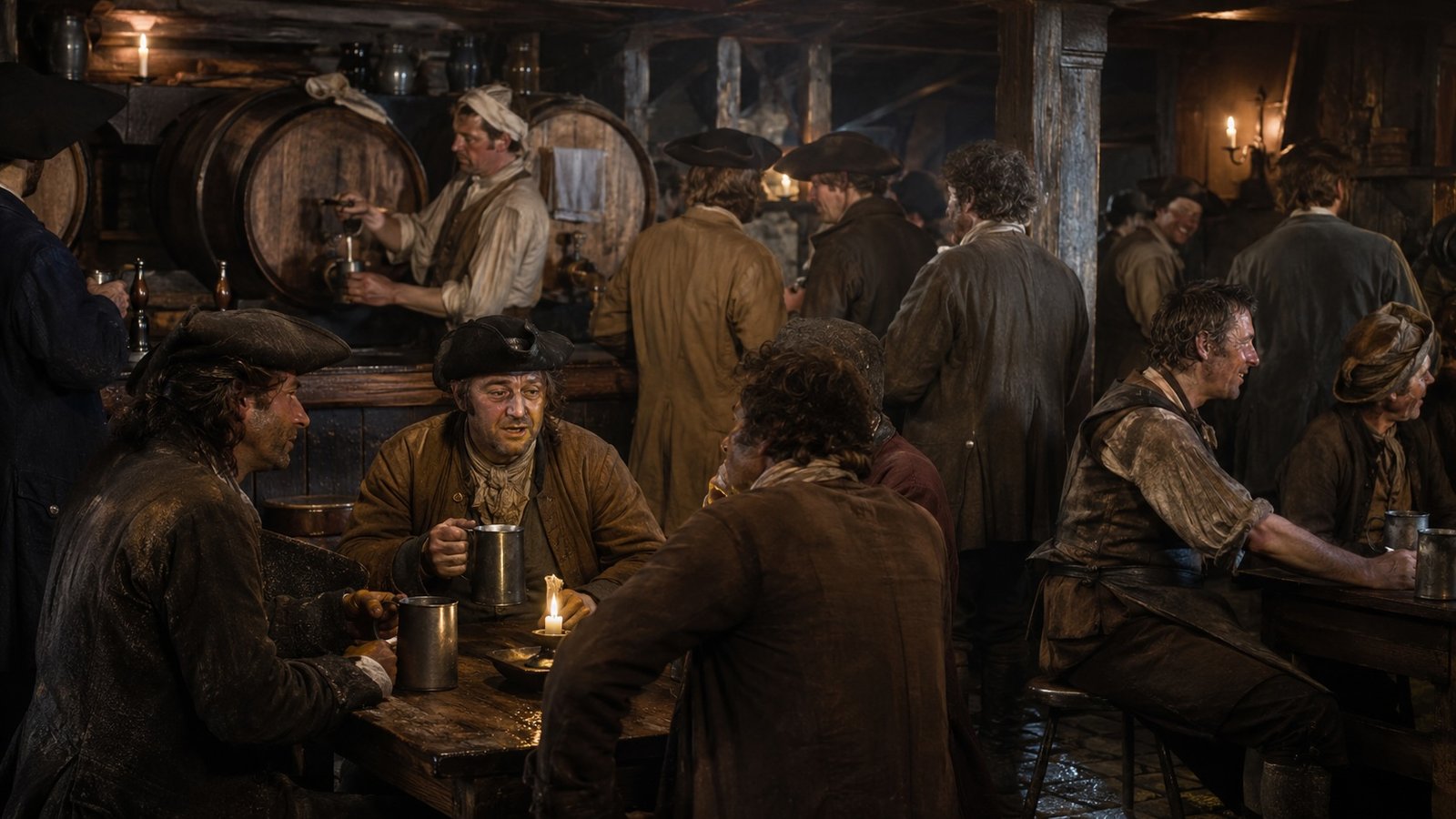
Porter did not begin in a peaceful country brewhouse surrounded by barley fields and rosy-cheeked villagers. It emerged in early eighteenth-century London, a crowded, smoky and relentlessly busy city where everything moved by muscle, cart, boat or shouted instruction. Thousands of labourers carried goods through streets, markets, warehouses and riverside wharves. These men became known as porters, and they developed a particular fondness for a dark, nourishing and reasonably affordable beer.
At least, that explains the name. The exact birth of porter remains slightly less tidy, because beer history rarely behaves like a carefully labelled museum exhibit. It resembles a pub table after closing time: several convincing stories, a few missing pieces and someone confidently repeating something that probably never happened.
Londoners already drank brown beer before anyone called it porter. Brewers made it largely from brown malt, which produced a dark colour and a toasted, sometimes smoky flavour. During the early 1700s, they began improving this familiar beer, strengthening it, hopping it more generously and allowing it to mature. The result kept better, travelled better and offered a satisfying balance between fresh sweetness and aged sharpness.
For generations, books claimed that a brewer named Ralph Harwood invented porter around 1722. According to the popular tale, customers liked ordering a mixture of three beers known as “three threads”. Harwood supposedly saved publicans the trouble by brewing all three qualities into one drink called “entire”. It sounds beautifully efficient: one clever brewer, one brilliant idea and one grateful city.
Unfortunately, historians have found little evidence that events unfolded so neatly. Harwood certainly brewed in London, and publicans certainly mixed beers. However, porter seems to have evolved gradually from existing London brown beer rather than appearing fully formed from one man’s brewing copper. The “three threads” story emerged decades later and grew more elaborate as writers repeated it. Beer acquired an inventor because people prefer heroic origin stories to slow commercial development.
The word “entire” also caused confusion. It probably referred to beer drawn entirely from one brew or cask, rather than a magical combination of three separate drinks. Porter therefore represented refinement, not spontaneous creation. London brewers responded to changing tastes, taxation, competition and the practical needs of a huge urban market. Less romantic, perhaps, but much more interesting.
Porter suited London perfectly. Its heavy hopping helped it last, while maturation softened its rougher edges. Brewers could make enormous quantities, store the beer in vast wooden vats and blend mature porter with younger beer before sending it to pubs. Customers received a consistent pint, or at least something approaching consistency by eighteenth-century standards. In an age when food and drink regularly arrived with unwanted surprises, reliability counted as a luxury.
The beer also fitted working life. Porters, market workers and other labourers wanted something filling, refreshing and available throughout the city. We should resist the sentimental image of beer acting as a wholesome Georgian energy drink; it still contained alcohol, and London hardly lacked drunkenness. Nevertheless, beer supplied calories, tasted better than questionable water in many settings and offered a brief pause from exhausting physical work.
As demand grew, porter transformed brewing from a substantial trade into something resembling modern industry. London breweries became enormous. Whitbread, Truman, Barclay Perkins and other firms invested in bigger buildings, mechanical equipment, steam power and vast storage vessels. Their premises impressed visitors like industrial cathedrals, although cathedrals rarely smelled so strongly of malt, yeast and horses.
Those vats became symbols of ambition. Brewers built them ever larger and occasionally held dinners inside before filling them with beer, because Georgian businessmen understood publicity. The vessels stored thousands of barrels at once, allowing porter to mature on a scale that smaller brewers could barely imagine. Size brought efficiency, yet it also brought risks that no sensible marketing brochure mentioned.
In October 1814, a huge vat at the Horse Shoe Brewery near Tottenham Court Road burst. The escaping porter smashed other vessels and sent a destructive wave of beer into the surrounding neighbourhood. Buildings collapsed, streets flooded and nine people died. The London Beer Flood later acquired cheerful retellings about residents rushing outside with pots and drinking from gutters. In reality, it was an industrial disaster in a poor district, not an unusually generous street party.
Meanwhile, porter travelled far beyond London. British merchants exported it to Ireland, continental Europe, North America, India and the Baltic region. Its durability made it useful for long journeys, while its dark colour and strong flavour gave it a recognisable identity. Porter became one of the first beer styles to achieve genuinely international popularity.
Different countries then adapted it. Brewers around the Baltic developed stronger versions suited to local tastes and colder conditions. Over time, many Baltic porters used bottom-fermenting lager yeast rather than the warm-fermenting ale yeast associated with British porter. These beers often became smoother, stronger and richer, with flavours suggesting dark bread, dried fruit, caramel and chocolate.
Ireland created the most famous branch of the family. Dublin brewers initially competed with imported London porter, then began making their own. Arthur Guinness shifted his brewery towards porter, and stronger versions gained the description “stout porter”. In eighteenth-century brewing language, “stout” simply meant strong. Customers eventually shortened stout porter to stout, turning an adjective into a beer style.
This creates the enduring pub question: what is the difference between porter and stout? Historically, the border never stayed fixed. Stout began as stronger porter, not as an entirely separate invention. Modern brewers sometimes distinguish them through ingredients, describing porter as softer and maltier while giving stout more roasted barley and sharper coffee notes. Yet plenty of beers ignore that convention. A brewer could label the same dark beer porter on Monday and stout on Tuesday without causing the universe to collapse.
Porter’s dominance began fading during the nineteenth century. Pale ales attracted drinkers with their brighter appearance and increasingly fashionable reputation. Improvements in glassware made colour more visible, giving golden beer a marketing advantage. Mild ale also became popular as a sweeter, fresher and cheaper alternative. Porter, once the energetic drink of modern London, gradually acquired the image of something old-fashioned.
Wars, taxation and restrictions on brewing strength weakened it further. British beers generally lost alcohol during the twentieth century as governments limited raw materials and raised duties. Porter became thinner and less distinctive, while stout retained a clearer identity, especially through Guinness. By the middle decades of the century, porter had almost disappeared from Britain. A beer that helped create industrial brewing had become a historical footnote.
Then independent brewers began looking backwards for ideas. The late twentieth-century revival of traditional and craft brewing encouraged experiments with forgotten recipes, old malt combinations and historic beer names. Porter returned because it offered complexity without requiring the aggression of an imperial stout. It could taste of toast, nuts, cocoa, coffee, caramel or dark fruit while remaining relatively drinkable.
Modern porter now comes in several personalities. English versions tend to favour balanced malt, gentle roast and moderate strength. American interpretations may use more hops or stronger roasted flavours. Baltic porter often arrives with the alcoholic confidence of a dessert that has stolen someone’s brandy. Brewers also add coffee, vanilla, smoked malt, spices and occasionally oysters, proving that historical respect rarely prevents modern mischief.
Yet the most fascinating porter still connects us with London. A pint carries traces of crowded wharves, dray horses, smoky malt, cavernous breweries and labourers who gave the beer its name. It also tells a wider story about industrialisation. Porter grew because brewers learned to manufacture, mature, blend, transport and market one product on an unprecedented scale.
So porter was not simply another dark beer waiting for stout to replace it. It helped invent the modern beer industry, travelled across continents and produced several styles that still thrive today. Its history contains invention myths, commercial rivalry, technological ambition and one horrifying flood. That is quite a career for a drink whose name probably began with men carrying other people’s luggage.