Walk through Toledo and sooner or later you will encounter a sword. Usually sooner. They hang in shop windows beside suits of armour, medieval daggers and objects apparently designed for people whose interior decoration involves considerably more weaponry than average. Some look magnificent. Others look as though King Arthur might have bought them at an airport gift shop. Yet the connection between Toledo and swords runs much deeper than tourism. For centuries, the Spanish city ranked among Europe’s great centres of blade-making, and a Toledo sword represented craftsmanship, prestige and, most importantly for its owner, a reasonable chance of surviving an argument conducted with sharp metal.
Toledo’s relationship with blades reaches back into antiquity. The Iberian Peninsula already had sophisticated metalworking traditions before Roman domination. Iberian warriors used weapons such as the distinctive curved falcata, while Roman armies adopted Spanish sword designs and developed the famous gladius hispaniensis. However, connecting every ancient Spanish sword directly to Toledo requires caution, because later writers loved extending Toledo’s reputation backwards, sometimes with more enthusiasm than evidence. What we can say confidently is that central Spain developed a formidable tradition of working iron and steel, and Toledo eventually became its most famous name.
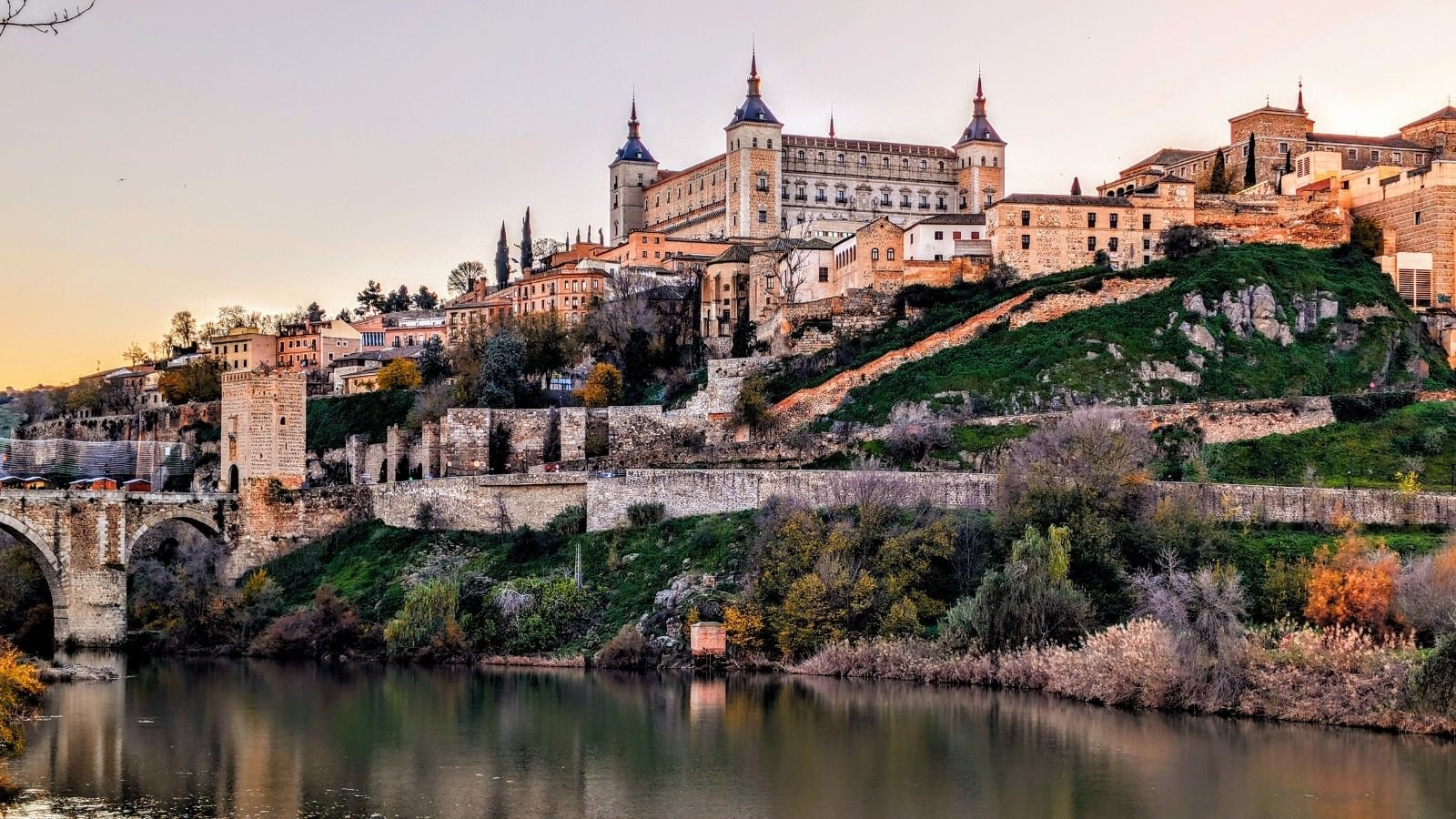
The city had several advantages. Toledo sits dramatically above the River Tagus and occupied an important strategic position in Iberia. Romans, Visigoths, Muslims and Christians all controlled it at different times, and each civilisation brought craftsmen, techniques and commercial connections. Under Islamic rule, Iberian metalworkers also had access to technological traditions stretching eastwards through the Mediterranean and Islamic world. When Christian forces captured Toledo in 1085, they inherited a sophisticated urban economy rather than an empty medieval film set waiting for knights to appear. By the later Middle Ages, Toledo’s swordsmiths had become celebrated, and their reputation grew further during the fifteenth and sixteenth centuries, when Spain emerged as a major European and global power.
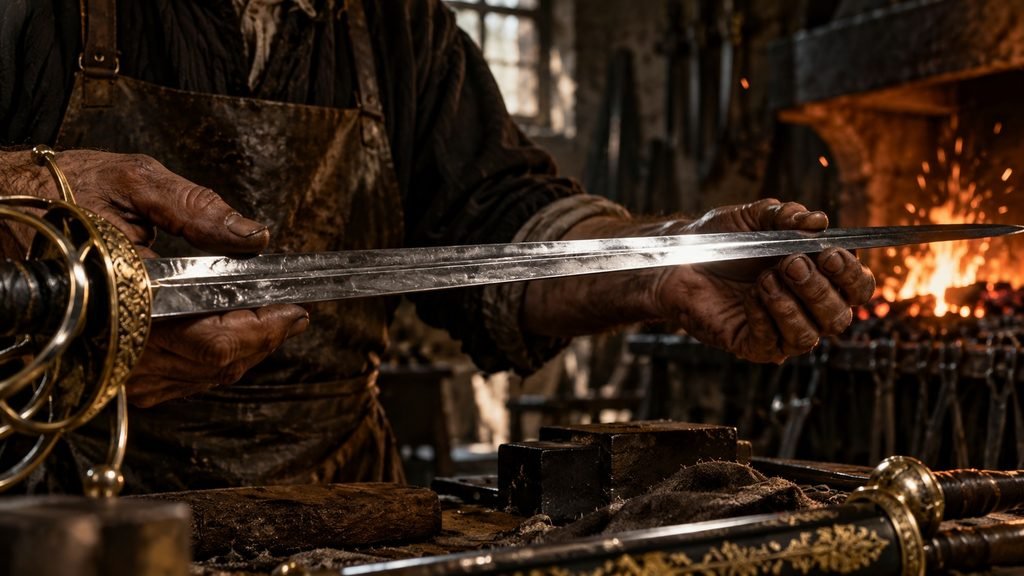
A fine sword needed two characteristics that do not naturally cooperate. It had to be hard enough to hold a sharp edge, yet flexible enough not to snap when struck. That sounds obvious until you try making one with pre-industrial metallurgy. Historical Toledo blades could combine materials with different carbon contents through forge-welding, using a softer iron or lower-carbon core for resilience while harder steel contributed strength and cutting ability. The exact techniques changed across periods and workshops, but the principle involved carefully managing competing properties. Modern metallographic examination of a sword from Toledo’s Royal Manufactory found two steels with different carbon contents welded together by hot forging. In other words, the celebrated performance of Toledo steel did not require alchemy. It required extremely good craftsmen.
Naturally, people preferred alchemy. One enduring legend claimed that the water of the Tagus gave Toledo swords their special qualities. Craftsmen supposedly quenched heated blades in river water, whose mysterious properties transformed ordinary steel into something exceptional. Historical descriptions certainly mention Tagus water during tempering, and they also mention the pale sand found beside the river. Eventually the Tagus became almost another ingredient in Toledo steel, alongside iron, carbon and professional secrecy. The romantic explanation has obvious appeal because a magical river running beneath an ancient city sounds much better than controlled carbon content and heat treatment. Unfortunately for romantics, there is little reason to believe Toledo’s water possessed supernatural metallurgical powers. The real magic happened in the workshop.
Temperature mattered enormously, yet medieval craftsmen had no digital thermometer displaying 800°C. They judged heat through colour, experience and timing, building up a practical knowledge that could take years to master. Accounts even describe smiths using prayers, songs or verses to measure intervals while working the metal. Religion, rhythm and metallurgy could therefore occupy the same forge without anyone finding the arrangement peculiar. This sort of detail explains why sword-making became more than a trade. It was a mixture of skill, ritual, observation and inherited workshop knowledge, with each generation learning from the previous one.
Another confusion surrounds Damascus steel. Toledo steel and Damascus steel often become interchangeable in popular storytelling, but they belong to different traditions. Damascus itself became famous during the Middle Ages for sword manufacture, while Toledo developed its own reputation in western Europe. Ideas and metallurgical knowledge travelled enormous distances, particularly through Islamic trade and cultural networks, but that does not make every famous patterned blade a Toledo sword or every Toledo sword Damascus steel. The confusion grows because Toledo also became renowned for damascening, although despite the similar name this concerns decoration rather than the fundamental structure of a sword blade. Craftsmen create intricate patterns by inlaying gold or silver into another metal, traditionally iron or steel, and Toledo still specialises in this extraordinarily delicate craft.
Jewellery, plates, boxes and decorative weapons covered in gold patterns provide a rather elegant reminder that humans rarely remain satisfied with making something dangerous. We eventually decide it needs decoration. That instinct helped transform Toledo’s metalworking tradition into something artistic as well as functional, and it remains one of the reasons the city’s craftsmanship has survived long after swords lost their practical importance.
By the sixteenth and seventeenth centuries, Toledo stood alongside Solingen in Germany as one of Europe’s principal sources of prestigious sword blades. Museum collections still contain rapiers whose blades originated in Toledo even when craftsmen elsewhere produced their elaborate hilts. The rapier suited a changing Europe. Long, slender and designed increasingly for thrusting, it became both weapon and gentleman’s accessory. Wearing one communicated status as effectively as an expensive watch does today, although Rolex ownership generally causes fewer accidental puncture wounds. Toledo’s fame also attracted imitation, because a celebrated name creates counterfeiters whether the product happens to be a designer handbag or a seventeenth-century instrument for stabbing someone.
Then technology committed the usual offence against tradition. Firearms gradually reduced the sword’s military importance, and by the eighteenth century Toledo’s old craft industry had declined sufficiently for King Charles III to intervene. In 1761 he established the Royal Sword Factory, bringing sword production under a more organised system. The factory later moved beside the Tagus, where Francesco Sabatini designed an impressive new complex and water power helped operate machinery. Sword-making had travelled from individual workshops towards industrial production, and Toledo adapted by turning an old craft into a more systematic military industry.
The factory expanded enormously during the nineteenth and twentieth centuries. It eventually produced ammunition and other military equipment as warfare moved far beyond swords. At its height, the complex became practically an industrial town within Toledo. Production finally ended in the late twentieth century, and in one of history’s more pleasing conversions, much of the former weapons complex became a university campus. Buildings once devoted to manufacturing things designed to injure people now accommodate students and researchers, which feels like a fairly civilised use of industrial archaeology.
The swords, however, never disappeared from Toledo. Modern visitors can still watch craftsmen work metal, learn about sword-making and see damascening performed by hand. Genuine artisanal work survives beside an enormous souvenir trade offering everything from historical reproductions to fantasy weapons. This creates one of Toledo’s more entertaining contradictions. The city that once armed soldiers and aristocrats now supplies visitors who must somehow explain an enormous medieval sword when they get home. Yet dismissing the modern trade as tourist kitsch misses something important. Toledo has successfully converted an industrial reputation into a cultural identity, and the sword has become shorthand for the city itself.
Perhaps that explains why Toledo deserves its unofficial title as the capital of swords. Other cities produced superb blades. Solingen became equally legendary in Europe, while Damascus gave its name to an entire mythology of steel. Toledo cannot claim to have invented the sword, nor did some mysterious ingredient in the Tagus turn ordinary iron into indestructible weapons. Its achievement was more interesting. Generation after generation of Toledo craftsmen learned how to control difficult materials with remarkable precision, and their blades travelled across Europe while their reputation outlived the military usefulness of the product.
Today you can stand above the Tagus and look across one of Europe’s most spectacular historic landscapes. Somewhere below are the old workshops, the former Royal Factory and shops containing enough swords to equip several imaginary kingdoms. The warriors have gone, but the steel remains.