The Strange Habits of Nikola Tesla
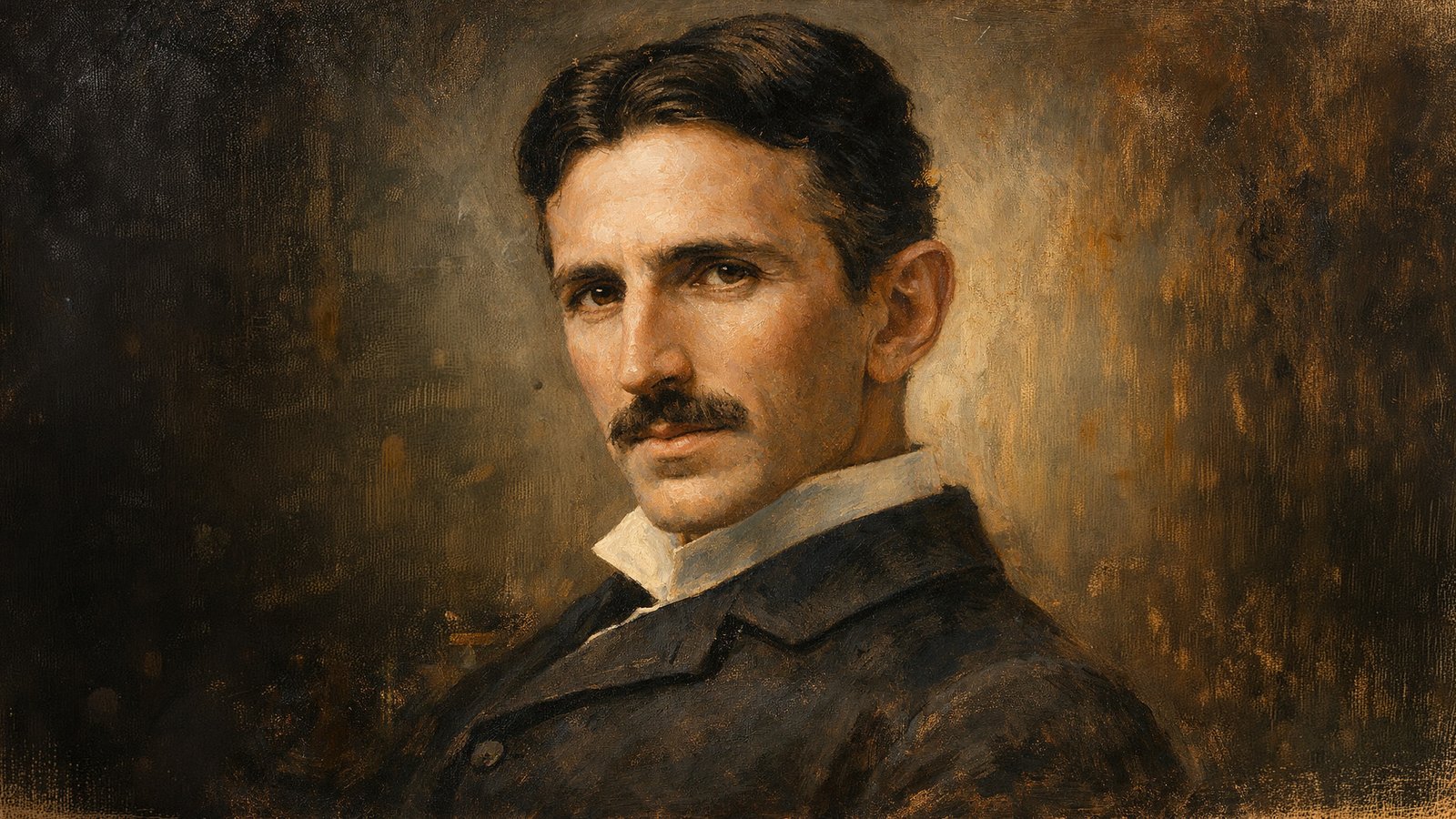
Nikola Tesla tends to arrive in popular culture like a bolt of theatrical electricity: lightning in the lab, sparks in the dark, a stare intense enough to power half of Manhattan. Yet the man himself often looked less like a sleek prophet of the future and more like someone who had wandered out of an elegant hotel dining room after arguing with the cutlery. Genius, in Nikola Tesla ’s case, rarely travelled alone. It dragged a suitcase full of rituals, fixations, private rules, and odd loyalties with it.
That is part of what makes him so fascinating. We like our inventors to look either magnificently sane or gloriously mad. Tesla refused to make things so convenient. He could imagine wireless communication, remote control, and a transformed electrical world, then spend his evening obsessing over cleanliness, counting his steps, and arranging life around the number three as though the universe had signed a private contract with arithmetic.
By the time he lived in New York hotels, his routines had become the stuff of legend. He liked exactness in everything. He reportedly wanted hotel rooms with numbers divisible by three. He used stacks of napkins at meals. He polished his utensils and glasses long before eating, even when the staff had already done the job perfectly well. One biographer’s version makes him sound like a man dining inside a tiny sanitary emergency of his own design. The comic part, of course, lies in the contrast. Here was a figure associated with colossal systems, giant turbines, planetary visions, and the future of civilisation, defeated nightly by the possibility that a spoon might not be clean enough.
Then again, maybe “defeated” is the wrong word. Ritual gave Tesla control. He lived in a period when electricity itself still seemed half magic to much of the public. His own mind worked at intimidating speed, and he often described vivid mental imagery so strong that he could test inventions in his head before building them. For a person wired like that, routine may have offered a railing at the edge of the staircase. Not glamour, not mysticism, just structure. There is something almost modern about it. Strip away the Edwardian tailoring and the grand moustache, and you can recognise the familiar human bargain: the world feels chaotic, so you build private systems and hope they hold.
His aversion to germs formed another layer of the performance, though “performance” should not make it sound fake. Friends and observers described a man deeply uneasy with dirt, contamination, and physical contact. He disliked handshakes. He cared intensely about hygiene. In some accounts he washed compulsively and reacted strongly to dust, jewellery, and certain textures. Pearls apparently bothered him so much that he would avoid speaking to women who wore them. It sounds absurd until you remember that plenty of real psychological distress sounds absurd from the outside. We should be careful here. Modern readers often rush to diagnose historical figures from a distance, and Tesla frequently gets labelled with obsessive-compulsive disorder as if a century-old anecdote were a clinical file. The evidence suggests obsessive tendencies and compulsive routines. Anything more precise belongs to medicine, not myth-making.
And then there was the number three, which followed him around like an especially persistent stage assistant. Tesla supposedly circled buildings three times before entering. He favoured repeated actions in threes. He liked room numbers that fit the pattern. Later internet culture inflated this into the now tiresome legend that Tesla had uncovered a cosmic code in 3, 6, and 9 and basically handed humanity the keys to the universe, only for humanity to misplace them somewhere between self-help manifestos and motivational reels. The truth looks less mystical and more personal. Three seems to have functioned as a ritual number, a fixed point in a mind that preferred order to randomness. That is stranger in a subtler way. It turns Tesla from occult wizard back into a very human man who could not quite stop counting.
His daily habits could feel equally surreal. He ate carefully, often spoke about health, and treated the body almost like a machine that needed proper tuning. He claimed to need very little sleep, though the exact number shifts with the telling and probably says more about Tesla’s appetite for self-mythology than about sound medical advice. He enjoyed long walks. He worked intensely. He cultivated discipline as though idleness were a moral failure. Yet his discipline never looked calm. It had a feverish edge, as if he did not merely want to organise life but to outwit it.
That edge becomes most poignant in his relationship with pigeons. On paper, this should be the detail that tips the whole portrait into parody. Great inventor of the modern age, lonely old man in Manhattan, emotionally attached to park birds. It sounds invented by a novelist worried that the character lacked symbolism. Unfortunately for anyone who prefers restraint, it appears to be true. Tesla fed pigeons in the city and brought injured ones back to his room to care for them. He commissioned special seed mixtures. Hotel managers, one assumes, had mixed feelings.
At the centre of these stories stands the famous white pigeon. Tesla spoke about her with startling intensity. He said he loved that bird as a man loves a woman and that while she was with him, his life had purpose. Those words still stop people short, partly because they are tender and partly because they are undeniably unsettling. Yet strip away the easy jokes and something sadder comes into view. Tesla never married and openly argued that romantic attachment could interfere with an inventor’s work. He built a life around intellect, discipline, and distance, then in old age appears to have poured deep affection into a creature that asked for no social performance, no compromise, no ordinary domesticity. The pigeon was not just a pigeon. She was companionship without negotiation.
This is where Tesla becomes less marble statue and more difficult, vulnerable person. We prefer our geniuses packaged as brands: Edison the hustler, Einstein the oracle, Tesla the misunderstood wizard of electricity. Real lives refuse that neatness. Tesla could be brilliant, vain, disciplined, theatrical, lonely, visionary, and bizarre all in one afternoon. He promoted grand claims that drifted into self-created myth. He also ended his life in relative isolation, clinging to routines that made sense mostly to him.
That does not reduce his greatness. It makes it more believable. The man who imagined systems vast enough to reshape the modern world still needed napkins lined up, numbers to behave, and birds at the window. Perhaps that is the real marvel. Not that genius floats above ordinary human fragility, but that it often grows right in the middle of it, fussing over germs, counting to three, and waiting for a pigeon to come home.