Imagine arriving just before dusk, your clothes stiff with dust, your patience thinner than the leather straps holding your cargo together. The desert has stopped pretending to be dramatic and settled into something more practical: heat that lingers, wind that stings, and a horizon that refuses to move closer no matter how long you stare at it. Your camels are done negotiating. They kneel without ceremony. You follow their lead, because arguing would be pointless. Then, just as the light begins to flatten into evening, a wall appears.
Not a mirage, not a promise, but a structure with a gate, thick enough to mean something. You move towards it with the quiet urgency of someone who understands risk. Inside, there will be water if you are lucky, a place to sleep if you are quick, and other travellers who will pretend not to watch you while absolutely watching you. You will do the same. Nobody here is careless, but everyone is relieved. This is the caravanserai.
Only later, when distance has turned discomfort into something almost charming, does the place begin to sound romantic. In the moment, it is simpler. It is survival with walls, trade with a lock on the door, and the closest thing to safety you will find between cities. The caravanserai is part hotel, part warehouse, part stable, part business lounge, and entirely necessary.
The word itself comes from Persian, combining caravan and saray, meaning something like a place or palace for caravans. Palace might feel generous when one imagines the smell alone, but the ambition behind these buildings was serious. Across Iran, Central Asia, Anatolia, the Arab world, and parts of South Asia and North Africa, caravanserais turned dangerous journeys into slightly less dangerous ones. That distinction mattered. Travelling long distances with silk, spices, metalwork, dyes, paper, horses, carpets, or precious stones required more than brave merchants and good weather. It required infrastructure. No empire ever advertised that part very well, because “our civilisation succeeded thanks to careful placement of wells, walls, fodder, and secure storage” lacks a certain poetry. Yet that was often the truth.
Most caravanserais were built roughly a day’s journey apart, which meant the rhythm of the road often followed the rhythm of pack animals rather than any grand philosophical plan. A merchant did not stop because the sunset looked particularly moving over the desert. He stopped because the camels were exhausted, the water skins were low, and sleeping outside with valuable cargo was a terrible idea. So the caravanserai appeared like a promise in brick or stone: one gate, thick outer walls, a broad courtyard, rooms around the edges, storage areas below, lodging above, water if fortune smiled, and enough order to get everyone through the night without losing either merchandise or dignity.
That layout tells you everything about its purpose. This was not an inn in the modern sense, with charm, local character, and a handwritten breakfast menu. It was a machine for movement. The central courtyard created space for animals to kneel, be unloaded, watered, and fed. Rooms along the sides gave merchants a place to sleep, argue over prices, count coins, repair tack, and keep one eye on their goods. Some caravanserais had prayer rooms, baths, workshops, and little commercial corners where supplies could be bought or sold. In cities, related buildings such as khans, wikalas, and funduqs became dense urban versions of the same idea, less about desert survival and more about storage, brokerage, trade, and urban commerce.
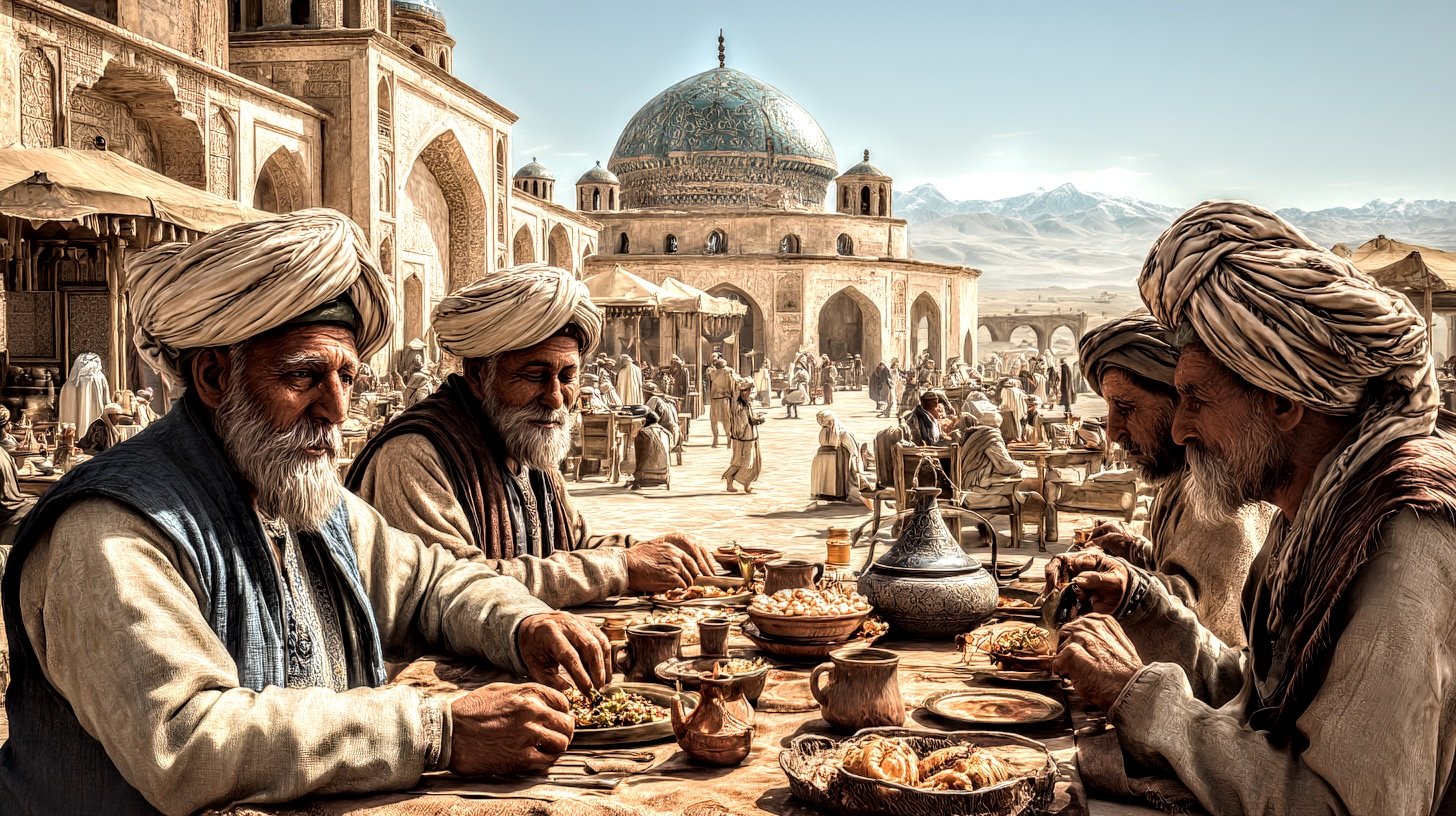
Naturally, the caravanserai became one of the Silk Roads’ great theatres of accidental proximity. A silk merchant from one end of Asia, a horse trader from the steppe, a pilgrim on the move, a local official, a translator, a cook, and a man trying to sell something probably unnecessary could all end up inside the same courtyard by evening. Goods changed hands there, but so did rumours, religious ideas, songs, recipes, technologies, medical knowledge, and gossip of heroic uselessness. Persian medical texts travelled with merchant-scholars; techniques in tilework and glazing quietly migrated with artisans moving between cities; even accounting practices evolved as traders adapted to new currencies and contracts.
Yet proximity did not mean equality. Language often decided who negotiated and who listened. Wealth shaped access to space, security, and influence within the walls. Gender and social norms limited who could participate in these exchanges at all. A place designed to protect commerce kept producing culture as a side effect, but not everyone had the same voice in shaping it. Nobody needed a conference on intercultural exchange. They just needed shelter, warm food, and enough curiosity to ask the stranger next to them where he had come from and why his saddlebags smelled of cinnamon.
That is why caravanserais matter far beyond architecture. They show how exchange really happens. It rarely arrives wrapped in noble slogans. More often it begins with practical need. Someone wants to sell wool. Someone else wants paper. A third person wants news from the next city and a fourth wants directions, water, and maybe a blacksmith. From that messy combination comes contact. Languages bend. Customs rub against each other. Words migrate. Dishes absorb foreign ingredients. Beliefs travel with pilgrims and teachers. Techniques move with artisans. The road carries silk, yes, but it also carries habits.
Still, the dreamy image of the caravanserai as a perfectly harmonious crossroads needs a little discipline. These places existed because travel was risky. Banditry was real. Tolls could be painful. States and rulers did not support trade routes merely out of affection for cultural dialogue. They wanted revenue, legitimacy, control, and movement under watch. Caravanserais made trade possible, but they also made it legible. Goods could be counted, travellers observed, routes stabilised, and taxes collected with greater efficiency. Even hospitality, in other words, had paperwork lurking somewhere in the background. Human civilisation remains very loyal to that habit.
There is another myth worth dropping gently onto the floor: the Silk Road was never just one road, and caravanserais were not all identical desert forts sprinkled evenly from China to the Mediterranean. The whole system was a shifting network shaped by season, war, politics, topography, and access to water. Caravanserais changed with it. Some were monumental, built by rulers eager to project order, like Sultan Han in Anatolia, with its grand stone portal and fortified presence that still feels closer to a citadel than an inn. Some were modest, such as Rabati Malik in present-day Uzbekistan, standing exposed along the road with just enough structure to promise shelter rather than comfort. Others, like Dayr-e Gachin in Iran, operated almost as desert compounds, strategically placed to support long stretches of travel where options were limited.
In cities, related structures such as wikalas and khans performed a similar role in denser environments, blending storage, trade, and accommodation into the fabric of urban life. These variations reflected local needs rather than a single master blueprint, although the underlying logic remained wonderfully stubborn: protect people, animals, and goods so the road can keep functioning tomorrow.
And then there are the camels, who deserve more credit than decorative postcards usually allow. The caravanserai without camels would have been a shell without a system. These animals made long-distance overland trade possible across punishing landscapes because they could carry heavy loads, cope with harsh conditions, and survive stretches that would have defeated more delicate transport arrangements. The camel was the true supply chain manager of the premodern world, only furrier and with worse manners. The caravanserai was built around that reality. Gates had to admit loaded animals. Courtyards had to hold them. Water and fodder had to be available. Commerce was not just housed there; it was anatomically planned around humps, hooves, and stubbornness.
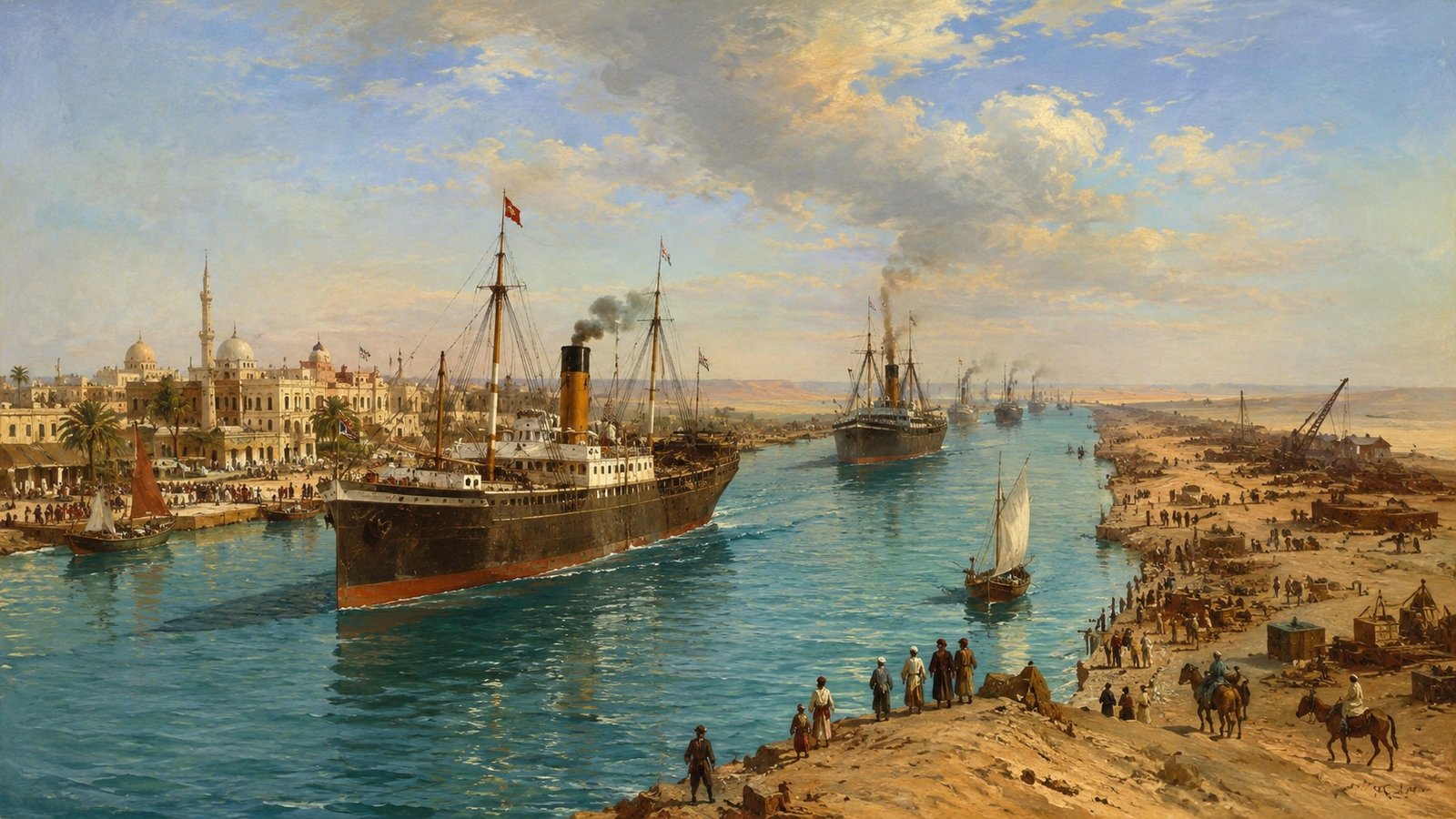
What makes the story even better is that caravanserais never fully disappeared as an idea, even if their original system did. By the 19th century, the slow choreography of camel caravans began to lose its dominance. Railways cut across continents with far less patience. Steamships shifted trade towards maritime routes. New political borders and colonial systems restructured how goods and people moved. The long-distance overland networks that had sustained caravanserais for centuries gradually thinned, and with them, the steady rhythm of arrivals at their gates.
The buildings remain across a huge geography, and many have been restored, reused, studied, or folded into modern heritage routes. In 2023, UNESCO recognised 54 Persian caravanserais as World Heritage sites, underlining that these were not scattered relics but parts of a coherent and influential system. Some now function as museums, cultural venues, or tourism sites. Others survive as ruins, which may be the most honest ending possible. A place built for movement cannot entirely escape stillness forever.
Yet the romance persists, and perhaps this time it has earned it. Not because caravanserais were comfortable, though they could be life-saving. Not because everyone who entered them became instant friends, because human beings have never worked that neatly. They matter because they reveal a simple truth about civilisation: culture does not spread only through grand empires, famous conquerors, or official masterpieces. Quite often it spreads because strangers stop for the night, water their camels, share a meal, compare prices, trade rumours, and leave in the morning carrying a little more of each other than they had planned.