Can Seismic Stations Really Predict Earthquakes?
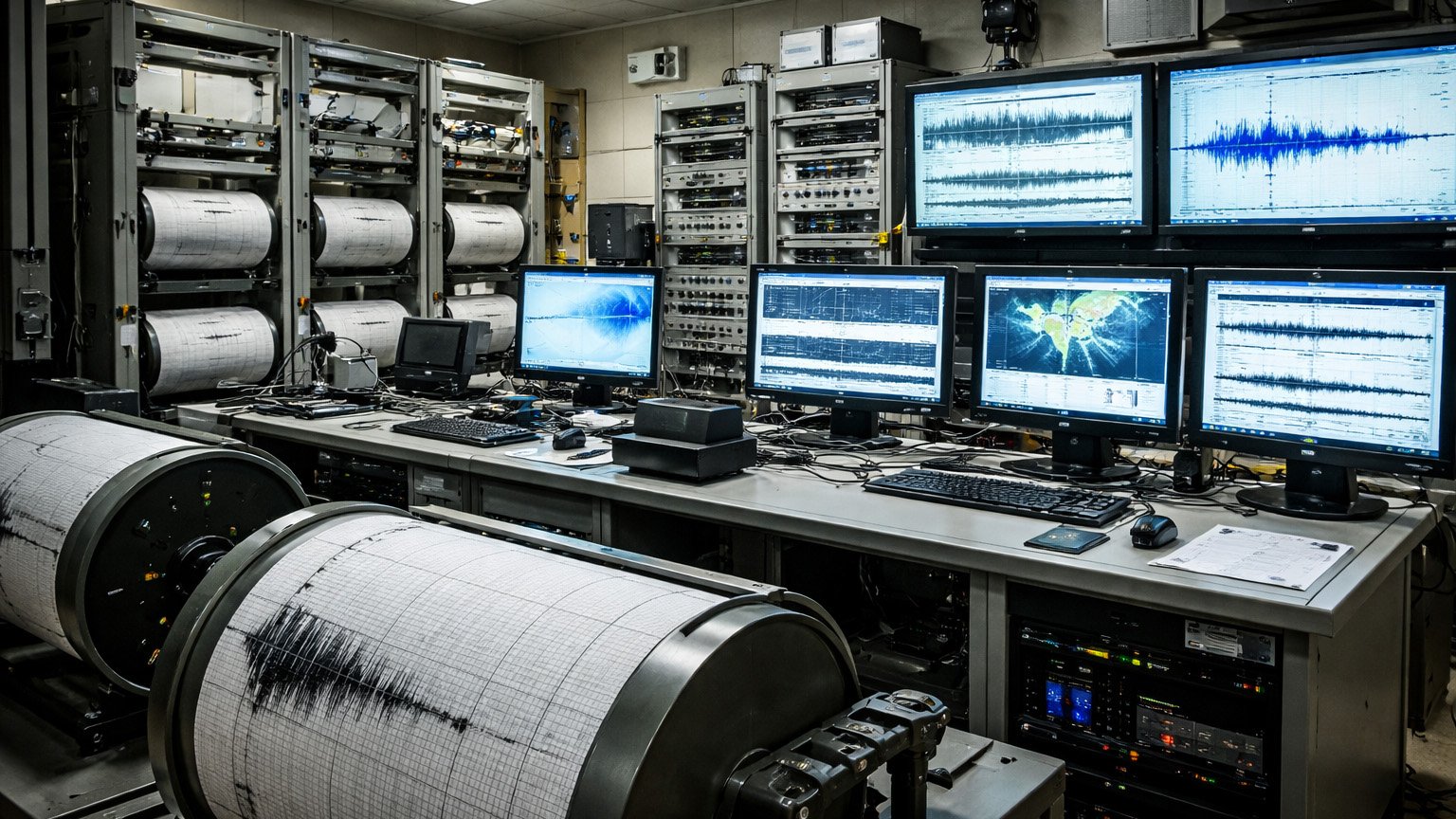
People love the idea that somewhere in a quiet room full of screens, blinking lines and very serious scientists, a seismic station might suddenly whisper that a major earthquake will strike on Thursday at 3:17 pm. It is an attractive fantasy. It makes the planet seem difficult, but not truly uncontrollable. We imagine hidden signals, a clever machine, and one expert finally cracking the code. Yet the reality is both less cinematic and, in its own way, more fascinating.
A seismic station does not work like a fortune teller. It works like a listener. Its instruments, usually seismometers, record vibrations travelling through the Earth. They pick up tiny local tremors, large distant earthquakes, quarry blasts, and sometimes even human noise. Networks of stations then help scientists locate where a quake happened, estimate its magnitude, and understand how energy moved through the ground. In Britain, for example, the British Geological Survey operates the national earthquake monitoring network and uses those data to analyse seismic activity and inform hazard assessment. In other words, these stations are brilliant at detection, measurement and mapping risk. Prediction, however, is another matter entirely.
That distinction matters because the word predict gets used far too casually. In seismology, a genuine prediction would need three things: the time, the location and the magnitude, all specified with enough precision to be useful. That is the standard the US Geological Survey uses, and by that standard neither the USGS nor any other scientific body has learned how to predict major earthquakes. Not next week, not next Tuesday, not before lunch. Science can estimate probabilities over time, but it cannot currently deliver the neat, dramatic certainty people often imagine.
This is where the first myth crashes into the wall. Myth: seismic stations can see a big quake building and announce it before it starts. Reality: stations usually know an earthquake is happening only once the rupture has already begun. They are reacting extremely fast, not peering into the future. That may sound disappointing, but it is exactly how earthquake early warning works. Systems such as Japan’s Earthquake Early Warning network and the US ShakeAlert system detect the first, faster seismic waves from an earthquake already in progress, calculate what is likely to follow, and then send alerts before the stronger shaking arrives in other places. That can buy seconds, sometimes tens of seconds. Enough to slow trains, pause surgery, stop lifts at a floor, open firehouse doors, or give people time to duck, cover and hold on. Useful, yes. Prediction, no.
The second myth is more romantic: animals always know first. This idea has survived from ancient Greece to modern group chats. Dogs bark, birds vanish, snakes panic, and surely the seismic station just needs to catch up with the goat. The problem is evidence. Scientists have collected many anecdotes about unusual animal behaviour before earthquakes, but anecdotes are not reliable forecasting tools. Animals behave oddly for all sorts of reasons, and most of the time nothing happens afterwards. That creates a perfect machine for selective memory. We remember the one spooky coincidence and forget the hundred false alarms. Researchers still study these reports, because ignoring nature completely would be silly, but no operational prediction system today relies on animals as a dependable earthquake oracle.
Then there is the more technical version of the same dream. People point to radon gas spikes, electromagnetic signals, strange clouds, earthquake lights, foreshocks or bursts of tiny tremors and say, there, that must be the warning sign. Here the honest answer is awkward. Some of these phenomena may be real in some cases. Foreshocks, for instance, do precede some major earthquakes. Earthquake lights have moved from pure folklore into the category of disputed but plausible geophysical phenomena. Radon anomalies are still investigated. Machine learning can now detect subtle seismic patterns far better than older methods could. So the door is not shut. But none of these signals has proved consistent, universal and specific enough to serve as a trusted public prediction method. A precursor that sometimes appears, sometimes does not, and often appears without any major earthquake afterwards is scientifically interesting, but operationally maddening.
That is why seismologists increasingly prefer the language of forecasting rather than prediction. Forecasting deals in changing probabilities. It asks whether the likelihood of an earthquake has risen in a region over days, years or decades, rather than pretending science can issue a clean appointment in the diary of the Earth. Long-term hazard maps do this by showing where damaging shaking is more likely over decades. Operational earthquake forecasting pushes the idea further by updating probabilities after swarms or significant events. Aftershock forecasting is already used in practice, because once a substantial earthquake has happened, scientists can estimate the odds of more shaking in the hours, days and weeks ahead. That is not glamorous, but it saves confusion and helps emergency planning.
The controversy enters when public hope outruns scientific caution. Every few years, a claimed breakthrough appears. Artificial intelligence will solve it. Satellite data will solve it. Deep borehole sensors will solve it. Somewhere, someone insists that officials ignored a warning. Sometimes these claims arise from genuine research that the media stretches far beyond what the data support. Sometimes they come from outsiders who mistake patterns in noisy data for certainty. Earthquakes are especially cruel in this respect because, with enough signals and enough hindsight, almost anything can look meaningful after the event.
And that brings us back to seismic stations. What can they actually do? Quite a lot. They build earthquake catalogues. They reveal active faults and aftershock sequences. They improve engineering standards. They feed hazard models used in planning, insurance and infrastructure design. They help tsunami systems and early warning networks. They allow scientists to spot swarms, compare past ruptures, and test whether a supposed precursor was real or just another trick of hindsight. They do not offer crystal-ball prophecy. They offer something more grounded: disciplined listening to a noisy planet.
So can seismic stations predict earthquakes? No, not in the way most people mean. They cannot tell us with reliable precision that a major quake will strike a particular place at a particular time and size. But dismissing them as useless would be absurd. They are central to detection, forecasting, early warning once a rupture begins, and the long, patient work of reducing seismic risk. The myth promises certainty. Reality offers probability, seconds of warning, and a steadily improving understanding of how the Earth breaks. That may sound less thrilling than prophecy. Then again, reality usually does, right up until the ground starts moving.