For most of human history, cold was not something you made. Instead, it was something you waited for or prayed for. People stored it, buried it, or stole it from winter. Sometimes, they even shipped it across oceans at great expense. Therefore, the history of refrigeration begins long before modern fridges and freezers. It starts with a simple problem: food spoils, heat wins, and nobody wants suspicious milk.
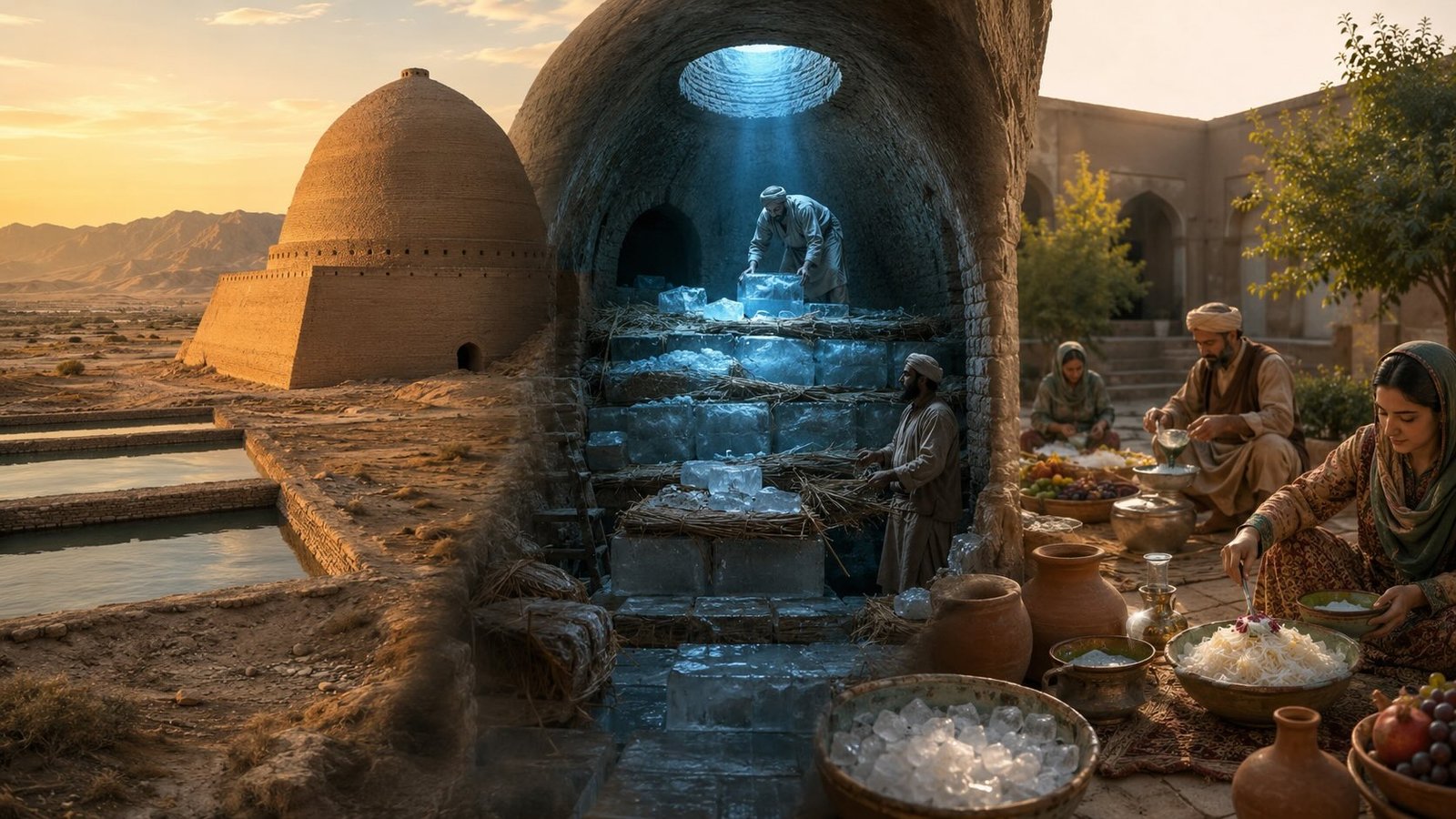
Ancient people knew how to keep things cool without modern tools. For example, in Persia, structures called yakhchāls used thick walls and underground storage. They also used wind-catchers and evaporative cooling to store ice in hot climates. As a result, the idea seemed almost magical. People collected winter ice and protected it from the sun. Meanwhile, elsewhere, people stored snow in pits or packed ice in straw. They lowered food into wells or used caves. In addition, some placed food in cold running water. Although this was not modern refrigeration, it showed the same instinct. Nature offered cold, and humans tried to keep it.
Then came the ice trade. At first glance, it may sound quaint, but it became a serious business. In the nineteenth century, frozen lakes in New England became valuable. Workers cut large blocks of ice and packed them in sawdust. Subsequently, they shipped them to warmer cities and even tropical regions. Frederic Tudor, known as the “Ice King,” helped build this trade. For instance, he sent ice to Martinique in 1806. Initially, people thought it was a strange idea. However, it later proved successful. Ice King supplied homes, restaurants, and hospitals. Nevertheless, the system depended on reliable winters and clean water, which were not always guaranteed.
The scientific breakthrough came when people tried to create cold. In 1755, William Cullen showed artificial cooling. Specifically, he created a vacuum over ether, which absorbed heat as it boiled. Consequently, this produced a small amount of ice but no practical machine. Still, the idea was important. In fact, cold was not a substance; rather, it came from moving heat.
In 1805, Oliver Evans described a refrigeration cycle. Although he did not build it, his ideas were influential. Later, Jacob Perkins built a working system in the 1830s. This system used vapour compression. Even today, most modern refrigerators still use this principle. A refrigerant absorbs heat, gets compressed, and releases heat. Then, the cycle repeats. Although Perkins did not become famous, his work shaped the future.
Medicine also encouraged progress. For example, Dr John Gorrie wanted to cool hospital rooms in Florida. In 1850, he showed a machine that made ice. As a result, this amazed people who expected ice to come from colder places. However, Gorrie struggled financially and died poor. His story reflects the challenges inventors often face. Nevertheless, his work pointed toward air conditioning and mechanical cooling.
By the late nineteenth century, refrigeration moved into industry. For instance, breweries used it to control temperature. Meatpacking and dairies also benefited. Moreover, Carl von Linde improved refrigeration systems in the 1870s. Consequently, his machines made cooling more practical. This allowed food to travel farther. As a result, people no longer had to eat food near where it was produced. Therefore, this change reshaped trade and diets.
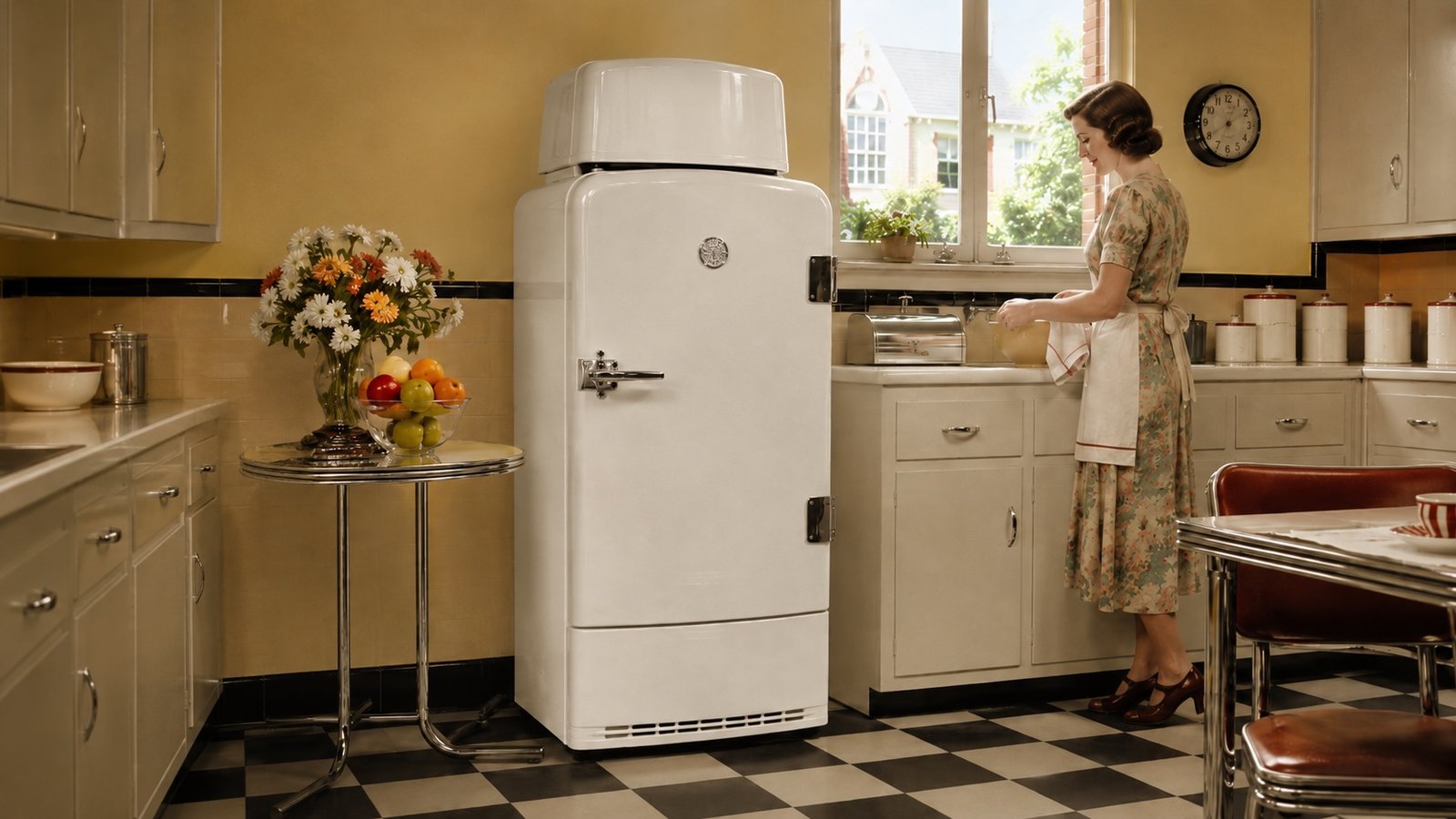
Domestic refrigeration developed more slowly. Initially, early machines were expensive and bulky. As a result, many homes used iceboxes instead. These cabinets held blocks of ice delivered by icemen. Eventually, electric refrigerators appeared in the early twentieth century. At first, only wealthy households could afford them. However, in 1927, General Electric introduced the “Monitor Top” refrigerator. Over time, it became more affordable. Consequently, refrigerators became common in homes.
Refrigerants created new challenges. Initially, early ones included ammonia and sulphur dioxide. Although they worked, they could be dangerous. Therefore, in the late 1920s, chlorofluorocarbons seemed safer. They were stable and non-flammable. As a result, refrigerators became easier to use. However, these chemicals harmed the ozone layer.
By the 1970s, scientists linked CFCs to ozone depletion. Consequently, the Montreal Protocol in 1987 addressed this issue. It helped reduce harmful substances. Later, new refrigerants caused another problem. Specifically, many contributed to global warming. Therefore, the Kigali Amendment now promotes safer alternatives. In this way, refrigeration solved one problem but created others.
Today, the cold chain is essential. It keeps vaccines effective and food fresh. Moreover, it supports global trade. Without it, much food would be lost. According to the UN, poor refrigeration leads to major food waste. Therefore, better systems could reduce this loss. In some places, refrigeration means convenience. In others, it means survival.
Some myths surround refrigeration. For example, one claims it made food unnatural. In reality, older methods often led to spoilage. Another myth says fresh food is always better than frozen. However, sometimes freezing preserves quality better. A third myth suggests refrigeration harmed food culture. In truth, it changed habits but also expanded diets.
Challenges remain. For instance, cooling uses energy, and refrigerants can leak. Furthermore, demand for cooling will rise as the planet warms. This creates a cycle where cooling can worsen warming. Therefore, refrigeration is not the problem itself. Instead, it is a tool that must be used wisely.
Next time your fridge hums, consider its history. After all, it represents centuries of innovation. It connects ancient ice storage to modern science. Ultimately, it is more than a simple appliance. It is a quiet force that shaped civilisation.