Rutabaga: The Vegetable That Survived Everything Except Fashion
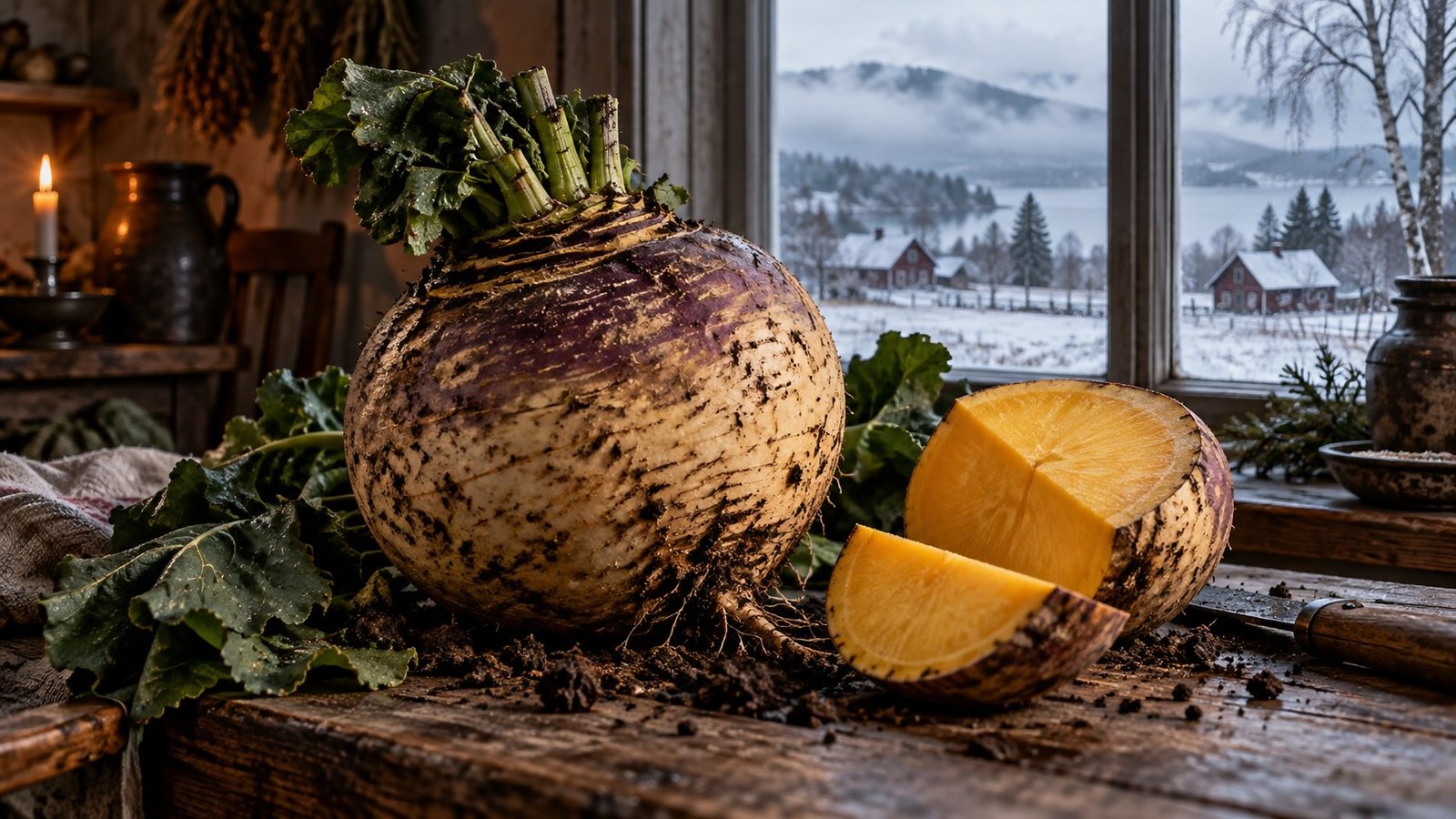
Rutabaga may have one of the worst marketing departments in the vegetable world. It is large, heavy, slightly lumpy and usually dressed in an uninspiring combination of purple and beige. Nobody photographs themselves romantically holding a rutabaga in a field at sunset. Restaurants rarely announce the arrival of rutabaga season with breathless excitement. Yet this stubborn northern root has quietly fed generations, survived severe winters, accompanied haggis, frightened away evil spirits and acquired several different identities along the way.
First, we need to establish what we are talking about. In Britain, most people know rutabaga as swede, short for Swedish turnip. Americans and Canadians generally call it rutabaga. Scots often call it a neep, although regional terminology becomes wonderfully complicated because people sometimes use “turnip” and “neep” for both true turnips and swedes. Ask three people in Scotland precisely what constitutes a neep and you may accidentally start a constitutional debate.
Botanically, however, swede and turnip are different plants. The ordinary turnip belongs to Brassica rapa, while rutabaga belongs to Brassica napus, the same species that includes oilseed rape. Rutabaga probably emerged from an ancient cross between turnip and cabbage. In other words, it comes from a family that somehow managed to produce cabbage, rapeseed and a vegetable resembling a cannonball.
The plant appears to have developed in northern Europe, probably Scandinavia or nearby regions. Written descriptions emerged during the seventeenth century, and by the eighteenth century the Swedish turnip had reached Britain. The name itself preserves that Scandinavian connection. American “rutabaga” comes ultimately from the Swedish dialect word rotabagge, referring to a root vegetable.
Its success made perfect agricultural sense. Rutabaga likes cool climates, tolerates frost and takes several months to mature. Unlike delicate vegetables that react to unpleasant weather as though personally offended, swedes simply continue growing. Farmers can harvest them during autumn and winter, while their dense roots store remarkably well.
That reliability mattered enormously before refrigeration and international supermarkets. Winter eating once depended largely on foods capable of surviving winter. Root vegetables therefore played a much more important role than their current supermarket shelf position suggests. Potatoes, carrots, turnips and swedes were not decorative accompaniments to dinner. They represented stored energy.
Scotland embraced the swede particularly enthusiastically. Mashed neeps became the traditional companion to haggis and tatties, creating perhaps the most famous plate of beige food in Western civilisation. Burns Night preserves the combination, although earlier generations ate root vegetables far more regularly than modern diners do. For poorer households, swedes supplied inexpensive bulk through difficult months when fresh produce became scarce.
Then came the twentieth century and an unfortunate reputational problem. Foods associated with hardship rarely remain fashionable once hardship ends. During the Second World War, Britain’s Ministry of Food encouraged households to make maximum use of vegetables that could grow domestically. Swedes therefore appeared in wartime recipes alongside potatoes and carrots. One extraordinary suggestion combined carrots and swedes in a drink called “Carrolade”. Nothing says national emergency quite like discovering that somebody has liquidised a swede.
Wartime usefulness subsequently became part of the vegetable’s image problem. For generations who remembered rationing, swede could evoke necessity rather than pleasure. It belonged to the culinary category of things you ate because German submarines had disrupted international shipping. Once prosperity returned, increasingly varied supermarkets gave consumers plenty of opportunities to choose something more glamorous.
Yet swede hardly deserves the punishment. Properly cooked, it has a surprisingly sweet, earthy and slightly nutty flavour. Roasting brings out its sugars particularly well, while butter transforms mashed swede into something far richer than its institutional reputation suggests. It works in stews, soups, gratins and purées, while raw swede can provide crunch when grated finely into salads or slaws.
There is also a simple practical rule that improves matters considerably: do not boil it into submission. Generations of British vegetables suffered from the theory that cooking should continue until structural integrity disappeared entirely. Swede needs softening, certainly, but roasting, steaming or controlled simmering preserves far more character.
Nutritionally, it offers another reason for rehabilitation. Rutabaga contains relatively few calories while providing fibre and useful amounts of vitamin C, potassium and several other micronutrients. Like other brassicas, it also contains plant compounds that researchers continue to study for their potential relationship with health. That does not make swede a miracle food, despite the internet’s fondness for declaring practically every vegetable a miracle food.
Eating one will not detoxify your body, reverse ageing or cause your immune system to stand up and applaud. It is simply a nutritious vegetable, which ought to be recommendation enough.
Its strangest cultural connection, however, has nothing to do with dinner. Before pumpkins conquered Halloween, people in Ireland, Scotland and elsewhere in the British Isles carved frightening faces into turnips and other root vegetables. They hollowed them out, placed lights inside and used them as lanterns associated with Halloween traditions and stories of wandering spirits.
Modern pumpkins look positively cheerful by comparison. A carved turnip possesses something genuinely disturbing. Its wrinkled flesh, narrow eye sockets and crooked mouth can resemble a small mummified head. You do not need sophisticated special effects when your vegetable already appears mildly possessed.
Irish immigrants later carried their Halloween customs to North America, where they encountered pumpkins. Pumpkins offered an obvious technical improvement: they were larger, softer and considerably easier to hollow out. The vegetable equivalent of technological disruption had occurred. Turnips lost the lantern market, and pumpkins eventually became internationally synonymous with Halloween.
Rutabaga therefore occupies an unusual cultural position. It sits somewhere between agricultural survivor, national comfort food and historical embarrassment. It carries associations with Scandinavian farming, Scottish dinners, British rationing and old supernatural traditions. Few vegetables have accumulated such an eccentric CV.
Perhaps its current anonymity even works in its favour. Food fashion constantly searches for forgotten ingredients to rehabilitate. Beetroot became fashionable. Kale experienced a transformation so dramatic that people started drinking it. Cauliflower somehow became pizza. Swede has watched all this from the bottom shelf with admirable patience.
It may never become fashionable enough to acquire its own expensive café culture, and perhaps that is for the best. Rutabaga does not need reinvention as a £14 small plate with fermented foam. Cut it into wedges, add olive oil, salt and pepper, roast it until caramelised, and perhaps finish it with butter, thyme or a little mustard. Alternatively, mash it with plenty of butter and black pepper and serve it alongside something robust.
For centuries, that straightforward usefulness kept the vegetable alive in northern kitchens. Rutabaga survived because it grows when the weather turns miserable, stores when other produce disappears and tastes better than its appearance promises. It asks for very little admiration in return.
Post Comment
You must be logged in to post a comment.