Why Gary Cooper Never Fit the Hollywood Machine
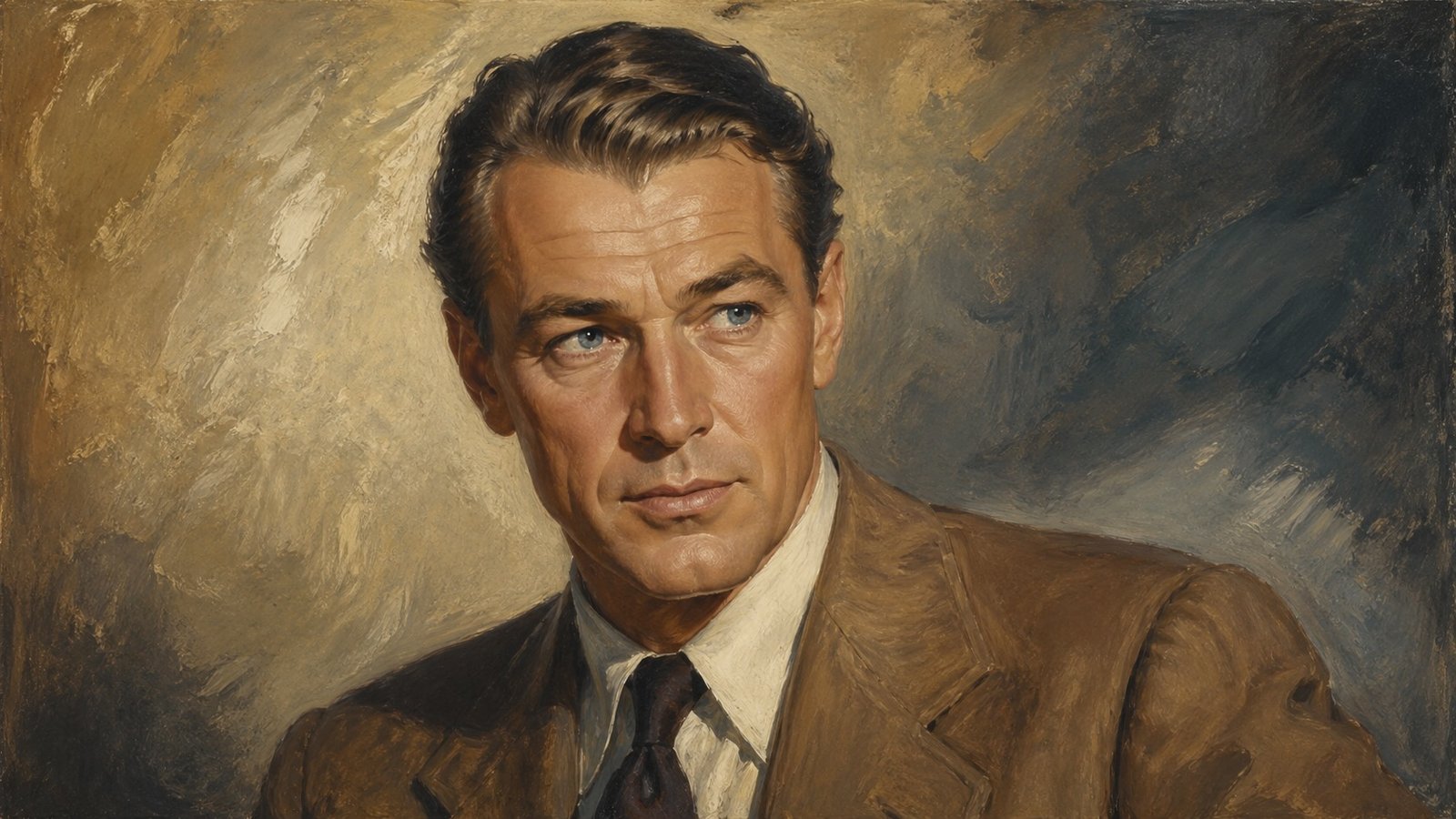
Gary Cooper looked as though Hollywood had found him leaning against a fence and accidentally put him in front of a camera. That was the trick, of course. Nothing in classic Hollywood happened by accident, especially not a star. Studios manufactured glamour with the seriousness of a military operation: hair, posture, wardrobe, gossip columns, carefully fed romances, public appearances, controlled interviews, and a useful amount of mystery. Yet Cooper’s greatest asset was that he seemed allergic to all of it. He became one of the biggest stars of the studio age by looking like the one man in the room who would rather be somewhere else.
That tension followed him from the beginning. He was born Frank James Cooper in Helena, Montana, in 1901, the son of English parents. His father, Charles Henry Cooper, was a lawyer, rancher, and later a Montana Supreme Court justice. His mother, Alice, came from Kent and cared enough about English manners to send her sons to school in Dunstable. So the future cowboy icon arrived with a rather odd mixture in his luggage: Montana dust, British schooling, ranch skills, and a natural reserve that Hollywood would later mistake for heroic depth. Conveniently for everyone, it was heroic depth. It was also shyness, discomfort, and a lifelong suspicion of too much noise.
Cooper did not enter films like a man storming the gates of destiny. He drifted in. In the mid-1920s, he worked as an extra and stunt rider in silent Westerns, partly because he could ride and partly because Hollywood always needed men willing to fall off horses for modest pay. The work was rough, sometimes cruel, and not exactly glamorous unless your idea of glamour includes bruises and dust in places dust should not reach. Still, it gave him something more useful than acting lessons. It gave him physical truth. When Cooper sat a horse, handled a rifle, or crossed a room in silence, he looked as if he had not been taught to do it for the camera. He looked as if the camera had simply caught him mid-life.
His name changed before his nature did. Casting director Nan Collins suggested “Gary”, after Gary, Indiana, and Frank Cooper became Gary Cooper. The new name sounded clean, open, American, and faintly inevitable. Paramount noticed. By the time sound arrived, Cooper possessed a quality that studios could sell but never fully explain. He had height, good looks, a drawling voice, and the great actorly gift of not appearing to act very much. In The Virginian in 1929, he helped define the screen cowboy as laconic, moral, dangerous when necessary, and emotionally economical to the point of national policy.
Hollywood loved that kind of man. Unfortunately, Hollywood also wanted to own him. The early 1930s nearly broke Cooper. Paramount worked him hard, casting him again and again while his sudden fame gathered around him like a crowd he had not invited. He made a punishing number of films in a short period, and the result was not the cheerful ascent that fan magazines liked to describe. By 1931, he was exhausted, ill with anaemia and jaundice, thinner, lonely, and depressed by the absurd speed of his own success. So he did something deeply inconvenient for a studio commodity: he left. He sailed away from Hollywood, travelled to North Africa and Europe, and spent months outside the machine.
There is something almost comic about it. Hollywood had built a hero of American steadiness, then watched him escape to Italy because stardom had made him miserable. Still, the retreat mattered. Cooper returned healthier, more experienced, and less willing to behave like studio property. He negotiated better terms with Paramount, including fewer films and greater control. This did not make him a rebel in the modern, leather-jacketed sense. Cooper did not need to smash furniture to make a point. He simply learned that silence works best when you can afford it.
His discomfort with fame did not stop fame from enlarging him. If anything, it sharpened the myth. In Frank Capra’s Mr. Deeds Goes to Town, Cooper’s Longfellow Deeds walks into a corrupt urban world with rural innocence and a suspiciously useful moral compass. In Sergeant York, he played a reluctant soldier who becomes a national hero. In The Pride of the Yankees, he became Lou Gehrig, a man whose decency seemed too large for ordinary melodrama. Later, in High Noon, Cooper’s Marshal Will Kane stood almost alone while a town practised the ancient civic art of looking the other way.
Again and again, Cooper played men who did not ask for the spotlight but had to stand in it anyway. That was not just casting. It was biography disguised as genre. His heroes rarely swaggered into greatness. They resisted, hesitated, suffered, squinted, swallowed a thought, then did the thing. Hollywood liked heroes with declarations. Cooper specialised in men who looked embarrassed by the need to have principles in public.
The studio system, naturally, preferred something easier to package. It wanted stars who could be sent into the world like polished products. Cooper, however, turned understatement into a brand before branding departments had fully ruined the word. He was elegant but not glossy. Handsome but rarely vain on screen. Masculine without the constant need to announce it, which already put him ahead of several generations of screen tough guys. He became glamorous precisely because he seemed not to chase glamour. That is a dangerous trick. Audiences can smell effort. Cooper’s effort was hidden so well that people mistook it for nature.
This does not mean the private man was identical to the screen saint. Nobody survives Hollywood by being made entirely of clean sunlight. Cooper had affairs, ambitions, political loyalties, professional calculations, and moments of contradiction. He could be conservative in politics yet courageous in friendship. During the making of High Noon, when screenwriter Carl Foreman faced pressure during the anti-Communist investigations, Cooper supported him more openly than many safer, louder moralists did. It was a very Cooperish kind of bravery: not theatrical, not pure, but real enough when it counted.
His later career made the tension clearer. By the late 1940s, Cooper had moved beyond simple studio obedience. He formed International Pictures, then later signed with Warner Bros. on terms that gave him script and director approval. That detail matters because it shows the reluctant hero learning how to survive inside the system without surrendering completely to it. He did not flee Hollywood forever. He negotiated with it. That may sound less romantic, but it is often how adults win.
Still, the irony remained. Cooper became one of the defining faces of Hollywood’s golden age while never quite seeming like a native of that kingdom. He lacked the glittering hunger of some stars and the volcanic self-display of others. Even his pauses felt like refusals. When he spoke, he often seemed to be rationing words in case a national shortage had been declared. Yet those pauses gave audiences room to enter. They could project courage, doubt, decency, pain, and stubbornness into the quiet. Cooper understood, or instinctively discovered, that silence can be more democratic than speeches.
That is why his fame lasted. The machine made many stars, but it could not easily manufacture a Gary Cooper. It could dress him, contract him, publicise him, and profit from him. It could place him in Westerns, comedies, war films, romances, and moral dramas. However, it could not fully smooth away the awkwardness that made him interesting. He always looked slightly out of step with the carnival around him, as if the photographers had arrived too early and he had not yet decided whether to tolerate them.
In the end, Cooper’s great screen role was not cowboy, soldier, baseball legend, architect, sheriff, or folk hero. It was the man who stood at an angle to fame itself. Hollywood sold certainty. Cooper offered reluctance. Hollywood loved noise. Cooper made quiet profitable. Hollywood wanted heroes who fitted the machine. Cooper became unforgettable because he never quite did.