How Sunshine Built Hollywood
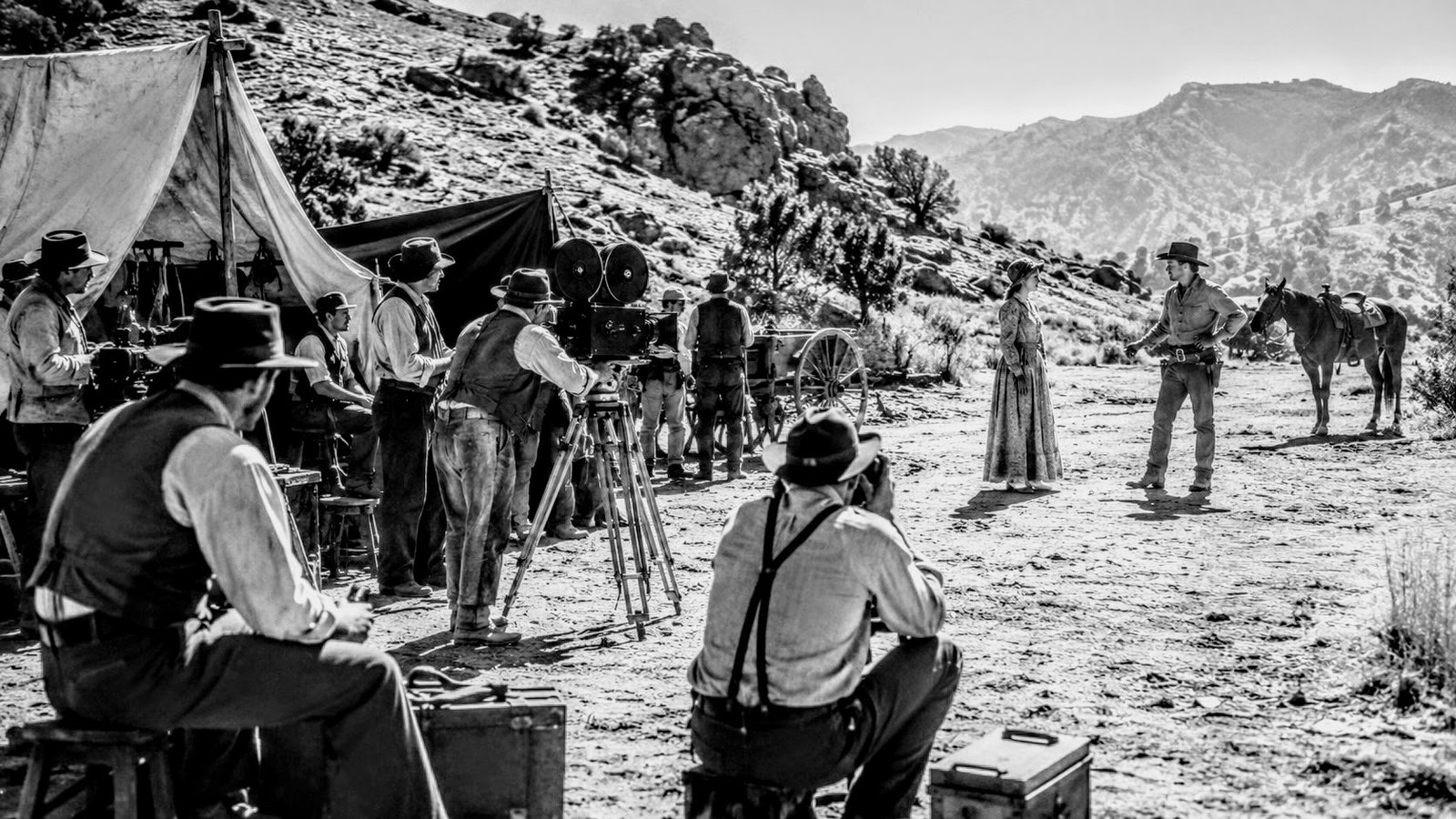
Carl Laemmle sat in his cramped office staring at yet another legal threat connected to Thomas Edison’s patent empire. Somewhere on the East Coast, another independent filmmaker had been cornered, sued, or intimidated into submission. Edison’s Motion Picture Patents Company controlled crucial film technology and enforced its rights with remarkable enthusiasm. For the young film industry, this was less a business environment than a permanent state of irritation. Laemmle, who had arrived in America from Germany as an immigrant and worked his way through ordinary jobs in Chicago, had little patience for monopolies standing between him and opportunity. He understood something important before much of the industry did: if cinema wanted freedom, it needed distance.
Far from New York courts and Edison investigators, Southern California offered open land, cheaper property, and one priceless advantage that early cinema desperately needed: sunlight. Endless, reliable sunlight. Before powerful artificial lighting existed, cameras behaved like demanding houseplants. They required brightness constantly, and East Coast weather could not be trusted to provide it. Los Angeles, meanwhile, seemed to wake up every morning already prepared for filming. That combination of legal escape and predictable weather would help transform a quiet Californian district into Hollywood.
Today, Hollywood is often treated as something inevitable, as though cinema naturally evolved toward red carpets, studio gates, celebrity scandals, and giant white letters on a hillside. The reality was far less glamorous. Hollywood emerged because filmmaking in the early twentieth century was technically fragile, financially risky, and heavily dependent on conditions that Southern California happened to provide almost absurdly well. Early film stock needed huge amounts of light. Cameras lacked the sensitivity modern filmmakers take for granted, and shooting indoors often meant working beneath giant glass roofs designed to trap daylight. On cloudy days, production slowed or stopped entirely.
New York and New Jersey, where much of the early American film business began, suffered from an unfortunate tendency to experience winter, rain, fog, and other meteorological inconveniences. Los Angeles looked almost scientifically designed to solve these problems. It offered around 300 sunny days per year, mild winters, and long stretches of stable weather that allowed producers to plan filming schedules with far fewer interruptions. The economics mattered enormously. More filming days meant lower costs. Lower costs meant more films. More films created more studios, technicians, carpenters, costume makers, camera operators, extras, and actors willing to pretend a dusty California hillside was ancient Judea or the Wild West.
The landscape itself became part of the attraction as well. Within relatively short distances, filmmakers could find beaches, mountains, deserts, orange groves, ranches, forests, and Spanish-style architecture. A single region could impersonate half the planet. One week a crew could shoot a Western. The next week they could film a biblical epic. Then perhaps a melodrama involving wealthy people staring unhappily across terraces. Hollywood’s rise therefore came partly from geography pretending to be versatility.
The first motion-picture studio in Hollywood itself appeared in 1911, when the Nestor Motion Picture Company opened operations at the old Blondeau Tavern on Sunset Boulevard and Gower Street. It is an oddly modest beginning for a global myth. Hollywood did not emerge from a grand cultural vision or a palace dedicated to art. It effectively began behind a tavern. By then, filmmakers had already started arriving in Southern California in growing numbers. In 1910, director D. W. Griffith filmed In Old California in Hollywood, often described as the first movie shot in the district itself.
Within only a few years, film companies clustered across the Los Angeles region, including places such as Edendale, Culver City, Burbank, and Santa Monica. Hollywood gradually became less a specific neighbourhood and more a brand name for the entire industry. Carl Laemmle became one of the central figures in this transformation. In 1912, he founded Universal Pictures, helping build one of the first major studio operations in California. Yet even Laemmle could hardly have predicted what the industry would become. At the beginning, filmmaking still carried the reputation of a chaotic, temporary business. Many respectable people considered films a novelty rather than an art form.
Silent actors often performed with exaggerated gestures because cinema itself still resembled theatre awkwardly translated through machinery. But Hollywood possessed something more powerful than cultural respectability: momentum. Once enough studios gathered in one place, the region developed the same gravitational pull seen later in places such as Silicon Valley. Actors moved there because producers were there. Producers moved there because crews were there. Crews moved there because the work kept multiplying. Success fed success.
Ironically, Thomas Edison unintentionally accelerated this process. His aggressive patent enforcement pushed many independent producers westward, where legal action became slower, more complicated, and less convenient. Distance mattered in an era before rapid national coordination. California therefore offered filmmakers not merely sunshine, but breathing room. History enjoys these contradictions. Edison, a man associated with invention and electric light, indirectly helped create an industry built partly on escaping his control and relying on natural sunlight.
Of course, the myth of perfect California conditions needs moderation. Los Angeles weather was reliable, not magical. Cinematographers quickly discovered that intense sunlight could also create harsh shadows and unflattering images. The bright California sky often needed careful management. Directors and camera crews learned how to diffuse light, manipulate angles, and shape brightness into something cinematic rather than merely blinding. In other words, Hollywood did not simply receive sunlight. It learned how to control it.
The weather also became part of the fantasy Hollywood sold to the world. California looked modern, youthful, expansive, and optimistic on screen. Palm trees, bright skies, and open roads created a visual identity that audiences everywhere associated with freedom and possibility. During cold winters in Chicago, London, or Berlin, Hollywood films projected warmth itself as a kind of product. This mattered psychologically as much as commercially. The film industry was not merely manufacturing stories. It was exporting atmosphere.
By the 1920s, Hollywood had become the undisputed centre of American filmmaking. Massive studios expanded across Southern California. Stars became international celebrities. Silent films evolved into talkies after The Jazz Singer in 1927 transformed the business. Money flooded into the industry. Scandals followed closely behind, naturally. Yet beneath all the glamour remained a strangely practical origin story.
Hollywood rose because filmmakers needed stable working conditions. They needed cheap land, open space, varied scenery, and enough reliable daylight to keep production moving tomorrow morning. The dream factory emerged from logistics before mythology. That is perhaps the funniest thing about Hollywood. One of the world’s most influential centres of fantasy began partly because clouds were bad for business.
Sunshine alone did not build Hollywood, of course. Ambition built it. Technology built it. Immigration built it. Risk-taking producers built it. Writers, actors, technicians, and audiences built it. But the Californian sun gave the industry its opening advantage at exactly the right moment in technological history. And Carl Laemmle, sitting in his office while Edison’s lawyers darkened the mood yet again, sensed that opportunity before much of the world did. Somewhere beyond the lawsuits and grey skies stood a place where cameras could work almost every day of the year. The industry followed the light westward, and the rest became Hollywood.