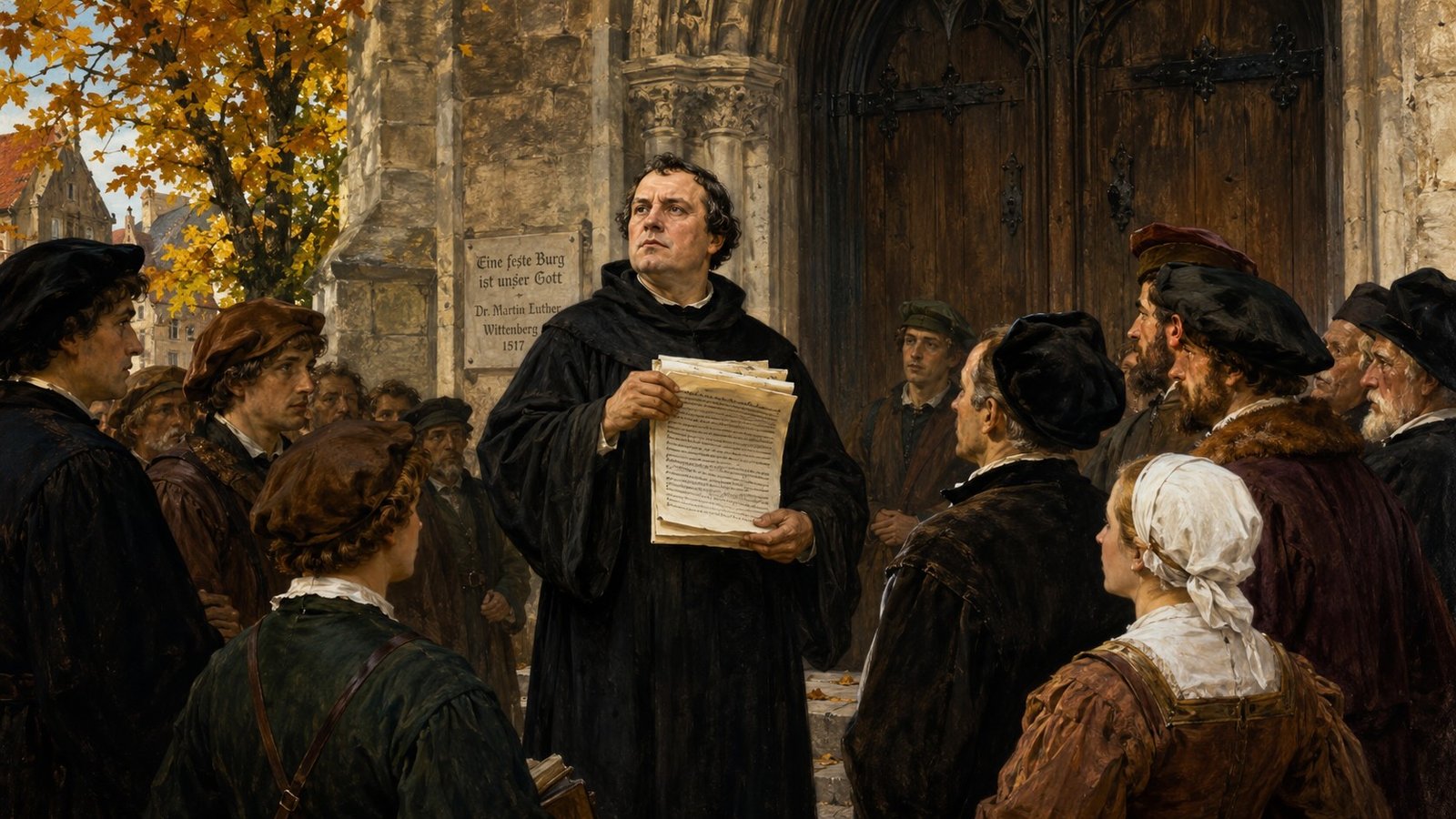
The Reformation began as a religious dispute, but it quickly behaved like a political earthquake wearing a monk’s robe. At its centre stood Martin Luther, a German friar and theology professor who, in 1517, challenged the sale of indulgences and questioned whether the Church had turned salvation into something that looked suspiciously like an administrative fee. The traditional story says Luther nailed his Ninety-Five Theses to the door of the Castle Church in Wittenberg on 31 October 1517. Whether he literally marched up with a hammer has become one of history’s favourite arguments, but the bigger point survives: his ideas spread, and Europe did not quietly return to its previous seating arrangement.
To understand why this became explosive, imagine a world where religion shaped almost everything: birth, marriage, death, law, education, politics, art, fear, comfort and the calendar. The medieval Catholic Church did not simply run Sunday services. It owned land, collected money, crowned ideas as orthodox or dangerous, and mediated between ordinary people and eternity. That is a fairly powerful job description. So when reformers began asking who had the right to define Christian truth, they were not opening a polite seminar. They were shaking the furniture in every palace, monastery and village church in Europe.
Luther’s attack focused especially on indulgences, which many believers understood as a way to reduce punishment for sin. In theory, this sat inside a larger system of repentance and church teaching. In practice, it could look alarmingly like a spiritual transaction, especially when preachers raised money with all the subtlety of a desperate fundraiser at closing time. Luther argued that forgiveness came through God’s grace, not through buying paperwork. He also insisted that Scripture carried higher authority than church hierarchy. Those ideas gave ordinary believers, pastors, princes and printers a dangerous new confidence.
Printing made the Reformation faster, louder and harder to control. Earlier reformers had existed before Luther, but they lacked the same media machinery. By the sixteenth century, pamphlets, translated texts and polemical cartoons could travel across borders with indecent speed. Luther did not invent religious criticism, but he arrived when Europe had the tools to make an argument go viral without needing dancing teenagers or a ring light. His German Bible translation also helped shape the early modern German language, which is a decent side effect for a man mainly trying to argue with Rome.
The Reformation soon grew beyond Luther. In Zurich, Huldrych Zwingli pushed reform in a different direction. In Geneva, John Calvin built a disciplined, intellectually powerful version of Protestantism that travelled widely through France, Scotland, the Netherlands and beyond. Calvinism brought a severe elegance to the movement: less incense, fewer saints, sharper doctrine and a strong sense that God’s sovereignty did not need decorative assistance. It could inspire literacy, discipline and moral seriousness. It could also create communities where everyone seemed very interested in what everyone else was doing after supper.
Yet the Reformation was never just “Protestants versus Catholics”, as if Europe had suddenly divided into two tidy football teams. Reformers disagreed with one another, sometimes furiously. Lutherans, Calvinists, Anabaptists and other groups quarrelled over baptism, communion, church authority and how radically society should change. Some wanted reform guided by princes and city councils. Others wanted a more complete break from old institutions. The Anabaptists, who rejected infant baptism and often argued for a gathered church of believers, frightened both Catholics and mainstream Protestants. Nothing unites respectable authorities quite like people who seem too radical for everyone’s comfort.
The Catholic Church did not simply sit there looking wounded. Its response, often called the Counter-Reformation or Catholic Reformation, included reform from within, new religious energy, missionary expansion, the Council of Trent and the rise of orders such as the Jesuits. The Church clarified doctrine, tightened discipline and fought back intellectually, politically and artistically. Baroque art, with all its heavenly drama and muscular saints, became part of this Catholic renewal. Protestant churches stripped images away in some places; Catholic churches replied with emotional theatre, gold, clouds, martyrs and angels who looked as if they had been hired by a very confident stage director.
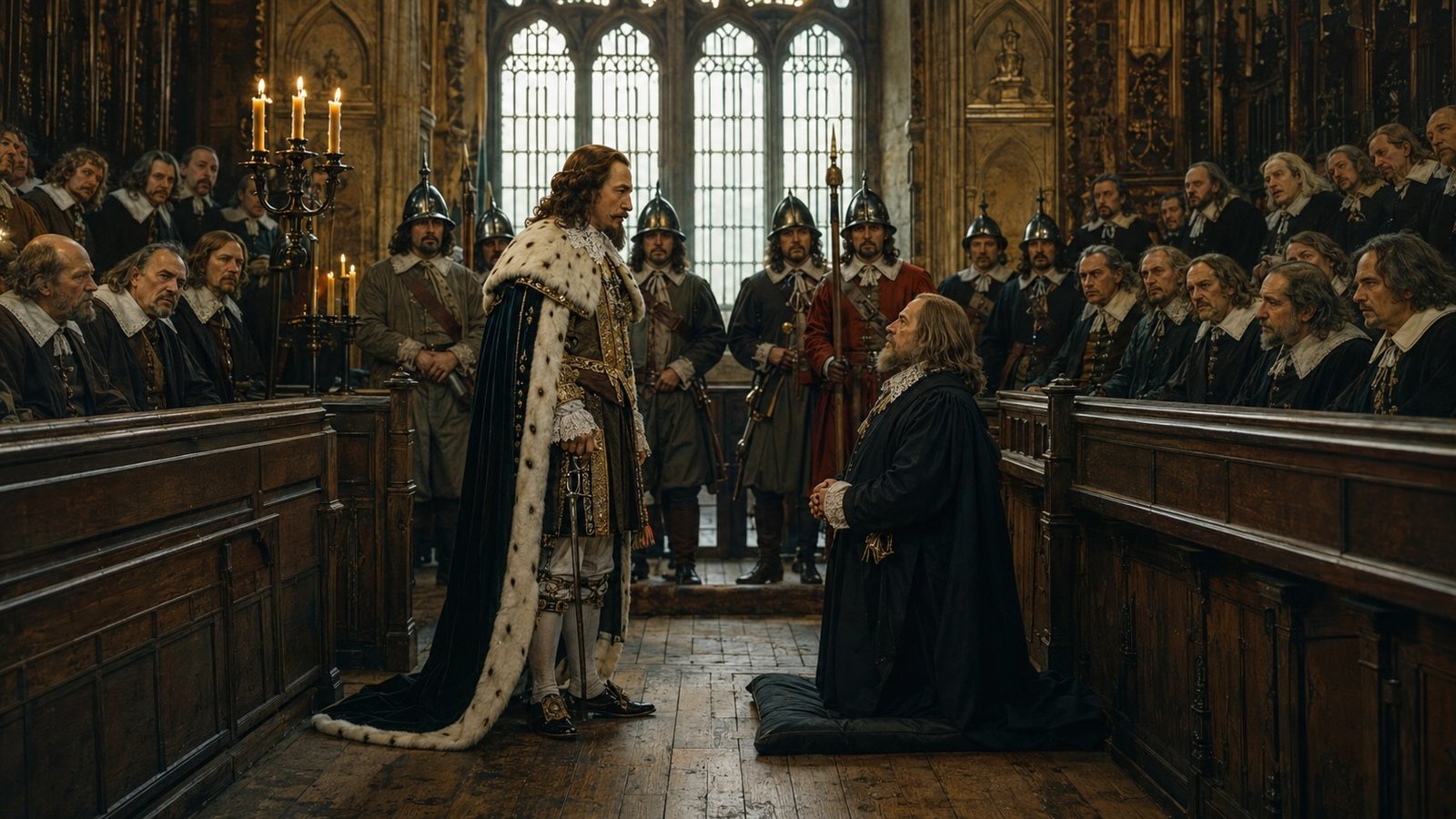
England made the story even messier, because England rarely sees a European crisis without deciding it needs its own bespoke version. Henry VIII first attacked Luther’s ideas and received the title “Defender of the Faith” from Pope Leo X in 1521. That detail remains one of history’s better jokes, because Henry later broke with Rome when the Pope would not annul his marriage to Catherine of Aragon. The English Reformation grew from theology, politics, dynasty, money and desire, all stirred together in the Tudor pressure cooker.
By 1534, Henry had placed himself at the head of the Church in England. This did not instantly make England a fully Protestant country. Henry remained conservative in many beliefs, but the break with papal authority changed everything. Parliament gained a central role in religious change, monasteries were dissolved, church property moved into royal and private hands, and religious life became tied to state power in a new and dangerous way. The English Reformation was a long Tudor story, stretching from Henry VIII through Edward VI, Mary I and Elizabeth I, rather than one clean royal decision.
The dissolution of the monasteries added another layer of controversy. Monasteries had owned land, offered charity, preserved learning and anchored local religious life. They had also accumulated wealth, privilege and enemies. Henry’s government presented dissolution as reform; critics saw it as plunder with paperwork. Both views contain uncomfortable truth. The crown gained enormous resources, ambitious families gained estates, and communities lost institutions that had shaped local life for centuries. In other words, salvation may have inspired the argument, but real estate made sure everyone paid attention.
Scotland took a more Calvinist path, with John Knox becoming the loudest Protestant voice in the room, which is saying something. France endured brutal conflict between Catholics and Huguenots. The Holy Roman Empire saw princes use religion to strengthen political independence. The Netherlands connected Protestant resistance with revolt against Spanish rule. Across Europe, religious identity became entangled with language, territory, dynasty and class. Once that happened, compromise became difficult. When people believe eternal truth, royal power and local survival all sit on the same table, dinner conversation tends to deteriorate.
The Reformation also changed everyday life. It altered worship, education, marriage, literacy, music and art. In many Protestant areas, sermons grew longer, images came down, saints lost prominence, and Bible reading became central. Clergy married. Monasteries closed. Parish life shifted. In Catholic regions, reform also reshaped devotion, discipline and education. The changes did not arrive evenly. Some villagers welcomed them. Others hid statues, resisted new prayer books or quietly waited for the old ways to return. History often loves kings and theologians, but ordinary people had to work out what these grand arguments meant for funerals, feast days, confession and the church wall that no longer had its familiar saints.
One myth says the Reformation instantly brought freedom of conscience. It did not. Reformers challenged one form of authority, then often built another. Many Protestant and Catholic rulers alike persecuted dissenters. Heresy trials, executions, exile and censorship continued. Another myth says the medieval Church had been hopelessly corrupt and everyone was waiting for Luther to rescue them. That is too neat. The Church contained corruption, certainly, but it also contained sincere reformers, devoted priests, scholars, charities and deeply meaningful religious culture. The Reformation succeeded not because the old world had no value, but because enough people believed it no longer answered the questions of their age.
Its legacy still lives in modern politics, education, capitalism, nationalism, individual conscience and the shape of churches across the world. It helped normalise vernacular Bible reading, strengthened the link between literacy and faith, and pushed states to manage religion more directly. It also left Europe with scars: wars of religion, confessional suspicion and a talent for turning theology into foreign policy. The Reformation did not simply split Christianity. It helped create the modern West’s noisy habit of arguing about authority, text, conscience and power. In that sense, Luther’s hammer, whether literal or symbolic, is still making a racket.