The Real Machiavelli Behind the Ruthless Reputation
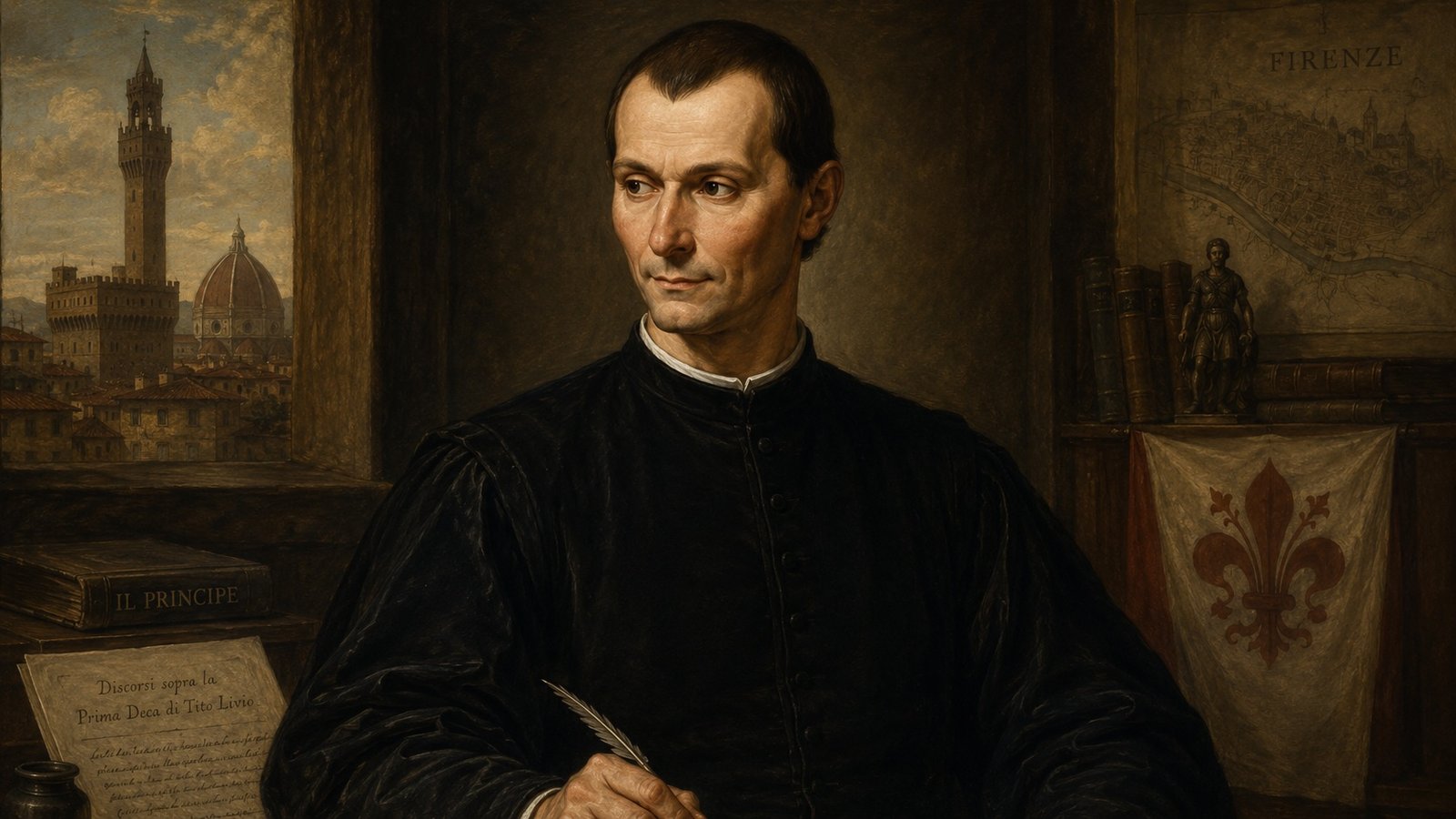
Niccolò Machiavelli has suffered one of history’s strangest public relations disasters. Most people know his name before they know anything about him, which is always dangerous. “Machiavellian” now means scheming, cold, manipulative and about as trustworthy as a smiling courtier holding a very sharp letter opener. Yet the real Machiavelli was not a cartoon villain polishing his dagger in a Renaissance basement. He was a Florentine civil servant, diplomat, writer, republican thinker and frustrated political insider who understood one uncomfortable truth better than almost anyone else: power rarely behaves politely.
He was born in Florence in 1469, when Italy was not really Italy in the modern sense. It was a crowded chessboard of city-states, noble families, republics, popes, mercenaries and foreign kings who kept popping in with armies, usually without bringing wine. Florence glittered with art, banking, scholarship and ambition, but it also lived with factional violence, exile, executions and the constant possibility that yesterday’s ruler might become today’s cautionary tale. Renaissance Italy looks elegant in galleries. Up close, it was politics with better tailoring.
Machiavelli grew up in this world and entered public service in 1498, just after Florence had got rid of the fiery religious reformer Girolamo Savonarola. Savonarola had preached against corruption, vanity and luxury, which in Florence was a little like declaring war on oxygen. After his fall, Machiavelli became a senior official in the Florentine republic, working in foreign affairs and military administration. This placed him close to the machinery of government, where noble ideals met unpaid soldiers, nervous alliances and people who promised loyalty with one hand while checking the wind direction with the other.
For around fourteen years, Machiavelli served Florence as a diplomat and political operator. He travelled on missions to powerful figures across Europe and Italy, observing kings, popes, generals and ambitious men who thought morality was something best discussed after victory. He met Cesare Borgia, the ruthless son of Pope Alexander VI, and watched him carve out power with frightening speed. Borgia fascinated him, not because Machiavelli adored cruelty for its own sake, but because Borgia showed what boldness, calculation and timing could achieve before fortune changed its mind and ruined the whole performance.
That word, fortune, mattered deeply to Machiavelli. He did not believe human beings controlled everything. He knew luck could smash the best-laid plan like a drunk nobleman falling through a banquet table. Still, he also believed strong leaders could prepare, act decisively and shape events rather than merely complain about them afterwards. This tension between skill and chance runs through his work. Life may throw storms at you, but Machiavelli had limited patience for leaders who stood in the rain writing poems about wetness.
Then came disaster. In 1512, the Medici family returned to power in Florence, backed by Spanish forces, and the republic collapsed. Machiavelli lost his job, got accused of conspiracy, endured imprisonment and torture, and withdrew to his small property outside the city. For a man who lived for politics, this was not peaceful retirement. It was exile with vegetables. He wrote letters describing his days in the countryside, dealing with ordinary frustrations, then dressing in formal clothes at night to read ancient authors and argue with the dead. Even in disgrace, he remained theatrical.
In 1513, he wrote The Prince, the short book that made his name notorious. It offered advice to rulers on gaining, holding and stabilising power. The book did not coo gently about virtue, mercy and noble intentions. It asked what actually works when enemies gather, allies wobble and the state threatens to fall apart. That directness shocked readers. Machiavelli did not invent political ruthlessness. He simply described it without enough decorative moral lace.
The most famous idea from The Prince concerns whether a ruler should be loved or feared. Popular memory has reduced his answer to something like, “Be feared, preferably before breakfast.” His real point was more careful. A ruler should ideally be both loved and feared, but if forced to choose, fear offers more reliability than love. Love depends on gratitude, and gratitude in politics has the life expectancy of a mayfly. Fear, however, can hold people in line, provided the ruler avoids hatred. That last bit matters. Machiavelli did not recommend random cruelty. He warned that hatred could destroy a ruler.
Another popular myth claims that Machiavelli wrote “the ends justify the means”. He did not use that neat phrase. The idea captures part of his reputation, but it flattens his thinking into a slogan fit for a villain in a cheap cloak. Machiavelli cared about outcomes, especially security, order and survival, but he also understood that badly used violence creates new problems. Cruelty, in his view, had to serve a purpose quickly and then stop. Pointless brutality looked not strong but stupid. Even evil, apparently, needed competent administration.
The strangest part of his reputation comes from the fact that Machiavelli was not simply a preacher of tyranny. His other major work, Discourses on Livy, shows him thinking seriously about republics, civic freedom, public institutions and ancient Rome. He admired the Roman Republic because it turned conflict, ambition and military discipline into political energy. Machiavelli believed citizens mattered. He disliked dependence on mercenaries and argued for citizen soldiers who had a stake in defending their own city. This does not sound quite like the handbook of a man who wanted every ruler to become a velvet-clad monster.
So why did The Prince cause such a scandal? Partly because Machiavelli separated politics from the comforting language people preferred. Before him, rulers had lied, manipulated, bribed and killed while still commissioning flattering portraits and speeches about virtue. Machiavelli looked at the same behaviour and described the mechanics. That was unforgivable. Hypocrisy enjoys candlelight; Machiavelli opened the shutters.
Some scholars have even argued that The Prince may contain irony or satire. Perhaps he was exposing tyrants rather than helping them. Perhaps he was trying to win favour with the Medici after losing his position. And, perhaps, he meant every word. The debate continues because Machiavelli rarely behaves like a tidy philosopher. He contradicts himself, shifts tone and refuses to sit neatly in one moral box. This, naturally, annoys everyone who wants history to arrive pre-labelled.
His personal life also complicates the image. Machiavelli wrote plays, poetry and comic works, including Mandragola, one of the great comedies of Renaissance Italy. The supposed prophet of political darkness also understood farce, lust, stupidity and human weakness. That feels appropriate. Nobody who studies power closely can avoid comedy for long. Politics is often tragedy wearing an expensive hat, but the hat does wobble.
His reputation darkened after his death. The Prince appeared in print in 1532, five years after he died, and readers quickly attached his name to manipulation and moral danger. Religious critics condemned him. Political enemies used him as a warning. Later thinkers debated whether he was a monster, realist, patriot, republican, satirist or uncomfortable truth-teller. The word “Machiavellian” grew larger than the man until it swallowed him almost completely.
Yet the real Machiavelli still matters because he asks questions that polite societies keep trying to avoid. Can a leader remain good when enemies use bad methods? Does moral purity help if the state collapses? When does necessary force become cruelty? Are people loyal because they believe, because they benefit, or because they fear the alternatives? These questions do not belong only to Renaissance palaces. They hover around governments, boardrooms, institutions and movements today, usually wearing modern language and carrying a slide deck.
Machiavelli’s great offence was not that he loved wickedness. It was that he refused to pretend power always rewards goodness. He saw leaders as they were: vain, frightened, ambitious, brilliant, foolish, lucky and doomed in various proportions. He believed political failure could bring chaos, invasion and suffering, not just embarrassment at a committee meeting. That gave his writing a hard edge. He preferred an effective ruler with dirty hands to a noble failure whose purity left the city burning.