In October 1984, two lorries carrying freshly harvested grapes attempted an extraordinary journey from Lebanon’s Beqaa Valley to Château Musar’s winery. The country was in the middle of a civil war, and the usual roads were blocked by fighting. One driver travelled north towards Tripoli, while the other headed south through Jezzine to Sidon. The second route even involved a ferry journey along the coast, delayed by a violent storm. By the time the final shipment reached the winery, the grapes were bruised, overheated and already fermenting. Serge Hochar, Château Musar’s celebrated winemaker, decided to make wine from them anyway. Only two vats of the 1984 vintage were produced, and the wine never received a conventional commercial release. Small quantities eventually reached collectors decades later. Most winemakers worry about the weather during harvest. In Lebanon, getting the grapes past military checkpoints could be an even greater challenge.
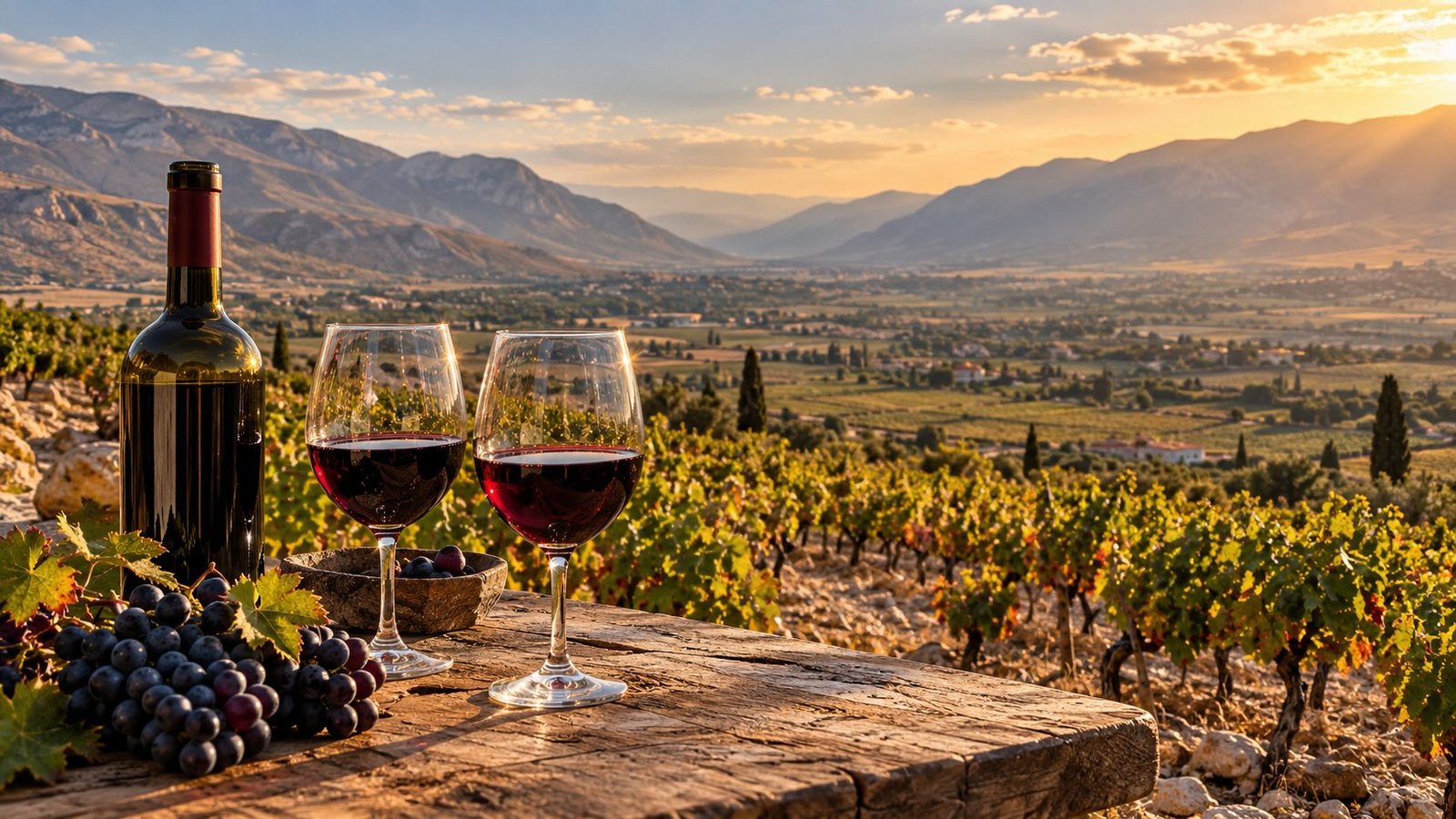
This remarkable episode captures something distinctive about the wines of Lebanon’s Beqaa Valley, also known as the Bekaa Valley. Behind their international reputation lies an unusual combination of ancient traditions, French influences, mountainous geography and political upheaval. The valley stretches between the Lebanon Mountains to the west and the Anti-Lebanon Mountains to the east. Although Lebanon borders the Mediterranean, its most celebrated vineyards grow far from the beaches, often around 1,000 metres above sea level. Summers are hot and dry, with abundant sunshine and relatively little rainfall during the growing season. Yet the altitude brings cooler nights, allowing grapes to develop intense flavours while retaining their natural acidity. This gives the finished wines freshness and balance. The valley’s varied soils, including limestone-rich areas, contribute to its diversity. These conditions produce powerful but balanced reds, alongside increasingly impressive white wines.
Wine has occupied a place in this region for thousands of years. The ancient Phoenicians, whose trading cities stood along the coast of present-day Lebanon, helped distribute Levantine wines across the Mediterranean. Their merchants transported wine alongside timber, textiles and other valuable goods. These trading networks connected the eastern Mediterranean with Cyprus, North Africa and southern Europe. The Romans inherited an established drinking culture and left an impressive architectural monument at Baalbek, on the valley’s northern side. The magnificent Temple of Bacchus, built during the Roman imperial period, remains exceptionally well preserved. Its association with the Roman god of wine makes it an appealing symbol for Lebanese viticulture. The building itself, however, cannot tell us how much wine local farmers produced. What is certain is that the region’s relationship with the vine predates its modern wineries by many centuries.
The modern Lebanese wine industry owes much to a rather unexpected group of entrepreneurs: Jesuit missionaries. In 1857, they established the enterprise that became Château Ksara near Zahlé, bringing European winemaking methods and grape varieties into the valley. French influence subsequently shaped much of Lebanon’s commercial wine production. Cabernet Sauvignon, Cinsault, Carignan, Grenache and Syrah found a favourable home in the region. Producers developed blends inspired by Bordeaux and the southern Rhône, adapting them to local conditions. Château Ksara also acquired an unusual advantage in 1898, when underground passages were found beneath its property. The caves became extensive wine cellars, providing naturally cool storage conditions before modern refrigeration became commonplace. Today, the estate remains one of Lebanon’s best-known producers. Its range includes approachable everyday bottles and structured reds intended for ageing.
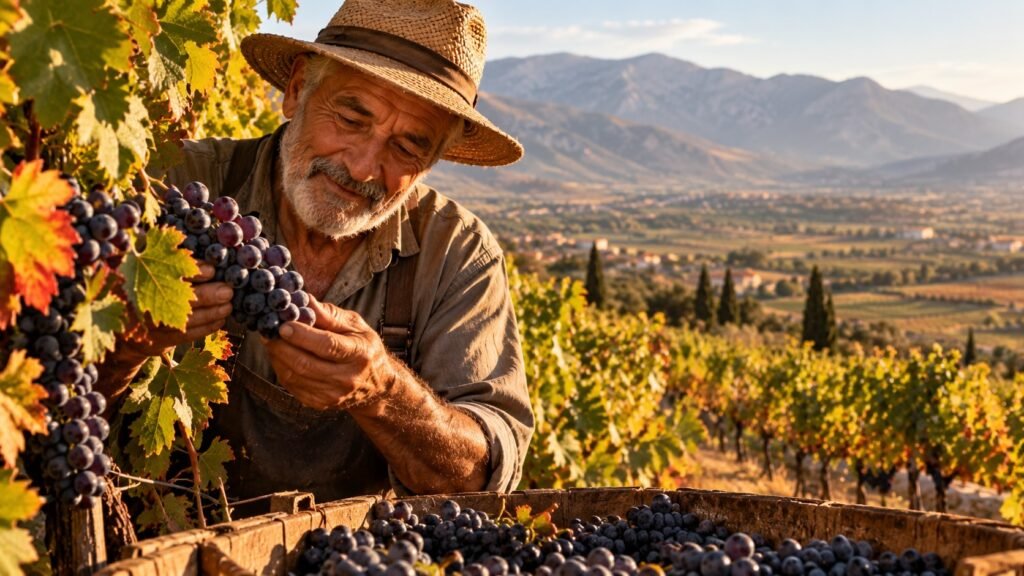
Perhaps the most internationally celebrated Lebanese winery is Château Musar, founded in 1930 by Gaston Hochar. His son Serge later transformed the estate into a cult name among wine enthusiasts. Its appearance at the Bristol Wine Fair in 1979 helped attract the attention of influential British wine writer Michael Broadbent. Musar’s flagship red traditionally combines Cabernet Sauvignon, Cinsault and Carignan, creating a wine that resists easy classification. Young bottles may show cherries, dark berries, spice and firm tannins. Older vintages can develop aromas of leather, dried fruit, tobacco and earthy woodland notes. Their character varies considerably between years, and that unpredictability is part of their attraction. Some drinkers admire the complexity and individuality; others prefer a cleaner, more consistent style. Musar has never seemed particularly concerned about pleasing everyone. That may explain why its admirers remain so devoted.
Other estates demonstrate how varied Beqaa Valley wines can be. Château Kefraya, situated on the foothills of Mount Barouk, produces elegant red blends from vineyards with differing soils and elevations. Cabernet Sauvignon, Syrah and Cabernet Franc feature prominently, often giving the wines a polished structure and considerable ageing potential. Domaine des Tourelles, established in the nineteenth century, offers another perspective, with particular attention to freshness and fruit expression. Its old-vine Cinsault can produce appealing reds with bright berry flavours, subtle spice and relatively soft tannins. Château Ksara provides an accessible starting point for exploring the region. Musar, meanwhile, tends to appeal to those interested in mature wines with unconventional personalities. Together, these producers demonstrate why Lebanese wine deserves recognition on its own terms. It is not simply an eastern imitation of French classics.
Yet the most interesting chapter in modern Lebanese winemaking may involve grapes that have little connection with France. Obeideh and Merwah are traditional white varieties associated with Lebanon’s production of arak, the anise-flavoured spirit commonly enjoyed with mezze. For years, these grapes attracted relatively little international attention as sources of fine wine. That has changed as producers explore their potential for distinctive dry whites. Obeideh often produces wines with rounded texture and flavours suggesting citrus, honey and orchard fruit. Merwah can contribute floral, nutty and citrus notes, particularly when grown at higher elevations. Château Musar has long used both varieties in its white wine, which can age surprisingly well. Other wineries now produce single-variety bottlings. This shift reflects an intriguing change in priorities. Earlier generations demonstrated their ability to make excellent wines from internationally recognised grapes. Today, some producers are exploring what Lebanon can offer that Bordeaux or California cannot.
Food provides another compelling reason to explore the wines of Beqaa Valley. Lebanese cuisine brings together lemon, garlic, olive oil, fresh herbs, grilled meats, pulses and an impressive assortment of vegetable dishes. Such variety rewards wines with generous flavours and sufficient acidity to remain refreshing. A medium-bodied Cinsault works particularly well with lamb kofta, grilled aubergines and chicken shawarma. Richer Cabernet Sauvignon and Syrah blends complement slow-cooked lamb or spiced beef. Obeideh and Merwah whites can accompany grilled fish, fresh cheeses, hummus and herb-based salads. There is also a practical consideration. Lebanese meals frequently involve numerous small dishes served together rather than a carefully organised sequence of courses. A versatile wine that complements several different flavours may therefore be preferable to an imposing red designed for one substantial main course. Sometimes the most expensive bottle on the table is not necessarily the most useful.
Despite its advantages, Lebanese winemaking remains a difficult business. Political instability, economic crises, rising production costs and transport disruptions have repeatedly complicated vineyard management and exports. Unlike many industries, wine production requires decisions that may take years to bear fruit. Newly planted vines need time to mature, equipment demands substantial investment, and premium bottles may spend years ageing before reaching customers. Yet producers continue to cultivate their vineyards, develop new wines and explore the potential of older grape varieties. The Beqaa Valley’s appeal lies partly in this continuity, but its wines also reflect growing confidence in the region’s identity. Lebanon is Mediterranean yet mountainous, ancient in its winemaking traditions yet strongly influenced by modern France. Its reds can resemble Bordeaux, the Rhône or neither, sometimes within the same bottle.
And then there is that extraordinary Château Musar 1984. Its grapes travelled along dangerous mountain roads, crossed conflict lines and endured a stormy ferry passage before reaching the cellar already fermenting. Against reasonable expectations, Serge Hochar turned them into a wine that eventually became a collector’s curiosity. The resulting bottles developed flavours quite unlike those of a conventional vintage, with mature fruit, spice and unusual richness. It was hardly an ideal method of producing fine wine, and certainly not one to recommend in a textbook. But few bottles illustrate the character of Lebanese winemaking quite so vividly. A good wine can reveal the soil, climate and traditions of its birthplace. Occasionally, it also preserves something of the extraordinary circumstances in which it was made.