
From playing cello with the Philharmonia Orchestra to conducting at Carnegie Hall and founding London Musici, British conductor Mark Stephenson has spent his career exploring what music can achieve beyond the concert hall. In conversation with Interessia, he reflects on legendary conductors, overlooked composers, the relationship between music and dance, and why classical music’s future may depend more on schools than technology.
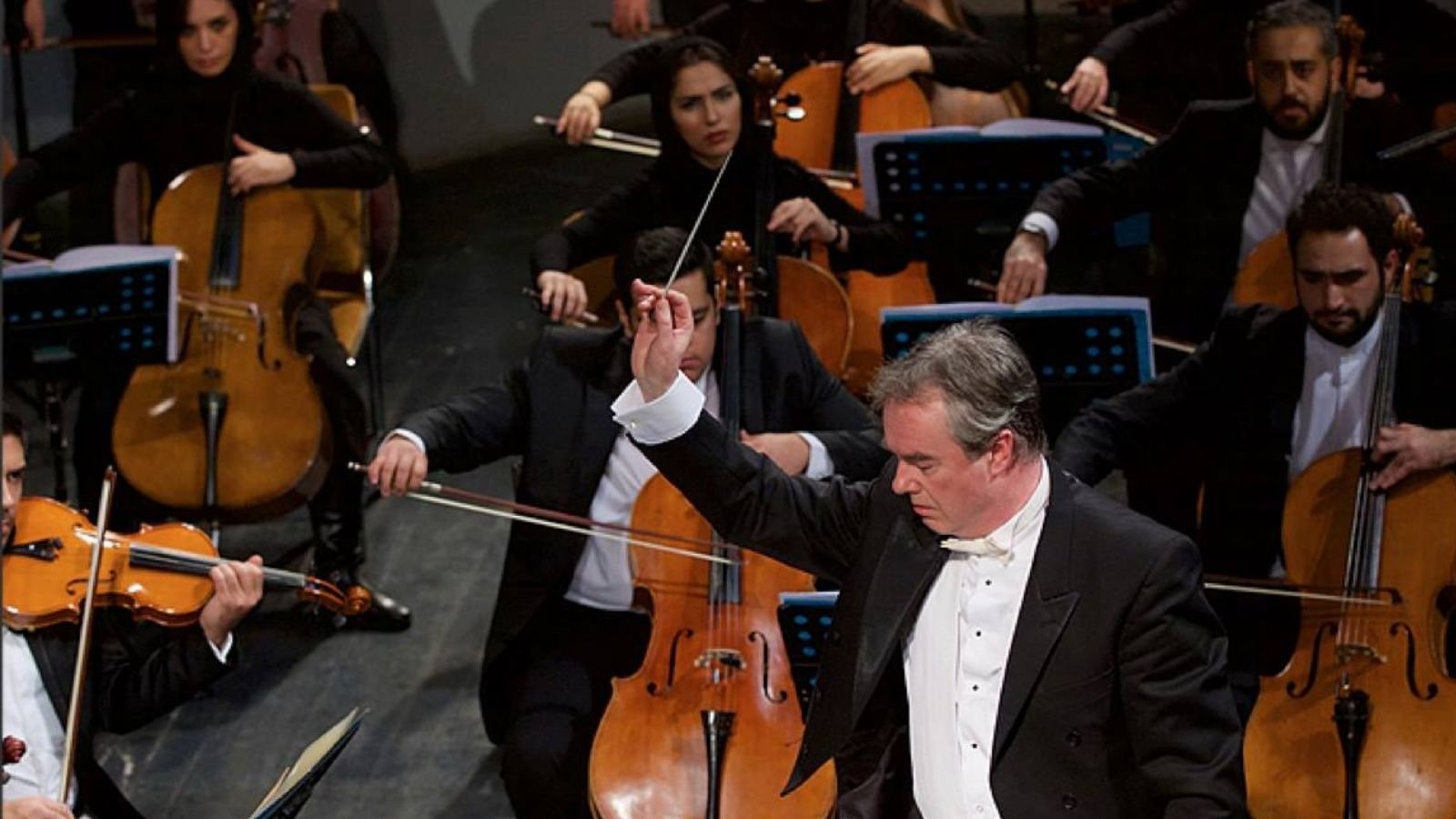
You spent ten years as a cellist with the Philharmonia Orchestra before becoming a conductor. What prompted you to move from being part of an orchestra to leading one, and how did that experience shape your approach to conducting?
As a teenager, I formed my own youth orchestra in my home town of High Wycombe, and as a student, I conducted many concerts at the Royal Academy of Music in London. Joining the Philharmonia Orchestra as a cellist at the age of 21 provided me with a daily masterclass in conducting, working with legendary conductors from around the world.
Maestro Giuseppe Sinopoli regularly invited me to conduct the orchestra during rehearsals while on tour abroad, including at Carnegie Hall in New York, so that he could listen to the balance of the orchestra and the acoustics of the hall.
I saved money from my earnings as a cellist and produced a professional demo recording with my own handpicked chamber orchestra, London Musici, which I sent to record companies. We were immediately offered a five-year recording contract by Conifer Records, later acquired by Sony Classical. Vladimir Ashkenazy supported my formation of London Musici.
Our first albums, featuring music by Sir Malcolm Arnold and Sir Andrzej Panufnik, were selected as record choices by The Sunday Times and other leading publications. Following the release of our album of music by Sergei Prokofiev in 1991, I put down the cello and picked up the baton full-time, after ten years with the Philharmonia Orchestra.
During your years with the Philharmonia, you worked with remarkable conductors, including Riccardo Muti, Carlo Maria Giulini and Bernard Haitink. Who influenced you most, and what did you learn from them beyond musical technique?
Riccardo Muti, Carlo Maria Giulini, Lorin Maazel and Bernard Haitink were major influences, as were the Russian conductors Yevgeny Svetlanov, Kirill Kondrashin and Yuri Simonov.
Their performances with the orchestra always reached another level, artistically and emotionally, because of their empathy with the music and their ability to communicate it to an audience. This went beyond technique, although they were also technical masters of their art.
Sometimes less is more, a lesson I learnt from their control of dynamics and the timing of musical climaxes. Their force of personality played a huge part in their success, and that made a lasting impression on me.
The conductor I admire most, although I never played under him, is Carlos Kleiber. I also met Herbert von Karajan, but never played under him.
You have championed composers such as Malcolm Arnold and Andrzej Panufnik, sometimes bringing their music to audiences unfamiliar with it. What attracts you to a particular composer, and how do you recognise music that deserves greater attention?
I was invited by John Kehoe, Executive Producer at Conifer Records, to record music by Malcolm Arnold and Andrzej Panufnik. I grew to love their music and became a champion of both composers. They were geniuses.
Occasionally, you encounter an unknown composer with exceptional intellect and originality. You rely on your gut instinct and years of experience when deciding whose music deserves greater attention.
Over the years, I have commissioned new works from several young composers at the outset of their careers, including Julian Anderson, Sally Beamish and Roxanna Panufnik, all of whom have gone on to enjoy highly successful careers.
Among more established but less widely known composers, I recorded an album of music by Galina Ustvolskaya, a pupil of Shostakovich. It received reviews in leading publications, including The Sunday Times. The remarkable baritone Sergei Leiferkus featured in the recording of her Symphony No. 5, Amen, reinforcing the importance of bringing her music to a wider audience.
As Music Director of Rambert Dance Company, you brought orchestral music into close collaboration with contemporary dance. How did working with choreographers change your understanding of rhythm, expression and the relationship between music and movement?
Some of the greatest music ever written was composed for ballet and dance, including works by Tchaikovsky and Stravinsky. The combination of music and dance naturally lends itself to rhythmic and emotional expression.
Music evolved from dance in its earliest forms, from foot-stamping and swaying. The two are inextricably linked.
Choreographers hear music in a particular way and have their own forms of notation, revolving around counts in relation to the steps. Sometimes a narrative and outline choreography are established before the music is chosen. At other times, the process is more of a collaboration between a composer and a choreographer.
The Music Director’s job is to serve the choreographer, the composer and the dancers. The choreographer is King or Queen!
Through London Musici and projects such as The Miracles Project, you have taken classical music beyond traditional concert halls. What have these experiences taught you about people who might never otherwise attend an orchestral performance?
In 2000, I won a Creative Britons Award with London Musici, sponsored by Prudential and Arts & Business, in recognition of the Miracles Project. The award attracted 500 nominations from across the UK.
The project took live performances into more than 60 buildings in London, including shopping centres, banks, law firms, other corporate buildings and hospitals.
We were ahead of our time, and orchestras are now doing the same thing 26 years later!
Our mission was to take music to where people work and spend their leisure time, particularly during lunchtimes and rush hours, and to collaborate with corporate social responsibility programmes.
However, more research is needed to establish whether this kind of outreach produces significant numbers of people who subsequently attend concerts in traditional venues. That requires considerable investment and long-term monitoring.
Classical music has survived centuries of social and technological change, yet attracting younger audiences remains a challenge. What do you believe orchestras need to change to remain relevant, and what should they never compromise?
Orchestras around the world continue to innovate, offering family and children’s concerts to introduce classical music to younger audiences. Many have entire departments devoted to this work.
Some have embraced new media and technologies to create immersive concert experiences, online and interactive projects. One notable example is the Philharmonia’s remarkable new media project based on Holst’s The Planets.
But at the end of the day, history has shown that exposure to classical music in the family home and school classroom at an early age is the best way of winning hearts and minds.
Unfortunately, classical music is disappearing from many state school curricula and is increasingly becoming the preserve of private schools.
Orchestras are versatile, but they must always treasure their heritage and never compromise the reasons their musicians chose this profession in the first place. In most cases, they studied for years to perform the great symphonic repertoire at the highest possible artistic standard.
The Aurora Orchestra in London has gone a step further, with its musicians performing from memory. This extraordinary achievement has given the orchestra a unique selling point and helped it sell out concert venues around the world.
A symphony orchestra remains one of the most powerful examples of teamwork: up to 100 people working harmoniously together, regardless of ethnicity, nationality, background, wealth or religion, to achieve the finest possible performance. It is a miraculous human endeavour that must continue to be celebrated and practised at all costs.
Mahler’s Symphony No. 8, known as the Symphony of a Thousand, is a shining example, bringing together a massive chorus and a huge symphony orchestra.
Another extraordinary example is Maestro Daniel Barenboim’s West-Eastern Divan Orchestra, which brings together young musicians from Israel, Palestine and elsewhere in the Middle East. It is an orchestra without borders, with a powerful reason for being.
Music has the extraordinary capacity to bring people together, regardless of their differences. That is something we should never lose.
Photography: Ehsan Neghabat