Love Hackers: Can a Spreadsheet Help You Find the One?
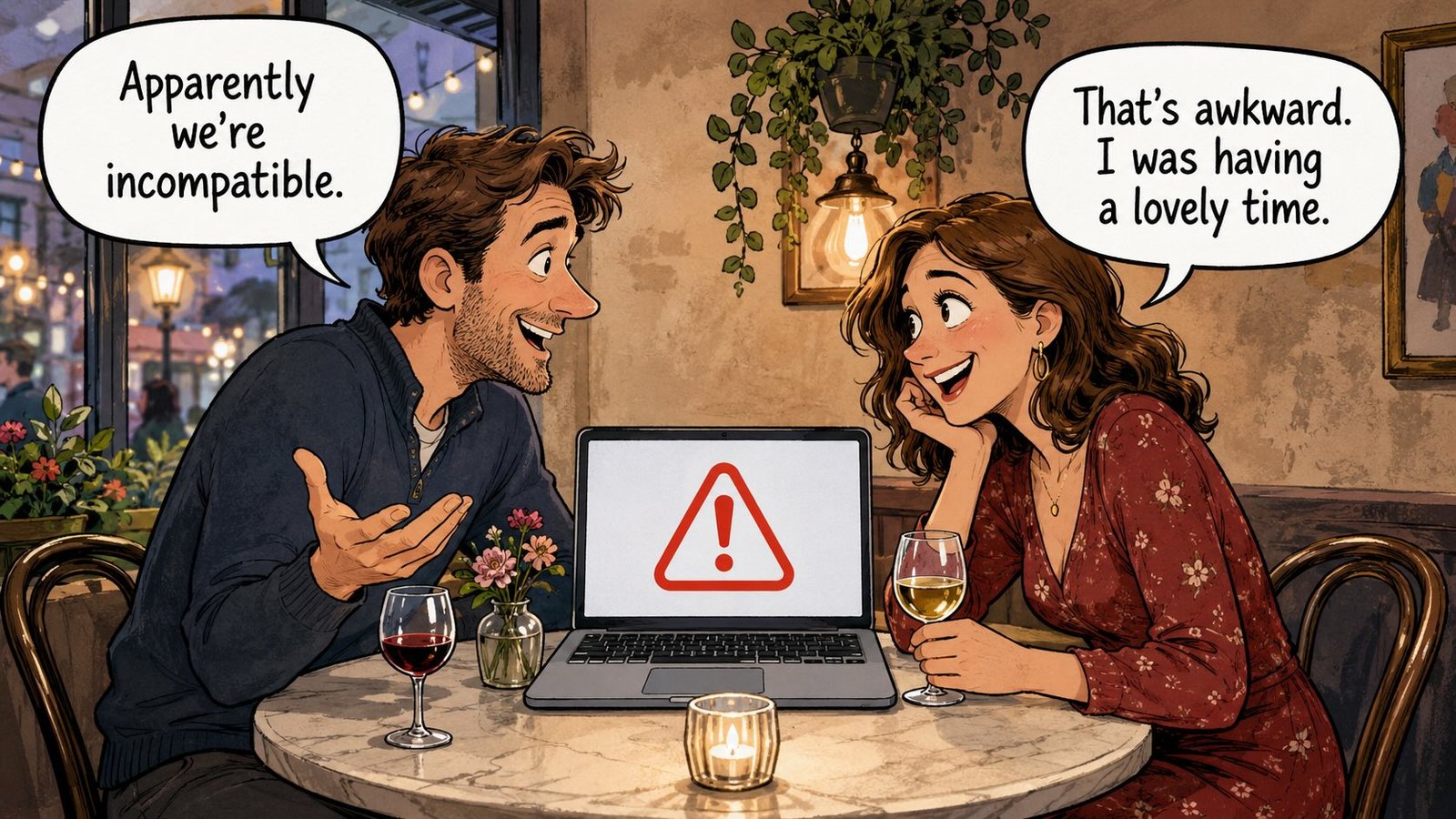
The Wall Street Journal recently reported that dating fatigue has pushed some singles towards an unusual romantic assistant: the spreadsheet. These “love hackers” record information about prospective partners, analyse their experiences and sometimes calculate compatibility scores before deciding whether a relationship deserves another evening. Pet preferences, political opinions, emotional availability and sexual chemistry can all become data points in what increasingly resembles a highly confidential management dashboard. (The Wall Street Journal)
The newspaper described people using spreadsheets, specialised apps and even presentations to make sense of their romantic lives. Some ask friends to contribute observations about a new partner. Others record dates, recurring problems and desirable qualities, then search for patterns across the evidence. One woman built a dating spreadsheet that included feedback from friends and later sold versions of the template to thousands of other singles. Apparently, even romance now has a scalable business model.
It sounds like satire written after a particularly long corporate strategy meeting. Yet the trend reflects a genuine problem. Modern dating offers access to more prospective partners than any earlier generation could reasonably imagine, while leaving many users exhausted, indecisive and strangely powerless. When every match appears replaceable, even promising connections can start to feel like candidates progressing through an unusually intimate recruitment process.
Dating apps once promised to make finding love easier. They removed geographical barriers, widened social circles and allowed people to state their preferences before spending two hours discovering a fundamental disagreement about children. However, the convenience came with a cost. Endless profiles created the impression of endless possibility, while swiping encouraged users to make rapid judgements from photographs, occupations and carefully engineered sentences about loving travel.
The resulting experience can feel less like courtship and more like administration. In Britain, dating-app audiences fell substantially during 2023 and 2024, with users describing the process as repetitive, detached and tiring. Some singles did not reject romance itself. Instead, they became weary of managing conversations, interpreting silences, restarting introductions and politely explaining for the fourteenth time what they like doing at weekends.
Research helps explain why greater choice does not always produce better decisions. In a series of online-dating studies, participants became progressively more likely to reject prospective partners as they moved through larger numbers of profiles. On average, the probability of accepting a profile fell by 27 per cent from the first option to the last. More choice appeared to create a rejection mindset rather than a festival of romantic opportunity.
This makes the spreadsheet easier to understand. When a process feels chaotic, people naturally look for structure. We already monitor sleep, calories, exercise, productivity, spending and screen time. Some of us know precisely how many minutes of deep sleep we achieved but cannot remember the last time we woke feeling cheerful. Romance was never going to escape the age of self-measurement forever.
Skyler Wang is an assistant professor of sociology at McGill University. Wang studied 42 people who tracked their dating lives in digital spreadsheets. These systems are described as “data auxiliaries”. They help users organise and interpret information that dating apps often miss. An app may record a swipe. A private tracker can show whether the conversation felt warm, awkward, safe or suspiciously like a sales presentation.r suspiciously similar to a sales presentation.
Used thoughtfully, tracking can expose the gap between what people claim to want and what actually makes them happy. Someone may insist that they prefer spontaneous, charismatic partners, only to notice that such relationships repeatedly leave them anxious and uncertain. Another person may place enormous importance on shared hobbies while their records show that reliability, humour and emotional generosity predict enjoyable dates far more consistently.
Most people carry an unofficial romantic specification. Films, former partners, family expectations and conversations with friends all contribute to it. The final document may require an ambitious person with unlimited free time, an adventurous homebody and a sensitive communicator who never needs reassurance. Naturally, this imaginary individual must also enjoy dogs, dislike clutter and possess exactly the right attitude towards brunch.
A dating record can challenge that fantasy. Instead of asking whether someone matches an idealised checklist, it can encourage better questions. Did I feel comfortable? Did they listen? Could we disagree without turning dinner into an international incident? Did I behave naturally, or did I spend two hours performing the role of Attractive and Uncomplicated Adult?
This distinction matters. A spreadsheet entitled “Candidate Evaluation Matrix” risks turning human beings into defective products. A journal asking “How did I feel before, during and after this date?” encourages self-awareness. Both collect information, but only the second method acknowledges that the person holding the spreadsheet may contribute to the recurring problem.
There are practical benefits too. People who date frequently can confuse conversations, forget details or overlook incompatibilities because attraction has temporarily dissolved their judgement. Written notes preserve observations that optimism may later edit. Someone who cancels repeatedly does not become reliable because they possess excellent cheekbones.
Early conversations about genuine non-negotiables also make sense. Views on children, monogamy, religion, money, geography and lifestyle can shape the future of a relationship. Discovering a fundamental disagreement quickly may save both people months of emotional investment. Romance deserves spontaneity, but nobody wins a special prize for postponing an unavoidable conversation until after signing a joint tenancy agreement.
However, the method becomes dangerous when users mistake measurable information for meaningful compatibility. Shared interests can begin a conversation, but they cannot predict the relationship two people might build. A couple may both love dogs, Tuscany and obscure jazz while communicating with all the warmth of two rival government departments. Another pair may disagree about films, food and the correct bedroom temperature but show patience and kindness when life becomes difficult.
Compatibility often develops rather than presenting itself fully formed on the first date. People reveal different qualities as trust grows and circumstances change. Attraction can strengthen through familiarity, shared humour and small acts of consideration. Meanwhile, dazzling early chemistry may disappear the moment one person faces inconvenience, disappointment or a restaurant that has lost the reservation.
A rigid scoring system can interrupt that process. Once somebody receives an average rating after two dates, the tracker may encourage a quick rejection. Yet first impressions contain nerves, bad timing, unsuitable settings and the tragic human tendency to tell a fifteen-minute story about office parking when frightened. An imperfect first evening does not always indicate incompatibility. Sometimes it indicates that two nervous people ordered food beneath fluorescent lighting.
Scoring also creates an illusion of objectivity. Giving somebody seven out of ten for humour looks scientific, but it remains one person’s judgement on one particular evening. Change the mood, expectations or surroundings and the score may shift. Add weighted categories, formulas and colourful charts, and the subjective opinion merely starts wearing a laboratory coat.
Moreover, people rarely behave as independent variables. One partner’s warmth may encourage the other to become more open. Anxiety can make someone appear distant, while genuine attention can reveal a playful side that no questionnaire detected. Compatibility emerges between two people; it does not sit inside each person like a factory specification waiting for inspection.
Privacy presents another problem. A private reflection about one’s feelings differs from a database containing identifiable information about another person’s sexual preferences, health, finances or family circumstances. The more intimate the information, the greater the responsibility to protect it. A humorous “Dating Wrapped” presentation may entertain friends, but the joke becomes less charming when a former date recognises themselves as “March: emotionally unavailable, disappointing shoes”.
The healthiest form of love hacking therefore tracks patterns without pretending to calculate destiny. It uses evidence to improve questions rather than manufacture certainty. A sensible tracker might record deal-breakers, emotional responses, recurring concerns and signs of mutual effort. It should leave room for context, uncertainty and revised opinions instead of producing a merciless league table.
Most importantly, the analysis should occasionally turn towards the analyst. Which behaviour repeatedly attracts me? Which warning signs do I romanticise? When do I withdraw? What qualities make me feel relaxed, interested and respected? These questions reveal far more than whether the other person prefers cats.
Love hackers have recognised something true about modern romance. Dating can feel chaotic, repetitive and emotionally expensive, while a little structure may reduce confusion and restore a sense of agency. The spreadsheet can help someone remember what happened, challenge unhelpful habits and distinguish real compatibility from wishful thinking.
Yet people do not build lasting relationships because they satisfy every field in a database. They build them through attention, vulnerability, shared experiences and the slow accumulation of trust. Some qualities appear immediately; others emerge only after the polished first-date performance begins to relax.
So, keep the spreadsheet when it helps. Record the patterns, protect the data and review the evidence. Just remember to close the laptop occasionally. The person across the table may not meet the original specification, but specifications have never laughed unexpectedly, held your hand during bad news or made an ordinary Wednesday feel worth remembering.