The Napoleonic Wars: How One Emperor Turned Europe into a Battlefield
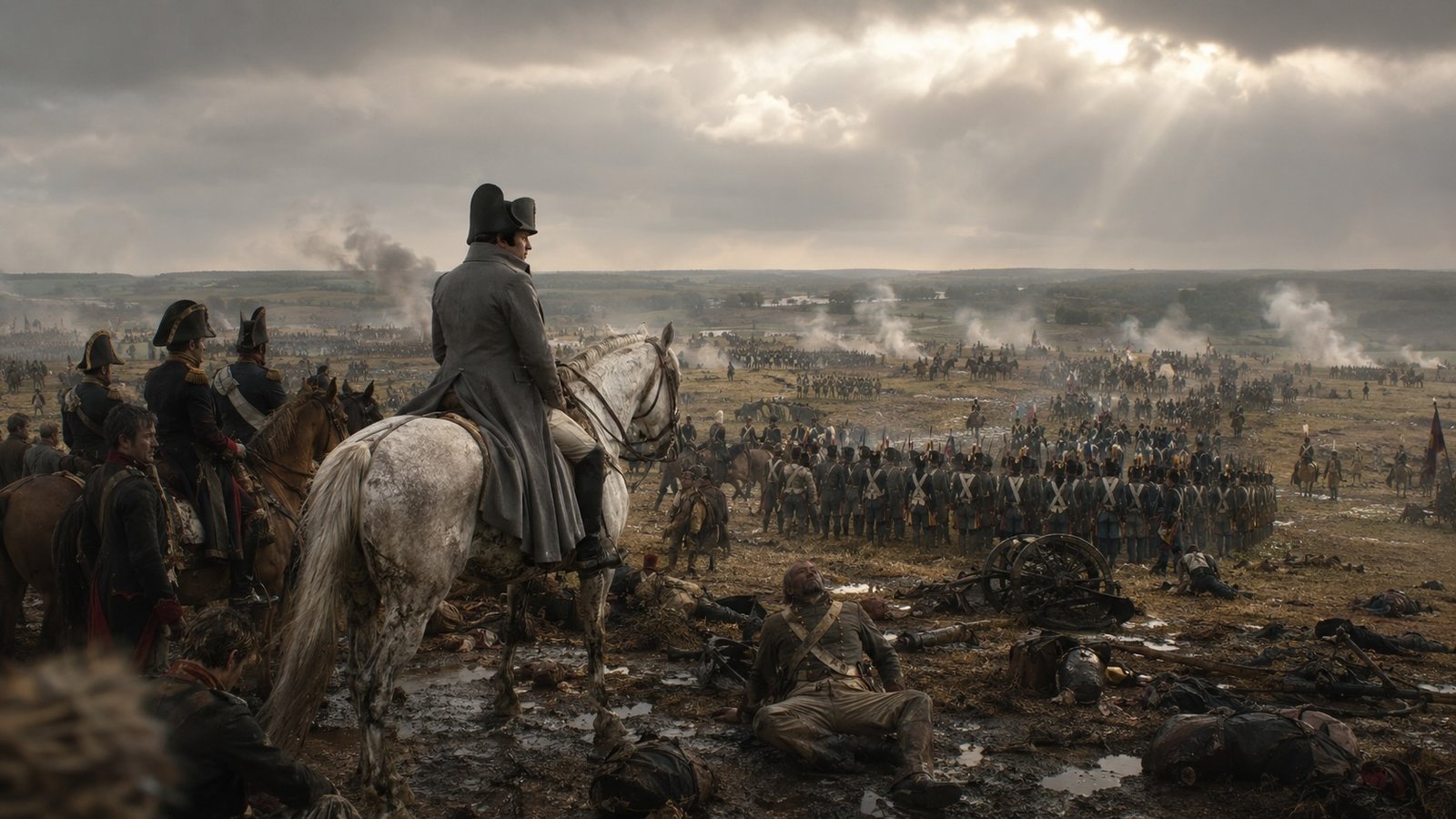
The Napoleonic Wars often appear in paintings as a magnificent parade of polished boots, fluttering standards and generals pointing confidently towards somewhere dangerous. Napoleon stands in the middle, naturally, wearing his famous bicorne and looking as though the entire continent has interrupted his breakfast. The reality felt far less elegant. Between 1803 and 1815, Europe endured mass conscription, economic blockades, occupation, guerrilla warfare, hunger, disease and battles involving armies larger than many people had ever imagined.
Even the name can mislead us. Napoleon certainly drove the conflict, but he did not create every quarrel, command every army or personally arrange every disaster. The wars grew out of the French Revolution, which had frightened Europe’s monarchies long before Napoleon crowned himself emperor. Revolutionary France had executed a king, challenged hereditary privilege and expanded across neighbouring territories. To Europe’s royal courts, this looked less like political reform and more like a contagious illness wearing a tricolour sash.
Britain and France resumed war in 1803 after the brief Peace of Amiens collapsed. From there, alliances formed, broke apart and formed again with almost comic regularity. Austria, Russia, Prussia, Britain, Spain, Portugal, Sweden and numerous German and Italian states joined different coalitions against France. Some fought Napoleon because they feared French domination. Others hoped to recover territory, strengthen their own influence or avoid becoming the next country redesigned according to Napoleon’s preferences.
Napoleon proved exceptionally good at moving armies quickly, concentrating force and confusing opponents. His corps system allowed large formations to travel separately and combine for battle, which gave him flexibility that slower coalition armies often lacked. At Austerlitz in 1805, he defeated the combined Austrian and Russian forces in one of his most celebrated victories. Later legend turned the battle into an almost supernatural performance, complete with thousands of enemy soldiers drowning beneath artillery-shattered ice. Some men did drown, but the dramatic frozen-lake massacre belongs more to imperial publicity and cinematic enthusiasm than reliable evidence.
His reputation for genius remains one of the great controversies of the period. Napoleon won an extraordinary number of battles, worked obsessively and often reacted faster than his opponents. However, he also made enormous strategic mistakes. Invading Spain created a brutal conflict that drained French troops for years. Marching into Russia in 1812 destroyed much of the Grande Armée. Returning from exile in 1815 demonstrated astonishing confidence, though perhaps not the sort one would recommend in a modern leadership workshop.
British resistance depended on far more than the Duke of Wellington standing behind a hedge and refusing to leave. The Royal Navy protected trade routes, blockaded French ports and prevented Napoleon from challenging Britain successfully at sea. Nelson’s victory at Trafalgar in 1805 destroyed French hopes of invading Britain, although the wider war continued for another decade. Meanwhile, British taxes, borrowing and commercial networks financed coalition armies on the continent. Britain effectively became Europe’s determined banker, paying others to continue fighting while periodically complaining about the bill.
Napoleon tried to answer British naval and financial strength through the Continental System. He ordered European territories to exclude British goods, hoping to suffocate Britain economically. Instead, merchants smuggled products, governments quietly ignored the rules and consumers discovered that political loyalty weakened when coffee, sugar and textiles disappeared. The blockade damaged parts of the British economy, yet it also harmed continental ports and industries. Russia’s reluctance to keep enforcing the system contributed to Napoleon’s disastrous invasion of 1812.
The Russian campaign produced one of history’s most persistent myths: General Winter defeated Napoleon. Winter certainly helped, but it arrived after disease, heat, exhaustion, desertion, poor supply arrangements and Russian resistance had already devastated the invading army. Napoleon entered Russia with a multinational force numbering hundreds of thousands. By the time the survivors staggered westwards, the imperial army had become a frozen procession of hungry men, dying horses and abandoned equipment. Blaming the weather alone rather generously excuses the person who decided to march such an enormous army deep into Russia without a sustainable supply system.
Spain created a different nightmare. Napoleon removed the Spanish royal family and placed his brother Joseph on the throne, apparently assuming that Spain would accept this administrative rearrangement with reasonable calm. Instead, rebellion spread across the country. Spanish guerrillas attacked French communications and isolated units, while British and Portuguese forces under Wellington developed a disciplined campaign in Portugal and Spain. The word “guerrilla”, meaning “little war”, entered wider usage through this struggle, although the violence felt anything but little to those caught in it.
Civilians paid heavily throughout the wars. Armies requisitioned food, occupied homes and carried disease. Soldiers often died from infection, exposure or starvation rather than enemy fire. Estimates vary because governments kept incomplete records, but several million military personnel and civilians probably died during the Revolutionary and Napoleonic conflicts. Paintings usually show the glorious charge. They rarely include the dysentery, unpaid farmers or families searching fields after a battle.
Nor were Napoleon’s armies simply French. Poles, Italians, Germans, Dutch, Swiss and soldiers from many other territories served under imperial banners. Coalition armies looked equally international. At Waterloo, Wellington commanded a force containing British, Dutch, Belgian and German troops, while the timely arrival of Blücher’s Prussians helped decide the battle. The popular British version, in which Wellington defeats Napoleon almost single-handedly, remains wonderfully convenient and only slightly rude to everyone else present.
Waterloo on 18 June 1815 ended Napoleon’s final return to power, known as the Hundred Days. Mud slowed French movements, command decisions faltered and repeated attacks failed to break Wellington’s position. When Prussian troops reached the battlefield, the French situation collapsed. Napoleon later surrendered and hoped the British might treat him as an honoured political refugee. They sent him to Saint Helena, which suggests they had learned something from his escape from Elba.
The wars changed Europe even where Napoleon lost. His governments abolished feudal privileges in several territories, reorganised administration and spread legal reforms associated with the Napoleonic Code. At the same time, French occupation provoked resistance and encouraged nationalism among Germans, Spaniards, Italians, Poles and others. Napoleon therefore spread revolutionary institutions while also inspiring people to reject French rule. History enjoys that kind of contradiction.
After his defeat, the Congress of Vienna attempted to restore stability by balancing the major powers and returning several dynasties to their thrones. Europe avoided another continent-wide great-power war for decades, although peace did not mean political harmony. Liberalism, nationalism and demands for constitutional government continued to grow beneath the restored monarchies. Napoleon had lost his empire, but Europe could not simply return to the world of 1789.
That may explain why the Napoleonic Wars still fascinate us. They offer heroic victories and spectacular incompetence, political idealism and ruthless ambition, elegant uniforms and appalling suffering. Napoleon emerges neither as a flawless genius nor merely as a tyrant with excellent branding. He was a brilliant commander whose strengths encouraged increasingly dangerous gambles. Europe eventually defeated him, but only after adopting mass warfare, mobilising national economies and sacrificing millions of lives. In other words, everyone learned how to fight modern wars, then spent much of the next century improving the technique.