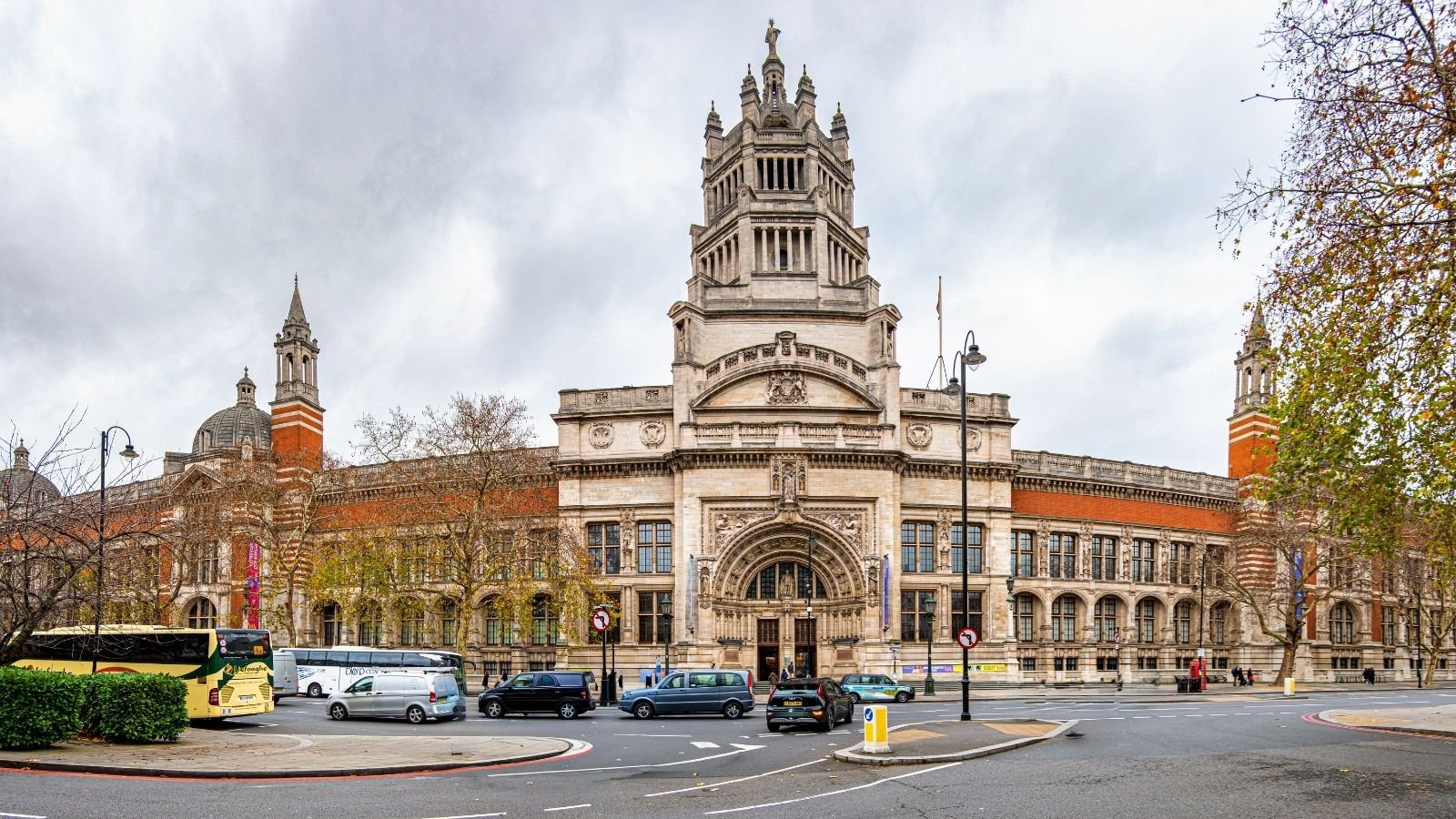
The next time you visit a museum, admire a few paintings, examine some ancient artefacts and then reward yourself with a cappuccino and an overpriced slice of carrot cake, remember to thank the Victorians. More specifically, thank Henry Cole, a man who believed that art could improve the British population, although apparently not on an empty stomach. In 1856, the institution that would eventually become London’s Victoria and Albert Museum opened what is widely recognised as the world’s first museum restaurant. Before then, museum visitors generally had to organise their own refreshments. Cole decided that culture and lunch belonged together, accidentally establishing one of the most profitable-looking traditions of modern museum life.
The story begins with the Great Exhibition of 1851, the enormous celebration of industry, science and design that Prince Albert helped organise in London’s Hyde Park. Henry Cole played a central role in making the event happen and learnt something important about human behaviour. People might admire sophisticated machinery and artistic masterpieces, but after several hours they also wanted something to eat. The exhibition attracted approximately six million visits, demonstrating that mass cultural entertainment required considerably more than interesting objects. It needed toilets, refreshments and somewhere to recover from the exhausting business of self-improvement.
When the South Kensington Museum opened on its present site in 1857, Cole wanted to create something more ambitious than a conventional collection of artworks. He imagined a place where working people could learn about design, manufacturers could improve their products and ordinary Londoners could spend their leisure time productively. The museum even introduced gas-lit evening opening, making exhibitions accessible to people who worked during the day. Cole hoped that culture would offer a respectable alternative to the drinking establishments of Victorian London. The man essentially wanted to compete with the pub, which, given Britain’s national habits, was a brave commercial decision.
The first refreshment room appeared in 1856, initially within a temporary structure designed by Francis Fowke. Unfortunately, the architectural critics were not particularly impressed. One newspaper described the building as “hideously ugly”, a rather unfortunate verdict for an institution dedicated to improving public taste. Its timber-clad Tudor-inspired appearance apparently offended the refined sensibilities of contemporary commentators. The museum demolished it in 1867, but the idea survived. Indeed, the authorities decided that if they were going to serve refreshments, they might as well do so in surroundings spectacular enough to become an attraction in their own right.
In 1868, three remarkable refreshment rooms opened to the public, although their decorative schemes took years to complete. Today we know them as the Gamble, Poynter and Morris Rooms, and they remain among the most extraordinary places in London to enjoy a cup of tea. The rooms showcased different approaches to Victorian interior design, transforming an everyday activity into an aesthetic education. Visitors could inspect decorative craftsmanship, study architectural details and then eat their lunch surrounded by examples of the very design principles that the museum wanted to promote. Rather than simply displaying good taste behind glass, the V&A invited people to sit inside it.
The Gamble Room, the grandest of the three, makes an impression somewhere between an Italian Renaissance palace and an unusually extravagant railway station. Elaborate ceramic tiles cover the walls and columns, while richly decorated ceilings, stained glass and ornamental mirrors create a theatrical atmosphere. Godfrey Sykes developed much of the original decorative concept, and James Gamble continued the work after Sykes died in 1866. Interestingly, the luxurious materials served practical purposes too. Washable ceramic surfaces helped maintain hygiene, while enamelled iron ceiling panels reduced fire risks. Victorian designers had discovered that practical building materials could also look magnificent, although modern customers might prefer less architectural drama while eating a sandwich.
Next door, the Poynter Room offered something different. Originally called the Grill Room, it featured a large cast-iron cooking range where staff prepared chops and steaks. Edward Poynter designed the interior with blue-and-white ceramic tiles, elaborate decorative motifs and influences from European and Asian art. Some of the painted tiles came from female students at the National Art Training School, who earned between sixpence and ninepence per hour. For women seeking professional artistic opportunities in Victorian Britain, this represented a relatively unusual public commission. Thus, a room devoted to cooking meat also became a small but significant showcase for women’s participation in decorative art.
Meanwhile, William Morris created the Green Dining Room, now bearing his name. At the time, Morris was still establishing his reputation, and his firm had yet to become synonymous with the Arts and Crafts movement. Working with Philip Webb and Edward Burne-Jones, he produced an atmospheric interior of dark green panelling, decorative plasterwork, stained glass and medieval-inspired imagery. The result became a popular meeting place for artists and intellectuals, including James McNeill Whistler and George du Maurier. Some visitors undoubtedly came to admire the decoration, while others probably preferred the opportunity to meet interesting people over refreshments. Either way, Cole had created something approaching a nineteenth-century cultural members’ club, without requiring everyone to be a member.
However, beneath all this artistic idealism lay a distinctly Victorian understanding of social equality. The museum might welcome the public, but its catering arrangements carefully recognised differences in social class. In 1867, the first-class menu offered jugged hare for one shilling and sixpence, steak pudding for a shilling and seasonal tarts for sixpence. Second-class diners could choose veal cutlets, poached eggs with spinach or inexpensive buns and sponge cake. Meanwhile, a third-class service catered for labourers, mechanics and poorer visitors elsewhere on the premises. A typical unskilled worker might earn approximately one pound a week, making some of the more elaborate dishes distinctly expensive. The British establishment had invented accessible public culture without necessarily inventing social equality.
There is something wonderfully revealing about these arrangements. Victorian reformers genuinely wanted working people to appreciate beautiful objects, but they still regarded society as a carefully organised hierarchy. Everyone could theoretically improve their taste, provided they understood which dining arrangements suited their position. The first-class visitor might contemplate the finer points of Renaissance decoration over jugged hare, while the working-class visitor enjoyed a more modest meal somewhere else. Art could elevate humanity, certainly, but apparently it could not eliminate the class system before lunchtime.
The museum restaurant also challenged an assumption that cultural institutions should remain solemn places of contemplation. Cole understood that visitors needed comfort, sociability and reasons to stay longer. A museum could become a destination rather than an obligation, a place to meet friends as well as study objects. Today, cafés, restaurants and shops form an essential part of the visitor experience in museums worldwide. What began as an unusual Victorian experiment has become so familiar that we barely question it. The V&A did not invent eating in public, of course, but it helped establish the idea that refreshments belonged inside the cultural experience itself.
Remarkably, visitors can still eat in those historic rooms today. The V&A’s main café continues to occupy the extraordinary spaces created by Gamble, Poynter and Morris, allowing modern Londoners to experience Victorian design in precisely the environment its creators intended. Contemporary menus have abandoned the explicit first-, second- and third-class distinctions, although the price of a museum lunch can still encourage uncomfortable reflections about personal finances. Nevertheless, the essential principle remains unchanged: beautiful surroundings can make even an ordinary meal more enjoyable.
Perhaps Henry Cole understood something that cultural institutions occasionally forget. People rarely experience art as disembodied intellectual creatures. They arrive hungry, tired, curious, distracted or simply looking for somewhere pleasant to spend an afternoon. Give them magnificent galleries, certainly, but also somewhere comfortable to sit and something decent to eat. The Victoria and Albert Museum turned that practical observation into an architectural masterpiece. And nearly 170 years after the original experiment, millions of museum visitors continue to demonstrate that the relationship between culture and cake remains one of civilisation’s most dependable achievements.