Forget the Battlefield: Rwanda Found a Better Use for Drones
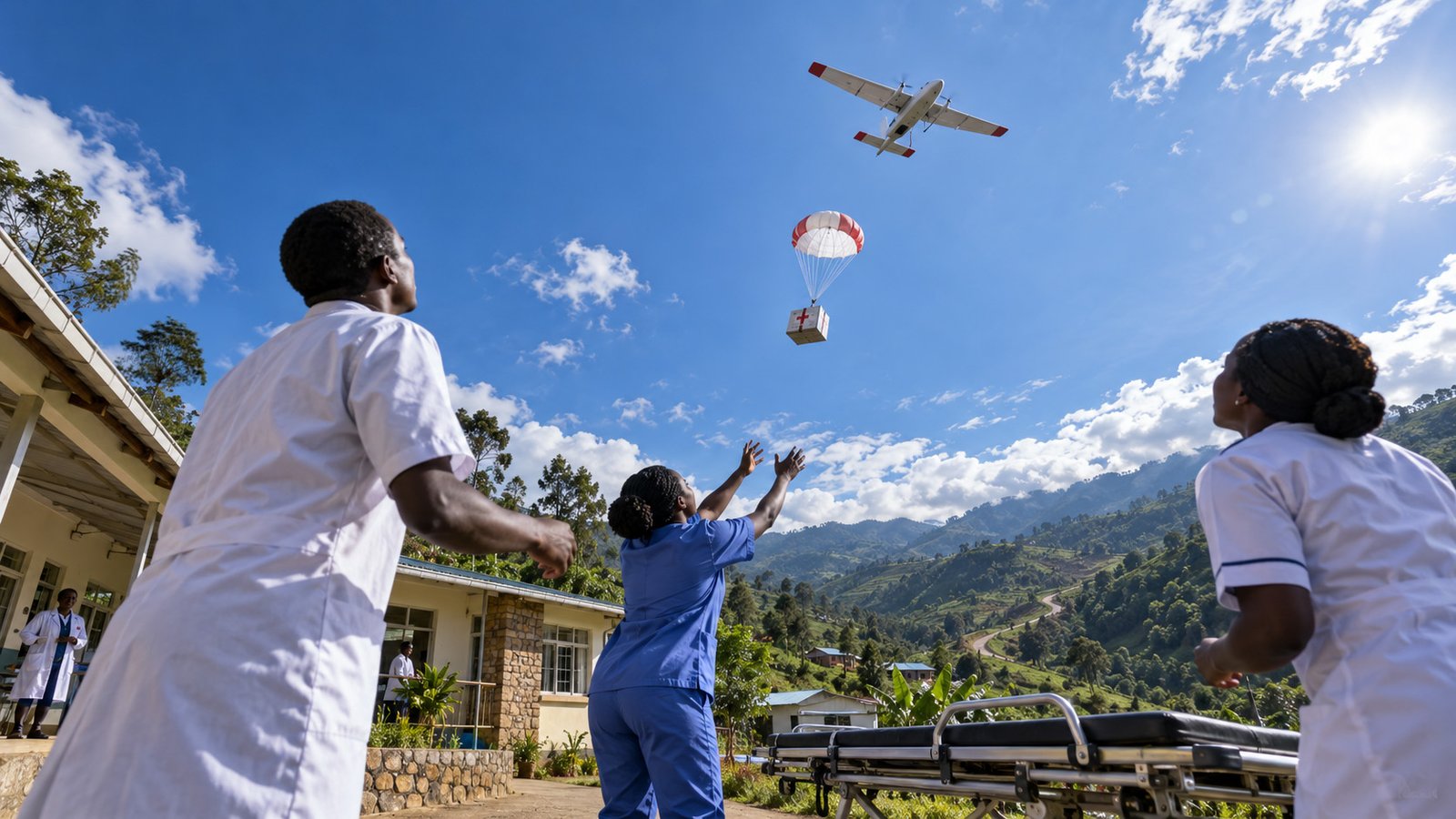
These days, drones usually make the news for grim reasons. They appear in reports from war zones, in footage of surveillance, and in stories where technology seems to have found yet another efficient way to frighten everybody. The word itself now carries a certain menace. You hear “drone” and think of hovering machines, remote control and bad headlines. Yet in Rwanda, another kind of drone has been flying for years with a very different mission. It does not carry explosives. It carries blood.
That contrast alone makes Rwanda’s story worth telling. It reminds us that technology does not come with a moral label attached. The same object can terrify one community and save another. In Rwanda, drones have become part of the national healthcare system, and not in some gimmicky, “look how futuristic we are” sense. They solve a real problem in a country where geography can turn urgency into tragedy.
Rwanda is often called the land of a thousand hills. That sounds lovely in a travel brochure, and no doubt it looks magnificent from a scenic viewpoint with a cup of coffee in hand. It becomes less charming when a doctor in a rural hospital urgently needs blood and the nearest supply sits on the far side of several hills, a winding road and a patch of weather that has chosen the worst possible moment to misbehave. In places like that, distance is not measured only in miles. It is measured in bends, delays and minutes that a patient may not have.
That was the practical problem Rwanda faced. Blood remains one of the most awkward medical supplies to manage. Hospitals need it at short notice, but they cannot predict exactly who will need it or when. Blood products require careful handling, proper storage and reliable refrigeration. Some have a limited shelf life. A small hospital can keep large emergency stocks, but then some of it may expire unused. Or it can keep less and risk running short in a crisis. Neither option looks particularly clever when lives depend on the outcome.
Rwanda chose a third option. Instead of trying to keep large quantities of blood everywhere, it built a system that could move blood quickly to where it was needed. In 2016, the government partnered with Zipline, an American robotics company, to launch an autonomous drone delivery service for blood and medical supplies. The idea sounded futuristic at first, although perhaps that says more about our habit of wasting innovation on convenience than anything else. Many places talked for years about drones bringing shopping to people who could not bear to walk to a corner shop. Rwanda looked at the same technology and asked a much better question: can this save lives?
The answer, rather impressively, turned out to be yes.
The system itself works with elegant simplicity. A hospital places an order for blood. Staff at a central distribution centre prepare the request, pack the blood into a specially designed container and load it into a small fixed-wing drone. The aircraft launches into the sky and flies autonomously along a programmed route. When it reaches the hospital, it does not land. That would complicate matters and require more infrastructure on the ground. Instead, it drops the package into a designated area using a small parachute, then turns around and heads back to base. The hospital staff collect the delivery and take it straight inside.
It sounds almost absurdly neat, like somebody finally forced logistics to stop showing off and become useful. More importantly, it saves time, and in medicine time has a nasty habit of becoming the whole story. Obstetric emergencies show this most clearly. A woman suffering postpartum haemorrhage can lose a dangerous amount of blood in a very short period. The medical team may know exactly what to do, but knowledge cannot replace a blood supply that is still bumping along a mountain road.
This is where Rwanda’s drones move from clever anecdote to serious healthcare case study. They have helped cut delivery times dramatically, especially for rural hospitals that used to rely on road transport. They have also allowed hospitals to reduce the amount of blood they keep in stock, because they know they can replenish supplies quickly when an emergency arises. That means less waste, fewer expired products and more efficient use of a limited resource. In other words, the drone is not just a flying courier. It changes the entire logic of the supply chain.
That is probably the most interesting part of the story. People often focus on the aircraft because aircraft photograph well. The real innovation sits in the redesign of the system. Rwanda effectively turned centralised inventory into an advantage. Rather than trying to scatter large reserves everywhere, it created a model where blood could stay in fewer, better-managed hubs and travel fast on demand. The drone matters, of course, but the thinking behind the drone matters even more. It is less a gadget story and more a logistics story with unusually cinematic props.
The results have been strong enough to attract global attention. Researchers have linked the drone network to faster deliveries, reduced wastage and better outcomes in emergencies, especially in maternal care. That matters in a country where reaching a remote facility quickly can mean the difference between a frightening incident and a fatal one. It also matters because Rwanda did not use drones as a toy on top of a weak system. It integrated them into national healthcare operations. Blood still has to be donated, tested, stored and handled correctly. Doctors and nurses still do the lifesaving work. The drone does not replace the health system. It strengthens one vital part of it.
There is also a useful lesson here for anyone who likes to talk grandly about innovation. Technology tends to attract breathless commentary when it looks dramatic, but it proves its worth only when it solves a specific problem better than the alternatives. Rwanda’s terrain made direct aerial delivery especially valuable. The country is relatively compact, but its roads do not always allow quick travel between medical centres and rural hospitals. Add urgency, perishable inventory and a strong central coordination model, and suddenly the drone stops being a novelty and starts looking almost obvious.
That does not mean the model copies neatly everywhere. Drones cost money. They need maintenance, trained staff, launch sites, regulation and dependable operations. They do not replace roads, ambulances or ordinary transport. Nobody sensible would look at a drone carrying a small medical package and decide that road investment has become optional. The real value lies in combining systems well. Roads still do most of the heavy lifting. Drones handle the time-critical deliveries that punish delay most severely.
Even so, the symbolic power of Rwanda’s example remains striking. At a moment when public imagination links drones with fear, Rwanda offers another image. A small aircraft crosses the hills not to hunt, monitor or intimidate, but to deliver blood to a hospital that needs it urgently. It turns a machine often associated with death into one associated with survival. That reversal feels almost too neat, yet it is real.
Perhaps that explains why this case stays with people. It is not just a story about African healthcare, or logistics, or aviation. It is a story about what happens when a country starts with a hard problem instead of a shiny toy. Rwanda did not ask how to make drones look impressive. It asked how to get blood to patients faster. The answer happened to involve drones, but the wisdom lay in the question.
And there is something quietly refreshing about that. In an age of loud innovation, Rwanda built a system where the most futuristic element serves one of the oldest human priorities: keeping people alive. The roads still wind through the hills. The weather still misbehaves. Emergencies still arrive without warning, because they rarely bother to schedule themselves politely. Yet now, in many cases, help no longer has to follow the road. It can come through the sky.