Fish and chips feels so thoroughly British that questioning its nationality seems almost impolite. It belongs with seaside promenades, vinegar-soaked paper, grey skies and the peculiar British belief that sitting beside a windy beach counts as leisure. Yet Britain did not really invent either half of its most famous takeaway. Instead, it performed one of its greatest cultural tricks: it borrowed two foreign ideas, put them together and eventually behaved as though they had always belonged here.
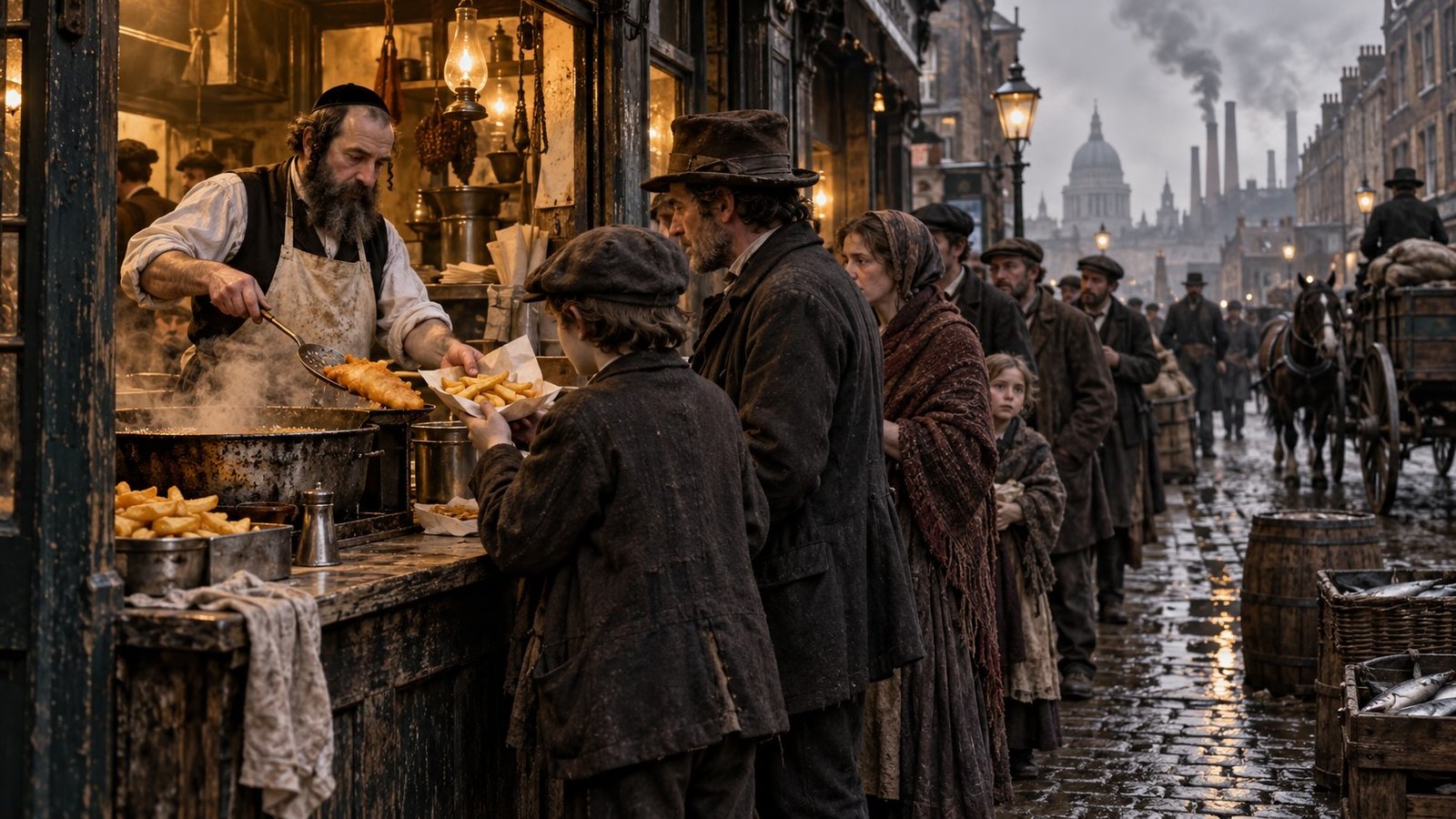
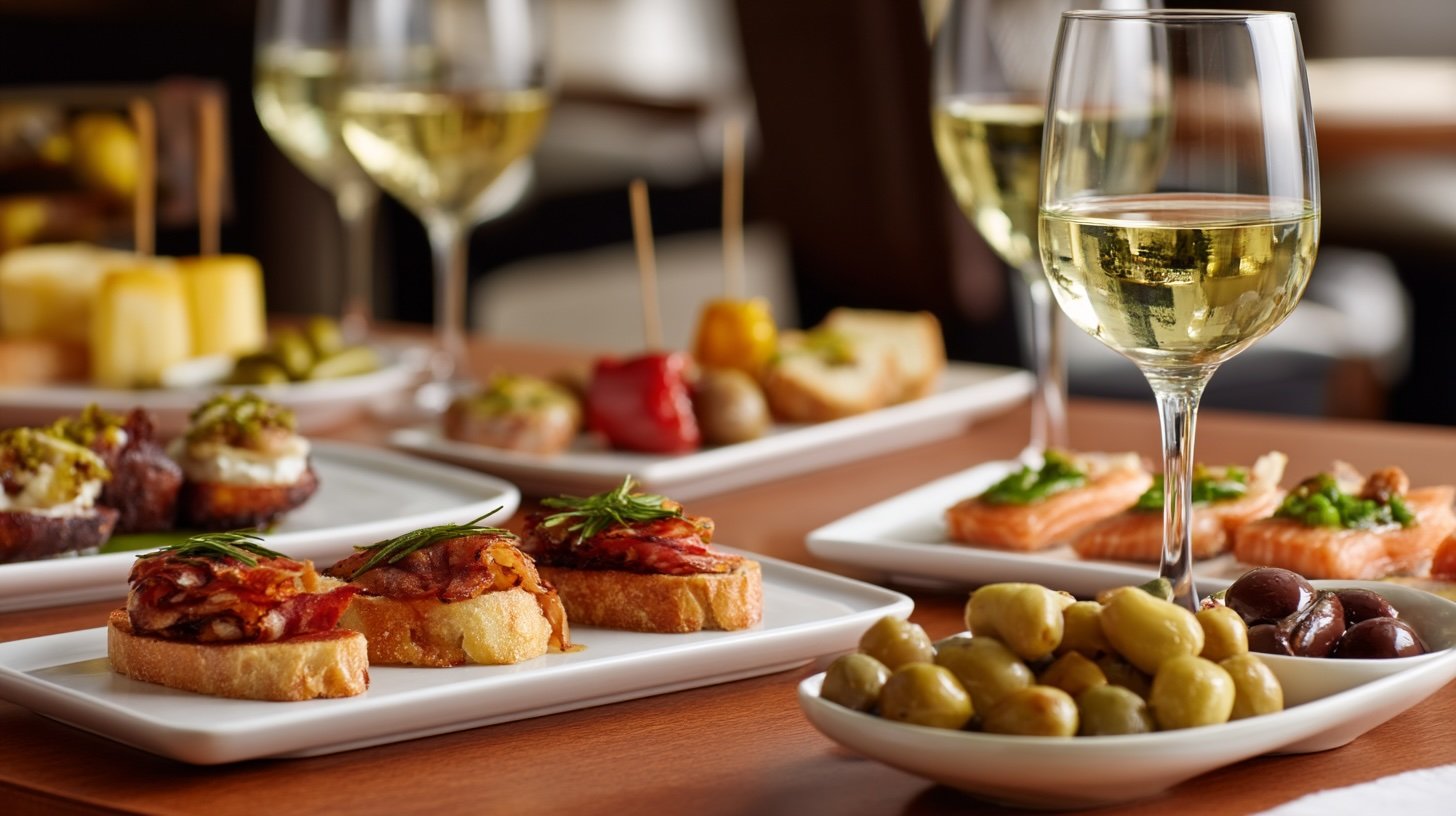
The fish came first, and its story begins far from a Victorian chip shop. Sephardic Jews fleeing persecution in Spain and Portugal carried a tradition of frying fish in oil as they moved through Europe. Some eventually settled in England, bringing versions of pescado frito with them. Cooks coated white fish in flour or batter and fried it until crisp. The method had an important practical advantage too. The fish remained pleasant when cold, which suited Jewish families preparing food before the Sabbath, when religious observance restricted cooking.
London gradually acquired a taste for it. By the nineteenth century, fried fish had become familiar enough to appear in popular literature. Charles Dickens mentioned a “fried fish warehouse” in Oliver Twist in 1838. A few years later, celebrity chef Alexis Soyer included “Fried Fish, Jewish Fashion” in his 1845 cookbook. Long before Britain developed an obsession with cod wrapped in paper, therefore, Londoners already knew exactly what fried fish was.
The potato followed a completely different route. Potatoes originally came from South America and reached Europe during the sixteenth century. Europeans initially viewed them with varying degrees of suspicion, which seems astonishing considering how enthusiastically Britain later embraced the chip. By the nineteenth century, fried potatoes had become popular in continental Europe, although Belgium and France still conduct a culinary custody battle over who invented them.
Britain developed its own trade in fried potatoes during the nineteenth century, particularly in industrial areas of northern England. Charles Dickens provided another useful clue in A Tale of Two Cities in 1859, referring to “husky chips of potato”. Apparently Dickens could not write a novel without accidentally documenting the development of British takeaway food.
Then somebody performed the decisive act: putting fried fish and fried potatoes together. Unfortunately, history failed to retain the receipt.
The traditional London claimant is Joseph Malin, a Jewish immigrant whose family lived in the East End. Accounts generally place his fish-and-chip business around 1860, although surviving evidence does not give historians the satisfying precision they might like. Malin allegedly began by selling fried fish with chips before establishing a shop. His business survived for more than a century, which certainly strengthened its claim to seniority.
Northern England has another candidate. John Lees reportedly sold fish and chips from a wooden hut at Mossley Market in Lancashire, now Greater Manchester, during the early 1860s. He later operated permanent premises and proudly claimed to run the oldest fish-and-chip business in the world. London therefore gives the crown to Malin, while Lancashire raises an eyebrow and asks to see the paperwork.
The sensible answer is that fish and chips probably emerged almost simultaneously in several working-class communities. Food history rarely behaves like the invention of the telephone. Nobody necessarily stood in a kitchen one afternoon, dropped a potato beside a piece of cod and shouted, “Gentlemen, Britain has found its destiny.” Fried fish already existed. Fried potatoes already existed. Industrial Britain simply created the perfect conditions for their marriage.
Those conditions mattered enormously. During the nineteenth century, industrial cities expanded rapidly. Factory workers needed food that was inexpensive, filling, quick and available outside the home. Fish and chips answered every requirement without requiring a marketing consultant.
Meanwhile, technology transformed supply. Steam trawlers brought huge quantities of fish from increasingly distant waters. Britain’s expanding railway network then carried fresh catches from ports into industrial towns and cities with unprecedented speed. Cheap potatoes came from British agriculture, while mass-produced cooking equipment allowed specialist fryers to serve large numbers of customers. Fish and chips became, in effect, a product of Victorian logistics.
By the early twentieth century, the chippy had become part of British neighbourhood life. Around 25,000 fish-and-chip shops reportedly operated across Britain by 1920. Customers queued at counters while enormous fryers bubbled behind them. Portions came wrapped in paper and traditionally, in many places, old newspaper. Few meals have ever combined dinner, packaging and tomorrow’s political opinions quite so efficiently.
The newspaper tradition has acquired its own mythology. People often claim that the government suddenly banned newspaper wrapping during the 1980s because printing ink poisoned everyone. The actual story proves less dramatic. Concerns about hygiene had existed much earlier; Parliament discussed old newspapers as food wrapping as far back as 1936. Eventually food-safety standards pushed shops towards clean food-grade paper, while faux newspaper print later allowed nostalgia to survive without yesterday’s racing results touching the cod.
Fish and chips became particularly important during the two world wars. Governments understood that food affected morale, and fish and potatoes remained outside the normal rationing system during the Second World War. That did not mean unlimited supplies. Wartime fishing became dangerous, vessels disappeared into military service and queues could stretch dramatically whenever a shop received fresh fish. Still, the possibility of obtaining fish and chips offered a small piece of normal life in abnormal circumstances.
This helped turn a cheap working-class meal into a national symbol. George Orwell famously included fish and chips among the comforts that helped make difficult lives tolerable. Winston Churchill reportedly called the pair “the good companions”. Stories also claim British soldiers used “fish” and “chips” as a call-and-response identification during the Second World War. The tale has become part of popular folklore, although its details deserve rather more caution than many cheerful retellings allow.
After the war, fish and chips faced new competition. Chinese takeaways expanded. Indian restaurants flourished. Burgers, pizza and kebabs joined the British takeaway landscape. Supermarkets offered frozen alternatives, while home freezers removed some of the chippy’s old advantage as a convenient hot supper.
Yet the institution survived. In 2026, Seafish identified roughly 7,210 independent fish-and-chip takeaway shops across the United Kingdom. Cod remains the most common choice across much of Britain, while haddock has particularly strong support in Scotland and parts of Yorkshire and the Midlands. Regional arguments over cod versus haddock can occasionally acquire the intensity that other nations reserve for constitutional reform.
The meal itself has changed too. Beef dripping survives in some traditional northern shops, while vegetable oils dominate elsewhere. Curry sauce became a perfectly respectable companion. Mushy peas divide households. Scotland contributed its own variations, including everything from haddock to deep-fried items that the original Sephardic cooks could never have anticipated. Coastal resorts turned fish and chips into part of the British seaside ritual, where gulls developed an equally passionate interest in the national cuisine.
Perhaps that explains why the history matters. Fish and chips looks like an ancient expression of Britishness, yet it actually demonstrates how British culture often works. Jewish migrants contributed the fried fish tradition. A South American plant supplied the chips. European cooks helped develop the culture of fried potatoes. Victorian trawlers, railways, industrial cities and working-class demand brought everything together.
Britain did not invent fish. It did not invent the potato. It probably did not invent fried potatoes either. What Britain created was the combination, the shop, the ritual and eventually the mythology.
And that may make fish and chips more British, rather than less. National traditions rarely descend from the heavens fully formed. They grow through migration, trade, technology, necessity and enthusiastic borrowing. Then, after several generations, everyone forgets the borrowing and calls the result traditional.
So the next time you open a steaming parcel of battered cod and chips, add salt, shake on far too much vinegar and defend it from a seagull, you are not merely eating a British classic. You are eating several centuries of migration, industrialisation and cultural exchange.
Fortunately, history tastes considerably better with mushy peas.