Eton College: Where Britain Learns to Rule
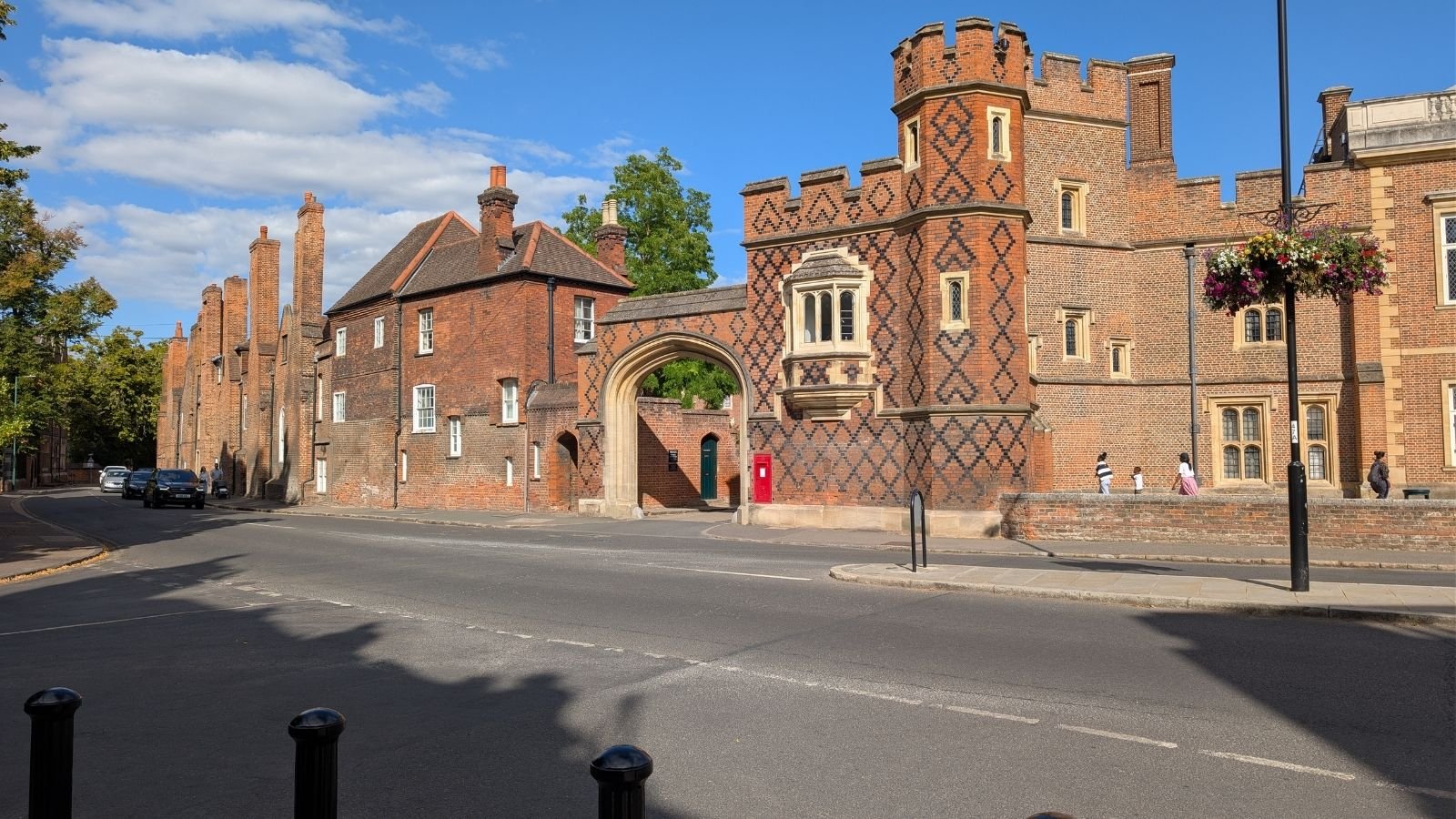
On 8 September 2026, a thirteen-year-old boy walked through the gates of a boarding school in Berkshire. Normally this would interest his parents, perhaps his grandparents and almost nobody else. Unfortunately for Prince George, his grandfather is the King, his father will probably become King, and the school happens to be Eton College. Suddenly, the beginning of Year Nine became national news.
There could hardly be a more British setting for the story. Windsor Castle sits just across the Thames. Boys still wear black tailcoats. Teachers can still be called “beaks”. School terms are “Halves”, senior prefects belong to something called “Pop”, and a sport exists in which two teams spend considerable periods pushing one another against a wall. Somehow, after nearly six centuries, everyone involved appears to regard this as perfectly normal.
Eton began, however, with an idea rather different from the modern image of wealthy families depositing sons beside Windsor with several trunks and a substantial direct debit. Henry VI founded the college in 1440. His charter created a school for poor scholars who would receive an education without charge. The institution eventually provided places for 70 King’s Scholars, while other pupils, later called Oppidans, could study alongside them but pay for their accommodation.
That original purpose creates one of the great ironies of Eton. A medieval king founded a charitable school partly to educate boys without money. Six centuries later, the school has become shorthand for money, class and influence.
It certainly costs money today. For the 2026/27 academic year, Eton charges £21,891 for each of its three terms, including VAT. That makes the basic annual bill £65,673 before the usual extras, which can add another £500 to £1,500 per term. Music lessons cost extra too, presumably because learning the oboe has never been the cheap route to social mobility.
Yet describing Eton simply as a playground for millionaires misses something important. The school remains an educational charity and spends significant sums widening access. It says it spent £10.06 million on financial aid in 2024/25, while 105 boys currently attend completely free. Bursaries can cover anything from a small proportion of the fee to the entire cost.
So Eton contains its own contradiction. It represents extraordinary privilege while simultaneously offering some boys from ordinary backgrounds an educational opportunity almost impossible to buy themselves. Both things can be true at once.
And what an education it can provide. Eton has more than 1,300 pupils, 25 boarding houses and an extraordinary collection of historic buildings and facilities. Its estate resembles a small town more than a conventional school. Ancient classrooms sit alongside laboratories, theatres, museums, libraries and modern sports facilities. More than 1,000 people work there.
Then there is the language. An Etonian does not simply go to lessons with teachers. He may go to “School” with a “beak”. An Oppidan is any boy who is not a Colleger. Wet Bobs are rowers. “Sent Up for Good” means exceptionally good work gets shown to the Head Master and preserved in the archives. Even the timetable planning document is called the “Abracadabra”. Somewhere inside British education, somebody clearly decided that ordinary nouns showed insufficient ambition.
Nothing demonstrates Eton’s ability to preserve the peculiar quite like the Wall Game. Played beside a brick wall on a strip only about five metres wide, it resembles football after football has been deprived of open space and optimism. Players form a mass called the Bully and struggle to move the ball along the wall. Scoring remains spectacularly difficult.
The traditional St Andrew’s Day match pits the King’s Scholars of College against the Oppidans. Only three goals have apparently been scored in that fixture’s history, and nobody has scored one since 1909. In many sports, going more than a century without a goal would trigger an emergency meeting. At Eton it qualifies as heritage.
The school’s influence outside its walls has been rather more obvious. Twenty British prime ministers attended Eton, including Robert Walpole, William Gladstone, Harold Macmillan, David Cameron and Boris Johnson. The Duke of Wellington studied there too, along with writers such as George Orwell and generations of diplomats, soldiers, politicians, bankers, actors and aristocrats.
That record explains both Eton’s prestige and much of the hostility towards it. Critics see a school that does more than educate clever boys. They see a network: friendships made at thirteen that can stretch into Oxford, Westminster, finance, the media and business. In a country permanently fascinated by class, accent and who knows whom, Eton inevitably becomes evidence for the prosecution.
The counterargument is that successful schools should hardly apologise for producing successful pupils. Eton cannot make someone prime minister simply by issuing him a tailcoat. Plenty of Old Etonians disappear into perfectly unremarkable careers, while Britain has produced many political, scientific and commercial leaders who never went anywhere near the place. Nevertheless, twenty prime ministers from one school is difficult to dismiss as statistical background noise.
Even Eton’s most famous supposed contribution to British history looks questionable. People endlessly credit the Duke of Wellington with saying that “the Battle of Waterloo was won on the playing fields of Eton”. Yet Eton’s own collections consider it highly unlikely that he ever said it. The quotation surfaced only later and gradually became one of those historical myths that survives because it sounds exactly like something people think ought to have happened.
Wellington himself spent only a few years at the school. His Eton career hardly resembled the polished production line of imperial leadership suggested by the legend. In other words, Waterloo was probably won at Waterloo.
Eton nevertheless understood something centuries before the phrase became fashionable: education creates networks as well as knowledge. Boys live together, debate together, play sport together and learn confidence in an environment where public speaking, competition and leadership form part of everyday life. The mathematics lesson matters, but so does the expectation that your voice deserves to be heard.
That may be Eton’s most valuable product, and also its most controversial one. The institution does not merely give pupils information. It gives many of them an extraordinary sense of possibility.
Prince George has now entered that world. He follows his father Prince William and his uncle Prince Harry, although the royal connection with Eton is actually much newer than many assume. William became the first senior member of the Royal Family to attend the school when he enrolled in 1995. George therefore continues a family habit rather than an ancient royal tradition.
His arrival also gives Eton another moment in Britain’s endless argument about itself. Can an institution simultaneously represent privilege and social mobility? Does an elite school perpetuate inequality, or can bursaries genuinely open elite education to people who would otherwise never reach it? Is Eton a remarkable educational institution, an old boys’ network with excellent libraries, or both?
Perhaps that uncertainty explains its fascination. Eton has survived kings, revolutions, world wars, educational reforms and governments of every political colour. It has changed enormously while retaining enough medieval vocabulary, strange costumes and incomprehensible games to give the impression that Henry VI might return at any moment and ask what happened to his scholars.
Almost six centuries after he founded it for poor boys beside Windsor, Eton remains one of Britain’s most powerful educational brands. Whether you see it as a national treasure or an elegant monument to the class system probably says almost as much about Britain as it does about the school.
Post Comment
You must be logged in to post a comment.