Your immune system has one job that sounds wonderfully simple: identify things that do not belong inside you and remove them. Viruses, bacteria, parasites and suspicious cells go on the blacklist. Your liver, thyroid, joints, nerves and pancreas, meanwhile, should enjoy diplomatic immunity.
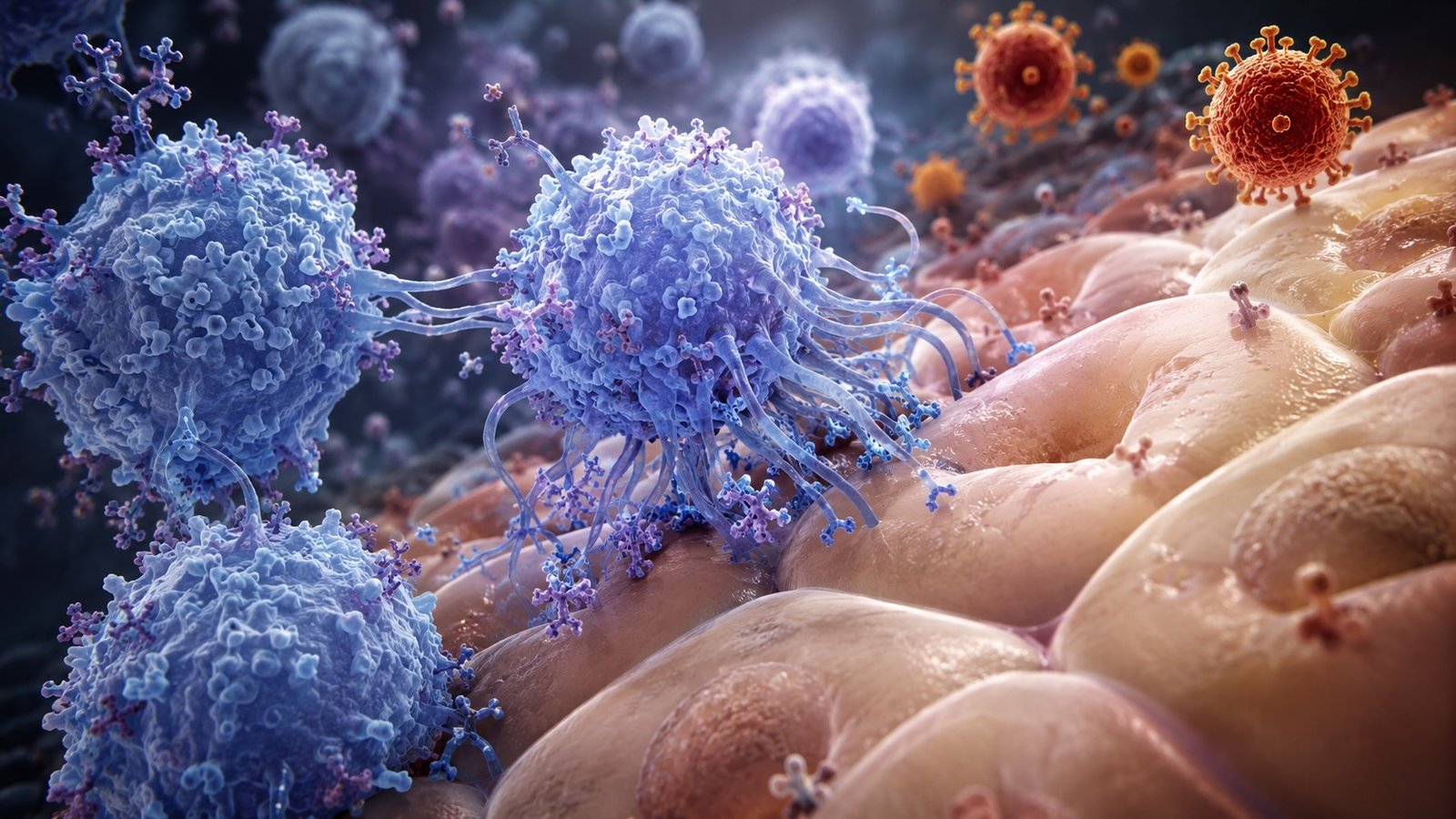
Usually, this arrangement works remarkably well. Occasionally, however, the security department loses the paperwork. Cells belonging to the body suddenly appear on the suspect list, antibodies start recognising perfectly respectable tissue as dangerous, and a system designed to protect you begins attacking the building it guards. That, broadly speaking, is autoimmunity.
The important word here is not “immune” but “tolerance”. From an early stage, the immune system learns that certain molecules belong to us and should therefore remain untouched. Immune cells that react aggressively against the body normally get eliminated, restrained or controlled by other immune cells. Autoimmune disease begins when enough of these safeguards fail.
That failure can take extraordinarily different forms. In type 1 diabetes, immune cells destroy insulin-producing pancreatic beta cells. In multiple sclerosis, they attack structures associated with myelin around nerves. Rheumatoid arthritis targets joints, while Hashimoto’s thyroiditis attacks the thyroid. Lupus adopts the more ambitious strategy of potentially involving several organs at once.
Scientists have identified more than 80 autoimmune diseases, although classification becomes messy around the edges. Together they affect a surprisingly large part of the population. Yet there is no single “autoimmune gene”, autoimmune bacterium or lifestyle mistake that explains them all. Instead, imagine a combination lock involving genetics, infection, hormones, environmental exposures and plain bad luck. Different combinations can open the same unpleasant door.
Genes clearly matter. Certain versions of genes controlling how immune cells recognise proteins substantially change the risk of particular autoimmune diseases. However, inheriting susceptibility does not mean inheriting destiny. Identical twins can share almost the same DNA while only one develops an autoimmune condition, which rather inconveniently prevents genetics from getting all the blame.
Viruses provide another suspect, and Epstein–Barr virus has become particularly interesting. EBV infects most humans eventually and usually causes either nothing noticeable or infectious mononucleosis. It then remains inside the body for life, quietly occupying B cells like an extremely persistent house guest.
The intriguing part concerns what happens in susceptible people. Researchers increasingly link EBV with several autoimmune diseases, including lupus, rheumatoid arthritis, Sjögren syndrome and especially multiple sclerosis. Proposed mechanisms include molecular mimicry, in which viral proteins resemble human proteins closely enough to confuse the immune response, and changes to infected B cells that may encourage autoimmune activity. Recent work has strengthened the biological case linking EBV and lupus, although scientists still do not claim that EBV alone “causes autoimmunity”.
This produces one of autoimmunity’s stranger possibilities: an infection may disappear clinically while the immunological misunderstanding it provoked continues for years. The burglar has left the house, yet the alarm system has become so enthusiastic that it starts arresting the furniture.
COVID added another chapter. Researchers have found persistent autoantibodies in some people with long COVID, and 2026 studies strengthened evidence that certain autoantibodies may contribute directly to neurological symptoms in at least some patients. However, long COVID probably has several mechanisms rather than one neat explanation, so calling the entire condition an autoimmune disease would currently go beyond the evidence.
Then there is one of medicine’s most striking statistical imbalances: women develop many autoimmune diseases far more frequently than men. In lupus and several other conditions, the difference becomes dramatic. For years, explanations often stopped at “hormones”, which has roughly the explanatory sophistication of saying British weather happens because of clouds.
Current research points towards a much richer mixture. Oestrogen and other hormones affect immune activity, but the X chromosome also carries numerous genes involved in immunity. Women have two X chromosomes, and the mechanisms that normally silence much of one copy do not always work identically in every cell. Researchers now investigate how X-chromosome biology, hormones, genetics, epigenetics and even interactions between sex hormones and gut microbes contribute to female-biased autoimmunity.
The microbiome inevitably joins the story because apparently no modern medical mystery can keep the gut bacteria out for long. This does not mean yoghurt cures lupus or that an expensive sachet containing bacteria with impressive Latin names can “reset your immune system”. Studies do suggest that gut microbes influence immune regulation, while disturbed microbial communities may contribute to autoimmune processes in genetically susceptible individuals. The causal relationships remain complicated, however, because illness, diet and medication can themselves alter the microbiome.
That distinction matters because autoimmunity attracts an enormous cloud of wellness mythology. One popular claim says autoimmune disease results from a “weak” immune system. Often the problem looks closer to misdirected immunity than simple weakness. Another says eliminating sugar, gluten, dairy or some fashionable villain can cure autoimmunity. Specific dietary measures genuinely matter in certain diseases — avoiding gluten is essential in coeliac disease — but no universal anti-autoimmune diet has emerged.
The hygiene hypothesis also gets regularly stretched into “children should eat more dirt”. The serious idea is subtler. Changes in childhood microbial exposure, family size, antibiotic use, urbanisation and lifestyle may affect how the developing immune system learns regulation. That does not turn poor sanitation into preventive medicine. Cholera remains a remarkably inefficient probiotic.
Treatment traditionally involves calming troublesome sections of the immune system. Steroids, conventional immunosuppressants and newer biologic drugs can reduce damaging inflammation or block particular immune pathways. The difficulty resembles dealing with an overzealous army: you want it to stop shelling its own territory without leaving the border completely undefended.
Now researchers are exploring something more ambitious. Rather than continuously suppressing autoimmunity, could doctors reset the faulty immune machinery?
CAR-T therapy offers perhaps the most dramatic experiment. Doctors originally developed these engineered immune cells to attack cancers. Small studies have since used CD19-targeting CAR-T cells to eliminate large populations of B cells in people with severe lupus and several other autoimmune diseases. Some patients have experienced prolonged drug-free remission after their B-cell populations regenerated, suggesting that removing the pathological immune memory might allow a healthier system to rebuild.
Nobody should interpret this as “CAR-T cures autoimmune disease”. The procedure can carry serious risks, costs remain enormous, patient numbers are still small and researchers need longer follow-up. Yet the conceptual shift matters enormously. Medicine may eventually move from permanently restraining the immune system towards restoring tolerance itself.
That would change the entire way we think about autoimmunity. Instead of treating the immune system as an army that has simply become too powerful, scientists increasingly see a complex identification system that has made a series of very specific mistakes.
The irony is difficult to miss. Human survival depends on an immune system suspicious enough to recognise microscopic enemies it has never encountered before. Make that system too timid and infections win. Make it too indiscriminate and the body becomes the enemy. Evolution therefore gave us one of biology’s finest security systems, together with the occasional administrative catastrophe in which security starts checking the owner’s passport and refuses to let them into their own house.