Rome had seen plenty of strange political performances by the time Augustus decided to tidy up everyone’s bedrooms. This was a city that had survived civil wars, assassinations, proscriptions, emergency alliances, public feuds, theatrical funerals, obscene graffiti, imported luxuries, and enough aristocratic gossip to keep the Forum humming for decades. Then came the first emperor, dressed in the language of old-fashioned virtue, telling the richest and most ambitious people in the Mediterranean world that they needed to marry properly, produce children, stop sleeping with the wrong people, and generally behave as if the Republic had not just collapsed under the weight of its own hypocrisy.
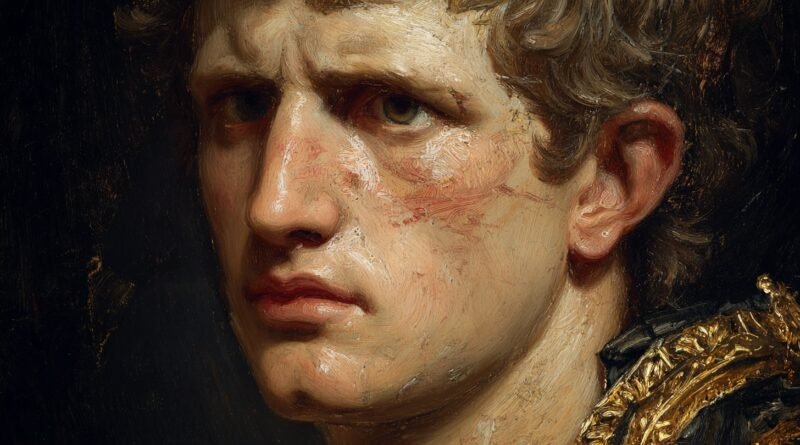
It was a bold idea. It was also very Roman. Augustus understood power better than almost anyone of his age, and he knew that ruling Rome meant more than controlling armies, money, and laws. He needed to control the story Rome told about itself. After years of civil war, he presented his regime as a restoration rather than a takeover. He was not, officially, a king. He was the man who had rescued the old ways, revived ancestral discipline, and returned dignity to a tired society. The trouble, of course, was that many Romans adored ancestral discipline in speeches and ignored it at dinner parties.
His moral programme reached its most famous form in the Julian laws of 18 BCE and the later Papian-Poppaean law of 9 CE. These measures encouraged marriage, rewarded legitimate children, penalised celibacy, restricted certain marriages across status lines, and treated adultery not merely as an embarrassing family matter but as a public crime. That last part mattered enormously. Before Augustus, adultery largely belonged to the domestic sphere, where husbands, fathers, relatives, and family councils handled scandal according to status, anger, money, and convenience. Augustus dragged it into the machinery of the state. Suddenly, the imperial project cared who had been in whose bedroom.
The logic looked neat on papyrus. Rome needed stable elite families. Stable elite families needed legitimate heirs. Legitimate heirs needed respectable marriages. Respectable marriages needed women whose sexual behaviour did not raise awkward questions about inheritance, bloodlines, and household honour. So Augustus created a legal framework that turned family life into a civic duty. Marriage became not just a private arrangement but a patriotic service. Childlessness looked suspicious. Bachelorhood became less charming. Adultery became less a scandal whispered over wine and more a matter for prosecution.
Yet the laws also revealed the limits of Augustus’ revolution. He could defeat Antony and Cleopatra. He could reorganise provinces, reshape the army, build monuments, and make poets sing about peace. But he could not make Rome stop being Rome. The same elite that applauded virtue in public often treated morality as something for other people, preferably poorer people, to practise. Wealthy Romans had villas, slaves, clients, mistresses, poets, actors, banquets, complicated marriages, and an astonishing talent for loopholes. A law could say “marry”; society could reply, “Certainly, but not necessarily with enthusiasm.”
Suetonius later tells us that Romans tried to dodge the spirit of the legislation through immature betrothals and frequent marital rearrangements. That detail feels wonderfully human. Faced with a social engineering project, people did what people often do: they looked for the administrative gap. If the emperor wanted marriage, they could offer him paperwork. If he wanted virtue, they could offer him technical compliance. Augustus had tried to legislate character, but Rome specialised in negotiating with rules.
Then came the scandal that made the entire project look almost theatrical. Julia the Elder, Augustus’ only biological child, became the most famous casualty of the moral regime. She was not just any aristocratic woman caught in rumour. She was the emperor’s daughter, married strategically more than once, used as a dynastic instrument, and expected to embody the clean family image her father wished to sell to Rome. Instead, she became associated with adultery, parties, and a circle of men whose behaviour may have been merely scandalous or possibly political. Ancient sources do not let us see the full truth clearly, and later moralising makes the picture even foggier. Still, the political damage was obvious. The emperor who had criminalised adultery found alleged adultery inside his own family.
Augustus responded with severity. Julia was exiled in 2 BCE to Pandateria, a small island off the Italian coast. Her alleged lover Iullus Antonius, son of Mark Antony, died by suicide or execution depending on how one reads the grim politics around the case. Other men faced punishment too. The whole episode had a bitter elegance that a novelist might reject as too obvious. Augustus had built a public morality machine; then his daughter was fed into it.
The scandal did not end there. Julia the Younger, Augustus’ granddaughter, later suffered a similar fate after accusations of adultery. For a dynasty obsessed with controlled succession, the two Julias became living anti-advertisements. They showed how difficult it was to turn human desire, resentment, ambition, and boredom into imperial choreography. Augustus wanted the ruling family to model restraint. Instead, it modelled the gap between propaganda and life.
There is another irony too. The moral laws supposedly restored ancient Roman values, but they also marked something new and rather intrusive. Augustus spoke the language of ancestral custom, yet he expanded the state’s reach into intimate conduct. He did not simply revive the old household order. He nationalised parts of it. The paterfamilias, the male head of the household, had long held enormous authority in Roman family life. Augustus did not abolish that world, but he placed imperial law above it. In modern terms, he rebranded private virtue as public infrastructure.
That helps explain why the reforms were ambitious but quietly ineffective. They were not meaningless. Laws shape incentives, language, status, and fear. The Augustan programme influenced Roman legal thinking for generations, and later jurists continued to discuss its categories. The incentives around children, marriage, inheritance, and women’s legal position mattered in real lives, especially for elites with property at stake. However, if the aim was to make Roman society morally austere, fertile, faithful, and obedient, then the evidence looks far less flattering. The laws needed later amendments. People gamed them. Satirists still found plenty of material. Elite sexual politics remained messy. The imperial household itself kept producing scandals.
Besides, Augustus had chosen an awkward battlefield. Public behaviour can be choreographed. Statues can be commissioned. Temples can be restored. Coins can carry messages. Poets can be patronised, nudged, flattered, or frightened. But desire does not salute. Marriage does not become happy because the state wants heirs. Status anxiety does not vanish because a law prefers respectable matches. A ruling class trained for competition does not suddenly become a choir of modest citizens because the victor of the civil wars tells it to remember its grandfathers.
And Rome, despite all the marble and moral vocabulary, loved excess. The city had conquered a world and imported its pleasures. Eastern luxuries, Greek art, expensive dining, theatrical culture, sexual gossip, political ambition, and brutal inequality all lived beside temples and solemn speeches about virtue. Augustus could present himself as the restorer of old discipline, but his capital had already tasted empire. It wanted order, yes. It wanted peace, absolutely. But it did not necessarily want to become a moral museum.
That is what makes the story more than a colourful imperial scandal. Augustus’ moral reforms expose a problem every reformer eventually meets: law can punish behaviour, reward behaviour, and signal ideals, but it struggles to manufacture belief. People may obey the visible part and ignore the spirit. They may repeat the slogan and keep the habit. They may praise reform in public while privately searching for the loophole with the best lighting.
Augustus succeeded brilliantly at building the Roman Empire’s political architecture. He ended the age of open civil war, reshaped government, managed the army, and created a language of rule that outlived him by centuries. Yet when he tried to engineer virtue, Rome gave him something much less satisfying: compliance, evasion, scandal, and irony. His laws stayed famous. His moral revolution did not quite arrive.
In the end, the man who mastered Rome discovered the small print of power. You can command legions. You can rename months. You can cover a city in marble. You can exile your own daughter to prove that no one stands above the law. But you cannot simply order a civilisation to become virtuous, especially when that civilisation has just realised how much fun it can have while pretending to agree with you.