One female snowy owl covered more than 4,000 kilometres in a single spring while looking for somewhere to breed. The home she was after would amount to a shallow scrape in the ground, preferably on a low rise where the snow had cleared. There was no need for a tree, a sheltered ledge or even much in the way of building materials. The demanding part of the search was finding enough food nearby to raise a brood. And in the Arctic, an address that came with plenty of lemmings last summer may have very few by the time an owl comes back to look.
Researchers followed nine breeding females in the Canadian Arctic using satellite transmitters. On average, the owls nested 725 kilometres from where they had bred the previous year. One moved more than 2,200 kilometres between successive breeding sites. The spring searches could be long in their own right, with the longest lasting 108 days. In the year when researchers recorded the fewest lemmings on Bylot Island, the owls searched for longer and travelled farther. They still settled in places where lemmings were relatively abundant. The old nest may have been perfectly serviceable. It was the neighbourhood that had changed.
Lemming numbers can rise sharply and then fall, and the peaks do not always occur in the same places at the same time. That gives the owl a reason to keep moving. A poor season on one stretch of tundra says little about what it might find several hundred kilometres away. For a bird that can cover those distances, familiarity with last year’s hunting grounds is only one consideration. A patch of tundra it has never used may offer far better prospects. The satellite tracks show what that looks like in practice. The owls ranged across several widely separated areas in spring before settling down to breed.
Once a pair settles, the actual nest takes considerably less work. The female makes a shallow scrape, often on raised ground that gives her a clear view of the surrounding tundra. Wind can also clear snow from an exposed mound early in the season. The male, meanwhile, can make his contribution to the proceedings obvious. During courtship he may fly in an exaggerated, undulating pattern with a lemming in his bill or talons. After landing, he drops the offering, lowers his head and fans his tail. There is some ceremony to it, but the item on the ground gives a fair indication of what he can bring to the household. In a good lemming year, a pair can raise ten or more chicks.
In north-eastern Canada in the summer of 2013, researchers found nests ringed with dead lemmings and other small mammals. Inside were eggs and newly hatched chicks. The adults had stocked up in a season when prey was plentiful, and by winter snowy owls were turning up far south of their usual haunts in eastern North America. A sudden influx like this is known as an irruption. It is tempting to read one as a sign of hard times in the Arctic. In this case, the piles of provisions suggested a different explanation. A productive breeding season had sent a large cohort of young owls into its first winter.
Winter also shows how much the owl’s requirements change once there are no chicks to feed. In the eastern Canadian Arctic, some birds hunt sea ducks around open patches of water in the ice, more than ten kilometres offshore. Others spend the season in open country farther south, including farmland and areas around the Great Lakes. Even an airport can offer a recognisable layout from an owl’s point of view. Short vegetation and long stretches of open ground make prey easier to spot, much as they do on the tundra. An owl that can spend part of the year hunting ducks at sea may still cross a substantial piece of the Arctic in spring to find a patch of ground with enough rodents.
Occasionally, a pair finds somewhere worth returning to. Snowy owls bred for eight seasons on Fetlar, in Shetland. The male failed to return in 1976, though one or two females continued to summer on the island each year until 1993. For Britain, where a snowy owl is a rare visitor, it was an unusually sustained spell of occupation. The Fetlar birds and the tracked Canadian females show how different successive seasons can look. One pair can keep coming back to a small island, while another bird can shift its breeding site by thousands of kilometres.
That flexibility makes snowy owls difficult to count. An influx on a well-watched coast may reflect a successful breeding season far away. A quiet winter may mean more birds are spending it beyond the reach of observers. Over longer periods, the evidence points to a decline, and the snowy owl is classed as Vulnerable globally. One possible pressure lies beneath the snow, where lemmings find shelter in winter. Ice crusts can make that space less habitable, although researchers have yet to establish a consistent change in lemming cycles across the Arctic. For owls that hunt offshore, shrinking sea ice changes the winter habitat as well.
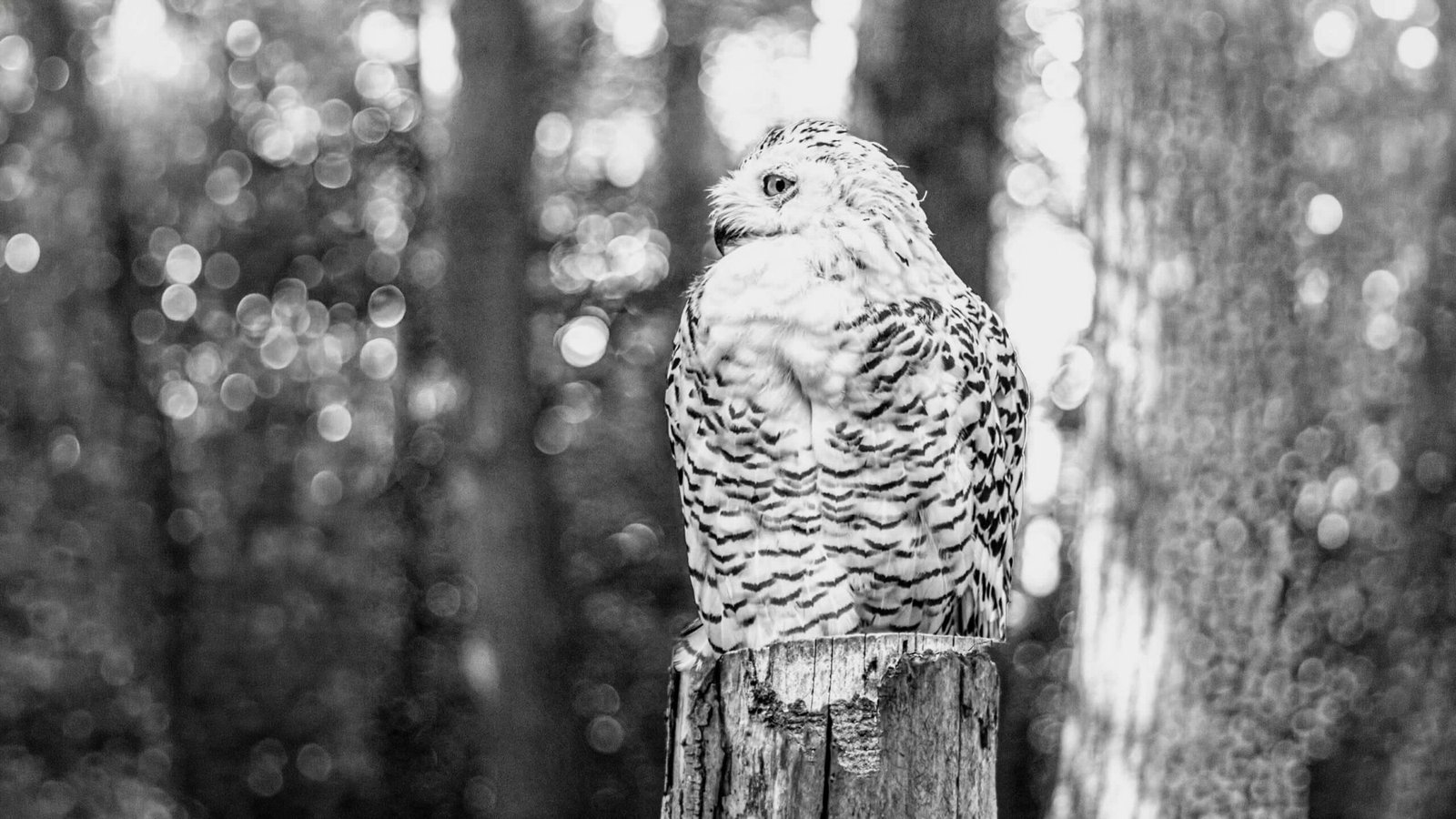
Seen from a distance, a snowy owl on a low mound can look as though it has been there all winter. A female may in fact have spent weeks searching before settling on that particular patch. The mound needs to be dry enough for a scrape and high enough to see what is moving nearby. Most of what made it worth the journey may still be out of sight, going about its business under the snow.