What makes bioluminescent seas glow like spilled stardust?
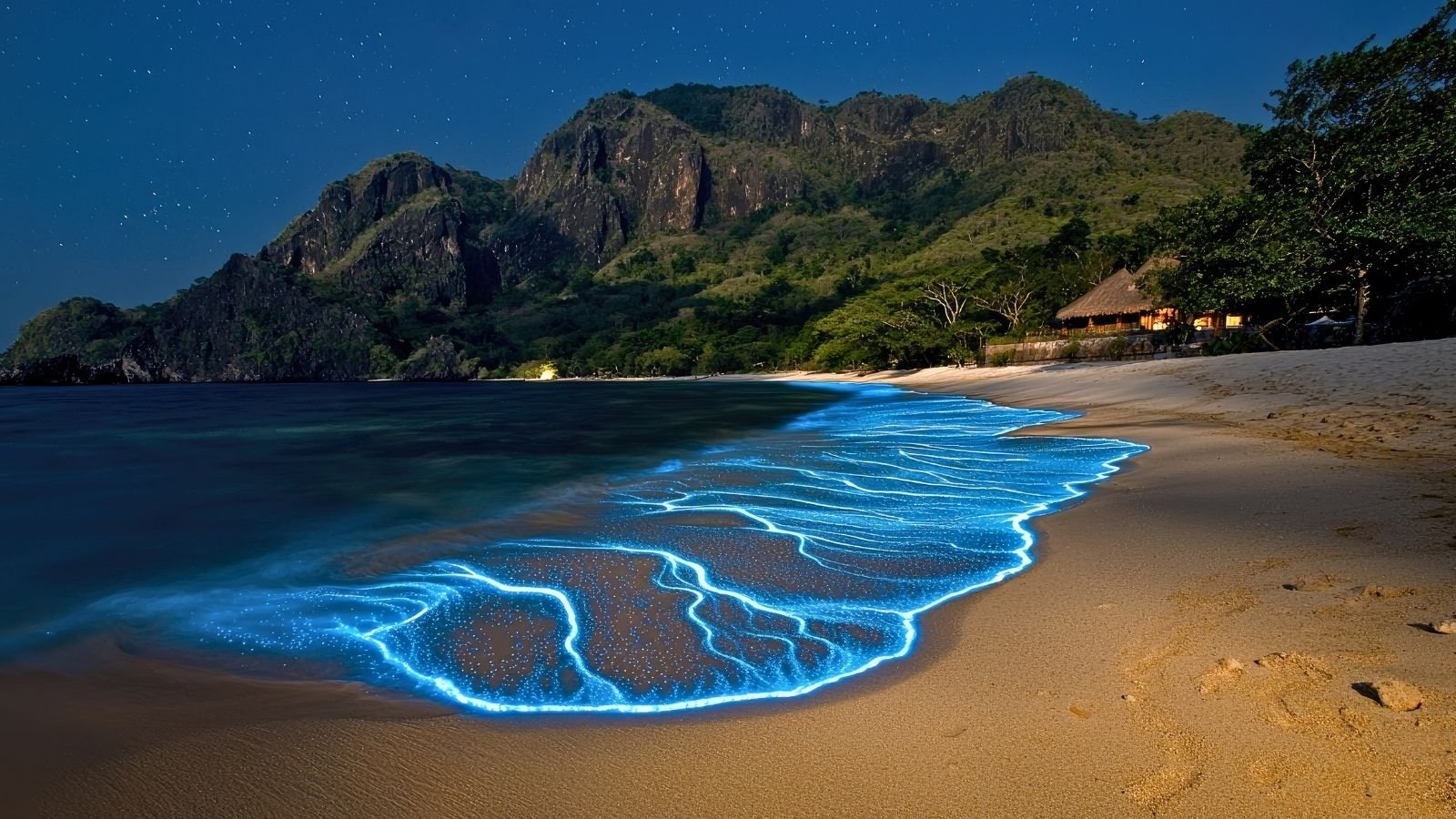
Bioluminescent seas lure travellers the way bonfires charm moths. Anyone who has stood on a quiet beach at night and suddenly seen the shoreline glow electric blue will tell you the same thing: it feels like the planet decided to put on a secret light show and forgot to charge admission. The science behind it sounds straightforward on paper. The experience never does. The glow comes from microscopic plankton, usually dinoflagellates, that release light when the water around them gets agitated. Waves stir them. Kayaks spook them. Even your toes brushing the sand can set off a shimmer. They behave like tiny guardians who flash a warning signal when something nudges them. Nature’s very own motion-sensitive night lamps. The chemical trick at play uses luciferin and luciferase. One is the fuel, the other is the switch. Together they create a brief burst of neon, lasting less than a second. It’s fast enough that you almost doubt what you just saw, then the next wave rolls in glowing even brighter, and you realise you’re witnessing something quite real and slightly unhinged. Some travellers swear the glow looks like a spilled bottle of highlighter ink. Others insist it feels more magical, closer to fairy dust caught in a tide. Cameras struggle with it, which adds a layer of smugness for everyone who has seen the phenomenon in person. It’s one of those rare moments when your eyes outperform your phone. Vaadhoo Island in the Maldives earns the most attention thanks to its so-called Sea of Stars. On certain nights, the entire shoreline lights up blue. Photos of Vaadhoo make it seem staged. The truth feels even stranger. You walk along the beach, and the sand glows under your feet like a runway guiding an aircraft made entirely of bewildered tourists. No wonder half the planet put it on their dream list. The Caribbean delivers its own luminescent surprises, with Mosquito Bay in Puerto Rico topping the charts. The bay holds an absurd number of plankton per litre of water, which means even a small splash looks like someone just fired a sparkler under the surface. Kayakers there paddle through liquid light, leaving bright blue trails behind them like glowing tail fins. Locals claim the glow gets stronger on moonless nights. They’re right. Less competition makes the plankton’s show even more dramatic. It’s also one of the few places on Earth where tourists paddle quietly out of respect, not because a guide insists on it, but because glowing water demands a bit of reverence. Plenty of other coastlines join the club. Toyama Bay in Japan gets the same effect from firefly squid, which rise to the surface by the millions every spring. Their glow lines the shore like a festival with no sound except waves gently tapping the beach. Campers there can sit for hours just watching the water light up as if someone wired the sea to a dimmer switch. In California, the glow arrives whenever red tides bring large numbers of bioluminescent dinoflagellates close to shore. Surfers risk night waves just to carve bright lines across the water like temporary graffiti. The glow only lasts seconds, but it stays in the memory far longer. Some myths insist glowing seas are harbingers of destiny. Fishermen once believed the light signalled either incredible luck or terrible storms. Scientists politely disagree. The glow doesn’t predict anything. It simply reveals what’s already happening beneath the surface. Human fascination with glowing water goes back centuries. Ancient accounts mention ships cutting through light trails as though guided by ocean spirits. Even Charles Darwin wrote about his voyages through glowing patches that looked like molten metal shimmering on the waves. People who love marine biology will remind you that the glow isn’t rare; seeing it is. Plankton appear everywhere, but conditions need to align. Warm water. Enough nutrients. Calm seas. Minimal light pollution. Right place, right night. Some travellers get lucky on their first attempt. Others chase the glow across continents and still end up staring at dark waves, hoping for a flicker. A few practical notes emerge from this chasing game. Nights following hot days often favour the glow. Moonless evenings help too, because the darker the beach, the more dramatic the show. Patience matters. Many people walk away after ten minutes, then the glow appears fifteen minutes later, prompting a quiet stream of questionable vocabulary. There’s a fleeting quality to bioluminescent seas that adds charm. You can’t summon them. You can’t book them. You can’t demand refunds from the ocean. You just wait and hope. When the glow arrives, it carries a strange emotional pull, as though the planet briefly decided to whisper something in light instead of sound. The phenomenon also sparks environmental worries. Tourists love it so much that some destinations struggle with overcrowding. Kayaks, torches and drones disturb the plankton. Local guides often urge visitors to avoid sunscreen before entering the water, as oils and chemicals stress the organisms. The best viewing usually happens from shore anyway, with your feet firmly on dry sand and no risk of trampling microscopic performers. Scientists keep discovering new species capable of glowing. Some fungi, insects and deep-sea creatures produce their own light shows, but glowing coastlines hit differently because they’re accessible. They invite people who might never set foot on a research ship. They make science feel a bit like sorcery. Many travellers recall the first moment they saw the sea ignite. A flash. A swirl. A ripple that turned bright blue. Then the gentle shock that comes when something familiar suddenly behaves in a way you didn’t expect. You feel tiny. You feel lucky. You feel like you stepped into a story told in whispers. Even people who don’t usually get excited about nature find themselves mesmerised. The glow can turn an ordinary beach holiday into something that feels legendary. No need for fancy equipment. No need for expert guides. Just you, the surf, and a bit of planetary mischief. Watching bioluminescent seas reminds you that not everything extraordinary hides in remote wilderness. Sometimes it rolls quietly onto the beach, swirls around your ankles, lights up the night and disappears before dawn as though it realised it revealed too much. The glow lingers in your memory long after the waves forget it. It’s hard not to smile at how generous the world can be when everything aligns.