The Rucksack: A Bag, a Back, and a Surprisingly Long Human Story
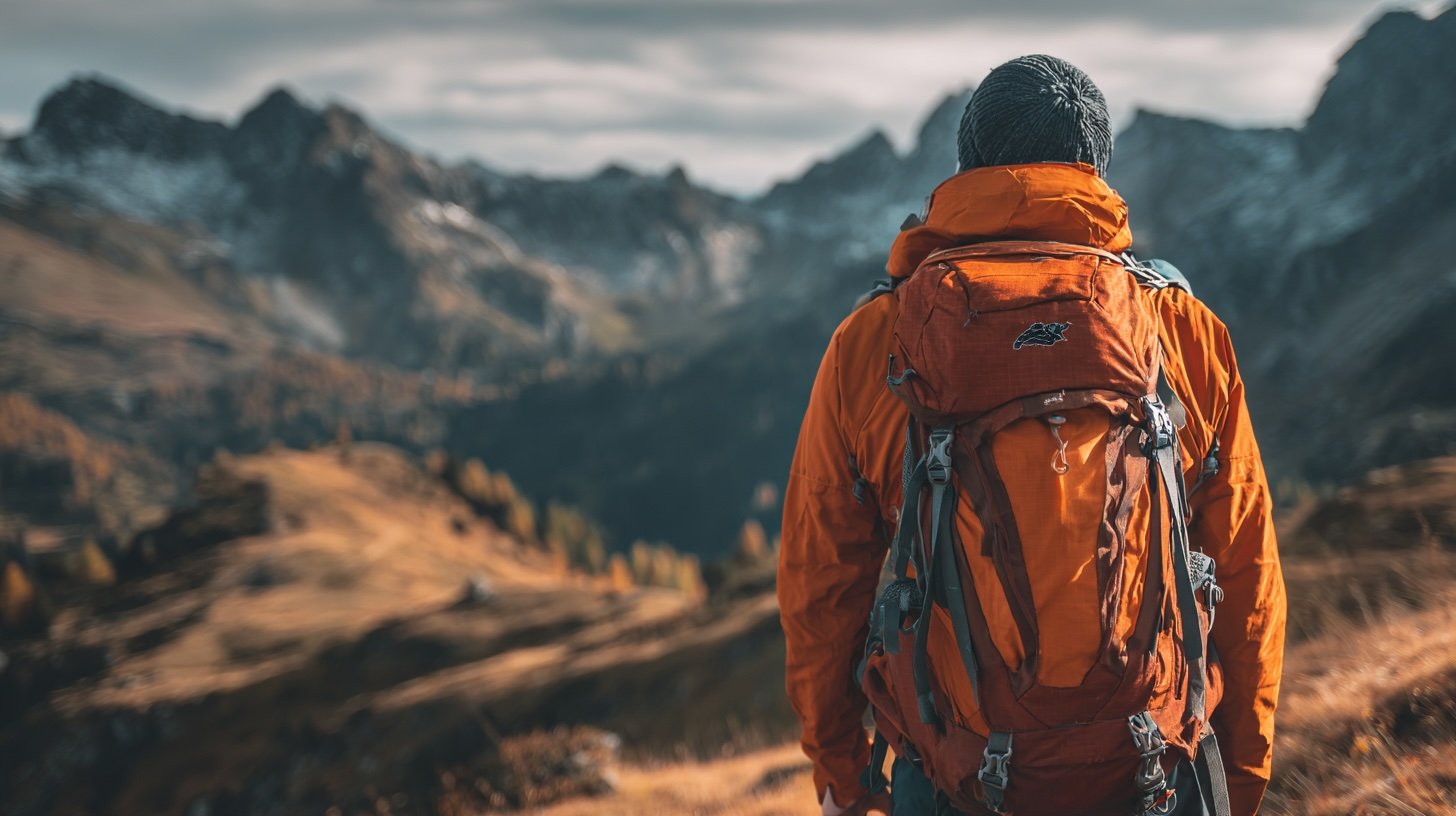
The word looks simple enough: rucksack. Two blunt syllables, slightly clumsy, very German, and entirely uninterested in sounding elegant. It promises practicality rather than poetry. Yet behind this ordinary object sits a colourful story of mountain paths, military logistics, weekend ramblers, schoolchildren, commuters, and our ancient habit of carrying slightly more than we probably need.
At its simplest, the name means exactly what it appears to mean. It comes from German: Rücken, meaning back, and Sack, meaning bag or sack. Some dictionaries trace the English word through a German dialect form, rucken, but the basic idea remains wonderfully literal: a bag for the back. No metaphor. No marketing department. Just a useful object named with admirable bluntness.
English has been using the word since the mid-19th century. Merriam-Webster gives 1853 as the first known English use, while Etymonline records it from 1866. That small difference is not unusual in word history; dictionaries often rely on different earliest written examples. The safe conclusion is that rucksack entered English in the Victorian period, at a time when Alpine travel, mountaineering, military kit, and outdoor exploration were becoming increasingly visible in British life.
Of course, people were carrying loads on their backs long before anyone used the word. Hunters, traders, farmers, soldiers, pilgrims and travellers all needed ways to move food, tools, clothes and supplies while keeping their hands free. The exact materials varied by place and period: animal skins, woven baskets, wooden frames, cloth bundles, leather straps and rope all played their part. The rucksack was not invented in one dramatic moment. It emerged from a very old human problem: how do you carry useful things across difficult ground without ruining your arms?
Mountain communities had especially good reasons to think about that problem. In the Alps, steep paths and long climbs made ordinary hand-carried loads impractical. Traditional wooden carrying frames, often associated with the Kraxe or Kraxen, allowed people to haul firewood, tools, food, agricultural goods and other heavy loads across awkward terrain. These were not sleek leisure accessories. They were working tools, closer to a portable wooden rack than a modern hiking pack. But they show the same basic principle: move the weight to the back, give it structure, and leave the hands free.
By the 19th century, the mountains began to change in the European imagination. They were no longer only places of labour, danger and local necessity. They became places of adventure. Mountaineering grew into a fashionable pursuit, Alpine clubs appeared, and British travellers joined German-speaking guides, Swiss hoteliers and European climbers in turning high-altitude hardship into a form of recreation. Climbers needed bags that could carry food, ropes, spare clothing and the optimism required to go uphill in uncomfortable garments. The German word fitted the setting beautifully. It sounded sturdy, practical and properly Alpine.
The military also had every reason to care about back-carried equipment. Soldiers have always marched with more than seems humane: food, blankets, ammunition, water, tools, spare clothing and whatever else the army decides is essential. Early military packs were often heavy, stiff and built for durability rather than comfort. Shoulder pain was not treated as a design flaw so much as a feature of service life.
As armies modernised, load-carrying systems became more sophisticated. Frames, canvas bodies, compartments and later synthetic materials all changed how soldiers carried their kit. During the Vietnam War era, the U.S. Lightweight Rucksack became one notable example: a nylon pack with exterior pockets and a tubular aluminium frame, designed for demanding field conditions. It was not the beginning of the rucksack, but it was part of the wider shift from simple sacks to engineered carrying systems.
Civilian life followed its own path. As railways expanded, holidays became more accessible, and hiking grew popular, the rucksack became part of leisure culture. Ramblers needed something to hold sandwiches, maps, waterproofs and flasks of tea. Students needed a bag for summer travel. Scouts, schoolchildren and outdoor clubs helped make the back-worn bag familiar to generations who were not climbing glaciers or marching through jungles.
The word itself also acquired a flavour. In British English, rucksack still sounds outdoorsy. It belongs to hill paths, campsites, wet grass, youth hostels and sensible boots. Backpack, by contrast, feels a little more urban and global, partly because of American influence. A backpack can carry a laptop to the office. A rucksack can do that too, but it still seems as if it would prefer to be heading towards a ridge.
Then came the great transformation of materials. Cotton canvas and leather gave way to nylon, polyester, waterproof coatings, plastic buckles, foam padding and reinforced stitching. Designers added hip belts, sternum straps, padded backs, laptop sleeves, hydration compartments and secret pockets whose purpose is often forgotten by the owner within a week. Load distribution became a science. Even a modest commuter bag now borrows ideas from expedition gear.
That is one reason the rucksack has survived so well. It is adaptable. It can be a child’s school bag, a soldier’s pack, a climber’s technical system, a cyclist’s weatherproof shell, a student’s travel companion or a consultant’s laptop carrier. The form changes, but the appeal remains the same: put your things inside, place the weight on your back, and keep moving.
There is also something quietly democratic about the rucksack. It does not require status, ceremony or instruction. A suitcase suggests travel. A briefcase suggests work. A handbag suggests personal style. A rucksack suggests readiness. It says: I may need a jumper, a notebook, a charger, a bottle of water, a snack, or possibly all of them at once.
The modern rucksack also reveals more about its owner than people might like to admit. A battered canvas one hints at literary habits and strong feelings about notebooks. A black waterproof roll-top suggests someone who has made peace with British rain. A technical hiking pack covered in straps announces either serious outdoor ambition or a touching belief that camping will be relaxing. A tiny minimalist one says the owner travels light, or at least wants to appear that way.
Yet beneath all this style and symbolism, the old practicality remains. The rucksack works because the human body is reasonably well suited to carrying weight close to the back and shoulders, especially when that weight is balanced and supported. It keeps the hands free. It makes walking easier. It turns carrying into movement rather than performance.
That is why the rucksack’s story is larger than the object itself. It follows changes in how people move through the world. When travel meant labour, it carried tools and provisions. When mountains became romantic, it carried ropes and maps. When armies modernised, it carried military kit. When leisure expanded, it carried sandwiches and raincoats. Today it carries laptops, headphones, passports, gym clothes and charging cables, proving that modern life has not made us lighter packers. It has simply changed the contents.
The charm of the word is that it never tries too hard. Rucksack is not sleek. It is not glamorous. It does not sound like something invented by a lifestyle brand. It sounds like what it is: a sack for your back. That bluntness is part of its survival. The name is useful, the object is useful, and together they have crossed languages, mountains, wars, classrooms, airports and office corridors.
So the next time you sling one over your shoulders, remember that you are carrying more than a bag. You are carrying a small piece of human ingenuity: Alpine practicality, military adaptation, Victorian adventure, modern design, and the eternal belief that life is easier when you bring an extra layer.
A rucksack does not ask for admiration. It simply waits by the door, ready for the next journey — even if the journey is only to the corner shop.