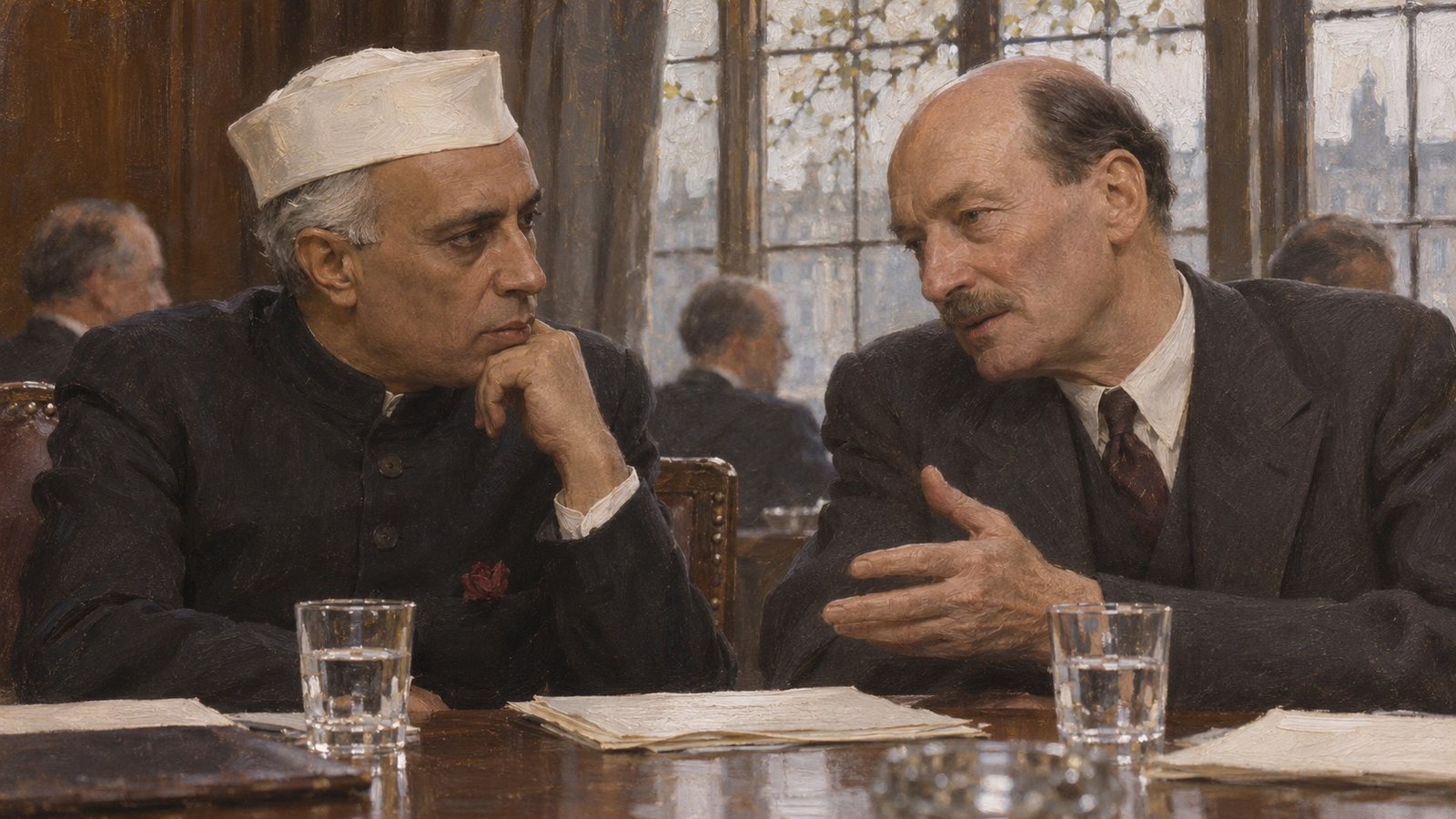
In 1949, India wanted to do two things that the rules of the club made incompatible. It wanted to become a republic, and it wanted to stay in the Commonwealth. Until then, allegiance to the Crown had been the bond between members. India had won independence two years earlier and had every reason to dispense with that arrangement. The London Declaration found a way through. India could choose its own head of state and recognise George VI as the symbolic head of the association. The other seven members agreed. A club built around the Crown had just learnt that it could keep its members by asking less of them.
The old arrangement had already loosened considerably. In 1926, Britain and the self-governing Dominions agreed that they were equal in status, a principle the Statute of Westminster put on a legal footing in 1931. The Dominions still shared allegiance to the Crown, while much of the empire remained under colonial rule. India’s decision opened a route that newly independent countries could use as decolonisation accelerated. Ghana joined in 1957, Nigeria in 1960 and Jamaica in 1962. In 1965, the association acquired its own Secretariat. It had begun to develop a working life beyond the occasional gathering of prime ministers.
The change mattered because the new members had their own ideas about what the association was for. In 1961, South Africa withdrew after other members challenged its apartheid policies. At Gleneagles in 1977, Commonwealth governments agreed to discourage sporting contacts with apartheid South Africa. That gave governments a way to apply pressure through fixtures and tours, including in rugby and cricket, where South Africa had strong ties with fellow members. A Commonwealth delegation visited Nelson Mandela in prison in 1986 and explored the possibility of negotiations. South Africa returned in 1994, after its first election in which citizens of all races could vote. By then, the association’s reputation owed a good deal to governments that had used it to challenge the racial order from which it had emerged.
A year later, Mozambique, a former Portuguese colony, joined. Rwanda followed in 2009, and Gabon and Togo, both formerly under French rule, became the newest members in 2022. Joining gives a government another set of diplomatic relationships and another place to pursue its interests. That has an obvious appeal for countries with limited diplomatic resources. It also complicates the familiar British habit of looking at a Commonwealth map and seeing the remains of an imperial one. There are now countries on it that London never ruled and that chose to join decades after independence.
As of November 2026, the Commonwealth has 56 members and about 2.7 billion people. Thirty-three members are small states. King Charles III holds the symbolic position created for his grandfather, and the member governments choose who fills it. He is also head of state in 15 member countries, including the United Kingdom, in a separate constitutional capacity. Shirley Botchwey, a former Ghanaian foreign minister, has run the Secretariat since 2025. Governments make decisions by consensus. For a small island state, that means access to a room where its assent matters. For anyone hoping the room will issue a blunt verdict on one of its own governments, it can mean a long afternoon.
The Commonwealth Charter commits members to democracy, human rights and the rule of law, and a group of foreign ministers can suspend governments from participation. Gabon offers a recent example. The Commonwealth partially suspended it in 2023 after a military coup, lifted that suspension in July 2025 and took the country off the group’s formal agenda in November 2026. The ministers welcomed the restoration of elected constitutional government and encouraged continued engagement on issues including political pluralism and media freedom. The case shows how the association can respond to a clear constitutional rupture. Judging the quality of political competition or the freedom of the press over time takes a different kind of scrutiny, and the Commonwealth has fewer ways to make that scrutiny count.
That same November, Antigua and Barbuda became the smallest country ever to host a Commonwealth summit. Its agenda made the case for taking small members seriously. Leaders discussed how countries exposed to storms could raise money for infrastructure and cope with debt. Britain announced a Caribbean infrastructure programme worth up to £40 million for projects including renewable energy and infrastructure better able to withstand climate impacts. The meeting’s interest in trade and investment also showed how the Commonwealth tends to work in practice. The summit gave governments, lenders and investors a place to meet, with specific partnerships emerging from those conversations.
The sharper argument in Antigua concerned slavery. In Samoa in 2024, leaders had agreed that the time had come for a conversation about its historical harms. Two years later, Britain agreed to a structured dialogue with affected partners in Africa and the Caribbean. Ministers said it could cover remembrance, education, culture and calls for a formal apology. Britain maintained its opposition to financial reparations. For governments seeking reparatory justice, getting London to agree to a formal process was a step forward, with a substantial disagreement still to resolve. The communiqué could record an agreement to talk. Each side would go home with its own account of what those talks might achieve.
The attraction of the Commonwealth depends rather a lot on where one sits. From London, the King and the old institutional ties are hard to miss. From a Caribbean capital, it can look like a chance to put both the cost of rebuilding after storms and Britain’s role in slavery on the same diplomatic agenda. In 1949, India stayed after persuading the club to rethink what it could ask of a member. In Antigua, some of the smallest members used their seats to ask something of Britain.