In one Japanese military recruitment procedure in 1945, the men were blindfolded before being asked to put up a hand if they would volunteer for a mission they were expected to die carrying out. In theory, nobody could see who had said yes. In practice, they could hear the rustle of uniforms as arms went up. There were other ways to ask the same question. Sometimes men had to step forward in front of their comrades. Sometimes the officer reversed the instruction, and anyone who wanted to live had to be the one to move.
The name by which these pilots became known in English came from a much older story. Kamikaze means ‘divine wind’, the name tradition gave to the storms credited with saving Japan from the invasion fleets of Kublai Khan in 1274 and 1281. The weather did wreck ships in 1281. Its role in the first invasion is less certain, and Japanese warriors had plenty to do with repelling both. One of them, Takezaki Suenaga, commissioned illustrated scrolls showing his part in the fighting. Whatever credit later generations gave the wind, Suenaga was keen to make sure that some of it went to him.
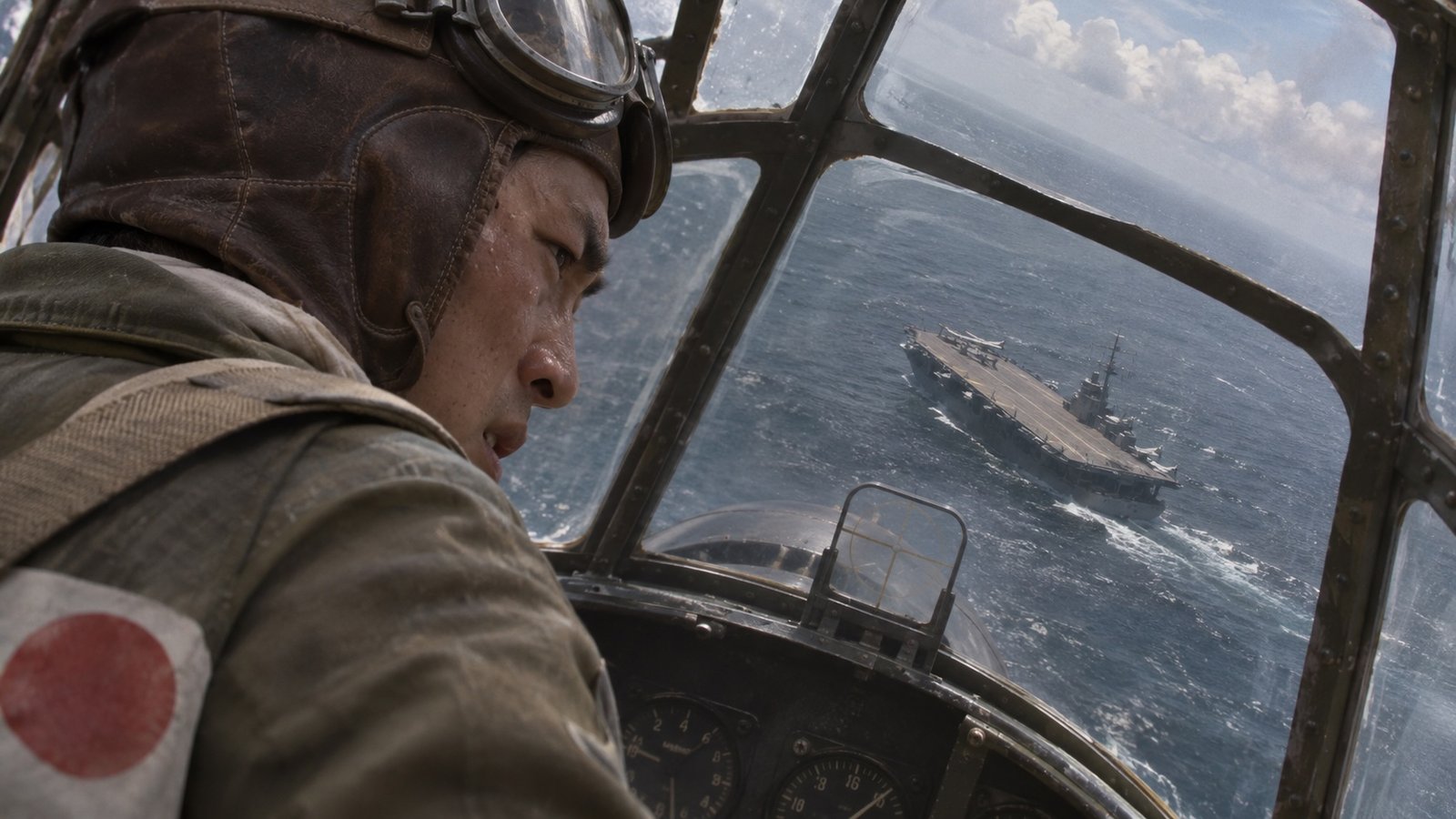
By October 1944, a story about deliverance from an invading fleet had an obvious appeal to Japanese commanders. The Americans had returned to the Philippines, and Japan’s navy was struggling to match their strength in the air. Vice Admiral Takijirō Ōnishi oversaw the formation of a naval unit whose pilots would deliberately crash their aircraft into Allied ships. In Japan, the broader special attack forces were known as tokkōtai, an abbreviation of ‘special attack units’. The term kamikaze passed into English as the name for the pilots and their attacks. A word that once credited the weather with saving lives now described an institution that required men to give theirs.
On 25 October 1944, during the Battle of Leyte Gulf, the American escort carrier USS St. Lo came through a fight with a much stronger Japanese surface force. The carrier survived that engagement only to be struck by a Japanese aircraft later that morning, in one of the first organised kamikaze attacks. It sank in less than twenty minutes. A hundred and fourteen crew members died. By the following spring, the Japanese army and navy were mounting attacks on a far larger scale against the fleet supporting the invasion of Okinawa. Crews could survive a day’s action and face another attack the next. Japan still lost Okinawa.
The word ‘volunteer’ did a great deal of work on the Japanese side. Kuroda Kenjirō declined to volunteer and subsequently found his name on the list anyway. His superior reported that the entire unit had volunteered. Other men felt an obligation to their friends that was harder to disentangle from the demands of their officers. It took one sort of courage to say yes and another to say no in a room full of men whose company you had shared through training, punishment and the exhausting business of getting through a war. A man could resent the officer asking the question and still feel he owed something to the person standing beside him.
Ichijima Yasuo, a Waseda University graduate and a devout Christian, reached for a poem when he wrote to a friend before his death in April 1945. It was by Ryōkan, the Buddhist monk, and it turns on a simple observation about cherry blossoms. The ones still on the tree will fall in their turn. Cherry blossoms were already familiar in the language of military sacrifice, but Ichijima had particular people in mind. Other pilots had gone before him. He wrote of serving his country and made no mention of the emperor. A letter could use an image familiar from wartime propaganda and still say something quite personal with it.
The young men who left the fullest written accounts were often university students drafted after the government shortened their studies. They had spent years reading and keeping notebooks, habits they carried into military life. Their diaries can give the impression that the special attack units were full of men who had come straight from a university library. Many pilots were younger recruits who left far less writing behind. There is a lopsidedness to the surviving record. One man leaves enough pages to follow a change of mind over weeks. Another leaves a photograph and a date. His face may be every bit as familiar in a museum, but there is far less to go on when trying to understand what he thought.
Decades after the war, Kasuga Takeo, who had looked after pilots’ meals and laundry at a naval air base, recalled a farewell gathering. There was cold sake. Some of the men cried, some shouted and some smashed light bulbs and windows. Others wrote their wills. Kasuga was remembering the scene half a century later, and his account describes an evening he witnessed. It sits uneasily beside the photographs of smiling men waving goodbye. A camera can record a smile perfectly well. It has nothing to say about what happened the night before.
At the Chiran Peace Museum in southern Japan, portraits of 1,036 special attack pilots hang in order of the dates on which they died. Below them are farewell letters and other final writings. The museum can put the deaths in sequence, one after another. The letters keep pulling in the opposite direction, towards a friend who knew the poem, a parent who would recognise the handwriting, a conversation that had started long before the war. For all the public language about dying for Japan, much of the writing was addressed to somebody in particular.