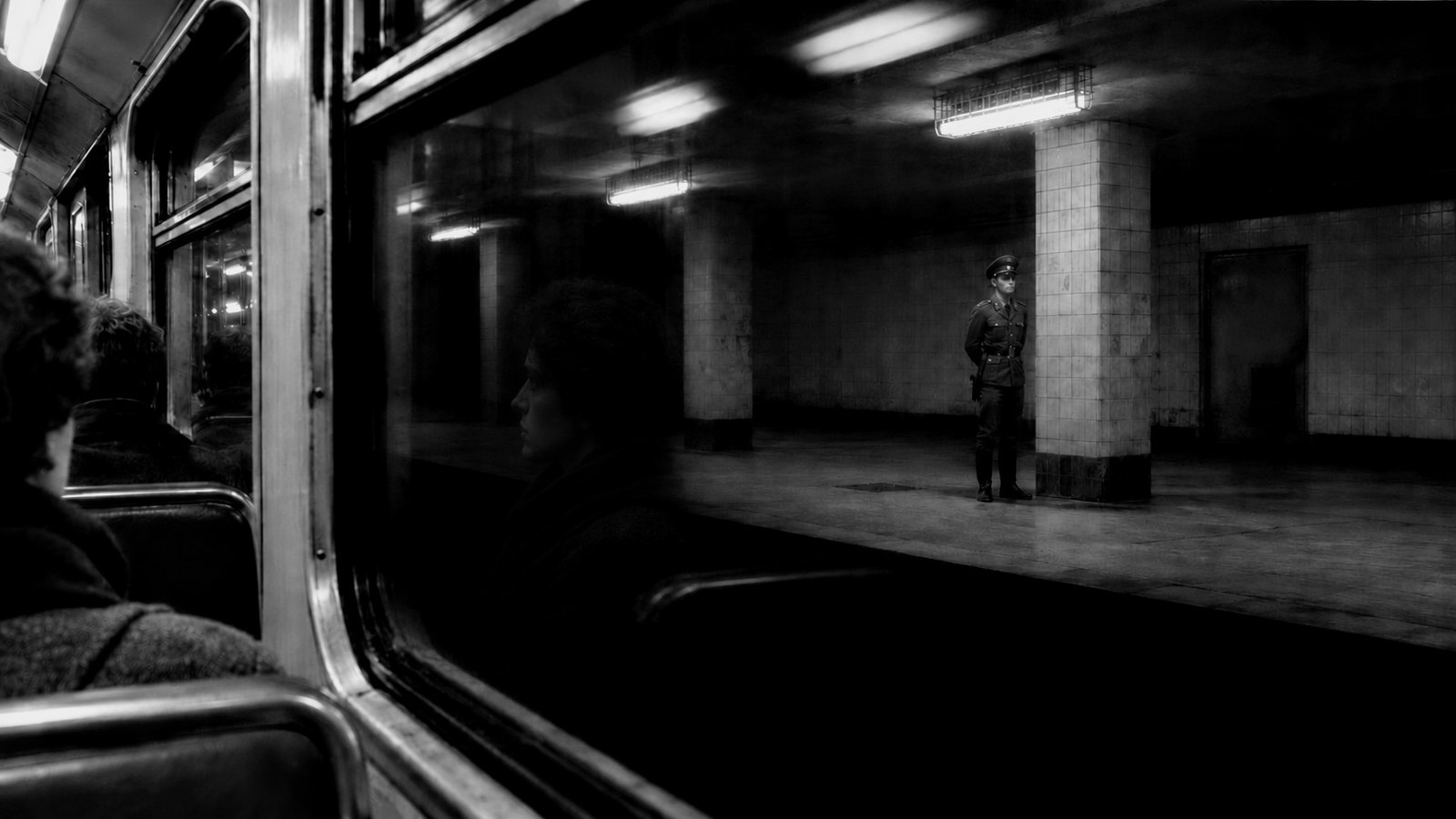
For nearly three decades, passengers on certain West Berlin trains could look out of the window and see East Berlin. Their train had crossed beneath the sector boundary, a border people risked their lives trying to cross. All the passengers had needed was a ticket. The trains slowed as they passed through dimly lit stations where armed East German guards stood on the platforms. The doors stayed shut. Nordbahnhof was one of these ghost stations. Above ground, its entrances were sealed. Below, passengers could watch a station go by that once would have been somebody’s stop for home.
The railway had been built for a city that made sense as a whole. The map drawn after the Second World War had different priorities. The victorious Allies divided Berlin into four sectors, even though the city lay deep inside the Soviet occupation zone. The American, British and French sectors became West Berlin. The Soviet sector became East Berlin and the capital of the German Democratic Republic, or GDR. After East Germany tightened controls along its border with West Germany, Berlin still offered a way out. People could cross into the western sectors and leave for West Germany. The East German government was losing citizens through streets that had never been designed to keep anybody in.
In the early hours of Sunday, 13 August 1961, East German forces began closing the crossings. They tore up paving and laid barbed wire. Concrete followed, but some of the first barriers were simply the buildings that happened to stand on the border. On Bernauer Straße, the houses on the southern side belonged to the Soviet sector, while the pavement outside belonged to the French sector. A resident could live in East Berlin and step straight into West Berlin through the front door. Once the authorities blocked that route, people tried the upstairs windows. On 22 August, Ida Siekmann jumped from her flat at number 48 and died.
The border grew into a system of walls, fences, watchtowers, patrol roads and open ground that guards could scan. The concrete face familiar from photographs was the part most readily visible from the West. At Bernauer Straße, the authorities forced residents to move out, sealed the windows and eventually cleared the houses. Even the Church of Reconciliation ended up stranded inside the border strip. The East German authorities blew it up in 1985. At least 140 people died at the Wall or in direct connection with the border regime there. Some died in falls or drowned. Others were shot by guards.
The railway posed a problem that bricklayers could only partly solve. Two underground lines and one suburban railway line began and ended in West Berlin but ran beneath part of the East. The trains kept running. East Germany shut the intervening stations to passengers, with one conspicuous exception. Friedrichstraße, despite standing in East Berlin, let passengers change between western services without going through East German passport control. It also served as a border crossing for people with the right papers. Two passengers could be in the same station, one changing trains on an ordinary commute and the other facing an inspection before being allowed to leave.
For all the effort the GDR put into controlling movement, the night the Wall opened began with a question about timing. By the autumn of 1989, East Germans were leaving through other countries and taking to the streets to demand change. On 9 November, Günter Schabowski, a member of the ruling party’s Politburo, announced new travel rules at a televised press conference. A journalist asked when they would take effect. Schabowski consulted his papers and indicated that, as far as he knew, the answer was immediately. For people watching at home, the obvious way to test that claim was to put on a coat and go to the border.
Crowds gathered at the checkpoints. At Bornholmer Straße, guards faced people asking to exercise a right they had just heard about on television. The officers had no clear instructions that matched the announcement. By late evening they had opened the barrier and people poured over the Bösebrücke into West Berlin. In the familiar footage of the night, people climb on the Wall and strangers embrace. At Bornholmer Straße, the decisive act was quieter. People walked across a bridge, and the guards let them. The concrete was still in place the next morning, when East Berliners could make the same journey again.
The ghost stations reopened on 1 July 1990. Germany reunified on 3 October, and the city’s old connections returned at their own pace. Roads met again where barriers had cut them off. The Chapel of Reconciliation now stands on Bernauer Straße, on the site of the former church. Nearby, the memorial preserves a section of the border strip, with its patrol road and watchtower. From the street, a wall can look deceptively thin. Here, the distance between the barriers makes it possible to see how much of the city the border took up.
At Nordbahnhof, an exhibition tells the story of the ghost stations on the mezzanine. Downstairs, there is a small pleasure that requires no knowledge of the Cold War. A train pulls in, the doors open, and someone who was looking at their phone suddenly realises this is their stop.