Sleep for Sale: How Melatonin Became a Modern Ritual
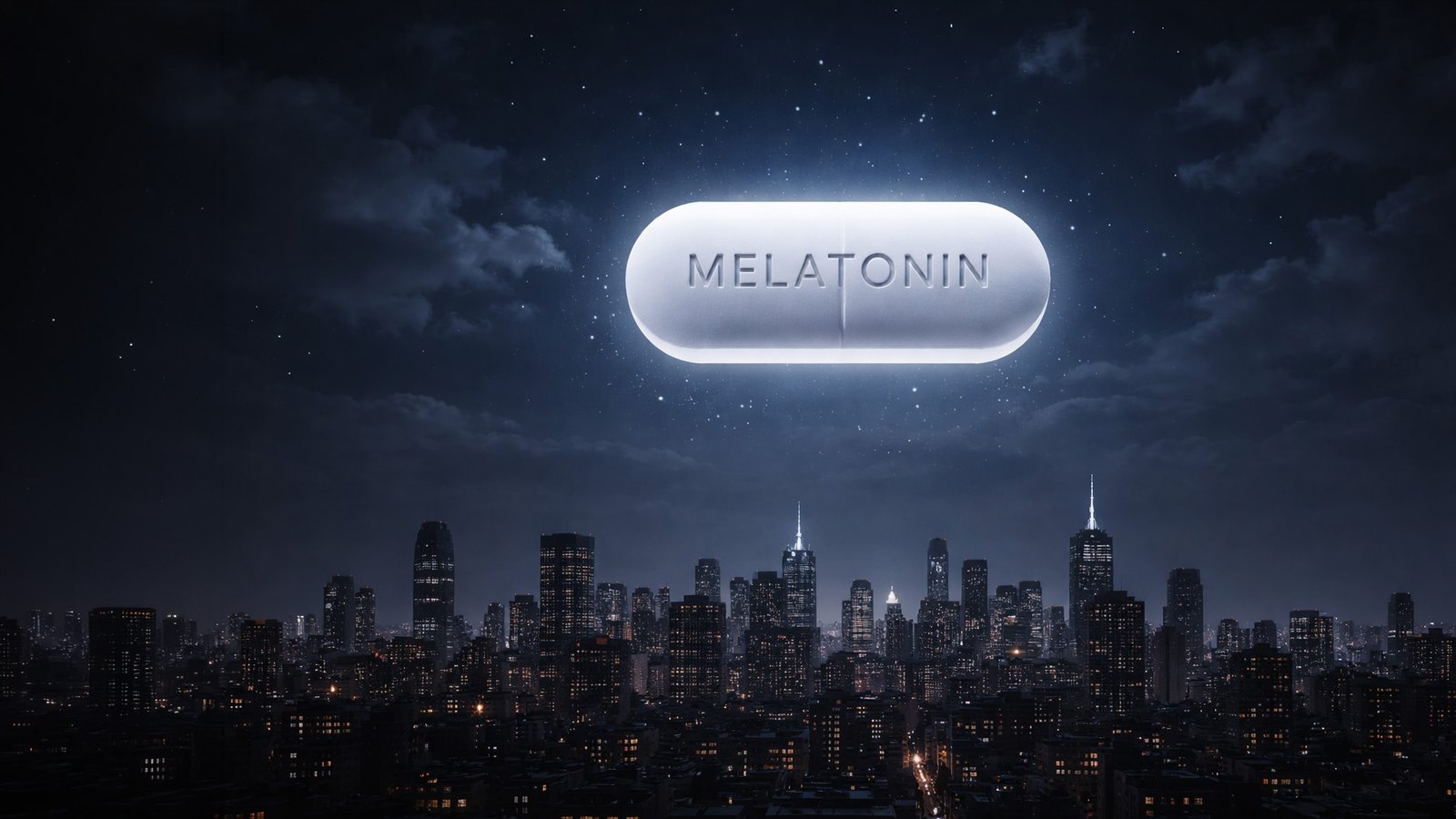
The bedside table has become a quiet confession booth. A glass of water stands by. A phone lies face down, still humming with late emails. Next to it sits a small jar of strawberry-flavoured melatonin gummies, promising rest in chewable form. We conquered continents, sequenced genomes, built cloud computing, and yet here we are, bribing our own brains to switch off.
Melatonin never asked for celebrity status. Each evening, the pineal gland releases it when darkness settles in. Rather than sedating, it signals. Think of it less as a bouncer knocking you unconscious and more as a stage manager dimming the lights. Night has arrived, it whispers, so you may begin to wind down.
For most of human history, that whisper had backup. Sunset meant something concrete. In agrarian villages, work stopped because sight simply failed. Since candles cost money and smoked up the ceiling, evenings narrowed naturally. People ate, talked, perhaps prayed, and then drifted into sleep because the world itself had grown quiet.
Monastic communities treated darkness almost as a colleague. Benedictine monks structured prayer around the hours of the night. They rose before dawn without consulting an app. Instead, they trusted rhythm over optimisation. Their bodies synced with seasons rather than spreadsheets.
Then industrialisation disrupted that pact. First came gaslight, then electricity, and soon cities glowed like permanent afternoons. Thomas Edison framed his bulb as liberation from the tyranny of sunset. He was not wrong; however, liberation often carries a hidden invoice.
Electric light extended productivity. Factories ran longer, while offices stayed open. Social life shifted later as well. Gradually, the idea of a fixed, external night eroded. Darkness no longer dictated behaviour, so we decided when it suited us to stop.
Soon afterwards, screens made the situation personal. Laptops followed us home. Smartphones climbed into bed. Blue light streamed into retinas at midnight and politely informed the brain that it was still daytime. Consequently, natural melatonin production hesitated.
Consultants in Manchester answer Teams calls with colleagues in New York. Designers in Bristol finish edits for clients in Singapore. Students scroll at 1 a.m., telling themselves that one more video will not matter. Meanwhile, the body keeps score.
As a result, the hormone that once operated quietly in the background moved to centre stage. Supplement companies bottled melatonin and placed it beside vitamin C and magnesium. Labels promised natural sleep support in soothing fonts. Suddenly, a molecule most people had never heard of became a household name.
The marketing framed it as gentle and sensible. Unlike heavy prescription sedatives, melatonin sounded almost wholesome. It aligned you with your own biology, or so the copy suggested. No drowsy hangover followed. Instead, harmony took centre stage.
Not surprisingly, harmony sells well in an exhausted culture.
By the 1990s in the United States, shoppers could pick up melatonin over the counter. Europe moved more cautiously; nevertheless, the idea travelled regardless of regulation. Articles praised it for jet lag, while bloggers recommended it for insomnia. Influencers displayed pastel gummies in aesthetic night-time routines.
During the pandemic years, sales climbed sharply. Lockdowns scrambled schedules, and bedrooms doubled as offices. Anxiety rose, routines dissolved, and many people reported fragmented sleep. Even those who had once slept soundly began staring at the ceiling at 3 a.m., wondering why their brains refused to cooperate.
At that point, melatonin offered a simple narrative. Your rhythm has drifted; this will nudge it back.
Here, reality complicates the fairy tale. Melatonin does not work like a classic sleeping pill. It does not force the brain into unconsciousness. Instead, it shifts circadian timing. Therefore, it proves useful for jet lag, shift work adjustment, or delayed sleep phase, particularly common in teenagers. For general stress-fuelled insomnia, however, results appear far more modest.
Even so, many people treat it as an on-demand off switch.
Dose adds another layer of confusion. Shops often sell 5 mg or even 10 mg tablets. Research frequently points to lower doses, sometimes around 0.5 to 1 mg, as closer to physiological levels. More does not automatically mean better; in fact, higher doses can lead to grogginess, vivid dreams, or a strange fog the next morning.
Thus, the colourful gummy may overshoot the quiet whisper nature intended.
Parents increasingly turn to melatonin for children who resist bedtime. Paediatric specialists urge caution because long-term data in children remains limited. The hormone interacts with more than sleep; moreover, it influences reproductive signalling and immune function. Natural does not equal consequence-free.
Still, one can understand the temptation. After a day of juggling work, homework, cooking, and screen negotiations, a chewable promise of calm feels merciful.
Beyond biochemistry, a cultural story unfolds. Modern society prizes availability. Emails travel instantly, and notifications arrive without respect for circadian biology. The global economy stretches across time zones, so ambition stretches with it. Under such conditions, sleep becomes a competitive sport.
Wearable devices track every movement. Apps grade your night with colourful charts. You wake not only tired but evaluated. Consequently, a mediocre score at 7 a.m. can cast a shadow over breakfast. In response, some people add melatonin to the routine as if it were insurance against poor metrics.
Ironically, the pressure to sleep well can itself sabotage sleep.
Historically, rest did not always occur in one tidy eight-hour block. In parts of Europe, people experienced first sleep and second sleep, separated by a quiet wakeful interval. They prayed, reflected, or even visited neighbours. Only later did industrial schedules promote consolidated rest as the gold standard.
Accordingly, waking at 2 a.m. may not signal pathology. It may reflect an older pattern colliding with modern expectations. However, a society that expects peak performance at 9 a.m. leaves little room for historical nuance.
Within this tension, melatonin acts as mediator. It suggests that biology can be coaxed into compliance with cultural demand. Take a capsule and align your ancient rhythms with your modern calendar.
Yet the body resists simplistic deals.
Morning light strongly influences circadian health. Regular bedtimes matter as well. Limiting caffeine in the late afternoon helps. Although these interventions lack glamour, they address root causes. They also require boundaries, which many professionals struggle to enforce.
Turning down a 10 p.m. meeting demands social courage. Switching off the phone an hour before bed requires discipline. By contrast, swallowing a small tablet feels efficient and discreet.
Exhaustion has become almost fashionable. We joke about being so tired as a badge of productivity. Social media celebrates hustle, while late nights signal dedication. In that climate, a supplement that promises to smooth the edges of overwork fits neatly into the narrative.
However, chronic sleep deprivation associates with cardiovascular risk, metabolic disruption, mood instability, and impaired cognition. No gummy can erase those links. Melatonin may adjust timing, but it cannot compensate for consistently insufficient hours.
Ageing introduces further complexity. Natural melatonin production declines over time. Older adults often report lighter, more fragmented sleep. In such cases, carefully supervised low-dose supplementation may provide modest benefit, especially when paired with daylight exposure and routine.
A retired couple in Kent who spend mornings walking outdoors face a different challenge from a thirty-five-year-old consultant juggling three continents. The molecule remains the same; nevertheless, lifestyle shapes outcome.
Meanwhile, cultural messaging amplifies the sense of crisis. Headlines warn of a sleep epidemic. Podcasts discuss biohacking routines. Influencers construct elaborate night-time rituals involving magnesium baths, lavender sprays, weighted blankets, and inevitably melatonin.
Sleep becomes a project.
Projects invite products.
Products invite profit.
It would be unfair to blame melatonin alone for the commercialisation of rest. The supplement can help when used strategically. Travellers crossing multiple time zones often benefit from timed doses. Shift workers sometimes use it to reset circadian drift. Teenagers with delayed sleep phase may respond well under medical guidance.
Problems arise when we treat it as a universal solvent for structural issues.
The consultant answering midnight emails does not suffer from a simple melatonin deficiency. The student scrolling through endless feeds at 1 a.m. does not lack a hormone so much as a boundary. Likewise, the parent juggling multiple responsibilities may need social support more than a supplement.
Nevertheless, supplements feel tangible, whereas boundaries feel abstract.
Consider how often we try to solve cultural problems biologically. We reach for caffeine to counteract insufficient sleep. Then we take melatonin to offset late-night light. Later, we use energy drinks to stretch afternoons. The body becomes a laboratory for compensating lifestyle choices.
Meanwhile, monks still go to bed early.
Not because they lack ambition, but because their structure protects darkness. Their rhythm emerges from community rules rather than personal willpower. Few of us live in monasteries; however, the comparison highlights how environment shapes behaviour more powerfully than intention alone.
Some people now attempt digital sunsets by switching devices to warmer tones after dusk. Others charge phones outside the bedroom. A few invest in blackout curtains and morning light lamps to reinforce cues. Together, these strategies aim to restore signals that once arrived automatically.
In that broader effort, melatonin can play a supporting role rather than the starring one.
The irony remains striking. We flooded our cities with light to extend opportunity. We carried screens into every corner of life to increase connection. Then we discovered that our brains still operate on ancient wiring tuned to sunrise and sunset. As a result, we manufactured a capsule to remind ourselves that night exists.
Perhaps the jar on the bedside table symbolises more than fatigue. It represents negotiation. On one side stands a 24-hour economy that rewards responsiveness. On the other stands a circadian system shaped by millennia of predictable light and dark.
Melatonin sits between them, small and polite.
It does not command cultural reform. It does not silence notifications. Nor can it renegotiate global capitalism. Yet it offers a nudge, a biochemical hint that rest still matters.
Used wisely, it may help travellers adapt or teenagers shift stubborn rhythms. Used casually, it risks becoming ritual, another item in the nightly checklist.
Ultimately, the exhausted age did not invent melatonin. Instead, it created the conditions that made us reach for it. We stretched the day until it snapped, and then we searched for something to stitch it back together.
The stage manager still dims the lights each evening. Whether we listen remains our choice.
Post Comment
You must be logged in to post a comment.