Melatonin did not begin life as a lifestyle accessory. It began as a hormone, first isolated in 1958 by dermatologist Aaron B. Lerner at Yale, quietly released by the pineal gland as darkness settled in. Its job was administrative rather than glamorous: help the body keep time. No branding, no pastel gummies, no moon-and-stars packaging, no influencer whispering about a “sleep stack”. Then modern life did what modern life does best. It found something biological, wrapped it in convenience, and put it on the bedside table.
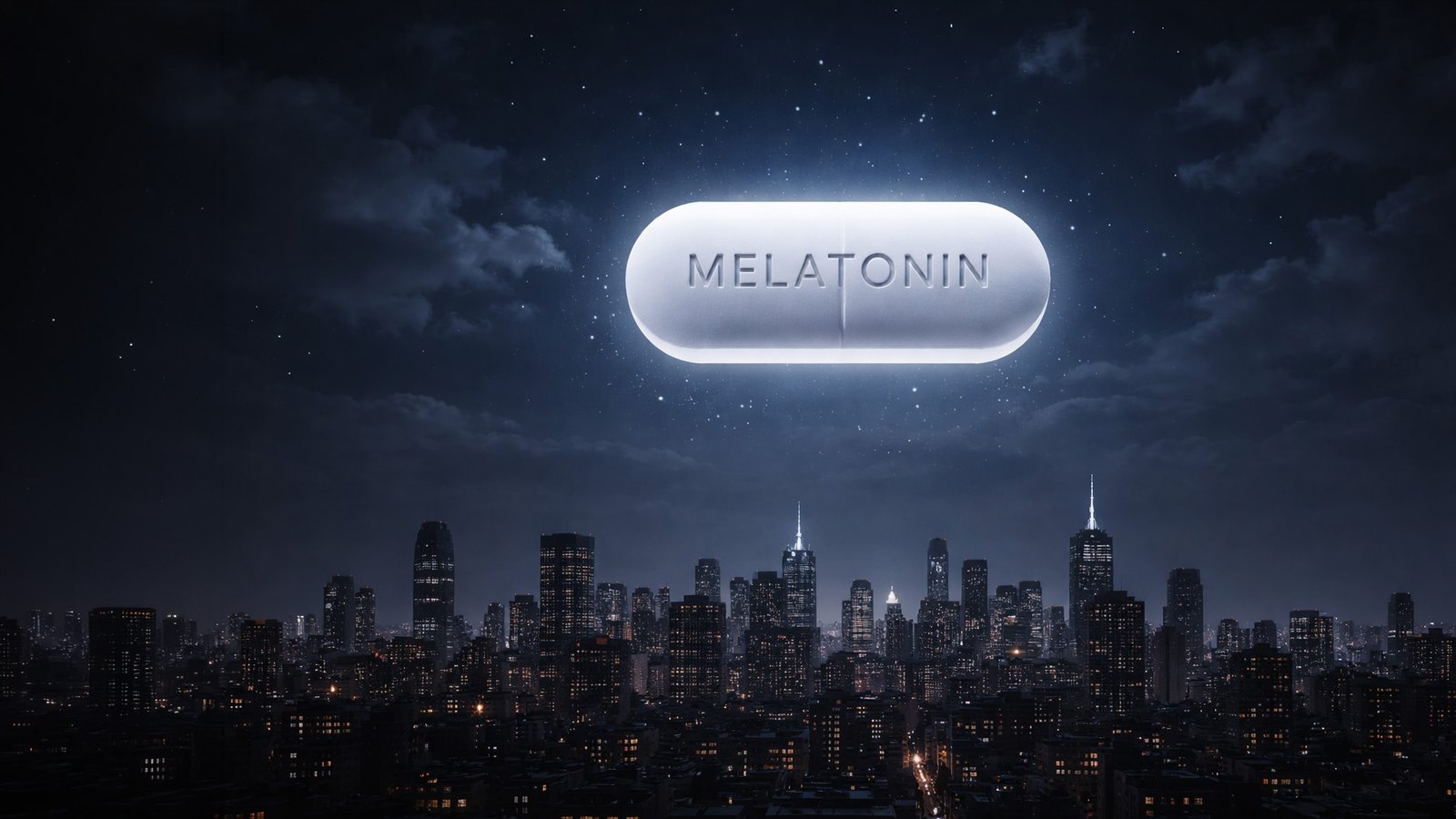
That is how melatonin drifted from endocrinology into ritual. It is no longer just a substance people take for jet lag or a disrupted sleep schedule. Instead, it often sits inside a larger evening performance: dim lamp, magnesium drink, silk pillowcase, blue-light sermon, phone still somehow in hand, and a small gummy meant to signal virtue as much as drowsiness. Sleep, once a bodily function, now comes with a shopping list.
The appeal is obvious. People are tired, overstimulated, and increasingly aware that sleep affects everything from mood to memory to appetite and even glucose regulation. Surveys in the United States suggest roughly one in five adults has tried melatonin at least once. Meanwhile, global sales have followed the mood. Estimates put the melatonin supplements market at several billion dollars annually, with projections continuing to climb as sleep anxiety becomes a consumer category.
That word natural has done a heroic amount of work here. Melatonin is natural in the sense that the body makes it. So is cortisol. That does not automatically make extra amounts of either a charming idea. Still, the phrase has marketing magic. It turns a hormone into a comfort object. It suggests that buying sleep is not really buying sleep at all, just giving nature a tiny nudge, preferably in berry flavour.
Yet melatonin is not really a sedative in the old-fashioned sense. It is better understood as a circadian signal. In darkness, the brain releases it to tell the body night has begun. In light, especially blue light, that signal is suppressed. That distinction matters because many people take it as if it were a universal off switch. In practice, however, timing, dose, and the actual cause of the sleep problem matter far more than the marketing usually admits.
For jet lag, circadian disruption, and delayed sleep–wake phase disorder, melatonin can make real sense. The National Institutes of Health and the NHS both acknowledge its usefulness in specific cases. In the UK, it is prescribed for short-term insomnia, particularly in people over 55, and for certain sleep disorders in children under specialist supervision. That is much less glamorous than the broader promise now floating around the market, which often implies that any modern adult with racing thoughts and a glowing phone can chew a gummy and outsource the consequences.
Naturally, the ritual expanded because ritual itself feels good. Humans adore a ceremony, especially one that makes us feel responsible and cared for. A melatonin gummy before bed is not just chemistry. It is also theatre. It marks a boundary between the messy part of the day and the supposedly restored self who will wake tomorrow with better focus and a less deranged relationship with email.
And that is where the story becomes more interesting. Melatonin sells not only because of what it does, but because of what it symbolises. It stands for permission to stop. It turns sleep into something intentional rather than accidental. In a culture that glorifies productivity and still somehow romanticises burnout, a bedtime supplement can feel almost rebellious.
However, rituals become slippery when commerce gets involved. The market rarely stops at “this may help some people in some situations”. It prefers a shinier script. So melatonin migrated into gummies, sprays, chocolates, children’s products, and “clean” sleep blends. The format matters because it changes the emotional meaning. Tablets suggest treatment. Gummies suggest harmlessness.
That shift has consequences. A 2023 study published in JAMA found that melatonin content in gummy products varied from less than half to more than four times the labelled dose. Some also contained measurable amounts of serotonin, a different neurochemical entirely. Meanwhile, reports from US poison control centres show a dramatic rise in paediatric melatonin ingestions over the past decade, with tens of thousands of cases annually. The ritual looks innocent right up until it collides with variability and the basic fact that children think gummies are sweets because, frankly, they are not wrong.
The international contrast makes the whole thing even stranger. In the United States, melatonin sits on shelves beside vitamins, available over the counter in doses that can reach 10 mg or more per serving. In the UK and much of Europe, it is a prescription-only medicine, typically used at much lower doses, often around 2 mg in controlled-release form. Same molecule, entirely different cultural framing.
Meanwhile, the myths keep multiplying. Many people assume more melatonin means better sleep. In reality, studies suggest that lower doses, sometimes as little as 0.5 to 3 mg, may be sufficient for shifting circadian timing. Higher doses do not necessarily improve sleep quality and may increase side effects such as next-day grogginess, headaches, or vivid dreams.
There is also the psychological side, which the market quietly loves. A ritual can help sleep even when the active ingredient does less than advertised, because routine itself matters. Repeated cues matter. Expectation matters. The body responds to patterns. In that sense, melatonin sometimes functions like a biochemical bookmark inserted into the same chapter every evening.
The problem comes when the bookmark replaces the book. Melatonin cannot negotiate with a 10 p.m. work email, a brightly lit kitchen, three episodes of something grim, and a mattress that should have been replaced five years ago. It cannot fix insomnia driven by anxiety, depression, chronic pain, or sleep apnoea. Yet the market loves broad answers because broad answers scale beautifully.
So melatonin became a modern ritual partly because it solves a narrow problem, and partly because it flatters a wider fantasy. The fantasy is that exhaustion can be managed elegantly, privately, and with the correct purchases. No need to rework the culture, the hours, or the glowing tyranny of the phone. Just add one more item to the nightly routine.
Still, it would be simplistic to treat melatonin as a scam in a moon-themed bottle. It has legitimate uses. Clinical trials have shown modest benefits in reducing sleep onset latency, particularly in circadian rhythm disorders. The issue is proportion. Melatonin works best when it is treated as one tool among others, not as a moral badge or a magical sleep passport.
Perhaps that is why melatonin feels so perfectly modern. It sits at the intersection of biology, commerce, and self-optimisation. It is scientific enough to sound credible, gentle enough to sound safe, and aesthetic enough to become part of a lifestyle identity.
So yes, melatonin is about sleep. But it is also about what modern people now expect from sleep: not just rest, but management, symbolism, and proof of effort. We do not merely want to drift off. We want to be seen trying correctly. The old ritual was darkness and quiet. The new one comes in a bottle, often fruit-flavoured, and promises to help us perform the simple act of going to bed as though it were a minor professional skill.
Which leaves an awkward, slightly uncomfortable question lingering at the bedside: are we actually fixing sleep, or have we simply found a more sophisticated way to buy into the illusion of control over it?