Most bread tries to make life easy. Mix flour with water, persuade some yeast to cooperate, leave everything alone for a while and put it in the oven. A few hours later, you have something warm, fragrant and socially acceptable. Pumpernickel takes a different view. Traditional Westphalian pumpernickel can spend at least 16 hours baking, which means you could fly from London to Singapore while your loaf is still getting comfortable.
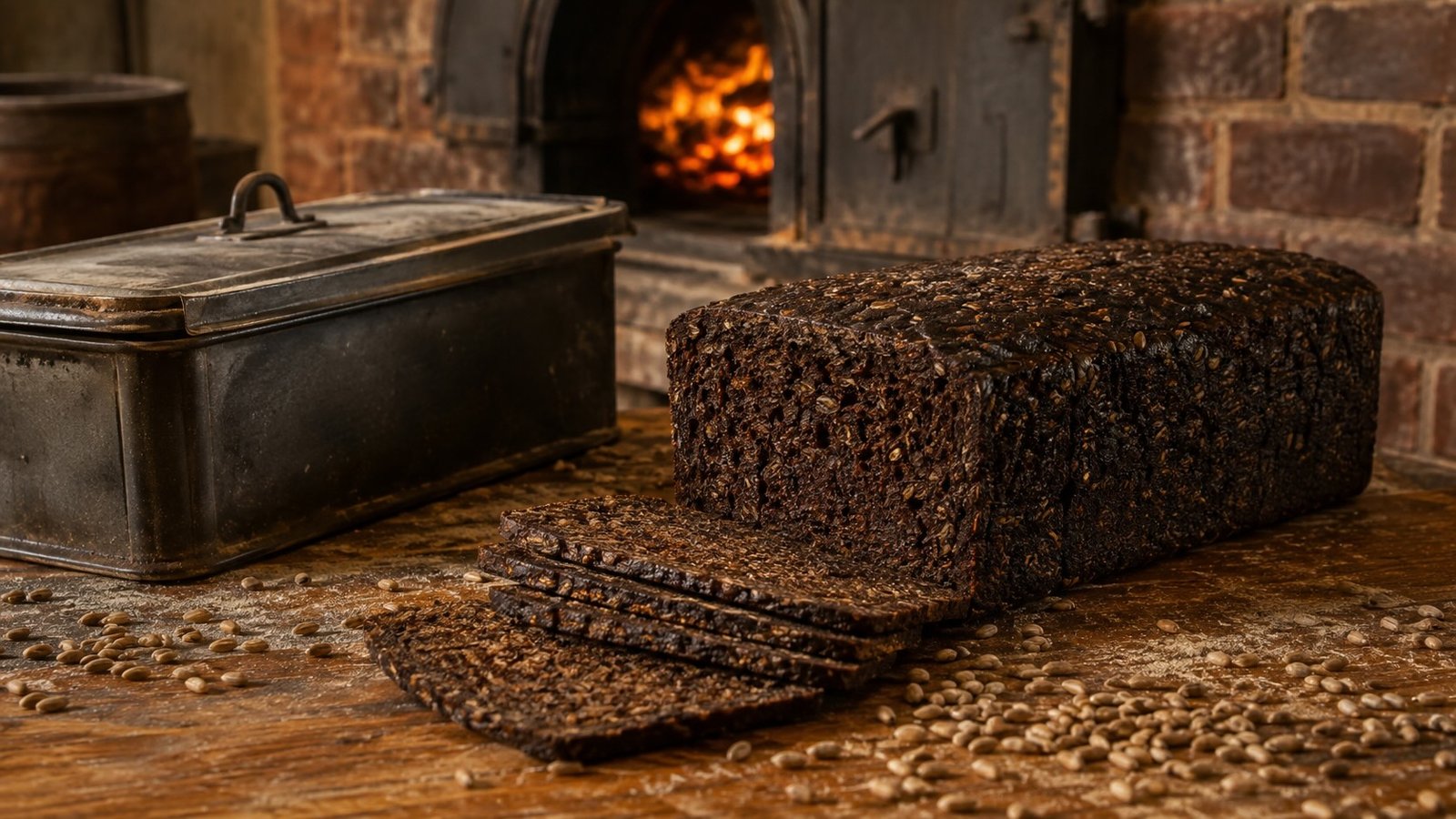
The result hardly resembles our standard idea of bread. Pumpernickel is dark brown, sometimes almost black, extraordinarily dense and pleasantly moist. It has virtually no crust and very little of the airy structure that sends sourdough enthusiasts into ecstatic discussions about “crumb”. Slice it thinly and you find pieces of rye grain packed together in something that looks halfway between bread, cake and geological core sample.
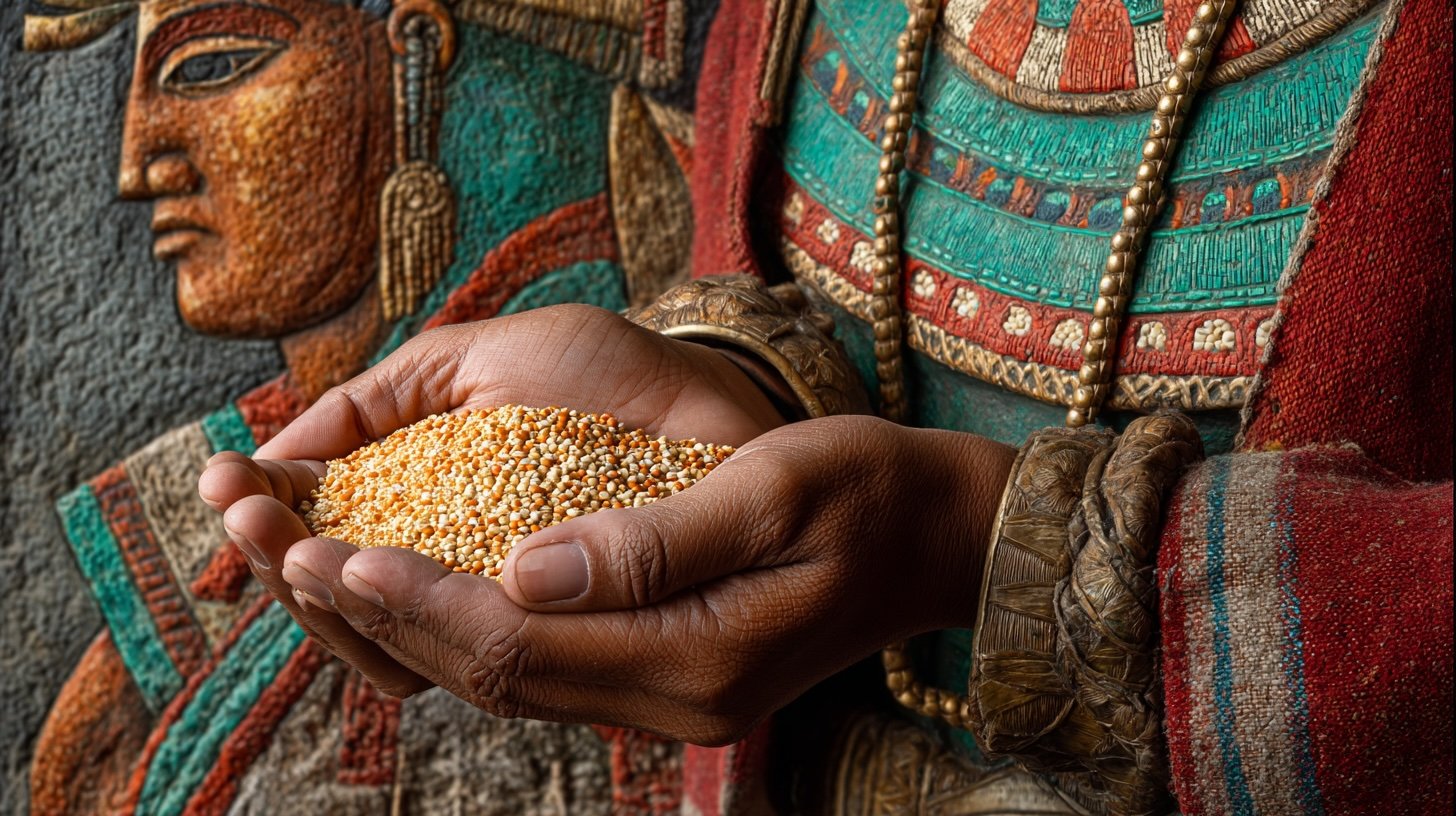
That appearance makes more sense once you know where it comes from. Pumpernickel belongs to Westphalia in western Germany, a region where rye traditionally thrived better than wheat. Rye tolerates poorer soils and colder conditions rather well, making it an extremely useful crop in northern Europe. For generations, people there ate dark rye bread not because some nutritionist had declared whole grains fashionable, but because rye was what grew.
Westphalian pumpernickel eventually became so closely associated with the region that “Westfälischer Pumpernickel” gained protected geographical status in the European Union. The official specification sounds almost comically strict for something that appears so rustic. The bread must consist entirely of rye, and the traditional process requires at least 16 hours in a humid oven or sealed baking tins.
This extraordinary cooking time creates the feature that causes the most confusion: the colour. Proper traditional pumpernickel does not need cocoa powder, coffee, burnt sugar or a mysterious bottle labelled “dark bread essence”. Its darkness develops during the long baking process itself.
At the relatively low baking temperature, enzymes continue breaking down rye starches into sugars. As the hours crawl by, those sugars contribute to increasingly complex flavours and browning reactions. Eventually, the loaf develops its characteristic deep brown colour, gentle sweetness and almost malty aroma. In other words, the baker does not burn pumpernickel black. The baker waits it black.
That distinction matters because much of what the English-speaking world calls pumpernickel is actually a different bread. American pumpernickel often combines wheat flour with rye and reaches its dark colour much faster through molasses, caramel, coffee or cocoa. Some versions are light and relatively fluffy inside, merely dressed in pumpernickel colours.
There is nothing inherently wrong with them. A wheat-and-rye loaf with molasses can taste excellent. However, comparing it with Westphalian pumpernickel is rather like comparing instant coffee with espresso because both happen to be brown and caffeinated. They belong to the same extended family, but somebody has clearly taken a shortcut.
The authentic German version also has a flavour newcomers sometimes struggle to describe. It is earthy but not muddy, sweet but certainly not sugary, slightly sour and occasionally faintly bitter. Because the loaf contains whole rye and retains so much moisture, it feels remarkably substantial. One thin slice can possess the psychological presence of three slices of supermarket bread.
Historically, that density made perfect sense. Food needed to keep, fill stomachs and survive storage without requiring daily intervention. Pumpernickel keeps unusually well, especially when properly wrapped, which helped make it valuable during difficult periods. Tradition even associates the bread with emergency provisions during shortages and conflict.
Then we reach the name, and here pumpernickel becomes considerably less respectable.
One of Europe’s great food legends claims Napoleon encountered the bread while travelling through Germany. Disgusted by the heavy black loaf, he supposedly declared it “bon pour Nicol” — good for Nicol, allegedly his horse. German locals then mangled the French phrase until “bon pour Nicol” became “pumpernickel”.
It is a splendid story. It is also almost certainly nonsense.
Forms of the word existed before Napoleon became the man everyone blamed for rearranging Europe. Earlier versions of essentially the same French-horse story also circulated before him, which demonstrates one of history’s useful rules: if an anecdote involves Napoleon inventing, naming or insulting a famous food, approach it with a raised eyebrow.
The real explanation appears considerably earthier. “Pumper” or related German forms referred to breaking wind or producing a dull thumping sound, while “Nickel” could mean a rascal, fool or goblin and derives from Nikolaus. The term originally functioned as an insult before attaching itself to the coarse Westphalian bread.
Depending on how enthusiastically you translate it, pumpernickel therefore comes close to “farting goblin”, “flatulent rascal” or something similarly unsuitable for an artisan bakery chalkboard. The probable reference to flatulence may even have contained a practical observation. Whole rye provides plenty of fibre, and anyone who suddenly doubles their fibre intake may discover that seventeenth-century German humour possessed a certain scientific foundation.
The bread’s nutritional reputation deserves slightly more restraint. Whole rye supplies fibre and retains more of the grain than highly refined bread. Studies of traditional rye breads have also found that coarse structure and intact grains can produce a lower blood-glucose response than some more finely processed breads.
However, “pumpernickel” on a packet does not magically guarantee nutritional sainthood. Recipes differ enormously. A dense whole-rye German loaf and an American-style wheat bread coloured with molasses may carry the same name while offering quite different nutritional profiles. As usual, the ingredient list tells a more useful story than the romantic typography on the packaging.
Traditional pumpernickel also demands a slightly different approach at the table. Cutting yourself a two-centimetre slab and treating it like toast rather misses the point. Thin slices work better because the bread is so concentrated in both texture and flavour.
Butter is enough, although smoked salmon, cream cheese, mature cheese, cured meats, pâté and pickled fish all suit it beautifully. Sharp or fatty toppings work particularly well because the rye gives them something substantial to push against. Germans also crumble pumpernickel into dishes and desserts, proving that once you have committed 16 hours to baking bread, you become reluctant to waste even a crumb.
Its survival feels strangely appropriate in our age of slow food and revived fermentation. For centuries, pumpernickel represented practical peasant food made from a hardy local grain. Today, those same characteristics sound almost fashionable: wholegrain rye, minimal ingredients, fermentation, regional identity and a production method so slow that no venture capitalist would approve it.
Perhaps that is its greatest trick. Pumpernickel looks uncompromising, carries a name probably connected with flatulence and takes most of a day to bake. Yet after centuries of supposedly more sophisticated breads appearing around it, this dark Westphalian brick remains on the table.
Sometimes progress simply means discovering that the peasants had already worked it out.