Praetorian Guard: Loyal Protectors or Ruthless Kingmakers?
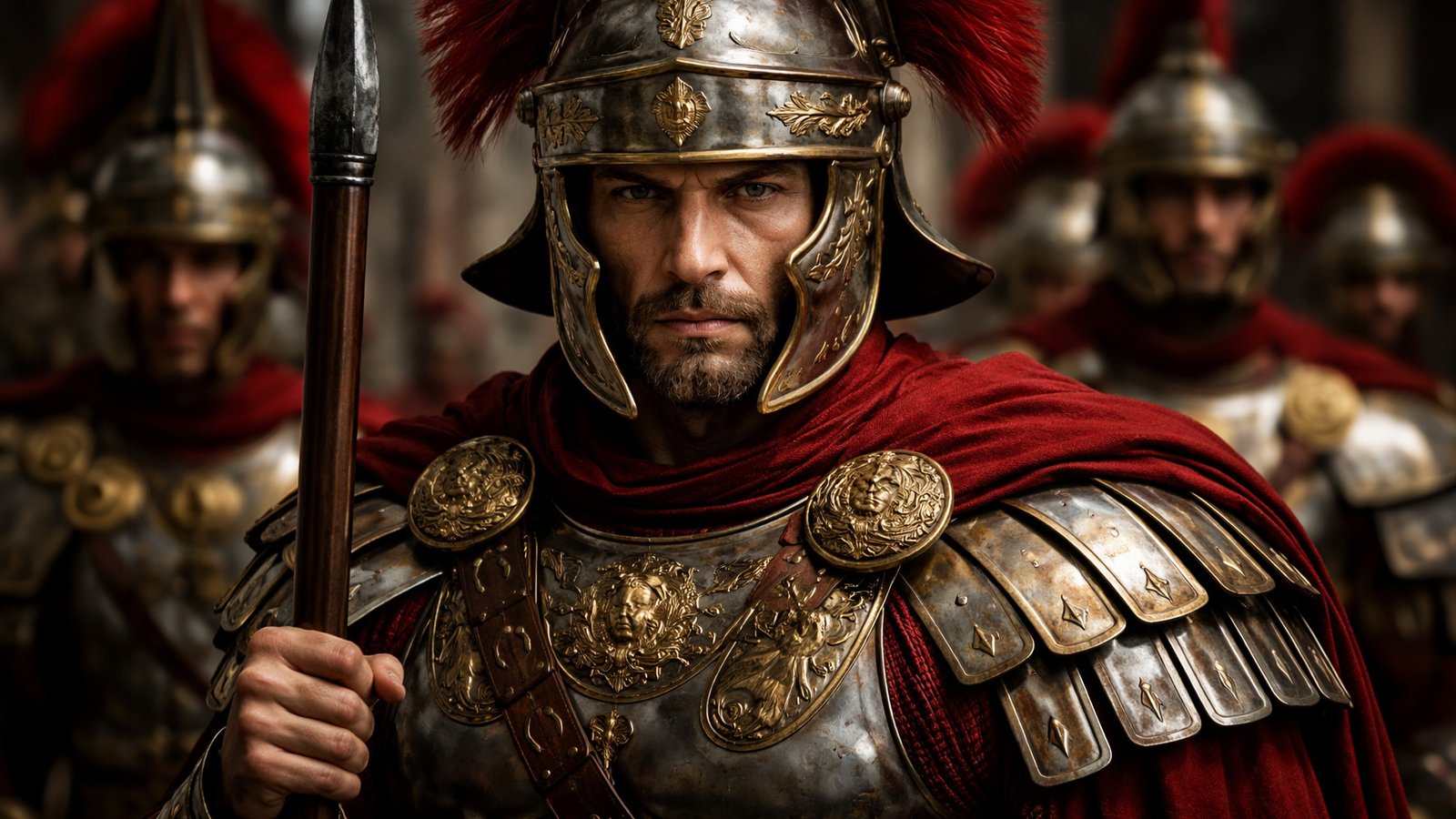
They were supposed to be the safest men in Rome to stand next to, yet they slowly became the most dangerous. The Praetorian Guard began as a sensible answer to a very Roman problem: if you are a general surrounded by rivals, conspirators, and shifting loyalties, you need a small circle of soldiers who answer only to you. Not the entire army with its ambitions and divided interests, but a tightly controlled group that stays close, watches carefully, and reacts quickly when things turn.
At first, the idea was almost mundane. During the late Republic, commanders like Julius Caesar selected trusted troops to guard their headquarters, the praetorium. These men were not meant to shape politics; they were meant to keep their leader alive long enough to win campaigns and return home. However, Rome had a habit of turning temporary solutions into permanent institutions, especially when power was involved.
When Augustus emerged as the undisputed ruler after years of civil war, he understood that appearances mattered as much as control. He could not openly present himself as a monarch, but he could not risk being unprotected either. So he formalised the Praetorian Guard, gave them structure, pay, and prestige, and positioned them near the centre of Roman life. It was a careful balance between discretion and authority, and for a time, it worked remarkably well.
The Guard enjoyed privileges that set them apart immediately. They were paid more than ordinary legionaries, served fewer years, and, perhaps most importantly, were stationed in or around Rome rather than on distant and often brutal frontiers. This created a different kind of soldier. While others fought wars and endured hardship across the empire, the Praetorians lived within the political heart of it. They became familiar not just with discipline, but with influence.
Proximity to power changes perception. It exposes the mechanics behind decisions that, from a distance, seem inevitable or even divine. The Praetorian Guard saw emperors not as distant figures carved in marble, but as individuals navigating fear, ambition, and uncertainty. They observed court intrigue, overheard conversations, and witnessed the fragile balance that kept authority intact. Over time, this perspective reshaped their role.
Confidence grew quietly at first. Then it turned into awareness, and eventually into leverage. If you are always present when decisions are made, you begin to understand how decisions can be influenced. The Guard did not suddenly decide to become political actors; rather, they gradually realised that they already were.
Moments of crisis accelerated this transformation. After the assassination of Caligula in 41 CE, chaos briefly gripped Rome. In that uncertainty, it was the Praetorians who found Claudius and declared him emperor. It was a pragmatic decision, perhaps even stabilising in the short term, but it set a precedent that could not be undone. Power, it turned out, could be conferred not only by tradition or law, but by those who controlled access to the throne.
From there, the shift became more visible. The Guard began to operate not just as protectors, but as participants in succession. They were close enough to intervene and powerful enough to make their intervention matter. The system adapted around them, but it also became more fragile because of them.
The most striking example came in 193 CE, a year that reads less like history and more like dark satire. After killing Emperor Pertinax, who had attempted to impose discipline on them, the Praetorian Guard openly auctioned the empire. Didius Julianus secured the throne by promising a substantial payment to each soldier. The transaction was as direct as it was astonishing. Rome, with all its institutions and traditions, reduced to a financial agreement negotiated in a military camp.
Such an arrangement was never going to hold. Across the empire, generals commanding real armies recognised both the absurdity and the opportunity. Among them was Septimius Severus, who moved decisively towards Rome. He understood that the issue was not merely who sat on the throne, but who controlled the process of choosing. If the Guard retained that power, no emperor would ever be secure.
Severus responded with clarity and force. He disbanded the existing Praetorian Guard, stripped them of their privileges, and replaced them with soldiers loyal to him. It was not a subtle reform, but it was effective. The immediate threat disappeared, and with it, the Guard’s ability to dictate succession.
Although a Praetorian Guard continued to exist afterwards, it never regained the same level of influence. The episode had exposed the risks too clearly. What had once been a protective institution had evolved into a destabilising force, and the system had corrected itself in the only way it could.
Looking at the broader picture, the story of the Praetorian Guard reflects a recurring dynamic rather than an isolated anomaly. Structures designed to provide security can accumulate power simply through proximity and privilege. Over time, their incentives may drift away from their original purpose, especially if there are no effective constraints.
There is also an element of irony throughout the narrative. The Guard was created to reduce uncertainty, to ensure that the emperor could govern without constant fear of assassination or rebellion. Instead, it introduced a new form of unpredictability, one rooted within the very mechanism meant to guarantee stability. The danger was no longer external; it was embedded in the system itself.
This tension feels familiar even beyond the context of ancient Rome. Whenever a group operates close to decision-making centres, with access that others do not have, it gains a form of influence that can be difficult to regulate. Formal authority may still exist on paper, but informal power often shapes outcomes in more immediate ways.
In Rome, the consequences were particularly stark because the stakes were so high. Control over the emperor meant control over the empire, and control over the empire meant control over vast resources, armies, and populations. The Praetorian Guard, by virtue of their position, found themselves at the intersection of all these forces.
Their rise and fall serve as a reminder that power rarely remains confined to its original boundaries. It expands, adapts, and sometimes exceeds the structures designed to contain it. The Praetorian Guard did not begin as kingmakers, but they became them because the system allowed it, and perhaps even encouraged it in subtle ways.
In the end, what remains is not just the image of elite soldiers in polished armour, but the quieter, more unsettling realisation of how easily roles can shift. Protectors can become arbiters, and those who stand closest to power may one day decide how it is passed on.