The Order of the Thistle sounds, at first, like something invented by a committee determined to make Scotland look as dramatic as possible. Take one national plant with spikes. Add green velvet robes, white feathers, Latin defiance, St Andrew, a chapel in Edinburgh, a royal procession, and a motto that basically says: “Try it and see what happens.” Somehow, this is not satire. This is one of the highest honours in the United Kingdom, and the highest order of chivalry in Scotland.
Its full name is The Most Ancient and Most Noble Order of the Thistle, which already tells you quite a lot. British ceremonial institutions rarely travel light. They prefer a full title, preferably one that sounds as if it has survived fire, rebellion, damp stone walls and several arguments about precedence. The Order of the Thistle sits just below the Order of the Garter in the British honours system, but in Scotland it occupies the top chivalric spot. For anyone honoured with it, this is not merely a polite pat on the back. This is velvet, heraldry and history turning up at your door with a very serious hat.
The Order recognises Scottish men and women who have held public office or contributed significantly to national life. That sounds tidy and modern. Yet, like many old institutions, it becomes much more interesting once you look beneath the polished ceremony. The Order of the Thistle is not only about merit. It is also about royal favour, Scottish identity, political loyalty, medieval nostalgia and the strange British genius for turning constitutional symbolism into theatre.
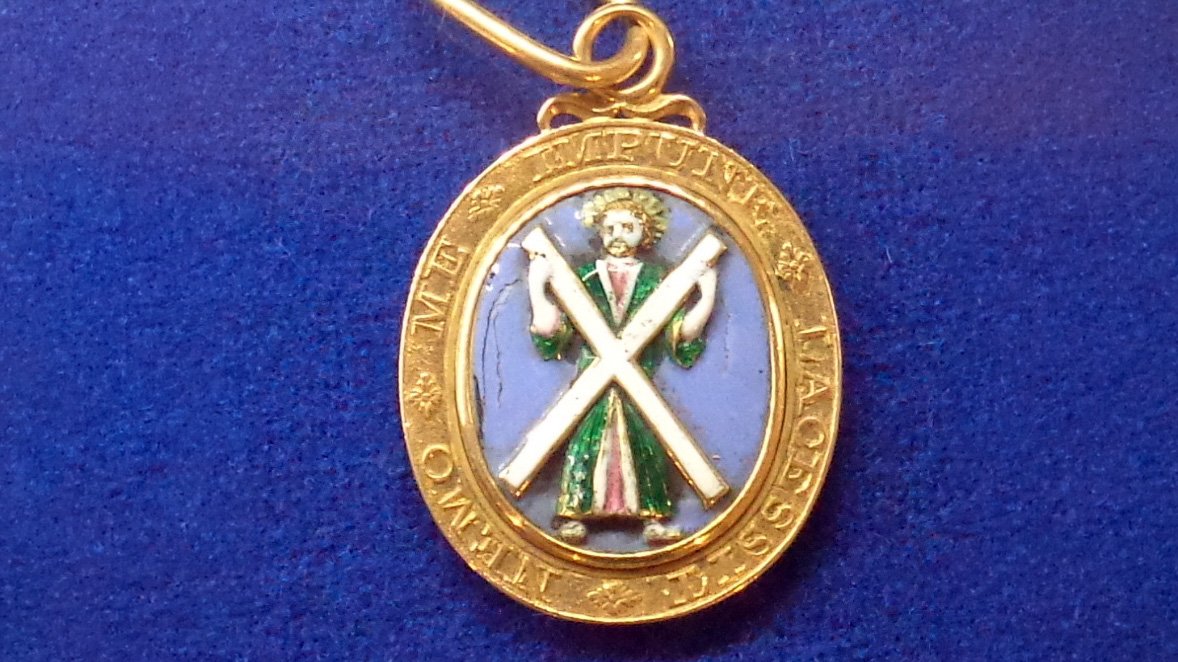
The thistle itself carries the whole mood beautifully. England has the rose, soft, elegant and ready for poetry. Scotland has a plant that injures the careless. As national branding goes, it is hard to improve on that. The thistle says beauty is welcome, but boundaries matter. It is decorative, but not submissive. You may admire it, but you should not grab it without thinking. No wonder the Order’s motto is Nemo me impune lacessit, usually translated as “No one harms me with impunity” or “No one provokes me with impunity.” In more cheerful Scots spirit, people often render it as “Wha daur meddle wi’ me?” It is less “lovely to meet you” and more “mind your hands.”
Naturally, the origin story arrives wrapped in fog. One legend claims the Order began in 809, when King Achaius of Scots supposedly made an alliance with Charlemagne. This gives the Order a magnificent early-medieval glow, which is useful if you enjoy parchment, swords and very confident genealogies. The trouble is that historians do not generally buy it. The story feels less like a provable foundation and more like the kind of ancient pedigree that later centuries loved to invent. When an institution calls itself ancient, someone usually starts looking for an even more ancient beginning, because “old” is never quite enough when “very old indeed” remains available.
A more plausible trail leads to Scottish royal symbolism in the late Middle Ages. James III of Scotland, who reigned in the 15th century, used the thistle as a royal emblem. Around that period, the plant began to appear more clearly in official Scottish imagery, including coinage. There may also have been earlier chivalric customs involving collars and badges. So the Order probably did not spring fully formed from one grand medieval moment. It seems to have grown, appropriately enough, like a thistle: stubbornly, symbolically and with a few awkward roots.
The modern Order, the one we can point to with legal confidence, begins in 1687 with James VII of Scotland, also James II of England. He re-established the Order under new statutes and used it to reward Scottish nobles who supported his rule. This is where the velvet becomes more interesting. The Order was never just an innocent ceremony of national pride. It belonged to the hard world of monarchy, loyalty and power. James needed friends. Honours helped make them visible. A glittering collar could say what a political speech sometimes could not: this person stands close to the Crown.
Then history did what history enjoys doing. James was overthrown in 1688, and the Order became dormant. Queen Anne revived it in 1703, only a few years before the Acts of Union created the Kingdom of Great Britain in 1707. That timing gives the Order an extra layer of meaning. Here was a specifically Scottish chivalric honour being revived just as Scotland’s political relationship with England was about to change dramatically. Whether viewed as recognition, reassurance or royal choreography, the Order carried Scottish distinctiveness into the new British state.
Membership has always remained small. Today the Order has the Sovereign and sixteen ordinary Knights and Ladies. Members of the Royal Family may also become Royal Knights or Ladies of the Thistle, without counting towards that limit. This makes the Order feel almost club-like in its exclusivity, though admittedly most clubs do not involve St Andrew, heraldic stalls and plumed hats. Members use the post-nominals KT or LT, which must be among the more elegant ways of making a business card look faintly medieval.
For a long time, the Order reflected the assumptions of old aristocratic Britain. Men dominated these circles because public honour, public office and public power largely belonged to men. That changed formally in 1987, when women became eligible for appointment on the same basis as men. The shift came late, but it mattered. A chivalric order that claims to recognise national contribution cannot sensibly ignore half the nation forever, even if ceremonial tradition often moves with the speed of a heavily embroidered cloak.
The ceremonial home of the Order is the Thistle Chapel in St Giles’ Cathedral, Edinburgh. The chapel itself dates from 1911, which may surprise anyone expecting every part of this story to smell of the 12th century. It replaced earlier lost or unsuitable arrangements and gave the Order a proper sacred and ceremonial setting. The chapel is a jewel box of carved wood, heraldry and symbolism. Each member has a stall, complete with personal arms and insignia. It feels intimate, ornate and intensely Scottish, as if national identity decided to become architecture.
The Thistle Service takes place every other year, and it is exactly the sort of ritual Britain does unusually well. Members process through Edinburgh in green velvet mantles and white-plumed hats, while the Royal Company of Archers, the King’s Body Guard for Scotland, adds another layer of ceremonial seriousness. To modern eyes, the whole thing can look faintly unreal, like a scene from a historical drama that forgot to end. Yet that is partly the point. Ceremony does not survive because it looks normal. It survives because it looks memorable.
The insignia deepens the symbolism. The star includes St Andrew’s cross and the thistle. The badge shows St Andrew with his saltire. The collar combines thistles with sprigs of rue, another plant with older associations of grace, repentance, protection and bitterness. That mixture feels almost too perfect. The thistle warns you not to meddle. Rue suggests memory and moral seriousness. Together, they create a botanical essay in metalwork.
Of course, the Order also carries awkward questions. In a modern democracy, what should we make of honours that remain the personal gift of the monarch? On one hand, this removes the Order from the normal churn of party politics. On the other hand, it makes selection feel closed, rarefied and hard to scrutinise. That tension is part of its identity. The Order celebrates service, but it also preserves hierarchy. It honours Scotland, but it does so through the British Crown. It looks ancient, but its documented modern form comes from a 17th-century political project. None of this makes it meaningless. It makes it more interesting.
The Order of the Thistle works because it refuses to be simple. It is national symbol, royal instrument, ceremonial performance and historical puzzle all at once. Its legends reach back to Charlemagne, even if the evidence does not. Its plant emblem seems humble, yet says more about Scotland’s self-image than many grander symbols could manage. Its motto sounds aggressive, but also wonderfully defensive: not conquest, exactly, but consequence.
In the end, the Order of the Thistle is a very Scottish kind of grandeur. It does not choose a lily, a laurel or a golden sun. It chooses a weed with spikes and turns it into nobility. That may be the secret of its charm. The thistle grows where it likes, survives poor soil, resists careless hands and looks better than it has any right to. As symbols go, Scotland could have done much worse.
Image: Borodun