Life Above the Supervolcano
Yellowstone does not ease you in gently. Instead, it steams. You arrive, and the ground exhales. Somewhere between pine forests and sulphur haze, you realise you stand on a lid. Not a poetic one. A geological one. Beneath your boots sprawls a supervolcano vast enough to trouble continents. Yet families unpack sandwiches. Children drop crisps. Someone argues about parking. Humanity picnics happily on existential threats.
The park became official in 1872. By contrast, the landscape has simmered and erupted for millions of years. Politicians signed papers. Meanwhile, magma kept circulating. Declaring something this volatile a national park feels almost charmingly optimistic.
Nevertheless, that optimism reshaped global conservation. Before Yellowstone, governments mined and fenced landscapes without apology. Afterwards, at least in theory, some spaces could remain gloriously impractical. No factories rise here. No housing estates creep in. Instead, geysers misbehave on schedule.
Old Faithful draws crowds because predictability soothes us. It erupts roughly every ninety minutes. Consequently, visitors gather early, phones poised, whispering as if at a premiere. When steam bursts upward, applause ripples across the benches. We clap for boiling water. The geyser, however, ignores us.
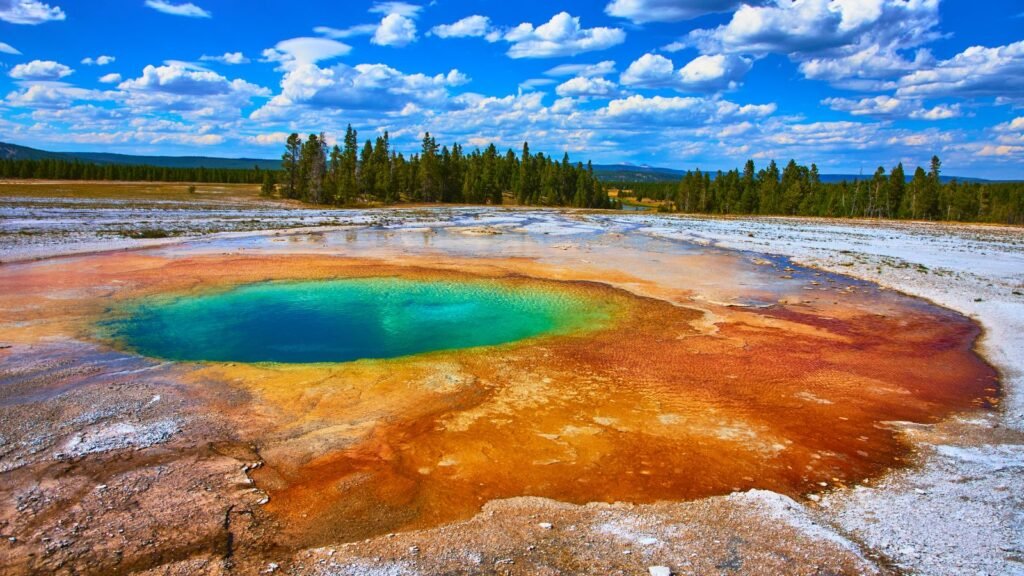
Beyond that celebrity act, thousands of other features simmer quietly. Yellowstone holds roughly half the world’s geysers. As you wander through the Upper Geyser Basin, the earth hisses like a temperamental radiator. Pools shimmer in improbable blues. Around their edges, microbes paint bands of orange and green. They thrive in heat that would hospitalise you in seconds.
Grand Prismatic Spring rejects subtlety altogether. From above, it resembles a spilled paint palette. At ground level, it feels almost synthetic. Steam drifts across the surface and then clears. As a result, colour returns with theatrical timing. Nature understands suspense.
Mud pots add another register. They bubble and burp with thick determination. Children lean forward in delighted horror. Adults pretend composure. Meanwhile, the smell wraps around everyone with rotten-egg insistence. Hydrogen sulphide never worries about branding.
Yet geothermal drama forms only one layer. Drive further and valleys open wide enough to swallow perspective. Bison cross those plains with prehistoric calm. They do not hurry. They do not apologise. Therefore, traffic halts without protest.
The first bison jam feels amusing. The third feels instructive. Engines switch off. Windows slide down. Cameras emerge. The herd continues its slow procession, enormous heads swinging gently. In those moments, impatience looks faintly absurd.
Wolves returned in the 1990s after decades away. Their comeback altered more than headlines. Once they resumed hunting elk, grazing patterns shifted. Consequently, willow and aspen recovered along riverbanks. Beavers found fresh building material. Songbirds reappeared. Even certain waterways stabilised over time.
However, applause did not echo everywhere. Ranchers beyond park borders worried about livestock. Debates flared quickly. Policies changed repeatedly. Yellowstone may appear untouched, yet politics presses close.
Beneath all this, the supervolcano continues its quiet flexing. The caldera spans roughly seventy kilometres. Ancient eruptions once blanketed continents in ash. Today, seismographs register small earthquakes each year. The ground rises and falls by centimetres as magma circulates. Scientists track each tremor calmly. The internet, predictably, prefers catastrophe.
In reality, smaller adjustments dominate. Geysers clog and re-route. New vents open. Old pools fade. Thus, the landscape edits itself without ceremony.
Winter rewrites everything. Snow buries roads beneath metres of white. As a result, snowcoaches replace camper vans. Cross-country skiers glide past steaming vents that rise like ghosts. Sound softens. Even bison appear more enigmatic.
Summer hums with movement. Campsites fill early. Rangers direct traffic with steady patience. Meanwhile, afternoon thunderstorms build over the mountains. Sunshine can flip to hail within minutes. Yellowstone refuses a stable mood.
Beneath seasonal shifts lies a deeper timeline. Indigenous peoples travelled these valleys for thousands of years. Obsidian from this region appears at distant archaeological sites. Therefore, trade networks once stretched far beyond the geysers. Hot springs formed part of living cultural landscapes, not curiosities.
For decades, mainstream narratives sidelined that history. Recently, conversations have broadened. Tribes assert connections with renewed clarity. As a consequence, the myth of untouched wilderness feels increasingly thin.
Fire shapes Yellowstone as decisively as water. Lodgepole pines rely on heat to open their cones. Lightning ignites summer burns. In 1988, vast fires consumed large areas and alarmed the public. Eventually, fresh growth proved renewal often follows destruction.
Climate change complicates that rhythm. Snowpack patterns shift subtly. Spring runoff arrives earlier in some years. Certain species adapt. Others struggle. Scientists monitor trends with measured concern.
Amid these grand processes, smaller moments linger longest. A fox crosses a meadow at dawn. A bull elk bugles in autumn mist. Steam curls from a thermal pool while coffee warms your hands. In contrast to headlines, these details settle quietly.
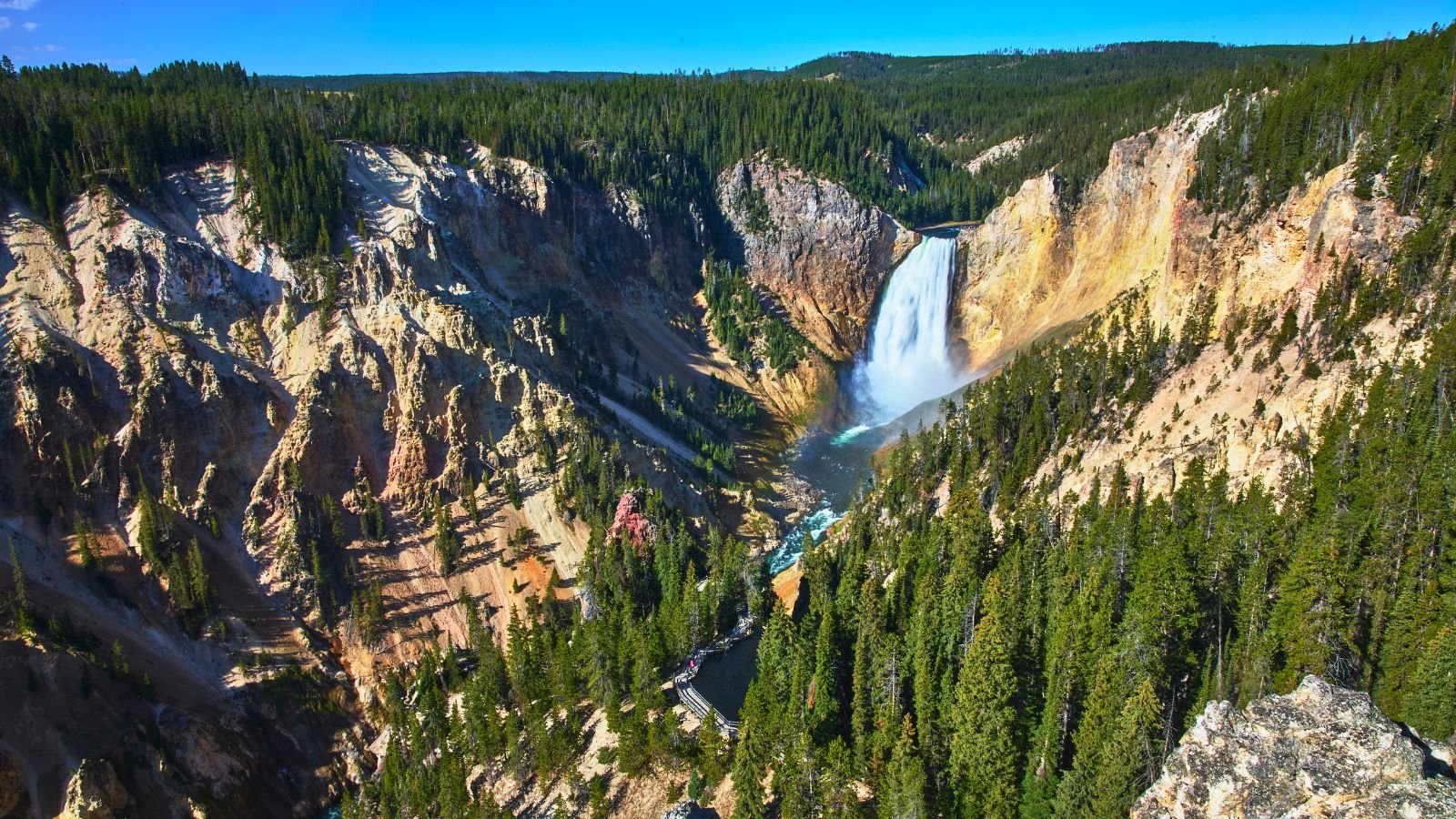
The Yellowstone River carves a canyon streaked in gold and rust. Stand at the rim and the Lower Falls thunder below. Afternoon light intensifies the colours. Early artists struggled to persuade audiences such hues existed. Even now, photographs underplay the saturation.
Roadside pull-offs host temporary communities. Strangers exchange binoculars. Someone whispers about a distant grizzly. Anticipation binds people who might otherwise avoid eye contact. Yellowstone manufactures brief alliances.
However, crowds test patience. Traffic stretches for miles in peak season. Boardwalks fill with competing cameras. The irony rarely escapes anyone. Therefore, some travellers rise before dawn. Others seek lesser-known trails.
Step away from the headline features and quiet returns swiftly. Forest paths absorb sound. Distant geysers rumble without spectators. Alpine lakes mirror entire skies. Gradually, you sense layers beyond postcards.
Geology refuses the role of backdrop. You feel faint vibrations underfoot. You smell minerals in the air. You see crusts of white and ochre glazing the earth. Few places render planetary processes so tangible.
Children often ask whether the volcano will erupt tomorrow. Adults wonder the same thing silently. Rangers answer with steady reassurance. Meanwhile, life continues.
Perhaps that indifference forms the deeper lesson. Human arguments look fleeting beside molten rock and glacial valleys. Yet our decisions still matter. Conservation demands negotiation between access and restraint. Yellowstone balances those tensions daily.
Leave the park and memory lingers. The scent of sulphur resurfaces unexpectedly. The image of steam against blue sky replays in quiet moments. You recall standing on a boardwalk above circulating heat older than history.
Yellowstone resists tidy slogans. It simmers. It erupts. It freezes. It burns. Ultimately, it invites you to slow down and pay attention. The planet, it reminds you, remains vividly alive.
Post Comment
You must be logged in to post a comment.