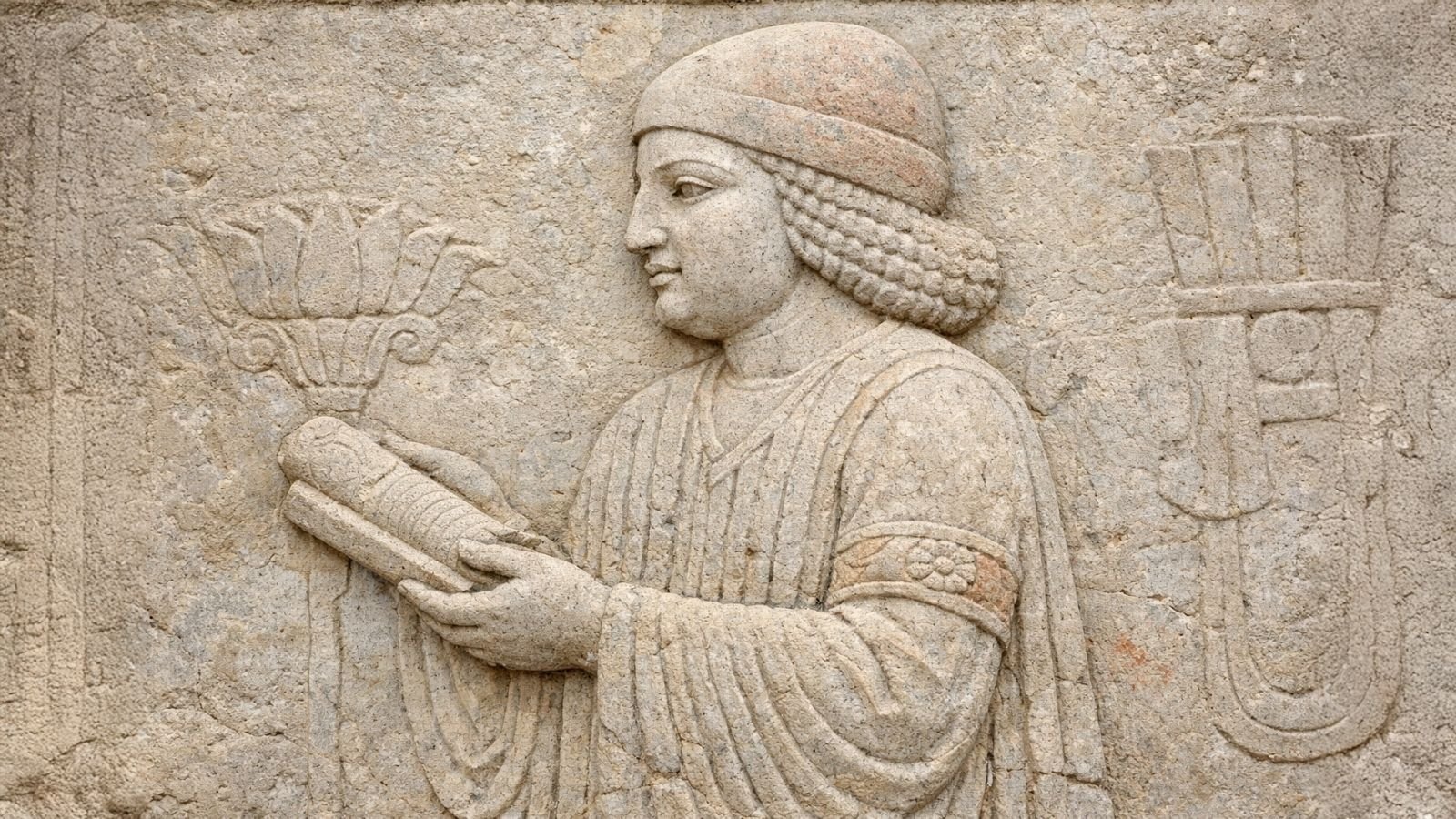
The Queen of Sheba was impressed by the seating arrangements. She had come to Jerusalem to test King Solomon with difficult questions, but the Book of Kings also records her astonishment at the food on his table, the places assigned to his officials and the clothing of his attendants. Elsewhere in the same book, we learn how Solomon kept that table supplied. Twelve district governors took turns providing for the royal household, each responsible for one month of the year. The queen saw what it looked like when everything ran smoothly. Somewhere beyond the palace, a governor was having a very busy month.

Solomon’s reign, traditionally placed in the tenth century BCE, begins with a struggle over who will succeed his father, David. With David growing frail, another son, Adonijah, makes a bid for the throne. Bathsheba, Solomon’s mother, and the prophet Nathan persuade David to have Solomon anointed while he still can. Adonijah survives the first encounter with his half-brother, only to be executed after asking to marry Abishag, the young woman who attended David in his old age. Solomon treats the request as a renewed claim to the throne. By the time the new king asks God for wisdom in a dream at Gibeon, the reader has already seen how quickly he can make up his mind.
What Solomon asks for is a listening heart, so that he can judge his people. The next story puts the request to the test. Two women who live in the same house claim the same infant after another baby dies in the night. With no witness to settle the dispute, Solomon calls for a sword and orders the living child divided. One woman begs him to give the baby to her rival, and he awards her the child. The judgement takes about a minute to tell. The rest of Solomon’s reign is harder to fit into a single anecdote, particularly once the king starts building.
The Temple takes seven years in the biblical account. Solomon’s palace takes thirteen, a comparison the narrator leaves there for anyone inclined to do the arithmetic. Hiram of Tyre supplies cedar, and gangs of Israelite labourers travel to Lebanon in shifts, spending one month away and two at home. Even a detail as mundane as the rota changes the view of the building. A year of construction meant several months away for a man in one of those gangs. At the dedication, Solomon asks how any earthly building could contain God. The question is striking in a story that has just spent pages getting the measurements right.
The Book of Kings remembers security as well as splendour. It pictures the people of Judah and Israel living under their own vines and fig trees, and describes peace along Solomon’s borders. That image deserves a place beside the labour gangs. A reign could bring real advantages and still ask a great deal of the people living through it. Even Hiram, the trading partner who helped make the building programme possible, gets a moment of dissent. When Solomon gives him twenty towns in Galilee, Hiram goes to inspect them and takes a poor view of what he has been given. The Queen of Sheba may have been delighted with everything she saw. Solomon’s timber supplier was harder to please.
How much of this golden age survives in the ground? The Book of Kings credits Solomon with building at Megiddo, Hazor and Gezer. The twentieth-century archaeologist Yigael Yadin linked similar monumental gates at those sites to Solomon’s building programme. Subsequent research has complicated the attribution. Israel Finkelstein argues that the celebrated gate and palaces at Megiddo belong to the ninth century BCE, in the time of the Omride dynasty. At Gezer, a separate radiocarbon study places the emergence of substantial fortifications and an administrative building in the tenth century, when Solomon is traditionally thought to have reigned. That makes the biblical association possible at Gezer. The dating can tell us when the town acquired its defences. Who commissioned them is still an open question.
The sharpest account of what Solomon’s reign cost comes just after his death. At Shechem, the people tell his son Rehoboam that his father laid a heavy burden on them and ask him to lighten it. Rehoboam asks for three days to think. The older advisers tell him to grant the request. The companions he grew up with tell him to promise even harsher treatment. He takes their advice, and the northern tribes turn to Jeroboam, a man who had once supervised labour for Solomon. The complaint at Shechem gives the story something the Queen of Sheba’s visit could never supply. Here, the people who helped sustain the court get to say what they thought of the arrangement.
The biblical narrator sees another cause for the split. In old age, Solomon turns towards the gods worshipped by his foreign wives, and the coming division is presented as divine judgement. The story has room for that explanation and for the much more immediate one given by the people at Shechem. It also has room for the king’s reputation to survive the collapse. Later readers associated Solomon with Proverbs, Ecclesiastes and the Song of Songs. Few royal names could lend authority to practical advice, reflections on the futility of human striving and the frankly delighted voices of lovers. Solomon’s could do all three.
In the famous judgement, Solomon works out what is at stake by noticing what one of the women is willing to give up. At Shechem, his subjects tell Rehoboam plainly what is at stake and ask him to give up a little of what his father demanded. The young king takes three days to decide that he can demand even more. The Queen of Sheba had marvelled at how everyone at Solomon’s table knew their place. At Shechem, a great many people decided they could get up and leave.